If you’ve watched Seinfeld for more than five minutes, you already know the show has a superpower:
it turns tiny, everyday objects into moral dilemmas, social chaos, andoccasionallymedical “experiments.”
Few props pull off that hat trick as flawlessly as the humble Junior Mint.
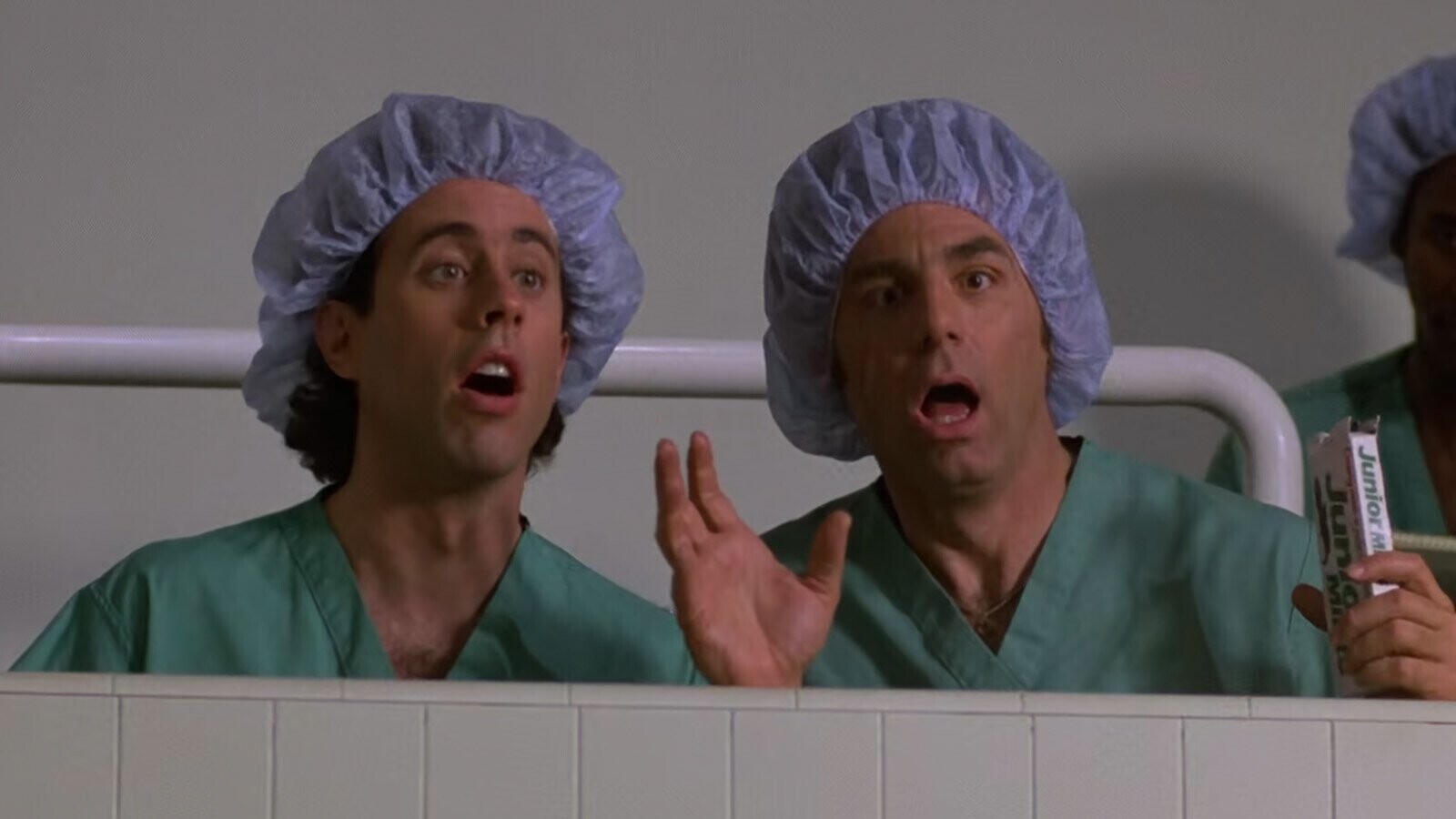
In the episode “The Junior Mint” (originally aired in March 1993), Jerry and Kramer accidentally drop a piece of candy into a surgical patient.
The show plays it like a minty miracle: the patient improves, the characters panic, and viewers laugh at the sheer absurdity.
But years later, fans keep asking the same question, because humans can’t resist a good “Wait… could that actually happen?” moment:
In real life, what would a dropped Junior Mint do inside a surgical patient?
Let’s investigatewithout ruining the joke, without getting gross, and without pretending a chocolate-and-peppermint snack is an FDA-approved surgical adjunct.
(Sorry, Kramer.)
Quick Refresher: What Happens in “The Junior Mint” (and Why It’s So Unforgettably Wrong)
The setup is simple: Jerry and Kramer end up observing a surgery (already a stretch), and Kramerbecause he is Kramerbrings snacks.
One Junior Mint takes a tragic little tumble into the surgical site, unnoticed by the operating team.
Later, the patient gets sick… then recovers… and the candy becomes comedy canon.
On paper, it’s outrageous. On screen, it’s perfect. The entire bit works because it combines:
(1) a high-stakes environment where mistakes matter,
(2) a ridiculously low-stakes object (candy!), and
(3) characters with the self-control of a shopping cart on a hill.
Why the Joke Works: Candy vs. Control in a “Sterile” World
One reason the scene sticks is that most of us have a fuzzy idea of what an operating room is:
a place where everything is clean, rules are strict, and nobody is casually snacking above an incision like it’s movie night.
That’s not just a vibesterility is the point.
In real operating rooms, “sterile” isn’t a feeling; it’s a system. It includes sterilized instruments, carefully prepared surgical sites,
disciplined movement, and protocols designed to reduce contamination and lower the odds of infection.
When something unsterile enters the sterile field (or worse, the patient), it’s not a sitcom problemit’s a patient-safety problem.
Still, the scene hits a nerve because it mirrors something deeply human: our curiosity about medicine.
People watch medical dramas, binge surgeon reaction videos, and fall down Wikipedia holes about anatomy.
The “Junior Mint” moment is basically a pop-culture version of a public anatomy theaterexcept with more sass and significantly worse snack etiquette.
Reality Check: What Operating Rooms Actually Allow (Spoiler: Not That)
1) Food in an operating room is a hard no
The real world isn’t anti-fun. It’s just pro-not-introducing-random-germs-into-a-surgical-environment.
Surgical teams work to keep the sterile field sterile, and rules around contamination are strict for a reason.
A candy box floating around an operating theater would be treated as a contamination risk, not a concession-stand upgrade.
2) “Breaking sterile technique” isn’t subtle
A break in sterile technique can be something as mundane as an item that shouldn’t be on the sterile field touching something that is.
When a break is identified, standard practice is immediate action: remove contaminated items, change gloves as needed,
reassess contamination risk, and document what happened.
Even a “small” contamination can matter, because surgeries already carry baseline infection risk.
3) OR culture is built around speaking up
Modern operating rooms emphasize teamwork and safety culture. If something contaminates the field, the expectation is that someone says so.
In the Seinfeld universe, everyone misses it. In real life, people are trained to notice and correct breaks.
(And yes, fans love pointing out that this is where the plot uses comedy logic, not hospital logic.)
If a Junior Mint Lands in the Patient: What Are the Real Risks?
Let’s separate the risks into two buckets: contamination (germs) and foreign-body effects (your body reacting to something that shouldn’t be there).
A Junior Mint is not a scalpel, but it is also not sterileand “not sterile” is doing a lot of heavy lifting here.
Risk #1: Infection (including surgical site infection)
Surgical site infections (SSIs) can occur after surgery and range from superficial incision infections to deeper or organ/space infections,
depending on the procedure and where contamination occurs. That’s why surgical teams obsess over sterile technique,
appropriate skin preparation, and infection-prevention steps.
A dropped piece of candy would be considered contaminated. It’s handled by bare hands, exposed to air, and made in a non-sterile environment.
If it enters a surgical site, it can theoretically introduce bacteria or fungi where they don’t belong.
That’s not guaranteed doom, but it is an avoidable riskexactly the kind medicine tries to eliminate.
Risk #2: Peritonitis (in abdominal surgery scenarios)
Fans often bring up peritonitis because the episode involves abdominal surgery. Peritonitis is inflammation of the abdominal lining and is often caused by infection.
It’s serious, can escalate quickly, and typically requires urgent medical care.
The “peppermint cure” idea is funny precisely because the real-life version of “random contamination in the abdomen” is not funny.
Risk #3: Abscess formation
Even if an infection doesn’t spread broadly, localized infections can form abscesses (collections of pus in tissue).
A contaminated foreign object can become a focal point for that kind of complication.
This is one reason medical professionals react so strongly to the scene: the “best-case” version is still a problem.
Risk #4: Foreign-body reaction (your body does not love surprise objects)
The body tends to treat unexpected materials as intruders. Sometimes it walls them off, forming scar tissue or a granuloma-like reaction.
Sometimes it triggers inflammation that causes pain or other complications later.
Retained objects after surgery are a known patient-safety issue because they can cause harm immediatelyor show up as a mystery problem months or years later.
Risk #5: “But wouldn’t it dissolve?” is not the comforting argument people think it is
Yes, candy can break down. But “it might dissolve” doesn’t erase contamination risk at the moment it entered the body,
and it doesn’t guarantee there won’t be irritation, inflammation, or a localized infection.
Also, the operating room does not operate on the standard of “Probably fine.” It operates on “Prevent the preventable.”
What Would a Real Surgical Team Do If Something Like This Happened?
Important note: this is a general, educational overview of typical safety principles, not medical advice and not a substitute for clinical training.
That said, the real-world response is far less cinematic and far more procedural.
1) Identify the break and call it out
If a team sees a contamination event, the expectation is to speak up immediately. Delays increase risk.
In real life, the whole comedy premise depends on nobody noticingbecause if someone notices, the scene ends with “Remove it,” not laughter.
2) Remove contaminated items and mitigate risk
Standard sterile-technique guidance emphasizes removing contaminated items and anything that contacted them,
changing gloves if needed, and reassessing the wound classification (because contamination can affect infection risk and documentation).
Depending on the situation, the team may also consider additional infection-prevention interventions.
3) Document the incident
Healthcare systems track safety events to improve processes. Documentation isn’t about blame; it’s about preventing repeat problems.
A “Junior Mint incident” would be treated like any contamination event: recorded, reviewed, and used as a learning opportunity.
4) Monitor for complications after surgery
If contamination reached the surgical site, clinicians would be alert for infection signs during recovery.
That doesn’t mean a patient is guaranteed to get sick; it means the team takes the risk seriously because outcomes matter.
The Bigger Patient-Safety Context: Retained Objects Are a “Never Event” for a Reason
One reason fans get so fascinated by the Junior Mint question is that medicine already has a real category for unintended objects left in the body:
retained surgical items and unintended retained foreign objects.
These events are rare, but significant enough that safety organizations treat them as critical patient-safety failures.
Retained objects can cause infection, inflammation, obstruction, perforation, additional surgeries, and serious emotional distress for patients.
That’s why the “counts” you see in medical discussions matter: sponges, needles, and instruments are tracked before closure.
Candy isn’t part of that accounting systemanother reason it’s such a ridiculous (and effective) sitcom choice.
So Could a Mint Ever “Help” Like It Does on the Show?
In real medicine, no one is sprinkling chocolate mints into surgical sites and calling it a day.
The episode’s “miracle recovery” is intentionally absurda comedic reversal of what you’d logically expect.
In reality, if a patient improves after contamination, it would be despite the event, not because of it.
If you want the most honest summary, it’s this: the Junior Mint is funny because the real-world version would be an avoidable riskand medicine hates avoidable risks.
Why Fans Keep Investigating: The Internet Turns Sitcom Logic into Science Homework
The “Junior Mint” scene lives forever because it’s the perfect internet prompt: short, vivid, and easy to debate.
It also sits at the intersection of three things people love:
nostalgia (Seinfeld),
medical curiosity (how bodies and hospitals work),
and moral judgment (“Kramer, why are you like this?”).
Over the years, the question has been dissected (pun extremely intended) in forums, fan communities, and doctor reaction content.
And when a pop-culture moment repeatedly generates serious questions about sterile technique, infection control, and patient safety,
it becomes more than a jokeit becomes a weird little public-health conversation starter.
Practical Takeaways (Seinfeld-Style, Minus the Malpractice)
- Sterile technique is a system, not a vibe. It depends on trained behavior and strict controls.
- Contamination events are handled immediately. In real life, “Oops” triggers protocols, not punchlines.
- Infection risk is realbut not always predictable. That uncertainty is why prevention matters so much.
- Retained objects are taken seriously. Medicine treats them as preventable safety failures.
- Comedy can still teach. A silly scene can lead people to learn real concepts like SSIs and peritonitis.
of “Junior Mint” Field Notes: Fan Experiences and Real-World Reactions
One of the most entertaining afterlives of “The Junior Mint” is how it became a shared trivia test for the internet’s collective medical curiosity.
Fans don’t just rewatch the scenethey treat it like a case study, then go hunting for answers from anyone with scrubs, a medical degree,
or at least enough confidence to type, “I’m pretty sure…”
Start with the modern classic: doctor reaction content. In one widely circulated breakdown, a surgeon explains the issue in plain language:
the candy wouldn’t be sterile, and the body generally reacts to foreign material. That reaction can mean inflammation, scarring, and the possibility of infection.
In other words, the mint isn’t a “cute little surprise”it’s a contamination event with consequences.
The funniest part is that the surgeon’s tone often sounds like a parent discovering gum under a table: tired, baffled, and deeply committed to not letting it happen again.
Then there are the fan forums, where the conversation turns into an accidental public seminar on patient safety.
People ask, “Would it dissolve?” Others reply, “Sure, but germs don’t politely dissolve on schedule.”
Someone inevitably brings up abscesses. Another person points out that retained objects are a known issue in healthcareand suddenly the thread
is half sitcom nostalgia and half safety lecture. The vibe is, “We came for Seinfeld, stayed for sterile technique.”
Articles about the scene often highlight one recurring point: the premise is knowingly unrealistic.
The show’s writer reportedly worried people would call out the inaccuracy because real operating rooms are controlled environments,
not snack-friendly viewing parties. That behind-the-scenes anxiety is relatable in its own waybecause the scene is memorable precisely
because it violates what we assume about hospitals.
And yet, fans also share a strangely wholesome takeaway: the scene makes medicine feel discussable.
People who’ve never set foot in an OR learn terms like “sterile field,” “surgical site infection,” and “peritonitis” purely because they wanted to argue about candy.
That’s not how public health campaigns are usually designed, but it works. A joke becomes a question. A question becomes learning.
And learning becomes the rarest thing on the internet: a comment section that accidentally improves someone’s understanding of how healthcare tries to keep patients safe.
The end result is a kind of fandom folklore: “The Junior Mint” isn’t just an episode. It’s a recurring debate prompt.
Every time it resurfaces, someone laughs, someone Googles, someone asks a doctor, and someone else learns why the OR is not the place for pocket snacks.
That’s the real-world “implication” Seinfeld fans keep uncovering: the scene is funny, but the safety principles behind it are very real.
Conclusion: A Minty Lesson in Why Medicine Hates Plot Twists
“The Junior Mint” works because it’s an impossibility with perfect comic timing: a tiny candy colliding with an environment built to control risk.
In real life, dropping a non-sterile object into a surgical patient could increase infection risk, trigger inflammation, or contribute to complications
like abscess formationand the response would be immediate protocols, documentation, and prevention-focused care.
But the most delightful twist is this: the scene didn’t just create a laughit created a lasting public conversation about how surgery actually works.
Not bad for a piece of candy that was never supposed to be more than a snack.