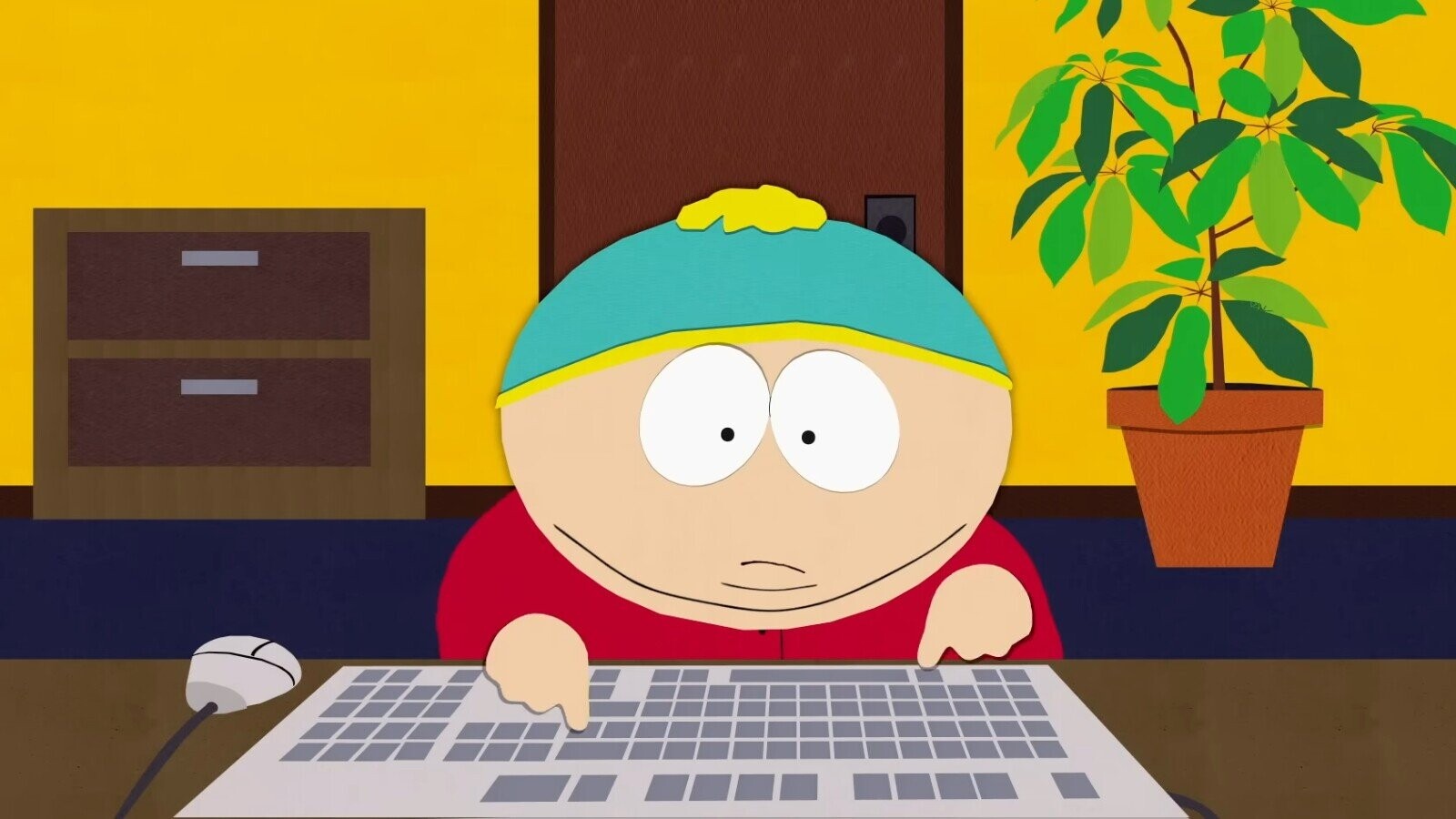
The voice behind one of South Park’s most famously tormented characters has found a new target: the politically supercharged world of online dating. Toby Morton, the writer and performer who voiced Scott Tenorman, created a fake MAGA dating website that looked just believable enough to attract real responses. The result was part digital prank, part political satire, and part accidental field study of what happens when romance, grievance, conspiracy culture, and “anti-woke” branding are placed in the same browser tab.
First, Scott Tenorman Is Not Literally Running the Website
Let us clear up the identity confusion before Cartman calls a lawyer. Scott Tenorman is a fictional ninth grader from South Park. Toby Morton is the real comedian, television writer, voice actor, and digital satirist who performed the character. Morton worked on South Park in the early 2000s and voiced Scott in “Scott Tenorman Must Die,” the season-five episode that permanently changed how audiences viewed Eric Cartman.
In 2025, Morton revealed that he had quietly launched a fake MAGA dating website, later promoted under the Find MAGA Love banner. The project was designed to resemble the growing ecosystem of ideological dating services that promise users a partner who shares not only their values, but also their preferred enemies, grievances, slogans, and cable-news vocabulary.
The headline joke practically writes itself. The man associated with Scott Tenormanthe teenager who once tricked Cartman with a bag of pubic hairhad built an online trap for people who believed they had found a safe space for anti-woke romance. It was less “boy meets girl” and more “browser meets bait.”
Why Scott Tenorman Still Matters to the Joke
A Legendary Episode Built on Escalating Deception
“Scott Tenorman Must Die” first aired in 2001 and remains one of the most notorious episodes in South Park history. Scott sells Cartman pubic hair and convinces him that the purchase will help him enter puberty. Cartman eventually discovers the scam and launches a revenge campaign so grotesque that describing it at dinner is still discouraged in several states and most functioning families.
The episode is remembered because its structure keeps escalating. A childish con becomes humiliation, humiliation becomes obsession, and obsession becomes a finale that reveals Cartman is not merely spoiled or rude. He is capable of planning something truly monstrous. Critics have repeatedly treated the episode as a turning point for the series and for Cartman’s characterization.
Morton’s dating-site prank uses a much less murderous version of the same comic engine: create a plausible premise, let the target’s expectations do most of the work, and then reveal that the situation was never what it appeared to be. No chili was involved, which is progress.
Inside the Bonkers Anti-Woke Dating Site
Morton said he released the fake dating site mostly out of curiosity. He expected a handful of obvious jokes and predictable political clichés. Instead, according to his public account, the site attracted responses from people who seemed to be searching for much more than a date. Some appeared to want a partner for a political movement, a cultural crusade, or an imagined national rescue mission.
The parody’s language was deliberately excessive but recognizable. Promotional concepts included names such as “Tiki Torch Tinder,” “Project 2025 Pair-Up,” and “OkQAnon.” The sales copy promised matches based on faith, freedom, traditional values, distrust of institutions, and resistance to anything labeled woke. It also mocked fears about Big Tech surveillance, public-health rules, diversity initiatives, women’s careers, and changing gender roles.
That is what made the site effective as satire. It did not invent an entirely alien ideology. It compressed existing slogans, anxieties, and online talking points into a dating platform where every belief sounded like a required profile field.
Satire That Looked Almost Market-Ready
The fake MAGA dating website was funny because it resembled products that already exist. Conservative-focused dating apps have been launched and financed in the United States, including The Right Stuff, an invite-oriented app created for conservative singles. Political identity has also become an increasingly visible filter on mainstream dating services.
In that environment, a platform promising anti-woke dating is not automatically absurd. It is commercially plausible. Add a clean logo, a few stock photographs of attractive people standing near flags, and a sentence about freedom, and half the internet will assume a seed-funding round is already underway.
Political Compatibility Has Become Romantic Compatibility
People have always considered religion, class, family expectations, and moral values when choosing partners. What has changed is the degree to which partisan identity now bundles those issues together. A political label can imply positions on abortion, guns, immigration, LGBTQ rights, vaccines, education, climate policy, race, gender roles, and trust in government.
Research from Pew Research Center has shown that many Americans are reluctant to date across the partisan divide. In one survey, a large majority of single Democrats who were looking for relationships said they probably or definitely would not consider a committed relationship with someone who voted for Donald Trump.
The underlying message is not simply that politics ruins first dates. Politics increasingly functions as a shortcut for judging a potential partner’s character and worldview. Someone’s vote may be interpreted as evidence of how that person would raise children, handle money, respond to social change, or treat people from different backgrounds.
That makes ideological dating platforms understandable, even when their marketing becomes ridiculous. Users may believe that filtering by politics saves time and prevents future arguments. The problem is that a narrow political filter can turn a dating pool into an echo chamber with profile pictures.
Why the Parody Worked So Well
It Offered Identity Before Intimacy
Most dating sites promise connection. Morton’s parody promised validation. It presented romance as membership in a tribe: the right partner would not merely love you, but would confirm that your fears were reasonable, your enemies were dangerous, and your preferred version of America was the only authentic one.
That is a powerful offer. Online dating already encourages users to package themselves as brands. Political dating takes the process one step further by making ideology the brand identity.
Instead of “I enjoy hiking and Italian food,” the profile becomes “I oppose the Deep State and require someone who understands why the cashier’s pronoun badge is the beginning of civilization’s collapse.” Cupid has left the building. He has been replaced by a podcast host with a merchandise store.
It Copied the Emotional Rhythm of Partisan Media
Successful political content often creates urgency: the country is being stolen, traditional life is under attack, hidden elites are watching, and only members of the in-group can be trusted. The parody dating site translated that rhythm into romance. Finding a partner became another defensive act in a permanent culture war.
The names were outrageous, but the emotional pitch was familiar. That familiarity may explain why some visitors apparently engaged seriously. A parody becomes most revealing when its target cannot immediately distinguish it from sincere messaging.
Toby Morton’s Larger Career as a Political Web Troll
The dating project was not Morton’s first online ambush. After working in television, including South Park and Mad TV, he developed a second career purchasing political domain names and turning them into parody websites. His targets have included prominent Republican politicians and conservative organizations.
The method is simple and effective. Morton finds a domain that sounds official, builds a polished-looking site, and fills it with exaggerated biographies, animations, fake campaign language, or pointed summaries of the target’s public record. The pages are designed to attract attention through confusion and then convert that attention into criticism.
Morton has described the work as humor with an activist purpose. He has also said that real political events sometimes become so dark that parody feels less like writing jokes and more like highlighting material that already exists.
His websites live in the uncomfortable zone where the punch line is funny until the reader remembers that the underlying dispute involves actual policy, rights, violence, or democratic institutions. It is comedy wearing steel-toed boots.
Is a Fake Dating Site Ethical?
This is where the story becomes more complicated than a perfect social-media dunk. Dating platforms involve vulnerability, private information, identity, and expectations of trust. A joke website that invites real people to provide personal details could become exploitative very quickly.
Morton publicly stated that he did not charge participants, misuse their personal information, or plan to expose individuals for public humiliation. That distinction matters. The prank was presented as an observation of ideological behavior, not a romance scam built to steal money or identities.
Still, the project raises useful questions about informed consent. How clearly was the experience labeled as parody? What information was collected? How long was it retained? Could a participant reasonably believe that private messages would remain private?
Those questions matter because dating services are already common environments for fake profiles, impersonation, emotional manipulation, and financial fraud. The Federal Trade Commission routinely warns consumers that scammers create believable identities on dating platforms and then exploit emotional trust.
The strongest version of political satire punches at systems, public figures, and public claims. The weakest version simply embarrasses ordinary people who did not understand the joke. Morton’s stated privacy limits move the project toward the first category, but any digital prank involving user data should be judged by what it protects, not merely by how funny its creator finds the screenshots.
What the Site Reveals About Modern Internet Culture
The anti-woke dating-site stunt demonstrates how difficult it has become to separate parody from sincere political communication. Real campaigns use memes. Influencers speak in exaggerated slogans. Conspiracy theories borrow the visual language of investigative journalism. Brands imitate activists, activists imitate brands, and everyone has a discount code.
In that atmosphere, satire no longer needs to exaggerate very far. A fake product can sound reasonable because real products have already adopted the language of ideological purity. A fake profile can seem authentic because authentic profiles increasingly read like miniature manifestos.
The project also shows how online communities can intensify behavior. Research on internet trolling suggests that context matters: people are more likely to engage in hostile behavior when they encounter antagonistic discussion environments or see others behaving the same way.
A site designed around grievance can therefore become more than a collection of individual opinions. It can create a stage on which visitors compete to prove who is the most committed, suspicious, traditional, or angry.
That is the deeper joke behind Morton’s project. The platform appears to match people with partners, but its real matching algorithm is between users and their own political performance.
Experiences Related to Scott Tenorman’s Anti-Woke Dating-Site Saga
The First Experience Is Uncertainty
Encountering a convincing parody site produces a strange few seconds. The design looks professional. The slogans are only slightly more dramatic than language seen in real advertisements. The testimonials sound ridiculous, but plenty of genuine testimonials sound ridiculous too. A visitor pauses and wonders, “Is this real?” That pause is the entire mechanism of the joke.
For regular dating-app users, the experience can feel especially familiar. Modern profiles already contain political disclaimers: no voters from the other party, no conspiracy theorists, no activists, no people who refuse vaccines, no people who support vaccines, no one who says “both sides,” and definitely no one holding a fish unless the fish has released a policy platform.
The fake site simply turns those scattered preferences into a total operating system.
The Second Experience Is Recognition
People laugh at “Tiki Torch Tinder” because they recognize the social ingredients. They have seen dating bios built around resentment. They have watched arguments begin before two people have exchanged names. They have seen users treat a romantic match as proof that their entire worldview is correct.
That recognition is uncomfortable because ideological dating is not limited to conservatives. Progressive platforms, religious matchmaking services, lifestyle communities, and identity-based apps all promise some degree of pre-screened compatibility.
The difference is often tone, scale, and which values are treated as nonnegotiable. Morton’s site targets a particular right-wing subculture, but the broader temptation is universal: people want love without the inconvenience of encountering anyone who might challenge them.
The Third Experience Is Realizing That Compatibility Is Not Chemistry
A shared ballot choice can prevent certain arguments, but it cannot guarantee kindness, humor, patience, attraction, emotional maturity, or the ability to load a dishwasher without launching a constitutional crisis.
Political agreement may be meaningful, especially when values affect safety, civil rights, marriage, or family plans, but it remains only one part of compatibility. Highly ideological dating services risk confusing loyalty tests with relationship skills.
Two people can agree about every headline and still be terrible together. They can disagree on tax policy and build a loving home. They can also discover that the person who wrote “traditional values” in a profile has a very modern relationship with commitment.
The Fourth Experience Is a Privacy Check
The story should remind every online dater to slow down before submitting personal information. A polished interface does not prove that a service is legitimate. Users should examine privacy policies, domain history, verification practices, payment requests, and whether the company has an identifiable team.
They should avoid sharing sensitive details too early and remain suspicious when a match quickly asks to move conversations elsewhere, requests money, promotes an investment, or claims to be temporarily trapped on an offshore oil platform with no access to personal banking.
Morton said his project was not designed to steal funds or publicly shame participants, but the internet contains many operators with less comic and more criminal ambitions. The safest lesson is not “never trust a weird dating site.” It is “do not let loneliness disable the same skepticism you would use when buying a suspiciously cheap laptop from a man named PatriotDragon1776.”
The Final Experience Is Understanding the Purpose of Satire
Good satire creates laughter, then leaves a splinter. The immediate joke is that people apparently took an absurd anti-woke dating platform seriously. The lingering question is why the platform seemed plausible in the first place.
Morton’s prank works because American politics has moved beyond elections and into consumer identity. People choose news, neighborhoods, churches, products, social networks, and partners partly through partisan filters.
The dating site did not create that reality. It dressed the reality in a cheap tuxedo, handed it a rose, and asked whether it was ready to meet someone special.
Conclusion: The Perfectly Uncomfortable Match
Toby Morton’s fake MAGA dating website connects two eras of internet comedy. His performance as Scott Tenorman belongs to a classic South Park story about deception, humiliation, and revenge. His later work as a political webmaster applies a related instinct to an online world where parody and reality frequently share the same fonts.
The anti-woke dating site was not funny merely because its slogans were extreme. It was funny because the concept was believable. Political identity has become a romantic filter, a consumer category, and a source of community. Morton pushed that trend until it exposed its own absurdity.
Scott Tenorman may never recover from Cartman’s chili. Toby Morton, however, appears to have recovered nicely. He has a browser, a collection of domains, and a talent for letting the internet walk directly into the punch line.