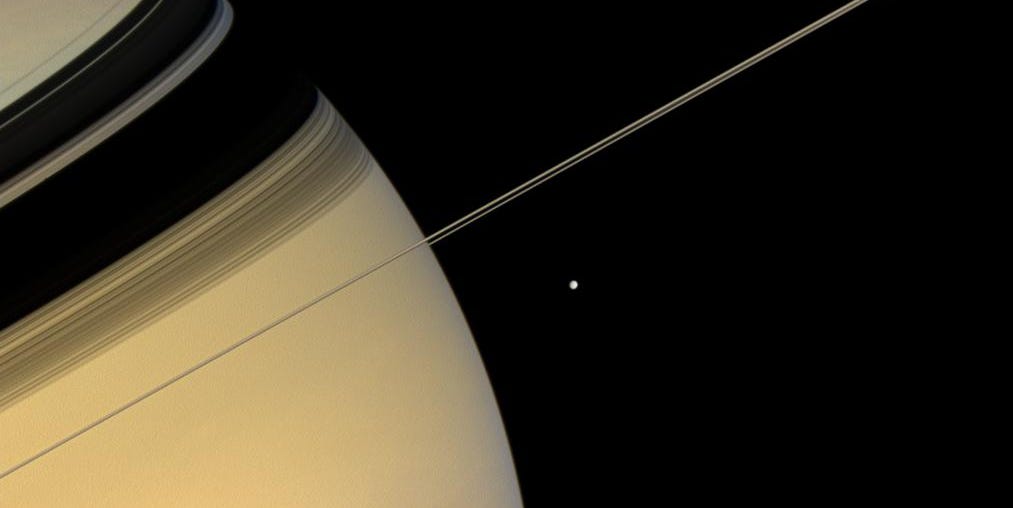
Saturn has always been a show-off. First it arrived with those iconic rings, looking like the Solar System’s fanciest dinner plate. Then it rolled out a moon collection so large that the other planets started looking a little underdressed. The big headline that grabbed attention around the world was simple: Saturn is now the planet with the most moons in the Solar System. And yes, that is true.
But this is not just a numbers game for astronomy trivia nights. Saturn’s exploding moon count says something much bigger about how planets evolve, how collisions reshape planetary systems, and how improved telescopes keep rewriting what we thought we knew about our cosmic neighborhood. In other words, Saturn didn’t just win a celestial popularity contest. It gave scientists a fresh set of clues about the messy, dramatic history of the outer Solar System.
If you have ever wondered why Saturn suddenly seems to be collecting moons like limited-edition baseball cards, pull up a telescope, a snack, and maybe a little humility. The ringed giant is having a moment.
How Saturn Took the Moon Crown
The phrase planet with the most moons sounds like something that should be carved into stone and left alone forever. In reality, the title changes whenever astronomers confirm new discoveries. For years, Jupiter and Saturn kept leapfrogging each other in the great moon race. One year Jupiter was ahead. Then Saturn surged forward. Then Jupiter flexed again. It was basically the Solar System’s nerdiest rivalry.
The turning point came when astronomers confirmed a huge batch of tiny Saturnian moons that had been hiding in plain darkness. These objects were not giant, round, photogenic moons like Titan. Most were extremely small, faint, and far away from Saturn. They only became visible after repeated observations and image-processing techniques allowed researchers to tease them out from the starry background.
That changed the scoreboard in a big way. Instead of a close race, Saturn opened up a serious lead. And the wildest part is that the headline is not just about a one-time bump. Saturn’s moon count kept growing as more objects were confirmed. So the famous “Saturn now has the most moons” story was not a fluke. It was the start of a bigger rewrite.
The discovery behind the buzz
The most talked-about breakthrough came from a campaign that used repeated observations of the sky around Saturn and a technique often described as “shift and stack.” The name sounds like a dance move invented by graduate students, but it is a smart way to find very faint objects. Astronomers align multiple images based on a moving object’s predicted path, then combine them so the moon brightens while background noise fades. That is how a lot of Saturn’s previously invisible little companions finally stepped into the spotlight.
These discoveries mattered because they were officially recognized. In astronomy, spotting a possible moon is exciting, but confirmation is what really counts. Once its orbit is secure and the object is shown to be truly circling the planet, the moon can join the official family photo.
Why So Many of Saturn’s New Moons Are Tiny Oddballs
When most people hear the word moon, they picture something large, round, and majestic. Maybe Earth’s moon. Maybe Saturn’s giant moon Titan glowing under a haze. But a moon does not have to be huge or perfectly spherical to make the cut. Many of Saturn’s newest additions are tiny, irregular, and frankly shaped like cosmic leftovers.
That is not an insult. In planetary science, those odd shapes are part of the story.
Regular moons vs. irregular moons
Saturn’s moon system includes both regular moons and irregular moons. Regular moons tend to orbit closer to the planet, move in more orderly paths, and likely formed from the same disk of material that surrounded Saturn long ago. These are the moons that feel like long-term residents.
Irregular moons are the weird cousins who show up from far away, park at strange angles, and move backward compared with the planet’s rotation. Many orbit at great distances and on tilted or retrograde paths. Scientists think a lot of them were not born around Saturn at all. Instead, they were probably captured by Saturn’s gravity early in Solar System history.
And then things got violent. Some of those captured bodies likely smashed into one another, or collided with comets, or broke apart in a chain of secondary impacts. The result? Swarms of small fragments that now count as separate moons. So when Saturn’s moon tally skyrockets, it is not necessarily because Saturn became more productive. It is because astronomers are getting better at seeing the debris from ancient cosmic chaos.
A crime scene in orbit
One reason scientists are so interested in these tiny moons is that they may preserve evidence of major collisions in the Saturn system. Their sizes, distances, and clustering patterns suggest that at least some are fragments from relatively recent breakups in astronomical terms. “Recent,” in this case, can still mean tens of millions of years ago, because space likes to laugh at our calendars.
Researchers have pointed to certain groupings of Saturn’s irregular moons as possible collision zones. In other words, today’s moon count may be the shattered remains of a much smaller number of older objects. Saturn’s moon record is not just a bragging point. It may be a fossil archive.
Saturn’s Moon System Is Not Just Big. It Is Spectacular
Here is the part that makes Saturn more than a statistical champion: its moon system is outrageously interesting. Some of the new moons may be tiny rocks on strange orbits, but Saturn also hosts some of the most compelling worlds in the Solar System.
Titan: the superstar with weather
If Saturn’s moons were a band, Titan would definitely be the lead singer. It is Saturn’s largest moon and one of the most fascinating places scientists have ever studied. Titan has a thick atmosphere, which is rare for a moon, and it is the only moon known to have stable liquid on its surface. Not water, unfortunately. Titan prefers methane and ethane, because apparently normal was never the goal.
Titan has clouds, rain, rivers, lakes, and seas. It even has an Earth-like cycle of liquids moving between sky and surface. That does not make Titan comfortable, but it does make it scientifically irresistible. For researchers interested in chemistry, climate, and the ingredients of habitability, Titan is basically a full-semester course hiding inside one moon.
Enceladus: the icy overachiever
Then there is Enceladus, a small icy moon that somehow stole a huge share of the scientific spotlight. Cassini observations showed that Enceladus sprays plumes of water vapor and icy particles into space from cracks near its south pole. Beneath its frozen crust lies a salty ocean, and evidence suggests that hydrothermal activity may be happening on the seafloor.
That is a big deal. Scientists care about liquid water, chemistry, and energy sources because those ingredients matter in the search for life. Enceladus checks an eyebrow-raising number of boxes. It also helps feed Saturn’s E ring, proving that even one small moon can influence an entire planetary system.
So yes, Saturn has the most moons. But more importantly, Saturn has a moon roster with real star power. It is not just quantity. It is quality, weirdness, and scientific drama.
The supporting cast is gloriously strange
Saturn’s other moons are no less quirky. Mimas is famous for looking suspiciously like the Death Star. Iapetus has a dramatic two-tone appearance, as if someone forgot to finish painting it. Hyperion resembles a cosmic sponge. Phoebe looks like it wandered in from another part of the Solar System and never left. Even Saturn’s shepherd moons help shape the rings, proving that small objects can still have big jobs.
Together, these worlds turn Saturn into more than a planet. It becomes a miniature system of interacting objects, each offering a different chapter in the story of planetary formation and evolution.
Why the Moon Count Actually Matters
It is fair to ask whether counting moons is mostly an exercise in astronomical bookkeeping. After all, if some of these objects are only a few miles across, why should anyone outside a conference room care?
The answer is that moon counts reveal system history. Every newly confirmed moon helps scientists map how material moves, breaks apart, and survives around giant planets. Tiny moons are not just clutter. They are evidence. Their orbital patterns can reveal ancient captures, collisions, and gravitational reshuffling. They also help astronomers compare Saturn with Jupiter, Uranus, and Neptune to understand why each giant planet ended up with a different kind of satellite family.
There is also a deeper question hiding underneath all this: what exactly should count as a moon? As telescopes get better, astronomers find smaller and smaller objects. At some point, the border between “moon,” “moonlet,” and “large chunk of rock with a good publicist” starts to blur. Saturn’s ballooning moon count is forcing scientists to think more carefully about classification itself.
That means Saturn is not just winning a record. It is helping reshape the conversation.
Can Jupiter Take the Title Back?
Never say never in astronomy. Jupiter is still massive, still complicated, and still surrounded by many small, faint objects that may yet be confirmed. New telescopes, better software, and more observing time could absolutely add to Jupiter’s total.
But Saturn has a few things going for it. One is its large gravitational sphere of influence, which makes it good at holding onto distant companions. Another is that researchers now know where and how to look for more faint Saturnian satellites. In plain English: once astronomers find a promising fishing hole, they tend to keep casting.
So could Jupiter catch up? Maybe. Will it be easy? Not at all. Right now, Saturn is not just ahead. It is lounging on the throne, adjusting its rings, and pretending not to hear the competition.
What Saturn’s Moon Boom Tells Us About the Solar System
The bigger lesson is that the Solar System is still full of surprises. We sometimes talk about the planets as if they were fully cataloged museum pieces, neatly labeled and permanently understood. But Saturn’s moon count proves that even in our own cosmic backyard, there are still discoveries waiting in the dark.
That should be both exciting and humbling. Exciting because every new moon adds another data point to our understanding of how planetary systems form. Humbling because it reminds us that “known” does not mean “complete.” The Solar System is not finished revealing itself just because we made posters of it in middle school.
Saturn’s rise to the top also highlights something beautiful about science: progress often comes from better tools, patient observation, and the willingness to revisit old assumptions. No single moon changed the story on its own. The story changed because astronomers kept looking.
Experience: What This Discovery Feels Like From Earth
There is also a very human side to the headline Saturn is now the planet with the most moons in the Solar System, and that side is easy to miss when the conversation gets buried under numbers. If you have ever looked at Saturn through even a modest backyard telescope, you know the strange thrill it creates. It does not look real at first. It looks staged, like someone hung a tiny ornament in the sky and forgot to remove the support wires. The rings are so elegant that your brain briefly refuses to believe the view belongs to the same universe as traffic lights, laundry, and grocery receipts.
That is why Saturn’s moon story hits differently. It takes an object that already feels mythical and makes it even richer. You look at that pale golden planet and realize that beyond the obvious beauty of the rings is an entire crowded realm of worlds, fragments, ice, rock, chemistry, weather, and deep-time wreckage. Suddenly Saturn is not a pretty dot with accessories. It is a bustling system with a backstory.
For casual skywatchers, the experience is part wonder and part scale shock. You may never directly see all of Saturn’s moons from your backyard, and certainly not the newly recognized tiny ones. But knowing they are there changes the experience of looking. It adds invisible complexity. The same way a city skyline feels different when you know the lives, histories, and dramas tucked behind the windows, Saturn feels fuller when you know it is surrounded by hundreds of companions.
For students and science lovers, discoveries like this are energizing because they make astronomy feel alive instead of finished. Saturn is not just something Galileo looked at, Cassini visited, and textbooks summarized. It is still generating fresh headlines. It is still surprising experts. It is still the kind of place where new objects can go from faint pixels to official members of the Solar System family. That makes the universe feel less like a static diagram and more like an active investigation.
There is also a poetic experience tied to the sheer weirdness of it. Some of Saturn’s newest moons are probably fragments of older worlds that broke apart long ago. Their existence hints at collisions, capture events, and gravitational drama playing out over millions of years. So when we say Saturn has the most moons, we are not just describing abundance. We are describing survival, wreckage, and history written in orbit.
And honestly, there is joy in that. Not the tidy joy of having all the answers, but the better kind: the joy of finding out the universe is still stranger and more crowded than expected. Saturn reminds us that space is not empty wallpaper. It is active, layered, and full of stories. Even from Earth, with both feet on the ground, that is a wonderful thing to feel.
Conclusion
So yes, Saturn is now the planet with the most moons in the Solar System, and it earned that title through a combination of better observations, official confirmations, and a genuinely astonishing population of natural satellites. But the real story is bigger than the record. Saturn’s rising moon count points to ancient collisions, captured objects, active scientific debate, and a planetary system that is far more dynamic than a simple number can capture.
The next time you hear that Saturn has more moons than anyone else, do not treat it like a trivia nugget and move on. Treat it like an invitation. Behind that headline are tiny irregular rocks, giant worlds with atmospheres and oceans, and a reminder that the Solar System still has secrets left to spill. Saturn may be the moon king for now, but the bigger winner is our understanding of how strange and marvelous planetary systems can be.