Every few years, the old Soviet dream returns from the mist like a mechanical sea ghost: a giant craft that is not quite a plane, not quite a ship, and somehow manages to look like both after a long night at the design bureau. That dream is the ekranoplan, sometimes called a wing-in-ground-effect vehicle, and Russia has repeatedly signaled that it wants a modern version back in action.
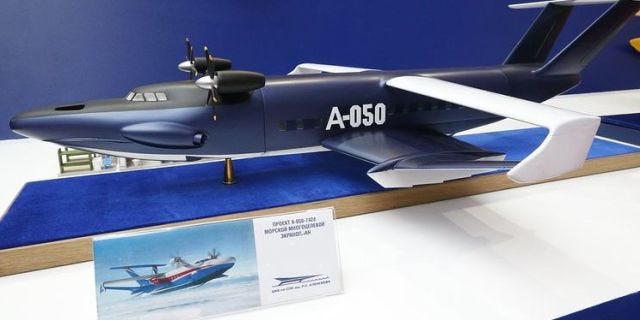
The headline-grabbing idea centers on the Chaika A-050, also referred to in some reporting as the Chaika-2, a new-generation ekranoplan meant to skim just above water, ice, or other flat surfaces. In theory, it would combine aircraft speed with ship-like payload capacity, all while staying low enough to exploit aerodynamic ground effect. In plainer English, it is a flying sea monster built to ride on a cushion of air.
That sounds delightfully bonkers, and it is. But it is also rooted in real military logic. Soviet engineers once pushed the concept hard, and modern Russia still sees possible uses in Arctic logistics, coastal patrol, passenger transport, search and rescue, and maybe even military lift. The catch is that ekranoplans have always been brilliant on paper, intimidating in photos, and maddeningly difficult in the real world.
So what exactly is Russia trying to revive here? Why do these sea-skimming machines look like science fiction props from a Cold War fever dream? And does this latest effort have a serious future, or is it another case of old engineering nostalgia putting on a new coat of paint? Let’s get into it.
What Is a Flying “Sea Monster,” Exactly?
An ekranoplan is a vehicle designed to fly extremely close to a flat surface, usually water, while using ground effect to reduce drag and increase lift. When a wing flies very near the surface, air gets compressed underneath it, creating a supportive cushion. That makes low-altitude flight more efficient than it would be higher up.
If that sounds abstract, picture a seabird gliding inches above the ocean without flapping much. Engineers saw the same principle and thought: what if we made it enormous, gave it a hull, bolted on a pile of engines, and scared intelligence analysts half to death?
That is basically how the Soviet Union ended up building the legendary Caspian Sea Monster, followed later by operational designs like the Lun-class ekranoplan. These machines were intended to race over the water at aircraft-like speeds while carrying much heavier loads than many conventional planes could manage at similar altitude. They could also stay below much of the radar horizon, which made them especially interesting in military planning.
The result is a category of vehicle that sits in an odd middle lane. It is faster than a ship, lower than an airplane, and more dramatic than almost anything parked at a marina. Unfortunately, it is also more finicky than a cat in a rainstorm.
Russia’s New Ekranoplan: The Chaika A-050 and the Return of the Idea
The modern reboot most often discussed in U.S. reporting is the Chaika A-050, a smaller and more practical follow-up to the Soviet-era giants. Reports have described it as a multi-role craft that could carry roughly 100 passengers or a modest cargo load, while cruising at high speed just above the surface. Proposed roles have included littoral transport, Arctic operations, coastal patrol, and emergency response.
That mission set matters. Russia is not reviving the ekranoplan simply because it enjoys building hardware that looks like a boss battle. The more practical argument is that an ekranoplan could move people, equipment, and supplies quickly across water or frozen terrain without relying on conventional runways. In places where roads are poor, distances are huge, and the weather is rude, that sounds useful.
The Arctic is especially important here. Russian planners have repeatedly shown interest in fast resupply and search-and-rescue platforms for the far north. A sea-skimming craft that can work over water, ice, and coastal approaches has obvious appeal in that environment. It would not replace cargo aircraft, icebreakers, or ships, but it could serve as a niche transport tool in hard-to-reach areas.
Why the Name “Sea Monster” Keeps Coming Back
The nickname comes from history. During the Cold War, U.S. analysts spotted a bizarre giant vehicle in Soviet testing areas and gave it the unforgettable label “Caspian Sea Monster.” The name stuck because, frankly, subtlety was never this machine’s strong suit. A giant sea-skimming hybrid with wings, jet engines, and a boat hull does not inspire names like “Mild Aquatic Commuter.”
Modern articles use the phrase because Russia’s new ekranoplan projects are clearly drawing on that legacy. The Chaika is not as gigantic as the original monster, but it belongs to the same engineering family: fast, low, unconventional, and intended to exploit the strange advantages of ground effect.
The Soviet Originals: Why These Machines Became Legends
You cannot understand the new Russian flying sea monster without understanding the old ones. The Soviet Union was the world’s most ambitious builder of wing-in-ground-effect craft, and for a while, it looked as if the technology might become a major part of maritime warfare.
The earliest giant prototype, commonly known as the KM or Caspian Sea Monster, was enormous even by modern standards. Later came the Lun-class ekranoplan, a missile-armed beast that looked like someone fused a warship, a jet, and a dare. The Lun could haul serious weight, move at roughly 300-plus miles per hour, and carry anti-ship missiles. There was also the Orlyonok, which leaned more toward troop and cargo transport.
These designs were not just weird for weirdness’ sake. Soviet planners liked the idea of a platform that could move fast over water, carry hefty payloads, and potentially approach targets while staying difficult to detect from afar. That combination made ekranoplans attractive for amphibious assault, missile delivery, and rapid coastal transport.
But there was a problem: being dramatic is not the same thing as being dependable.
Why Ekranoplans Look Great on a Poster but Struggle in Real Life
This is where the story gets interesting. Ekranoplans offer some real aerodynamic advantages, but they also live in a brutally narrow operating envelope. They need to stay very close to the surface, where waves, obstacles, weather, and pilot workload all become serious issues. In calm conditions, the concept can be elegant. In rough conditions, it starts looking like a physics exam with consequences.
One long-running limitation is sea state. Water is flat only in the poetic sense. In reality, waves are constantly trying to ruin everyone’s plans. A vehicle designed to skim low over the surface has to manage not only lift and speed, but also constantly changing water conditions. That is one reason modern U.S. defense efforts exploring similar ideas have focused so heavily on better control systems and the ability to operate in rougher water.
Another challenge is maneuverability. Traditional aircraft can climb away from trouble. Ships can ride out rougher water, within reason. Classic ekranoplans sit in an awkward middle ground. They gain efficiency by staying low, but that same low-altitude environment reduces their margin for error. If the craft rises too high, it loses some of the aerodynamic benefit. If it stays too low in bad conditions, things can get sporty in exactly the wrong way.
Then there is the question of infrastructure and mission fit. A conventional airplane has airports. A ship has ports. An ekranoplan wants access to coastlines, calm water, maintenance facilities, specialized crew training, and mission profiles that truly justify its weirdness. That is a narrower lane than fans of giant monster machines usually care to admit.
Why Russia Still Thinks the Concept Is Worth Another Shot
Because even flawed ideas can be useful in the right niche.
A modern Russian ekranoplan could make sense in a few specific roles. The first is Arctic and littoral logistics, where runway independence and fast over-water movement could be valuable. The second is search and rescue, where a craft able to move quickly to remote coastlines might offer advantages over slower marine vessels. The third is coastal military transport, especially if the vehicle can shuttle personnel or equipment between dispersed points faster than traditional ships.
There is also a prestige factor. Russia has a long habit of revisiting Cold War engineering icons, especially those that combine symbolism with plausible military utility. The ekranoplan fits that pattern almost too perfectly. It evokes Soviet technological swagger, looks fantastic in concept art, and still solves a real problem on paper: moving useful payloads quickly without depending entirely on airfields.
That said, recent U.S. reporting has noted that Russia’s attempts to revive military ekranoplans have not yet produced operational types. That is an important reality check. The concept is alive. The headlines are real. The engineering ambition is real. But a widely fielded, proven modern Russian “Sea Monster” is still more promise than routine presence.
Will the New Flying Sea Monster Actually Change Warfare?
Probably not in the way the nickname suggests.
The most realistic view is that a new Russian ekranoplan would be a specialized platform, not a revolutionary replacement for cargo aircraft, warships, or amphibious vessels. If it enters meaningful service, it will likely matter most in edge cases: coastal transport, Arctic support, rapid movement in remote maritime zones, or limited tactical logistics.
That may sound underwhelming, but it is actually a mature way to judge the concept. Military history is full of systems that were overhyped as game changers and underappreciated as niche tools. An ekranoplan does not need to dominate the seas or the skies to justify itself. It just needs to perform one or two missions better than the alternatives.
And that is the core question hanging over the Chaika A-050 and similar designs: can modern materials, avionics, control software, and mission planning finally make the old Soviet dream practical enough to survive contact with real weather, real maintenance, and real budgets?
Maybe. But maybe is doing a lot of heavy lifting there.
What the “Sea Monster” Really Tells Us About Russia
In one sense, the new Russian flying sea monster is about engineering. In another, it is about strategic culture. Russia still values systems that can operate in harsh environments, support distant frontiers, and signal technological boldness. The ekranoplan checks all those boxes. It is fast, unconventional, and visually unforgettable. It also connects modern Russian planning to a very Soviet tradition: if a vehicle looks like it belongs in a spy thriller, somebody in Moscow has probably tried to build it.
That legacy is why the ekranoplan story refuses to die. Even when the original vehicles were retired, sidelined, or turned into museum pieces, the idea itself kept hovering just above the surface. Not gone. Not quite flying high. Just waiting for another redesign, another funding pitch, another strategic use case, and another headline announcing that the monster is back.
And that is why this story remains fascinating. The new Russian sea monster is not just about one machine. It is about the enduring appeal of technologies that promise to cheat the usual rules of geography. Fly lower, move faster, carry more, need less runway, scare more people. It is a seductive formula. Whether it becomes a practical one is the part history keeps arguing with.
The Experience of a Modern Sea Monster: Why This Idea Still Captivates People
Part of the reason the ekranoplan story refuses to sink is that it taps into a very specific kind of human fascination: the thrill of seeing a machine behave in a way your brain insists should not be possible. A normal airplane flies high. A normal ship stays in the water. A modern sea monster does neither in the expected way. It charges across the surface looking as if it is about to crash, only to keep gliding forward on a hidden cushion of air. That visual alone is enough to turn casual readers into instant aviation nerds.
Imagine standing on a cold shoreline as one of these machines approaches. You would not get the neat, elegant silhouette of a conventional airliner. You would see a blunt, muscular hull, short broad wings, a tall tail, and engines that seem far too large and far too numerous for polite society. It would feel less like watching a plane arrive and more like witnessing a giant industrial animal sprint over the water. That sense of spectacle is a huge part of the ekranoplan legend.
There is also the imagined onboard experience. A passenger or crew member would be traveling fast, but not in the usual detached airline way. Instead of cruising at high altitude above clouds, you are close to the surface, with water and spray and horizon always nearby. The psychological effect would be very different. It would feel more physical, more immediate, and probably more intense. Some people would call that exhilarating. Others would call it an excellent reason to remain on land.
For military planners, the “experience” is less romantic and more practical. What excites them is the possibility of moving cargo or people quickly without relying on long runways or slow ships. In remote areas, especially icy or coastal regions, that can sound like a logistical miracle. The dream is not just speed. It is flexibility. You can imagine the attraction: fewer infrastructure demands than a large transport aircraft, more velocity than a ship, and a platform dramatic enough to make every briefing slide look twice as serious.
Then there is the museum effect. Even the old Soviet ekranoplans that no longer fly still pull people in because they look like relics from an alternate future. They represent a branch of aerospace history that almost became mainstream, then didn’t. Standing next to one is not just seeing an old vehicle. It is seeing a giant “what if?” made of metal, engines, and ambition.
That emotional pull matters. Technology stories endure not only because of utility, but because of imagination. The Russian sea monster keeps resurfacing because it occupies that rare zone where engineering, military strategy, design weirdness, and pop-culture energy all overlap. It is practical enough to be real, strange enough to be memorable, and unfinished enough to keep inviting the same question: what if this time it actually works?
Conclusion
Russia’s new flying “Sea Monster” is best understood as a modern attempt to revive one of the Soviet Union’s most unusual ideas: the ekranoplan, a fast, low-flying machine that skims the surface using ground effect. The Chaika A-050 and related revival efforts show that the concept still has strategic appeal, especially for Arctic transport, coastal logistics, and specialized missions.
But history is not exactly giving this dream a standing ovation. Soviet ekranoplans were iconic, intimidating, and technically impressive, yet they never became mainstream operational workhorses. Modern Russia may have better materials and better electronics, but the old problems have not magically evaporated with the spray. Rough seas, tight operating envelopes, cost, control complexity, and mission overlap remain stubborn obstacles.
So yes, Russia is making a new flying sea monster, at least in concept and development terms. Whether that monster becomes a regular sight over the water or remains another glorious example of “cool, but complicated” is the real story to watch.