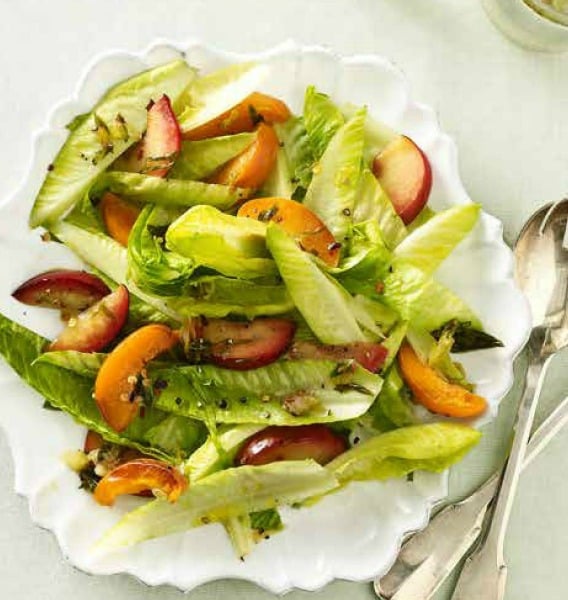
Some salads politely sit beside the main course and try not to attract attention. Resurrection Salad does the opposite. It arrives with crisp romaine, juicy stone fruit, peppery green onions, and a warm vinaigrette that makes the lettuce sigh dramatically without turning it into green wallpaper.
This Southern-inspired salad is a lighter reinterpretation of “killed lettuce,” an old-fashioned dish in which fresh greens are wilted with a hot dressing traditionally made from bacon drippings and vinegar. Resurrection Salad replaces the bacon fat with olive oil and turns plums and apricots into a sweet, tart, and gently spicy dressing. The result respects the original cooking technique while giving it a brighter, fruit-forward personality.
It is easy enough for a weeknight dinner, colorful enough for a spring celebration, and unusual enough to make guests ask for the recipe before they have finished chewing.
What Is Resurrection Salad?
Resurrection Salad is a warm wilted lettuce salad made with romaine and a cooked vinaigrette containing plums, apricots, green onions, olive oil, red wine vinegar, black pepper, and crushed red pepper flakes.
The dressing is heated until the fruit softens and releases its juices. It is then spooned over fresh romaine while still warm. The heat relaxes the leaves just enough to help them absorb the dressing, but a properly prepared bowl still retains plenty of crunch.
The recipe is connected to author and food activist Alice Randall, whose work with Caroline Randall Williams explores ways to preserve the character and history of soul food while using more fruits, vegetables, whole grains, and lighter cooking methods. Randall listed “Resurrection Salad” among her published works in 2015, the same year the mother-and-daughter team published Soul Food Love.
Why Is It Called Resurrection Salad?
The name works on several levels. The salad revives an older Southern dish, refreshes it with fruit and olive oil, and brings seemingly tired lettuce to life with a hot, flavorful dressing. It also looks like spring in a bowl, which makes the name especially suitable for Easter meals and seasonal gatherings.
There is no need to turn dinner into a theology seminar, however. At the table, the most important miracle is that people may voluntarily request a second helping of lettuce.
How Resurrection Salad Reinvents Killed Lettuce
Killed lettuce, also called wilted lettuce or kilt lettuce in some communities, is associated with Southern and Appalachian home cooking. Traditional versions commonly combine tender garden lettuce with a hot dressing made from bacon drippings, vinegar, onions, sugar, salt, and black pepper.
Pouring the hot mixture over the greens softens them immediately. The lettuce is “killed” in the colorful language of the kitchen, but it is not fully cooked like collard greens or spinach. The goal is a texture between raw and cooked: tender around the edges, crisp near the ribs, and thoroughly coated with dressing. Warm vinaigrettes remain a useful modern technique because they can soften greens and distribute flavor without requiring a long cooking process.
Resurrection Salad keeps that hot-dressing method but changes the flavor structure. Olive oil supplies richness, while cooked plums and apricots provide body and natural sweetness. Red wine vinegar cuts through the fruit, green onions supply savory depth, and red pepper flakes prevent the salad from drifting into dessert territory.
Think of it as killed lettuce returning from vacation with a brighter wardrobe and several entertaining stories.
Resurrection Salad Recipe
Yield: 8 side-dish servings
Preparation time: 15 minutes
Cooking time: 12 minutes
Total time: Approximately 27 minutes
Ingredients
- 2 large heads romaine lettuce
- 4 ripe but firm plums, pitted and chopped
- 4 ripe but firm apricots, pitted and chopped
- 1/2 cup thinly sliced green onions
- 1/2 cup extra-virgin olive oil
- 1/4 cup red wine vinegar
- 1/4 teaspoon kosher salt, plus more to taste
- 1/2 teaspoon freshly ground black pepper
- 1/2 teaspoon crushed red pepper flakes
Optional Finishing Ingredients
- 1/3 cup toasted pecans or walnuts
- 1/3 cup crumbled goat cheese or feta
- Fresh basil, mint, or parsley
- A small drizzle of honey for very tart fruit
Instructions
- Wash the produce. Rinse the romaine, plums, apricots, and green onions under cool running water. Do not use dish soap, bleach, or household cleaners. Dry everything thoroughly, particularly the lettuce.
- Prepare the romaine. Remove any damaged outer leaves. Chop or tear the lettuce into large bite-size pieces, keeping some of the crisp inner ribs for texture.
- Dry the greens well. Use a salad spinner or clean kitchen towels. Water left on the leaves dilutes the vinaigrette and encourages it to slide into the bottom of the bowl, where it contributes absolutely nothing except disappointment.
- Begin the dressing. Place the olive oil, red wine vinegar, green onions, salt, and black pepper in a small saucepan. Heat over medium heat until the mixture reaches a gentle simmer.
- Add the fruit. Stir in the chopped plums, apricots, and red pepper flakes. Bring the mixture briefly to a low boil.
- Cook until softened. Reduce the heat, cover the pan, and simmer for approximately 8 to 10 minutes. Stir once or twice. The fruit should become tender and saucy while retaining a few recognizable pieces.
- Taste and adjust. Add a pinch of salt if the dressing tastes flat. When the fruit is extremely tart, stir in a teaspoon of honey. If it is very sweet, add another splash of vinegar.
- Dress the salad. Divide the romaine among individual plates and spoon the hot fruit vinaigrette over each serving. Alternatively, place the lettuce in a large heat-safe bowl, add part of the dressing, and toss briefly.
- Serve immediately. Add nuts, cheese, or herbs, if desired. Resurrection Salad is at its best while the dressing is warm and the romaine still has a crisp center.
The basic ingredient proportions follow the published version of Resurrection Salad, while the optional garnishes and seasoning adjustments make the recipe easier to adapt to different fruit and serving situations.
Why the Ingredients Work Together
Romaine Lettuce Provides Structure
Delicate spring mix can collapse under a hot dressing before it reaches the table. Romaine is sturdier. Its leafy tops soften, but its pale ribs preserve enough crunch to keep the salad lively.
Cut the romaine into generous pieces rather than thin ribbons. Small pieces wilt rapidly and can become slippery. Larger leaves offer a more interesting combination of tender edges and crisp centers.
Plums Bring Tartness and Deep Fruit Flavor
Plums vary considerably in color and sweetness. Red or black plums generally create a darker, jewel-toned sauce, while yellow varieties produce a brighter golden dressing. Any type can work as long as it is fragrant, ripe, and not mushy.
A good plum should yield slightly when pressed. Fruit that feels like a billiard ball may never develop enough flavor, while severely overripe fruit can dissolve into a jammy dressing with little texture.
Apricots Add Mellow Sweetness
Apricots have a softer floral flavor that rounds out the sharper plum. Look for fruit with a deep yellow or orange color and a noticeable aroma. Slightly firm apricots are ideal because they soften during cooking without instantly becoming puree.
Near-ripe plums and apricots can finish ripening at room temperature. Once ripe, refrigeration slows further softening.
Red Wine Vinegar Keeps the Salad Savory
Without sufficient acidity, hot fruit and olive oil can taste heavy. Red wine vinegar adds brightness and makes each bite feel cleaner. It also complements the reddish fruit without overwhelming it.
Taste the dressing before pouring it over the lettuce. Fruit changes from batch to batch, so a rigid approach to seasoning is less useful than your own tongue. Fortunately, no subscription is required to operate it.
Green Onions Create a Savory Foundation
Green onions are milder than mature yellow onions, but simmering them in the vinaigrette softens their bite even further. They create an important bridge between the sweet stone fruit and the earthy lettuce.
Crushed Red Pepper Adds Contrast
The pepper flakes should not make the salad painfully hot. Their job is to create a quiet warmth that appears after the sweet and tangy flavors. Start with less when serving children or spice-sensitive guests.
Food-Safety and Preparation Tips
Fresh lettuce and stone fruit should be rinsed under running water before cutting or serving. The U.S. Food and Drug Administration advises against washing produce with soap, detergent, bleach, or commercial cleaning products. Drying produce with a clean towel also helps remove remaining surface moisture.
Wash the plums and apricots before cutting them. A knife can transfer material from the outside of a fruit to the flesh as it passes through the skin.
Keep washed lettuce refrigerated until shortly before serving. Prepare the dressing in a clean saucepan, and avoid using utensils or cutting boards that have recently touched raw meat unless they have been thoroughly washed.
Because the dressing contains cooked fruit but no commercial preservatives, refrigerate leftovers promptly. Store the dressing separately from fresh lettuce whenever possible. Once dressed, the romaine will continue to soften and is best eaten the same day.
How to Prevent Soggy Resurrection Salad
Start With Cold, Dry Romaine
Temperature contrast is part of the appeal. Cold romaine gives the hot vinaigrette something to work against, reducing the chance that the whole bowl becomes limp at once.
Drying the lettuce is equally important. Vinaigrette coats dry leaves much more effectively than wet ones.
Do Not Boil the Dressing Aggressively
A violent boil can break down the fruit too quickly and cause unnecessary splattering. After the mixture initially reaches a boil, reduce it to a controlled simmer.
Dress in Stages
Begin with approximately two-thirds of the warm dressing. Toss, inspect, and add more only when needed. A salad can always accept another spoonful. Convincing it to return excess dressing is considerably more difficult.
Serve Without Delay
Warm dressed salads are not ideal candidates for sitting on a buffet for an hour. Assemble Resurrection Salad after guests have arrived and shortly before everyone eats.
Flavor Variations
Peach and Plum Resurrection Salad
Replace the apricots with two ripe peaches. The dressing will be softer, sweeter, and especially appropriate for midsummer meals.
Cherry Resurrection Salad
Use pitted sweet cherries in place of half the plums. Add one teaspoon of Dijon mustard to sharpen the dressing and help bind the oil and vinegar.
Autumn Resurrection Salad
When stone fruit is unavailable, cook chopped apples or pears with dried apricots. Add toasted pecans and a pinch of cinnamon, keeping the cinnamon subtle enough that the dish still tastes like salad.
Vegan Main-Course Version
Add cooked farro, lentils, white beans, or quinoa. The grains or legumes absorb the warm dressing and turn the salad into a more substantial lunch.
Southern Celebration Version
Top the finished salad with toasted pecans and crumbled goat cheese. Serve it alongside roasted chicken, baked ham, grilled pork tenderloin, or blackened fish.
Extra-Spicy Version
Increase the red pepper flakes and add a thinly sliced fresh jalapeño to the simmering dressing. A spoonful of honey will balance the additional heat.
What to Serve With Resurrection Salad
The sweet-and-sour dressing makes this salad especially useful beside rich or smoky foods. It can refresh the palate after a bite of roasted meat, fried fish, creamy casserole, or buttery cornbread.
- Roast chicken with thyme or rosemary
- Grilled salmon or red snapper
- Glazed Easter ham
- Smoked turkey breast
- Black-eyed peas and brown rice
- Grilled pork tenderloin
- Vegetable quiche or frittata
- Crusty bread with soft goat cheese
For a lighter meal, serve the salad with soup and bread. For brunch, pair it with eggs, roasted potatoes, and a citrus drink. Its vivid colors also make it a welcome break in a holiday spread dominated by beige casseroles, brown rolls, and the occasional suspiciously shiny ham.
Can Resurrection Salad Be Made Ahead?
The components can be prepared ahead, but the final salad should not be assembled early.
Wash and dry the romaine up to one day in advance. Wrap it loosely in clean paper towels, place it in a covered container, and refrigerate it. Slice the green onions and chop the fruit several hours ahead, storing them separately in the refrigerator.
The fruit vinaigrette can also be cooked in advance. Refrigerate it in a covered container, then warm it gently in a saucepan before serving. Add a teaspoon of water when it becomes too thick during storage.
Do not pour the dressing over the lettuce until everyone is ready to eat. Resurrection Salad believes in living in the moment.
Experiences From Making Resurrection Salad
The first surprise when making Resurrection Salad is the aroma. A saucepan containing vinegar, onions, pepper, plums, and apricots does not smell like ordinary salad dressing. At first, the vinegar rises sharply from the pan. Then the fruit begins to soften, and the kitchen fills with something warmer and rounder, halfway between chutney, vinaigrette, and the filling of a very adventurous pie.
The second surprise is how much the ripeness of the fruit matters. In one test, firm supermarket plums produced a dressing that tasted lively but remained somewhat separate: oil, vinegar, and chunks of fruit were all clearly identifiable. After a few extra minutes of simmering, the fruit released more juice and the mixture became cohesive.
With softer fruit, the dressing thickened much sooner. It clung beautifully to the romaine but needed an extra splash of vinegar to avoid tasting too sweet. This is why tasting before serving matters more than following the clock with military precision.
The pouring step is the most entertaining part. When the hot dressing meets cold romaine, the leaves become glossy and slightly relaxed. You can watch the thin edges soften while the center ribs remain crisp. Too much dressing, however, overwhelms the lettuce quickly. Adding it gradually produces a better balance and leaves extra vinaigrette for another meal.
Serving the salad on individual plates gives the cook the most control. Every person receives a reasonable combination of lettuce, fruit, and warm liquid. Tossing everything in a large bowl is faster for a family meal, but the fruit tends to settle toward the bottom. Apparently, gravity has strong opinions about salad distribution.
Toasted pecans were the most successful optional topping in our kitchen. They added crunch and reinforced the Southern character without competing with the fruit. Goat cheese was equally appealing, creating creamy, tangy pockets that made the salad feel more substantial. Combining both toppings turned it into a satisfying lunch rather than a simple side dish.
The salad also proved useful for converting people who claim not to enjoy fruit in savory food. The plums and apricots do not remain raw, cold, or aggressively sweet. Once simmered with onions, vinegar, black pepper, and chile flakes, they behave more like a complex sauce. Even skeptical diners generally understand the idea after the first forkful.
Most importantly, Resurrection Salad demonstrates that updating a traditional recipe does not require erasing its identity. The hot dressing, wilted greens, vinegar, onions, and pepper still preserve the logic of killed lettuce. The changes simply move the dish in another direction, using fruit and olive oil to create a lighter expression of the same technique.
It is the kind of recipe that encourages experimentation. One batch may be sharper, another sweeter, and another unexpectedly spicy because someone shook the pepper-flake jar with excessive confidence. Each variation still feels connected to the basic dish: fresh lettuce transformed at the last moment by a dressing that is warm, bold, and very much alive.
Final Thoughts
Resurrection Salad is more than romaine with fruit on top. It is a thoughtful reinvention of a Southern wilted lettuce salad, using the same dramatic hot-dressing technique while replacing bacon drippings with olive oil, plums, and apricots.
The best version depends on three details: ripe but firm fruit, completely dry romaine, and careful control of the dressing. Get those right, and the finished salad offers sweetness, acidity, heat, savory depth, and crunch in a single forkful.
Serve it for Easter, a summer dinner, a Southern-inspired brunch, or any evening when an ordinary bowl of greens seems emotionally unprepared for the job.