Every pet owner has had that moment. You look across the room, your dog is staring at you like a tiny tax auditor, your cat is opening a cabinet she has absolutely no business opening, or your bird repeats a phrase at the exact moment it becomes emotionally devastating. Suddenly, the question is no longer, “Is my pet smart?” It is, “How long has this furry roommate been studying me?”
Stories about creepily intelligent pets have become internet gold because they sit in the perfect spot between adorable and mildly alarming. A dog who learns how to unlock a gate is impressive. A dog who waits until you leave, unlocks the gate, hides the evidence, and greets you at the door with the innocent face of a Renaissance angel? That is not a pet. That is a tiny criminal with paws.
The viral conversation around the “most creepily intelligent” things pets have done taps into something pet parents already know: animals are not little robots running on kibble and vibes. Dogs, cats, parrots, rabbits, horses, and even tiny rodents can learn routines, read human emotions, solve practical problems, and connect cause with effect. Science does not support the idea that your cat is secretly filing your taxes, but it does show that pets are often better at reading us than we are at reading them. Rude, but fair.
Why Do Smart Pet Stories Feel So Creepy?
Pet intelligence feels “creepy” when an animal does something that seems too specific to be accidental. A cat meowing at the treat drawer is normal. A cat pushing a chair across the kitchen, climbing onto it, opening the drawer, removing the treats, and then pretending to be asleep when caught is another situation entirely. That is not hunger. That is logistics.
Many of these stories involve three big abilities: observation, memory, and motivation. Pets watch what humans do, remember what works, and repeat the behavior when it benefits them. Dogs learn that keys mean leaving, shoes mean walks, and the sound of a cheese wrapper means democracy has failed because they were not consulted. Cats learn which door opens to food, which person wakes up fastest, and which shelf contains the forbidden plant. Birds can connect words with routines, emotional tone, and attention. In other words, pets are not just reacting to the world. They are collecting data.
What Pet Cognition Research Suggests
Modern pet cognition research shows that dogs are especially skilled at human-directed communication. Studies of puppies have found that even very young dogs can follow human social cues, such as pointing, before they have much individual training. Researchers have also compared dogs and young children in cooperative communication tasks, finding striking similarities in how they respond to human gestures and attention.
Cats, meanwhile, continue their proud tradition of knowing things and refusing to make a big deal about it. Research has shown that cats can recognize their own names and distinguish familiar human voices from unfamiliar ones. Their response may be subtle: an ear twitch, a head turn, a tail flick, or a dramatic decision to continue ignoring you from three feet away. Still, the ability is there.
Veterinary behavior experts also emphasize enrichment. Dogs and cats need opportunities to sniff, hunt, chase, chew, solve puzzles, explore, and interact socially in healthy ways. Without that mental workout, smart pets may invent their own enrichment program, which often includes activities such as “redecorating the couch,” “reverse-engineering the trash can,” or “testing gravity using your favorite mug.”
41 Creepily Intelligent Pet Responses That Sound Almost Too Smart
Below are 41 paraphrased examples inspired by the kinds of stories pet owners love sharing online. They are funny, strange, oddly touching, and sometimes just a little too clever for comfort.
- The comfort bird: A cockatiel repeated a soothing phrase its owner used during nighttime scares, then said it back when the owner cried.
- The fake sleeper: A dog learned that looking asleep helped avoid blame after stealing food, even when crumbs were still on his nose.
- The door-handle expert: A dog watched humans use a handle for weeks, then calmly opened the door when nobody was supervising.
- The treat drawer technician: A cat used a kitchen chair as a step stool to reach the exact drawer where snacks were stored.
- The alarm clock cat: One cat learned which human responded fastest and began waking only that person for breakfast.
- The emotional support dog: A dog brought its owner tissues during a crying spell after seeing tissues used during previous sad moments.
- The escape artist rabbit: A rabbit learned how to nudge a cage latch open and waited until the room was empty to do it.
- The suspicious parrot: A parrot started warning the family when a specific person approached the door, long before anyone else noticed.
- The button-board negotiator: A dog used communication buttons to ask for outside, then snacks, then outside again, creating a tiny legal loophole.
- The revenge pee strategist: A cat appeared to target only the belongings of the person who had moved her favorite blanket.
- The medicine detective: A dog learned which food contained hidden pills and began carefully eating around the suspicious center.
- The bedtime manager: A dog herded family members toward their rooms when the usual bedtime routine ran late.
- The pantry planner: A cat opened the pantry, knocked down the food bag, and waited for gravity to serve dinner.
- The leash interpreter: A dog connected specific shoes with walk time and became excited only when the correct pair appeared.
- The phone-call analyst: A pet recognized the sound of one family member’s ringtone and ran to the door before the person arrived.
- The guilt-free accomplice: Two pets worked together: one distracted the human while the other stole food from the counter.
- The storm predictor: A dog hid in the bathroom before thunder was audible, likely reacting to pressure changes or distant sounds.
- The cabinet locksmith: A cat learned to hook a paw under a cabinet door and pull repeatedly until it popped open.
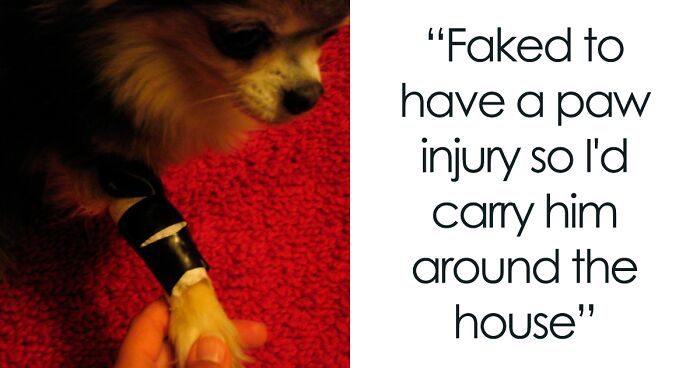
- The “injured” actor: A dog limped for sympathy, then sprinted normally the moment food appeared in another room.
- The fish observer: An aquarium fish recognized the person who fed it and ignored everyone else with impressive aquatic judgment.
- The routine enforcer: A pet became upset when furniture moved, then dragged its blanket back to the original location.
- The snack sound scholar: A dog ignored most kitchen noises but appeared instantly at the quietest cheese-wrapper crinkle.
- The mirror user: A cat watched a person in a mirror and turned toward the real person when called, suggesting clever visual tracking.
- The rescue signaler: A dog barked differently when a family member fell, drawing attention instead of using its usual “mailman emergency” bark.
- The training reversal: A dog trained its owner to give treats by performing tricks nobody had asked for.
- The laundry thief: A cat stole only warm clothing from the dryer and built a luxury nest behind the couch.
- The fake emergency: A dog barked at the back door so another dog would leave the couch, then took the warm spot.
- The baby monitor listener: A pet reacted to a baby crying through the monitor before the adults processed the sound.
- The hidden toy archivist: A dog remembered where a toy had rolled under furniture days earlier and returned with it proudly.
- The name recognizer: A cat responded only when its own name was spoken, not when similar nonsense words were tested.
- The fridge philosopher: A dog learned the refrigerator light meant opportunity and appeared every time the door opened.
- The social manipulator: A pet behaved perfectly around visitors, then resumed chaotic household leadership after they left.
- The schedule keeper: A cat demanded meals at the same time every day, even after daylight saving time confused the humans.
- The puzzle feeder champion: A dog solved a food puzzle so quickly the family had to upgrade to a harder model.
- The forbidden-room explorer: A cat waited until people showered to sneak into the one room usually kept closed.
- The jealous genius: A dog inserted itself between its owner and a laptop whenever work replaced playtime.
- The selective listener: A pet ignored “come here” but responded instantly to “cheese,” proving the ears worked just fine.
- The lost-item helper: A dog found keys after watching the owner search in a panic, then expected celebration and snacks.
- The bird mimic: A parrot copied the microwave beep so accurately the family kept checking imaginary leftovers.
- The silent negotiator: A cat stared at a human, then at the door, then back at the human until the servant understood.
- The tiny mastermind: A pet learned that being cute after committing a crime reduced consequences by approximately 97 percent.
The Patterns Behind These Smart Pet Moments
These stories may sound supernatural, but most of them fit into recognizable behavior patterns. Pets learn by association. If a sound, object, person, or routine predicts something important, they remember it. The leash predicts a walk. A laptop predicts boring human behavior. A drawer predicts treats. A crying human predicts a need for closeness, attention, or comfort.
Some pets also show impressive problem-solving. Opening doors, moving objects, finding hidden food, and using tools are all examples of animals adapting to their environment. They may not understand every step the way humans do, but they can connect action with outcome. Push the chair, reach the counter. Pull the handle, open the door. Press the button, receive the snack. Congratulations, human: you have been outsmarted by a creature who still eats fuzz off the floor.
Are Pets Actually Being “Creepy,” Or Are We Just Surprised?
Pets are not creepy in the horror-movie sense. They are creepy in the “wait, how long have you known how to do that?” sense. Humans often underestimate animal intelligence because pets do not communicate the way we do. A cat does not write a thesis about household power dynamics. She simply knocks your pen off the desk while maintaining eye contact. Different medium, same message.
Dogs, cats, and birds are also extremely good at learning human habits. We are predictable creatures. We wake up, use the same appliances, wear the same shoes, reach for the same keys, and make the same dramatic noises when the Wi-Fi stops working. Pets observe all of that. Over time, they develop expectations. When a pet seems psychic, it may simply be reading a routine better than the person living inside it.
How To Support A Brilliant Pet Without Losing Your Sofa
If your pet is too smart for peace, the answer is not to discourage intelligence. The answer is to give that brain something legal to do. Dogs benefit from sniff walks, training games, food puzzles, safe chewing, hide-and-seek, and scent activities. Cats benefit from vertical space, hunting-style play, puzzle feeders, window views, scratching areas, and predictable interactive play. Birds need safe social time, toys, foraging opportunities, and consistent routines.
For very clever pets, mental exercise can be just as important as physical exercise. A bored smart animal is basically a bored intern with bolt cutters. They will find a project, and you may not like the budget.
Personal Experiences Pet Owners Understand Too Well
Anyone who has lived with a sharp pet knows the experience is equal parts charming and humbling. You may begin the relationship thinking you are the owner, caregiver, decision-maker, and grand provider of kibble. Then one afternoon, your dog nudges the treat jar, looks at you, looks at the clock, and clearly communicates that management has failed to honor the snack schedule. Suddenly, you are not the boss. You are middle management with thumbs.
One of the funniest experiences many pet owners describe is realizing their animal understands routines they never intentionally taught. A dog may hear a laptop close and immediately celebrate because that sound means work is over. A cat may appear at the bathroom door every morning because that is when the human becomes vulnerable, stationary, and easy to negotiate with. A bird may copy a household sound so perfectly that everyone keeps checking the microwave, the phone, or the doorbell. Pets turn ordinary life into a psychological experiment where the test subject is usually the human.
There is also a touching side to pet intelligence. Many animals seem to notice changes in human emotion. A dog may stay close when someone is sick. A cat may sit quietly beside a grieving person. A parrot may repeat a familiar comforting phrase at exactly the right time. While we should be careful not to over-humanize every behavior, these moments matter because they show how deeply pets are woven into household life. They may not understand sadness, stress, or loneliness in the same language we do, but they often notice when the atmosphere changes.
The strangest part is how strategic pets can be. They learn which family member is easiest to persuade, which rules are flexible, and which forbidden actions are worth the risk. A dog may never jump on the couch when one person is home but transform into a decorative pillow the second that person leaves. A cat may refuse a new toy for three weeks, then adore the cardboard packaging with the passion of an art collector. These choices feel mysterious, but they are also reminders that animals have preferences, memories, and problem-solving styles of their own.
Living with a creepily intelligent pet changes how you see them. You stop thinking of training as one-way instruction and start seeing it as a conversation. You teach them “sit,” and they teach you “open the door faster.” You teach them “leave it,” and they teach you that silence in another room is never good. The best response is not fear, but respect, enrichment, and a healthy sense of humor. Because when your pet figures out the treat cabinet, the only reasonable reaction is to admire the brilliance, secure the snacks, and accept that the house has a new tiny consultant.
Conclusion
The funniest “creepily intelligent pet” stories work because they reveal something real: animals are observant, adaptive, emotionally responsive, and wonderfully motivated by comfort, food, play, and connection. Whether it is a dog solving household puzzles, a cat recognizing names while pretending not to, or a parrot repeating the perfect phrase at the perfect time, pets constantly remind us that intelligence comes in many forms.
Maybe your pet is not secretly plotting world domination. Maybe. But if the treat drawer is open, the evidence has vanished, and your cat is calmly washing one paw like a villain in a sunbeam, it is reasonable to keep an eye on things.
Note: This article is an original, fully rewritten synthesis based on publicly available pet behavior discussions, viral pet-intelligence anecdotes, and established animal cognition and veterinary enrichment information. Anecdotes are paraphrased and generalized for originality and readability.