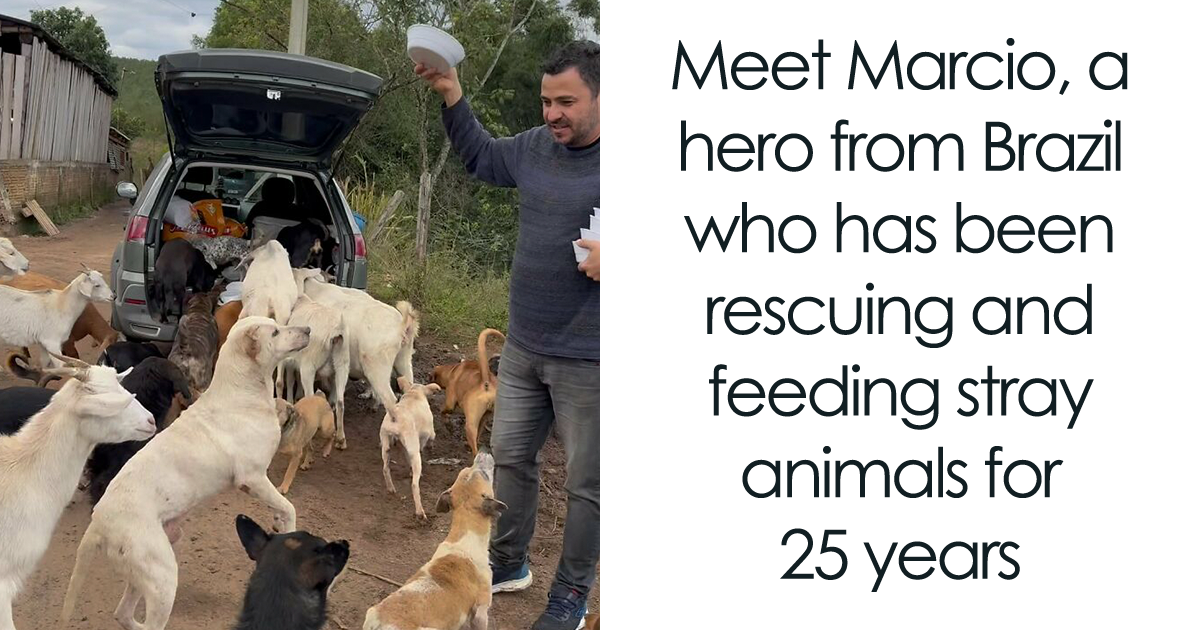
For 25 years, one man has walked dusty roads, filled empty bowls, carried frightened animals to safety, and reminded the world that compassion is not a grand speechit is a daily habit.
A Hero Without a Cape, but Probably With Dog Food in the Trunk
Some people dream of changing the world. Others wake up early, load bags of food into a vehicle, answer messages about injured dogs, comfort worried families, and somehow still find time to smile at a cat who clearly thinks it owns the entire neighborhood. Márcio Lacerda, widely known online as “Protetor Marcio,” belongs to the second group.
For more than 25 years, Márcio has dedicated his life to helping stray animals, especially dogs and cats living in poor communities where veterinary care, consistent food, and safe shelter can be painfully out of reach. His work is not the glossy version of animal rescue that fits neatly into a heartwarming 30-second video. It is muddy, expensive, exhausting, emotional, and sometimes heartbreaking. But it is also deeply hopeful.
His story has resonated with animal lovers around the world because it proves something powerful: one person, acting again and again with kindness, can create a ripple effect large enough to touch countless lives. Not just animal lives, either. Márcio’s mission has also included supporting vulnerable families, because in many communities, animal hardship and human hardship live on the same street.
That is what makes his journey so meaningful. He did not simply feed stray animals for a week and declare himself a legend. He kept going. Year after year. Bowl after bowl. Rescue after rescue. In a world that often rewards noise, he chose consistency.
How a Personal Calling Became a 25-Year Animal Rescue Mission
Márcio’s journey reportedly began during a very difficult chapter in his life. A friend introduced him to volunteer work at an animal shelter, and that experience became a turning point. Around animals who needed care, patience, and protection, he found purpose. The animals he helped also helped him rediscover his own strength.
That is one of the quiet miracles of rescue work: it often saves in both directions. A frightened dog gains a meal and a gentle hand. A person gains a reason to show up tomorrow. A kitten gets medicine. A volunteer gets meaning. The exchange may not look dramatic from the outside, but for the lives involved, it can be everything.
Over time, Márcio’s work expanded far beyond occasional volunteering. He became a familiar figure in communities where stray animals gathered. He fed them, helped arrange medical care, responded to urgent cases, and used social media to raise awareness and support. He also began studying veterinary medicine, seeking deeper knowledge to serve animals more effectively.
That decision matters. Compassion is the heart of rescue, but knowledge is the backbone. Feeding a hungry dog is good. Understanding vaccination, sterilization, wound care, quarantine, disease prevention, and safe transport is even better. When love and skill work together, animals get more than sympathythey get a real chance.
Why Stray Animal Rescue Matters So Much
Stray animals are often misunderstood. Some people see a dog on the street and assume it is wild, dangerous, or “just part of the scenery.” Others see a cat slipping behind a building and think it can survive perfectly well on its own. Reality is much more complicated.
Many stray animals were once pets. Some got lost. Some were abandoned when families faced financial trouble, housing problems, illness, or sudden life changes. Others were born outdoors because previous generations were never spayed or neutered. The result is a cycle that no single shelter, rescuer, or government agency can fix alone.
In the United States, shelter data consistently shows that stray animals make up a major share of dogs and cats entering shelters. That pattern reflects a broader truth: animal homelessness is not simply an “animal problem.” It is connected to access to veterinary care, pet-friendly housing, community education, poverty, disaster response, and the availability of low-cost spay and neuter services.
For rescuers like Márcio, the problem is never abstract. It has faces. A thin dog waiting near a roadside. A mother cat trying to hide kittens. A puppy too young to understand why the world feels so cold. These animals do not need a lecture about policy. They need food, safety, medical attention, and people willing to act.
The Work Behind the Warm Photos
Animal rescue content often goes viral because of the happy ending: the tail wag, the clean blanket, the adoption photo, the once-scared dog now sleeping upside down like a furry croissant. But behind every happy ending is a lot of unglamorous work.
Feeding Routes
Feeding stray animals sounds simple until you think about the logistics. Food must be purchased, transported, stored, and distributed safely. Rescuers must remember where animals gather, which dogs are shy, which cats are pregnant, which neighborhoods are safe, and which animals need urgent medical help. A feeding route can become a moving map of need.
Emergency Care
Many animals on the street need more than dinner. They may require vaccines, parasite treatment, sterilization, dental care, or emergency veterinary attention. Even basic care can become expensive quickly, especially when one rescuer is responding to many animals at once.
Trust Building
Not every animal runs toward help. Some have learned to fear humans. Building trust can take days, weeks, or months. A rescuer may sit quietly nearby, return at the same time each day, offer food without pressure, and wait for the animal to decide that maybe, just maybe, this human is not terrible. Cats are especially talented at making rescuers earn every inch of progress.
Community Relationships
Successful rescue work depends on people. Neighbors report animals in trouble. Donors help buy food. Drivers transport animals. Veterinarians provide care. Foster families open their homes. Volunteers clean, organize, post updates, and help find adopters. One rescuer may become the visible face of the mission, but a whole community helps keep it alive.
Compassion for Animals and People Can Share the Same Bowl
One of the most touching parts of Márcio’s story is that his compassion extends beyond animals. In the communities where he helps stray dogs and cats, he also sees families struggling. His view is simple and humane: you cannot bring food for animals and ignore hungry children nearby.
This idea deserves more attention. Sometimes people frame animal welfare and human welfare as competing causes, as if kindness were a tiny sandwich and everyone must fight over the last bite. In reality, the two often strengthen each other.
When families receive support, they are better able to care for pets. When pets are vaccinated and sterilized, communities become healthier and safer. When animal rescuers build trust with residents, they can share information about responsible pet care, lost-pet recovery, and affordable veterinary resources. Helping animals can open the door to helping people; helping people can prevent animals from becoming homeless in the first place.
This is why modern animal welfare increasingly focuses on keeping pets with families whenever possible. Adoption is beautiful, but prevention is powerful. A bag of food, a temporary foster home, a low-cost clinic, or help finding a lost dog can stop an animal from entering a crowded shelter at all.
What 25 Years of Stray Animal Care Teaches Us
Márcio’s story is inspiring because it is not built on one dramatic rescue. It is built on repetition. The ordinary, stubborn, loving repetition of showing up.
There is a lesson here for anyone who feels overwhelmed by the size of the stray animal crisis. You do not have to solve everything. You can do one useful thing. Then another. Then another after that.
Lesson 1: Start Where You Are
Many people wait until they have more money, more time, more space, or more confidence before they help. But rescue often begins with a small action: sharing a shelter post, donating one bag of food, driving one animal to a clinic, or asking a local rescue what they actually need. Small help is still help. A hungry dog does not reject a meal because it is not part of a five-year strategic plan.
Lesson 2: Spay and Neuter Work Is Essential
Feeding animals is compassionate, but preventing future suffering is just as important. Spay and neuter programs help reduce the number of unwanted litters and ease pressure on shelters and rescuers. For community cats, Trap-Neuter-Return programs are widely used to stabilize colonies, prevent new kittens, and improve cats’ lives through vaccination and veterinary care.
Lesson 3: Foster Homes Save Lives
Fostering gives animals a bridge between the street or shelter and a permanent home. It also helps rescuers learn an animal’s personality. Is the dog good with other pets? Is the cat secretly a lap warmer disguised as a dust bunny? Does the puppy believe shoes are a food group? These details help create better adoptions.
Lesson 4: Rescue Requires Boundaries
People who love animals deeply can burn out if they try to carry every crisis alone. Sustainable rescue requires teamwork, rest, planning, and honest limits. Saying “I cannot do this by myself” is not failure. It is wisdom wearing comfortable shoes.
The Bigger Picture: From Street Rescue to System Change
Individual rescuers are often the first line of defense, but long-term change requires systems. Communities need affordable veterinary care, accessible spay and neuter services, pet food support, lost-and-found programs, adoption networks, foster programs, and humane education.
Technology is also becoming part of the solution. Lost-pet platforms now use photo-matching tools to help reunite missing animals with families. These tools are especially valuable because many “stray” pets are not truly homeless; they are lost. A dog found wandering three blocks away may have a worried family searching nearby. Fast reunification keeps pets out of shelters and reduces stress for everyone involved.
Shelter medicine has also advanced. Today, animal welfare professionals pay close attention to stress reduction, disease prevention, enrichment, safe housing, and humane handling. These details may sound technical, but they make a huge difference. A less stressed animal is healthier, safer, and more likely to show its true personality to adopters.
Still, even the best systems need human hearts. A database cannot comfort a scared puppy. A policy cannot scoop kibble into bowls before sunset. A clinic cannot help an animal who is never brought through the door. That is why people like Márcio matter so much. They connect need with action.
Specific Examples of Everyday Impact
Imagine a stray mother dog living near a roadside with her puppies. Without intervention, the puppies may grow up unvaccinated, reproduce later, and continue the cycle. A rescuer who feeds the mother, gains her trust, brings the family to safety, arranges veterinary care, and finds responsible homes has changed not only those lives, but the future population of that area.
Now imagine a community cat colony behind a market. Neighbors may complain about noise, kittens, or spraying. A humane TNR approach can stabilize the colony: cats are trapped, sterilized, vaccinated, and returned if they are not adoptable. Friendly cats and kittens may be placed into homes. Over time, the colony stops growing, and tensions decrease.
Or consider a family facing financial trouble. They love their dog but cannot afford food for the month. Without help, they may surrender the dog to a shelter. A small pet food pantry or community support program could keep that animal at home. The dog avoids shelter stress, the family stays together, and shelter space remains available for animals with no other option.
These examples are not flashy, but they are the backbone of lifesaving work. Rescue is not only about dramatic moments. It is about preventing the next emergency.
Why Márcio’s Story Inspires So Many People
People are drawn to stories like Márcio’s because they cut through cynicism. It is easy to believe the world is too broken, too busy, too loud, or too selfish. Then you see someone spend 25 years feeding animals who have no money, no influence, and no way to repay him except with trust. Suddenly, the world feels a little less cold.
There is also something deeply relatable about the way this mission grew. Márcio did not begin as a giant organization. He began as a person who loved animals and found purpose in helping them. That makes his story feel possible. It tells readers, “You may not be able to do everything, but you can do something.”
And that “something” matters. A rescued dog does not care whether the person helping is famous. A hungry cat does not ask how many followers a volunteer has. Animals understand action. Food. Safety. A gentle voice. A warm place to sleep. A ride to the vet. A second chance.
After 25 years, the number of animals touched by Márcio’s work is difficult to measure in a neat little statistic. But perhaps that is the point. Some lives are not changed in ways that fit into spreadsheets. Some are changed in wagging tails, quiet purrs, healed bodies, safer streets, and children watching adults model kindness.
How Readers Can Help Stray Animals in Their Own Communities
Not everyone can spend 25 years on feeding routes, and that is okay. The goal is not to copy Márcio’s life exactly. The goal is to let his example move us from sympathy to action.
Adopt, Don’t Shop When Possible
Adopting from a shelter or rescue gives an animal a home and opens space for another animal in need. Responsible adoption also means choosing a pet that fits your lifestyle, budget, housing situation, and long-term plans.
Foster Temporarily
Fostering can be a lifesaving option for people who cannot commit to permanent adoption. Even a few weeks in a home can help an animal decompress, recover, and become more adoptable.
Support Spay and Neuter Programs
Donating to low-cost sterilization clinics or community cat programs helps address the root of animal overpopulation. It may not look as emotional as a rescue video, but prevention is one of the most compassionate tools available.
Help Lost Pets Get Home
If you find a stray pet, check for identification, report the animal through local lost-and-found channels, contact shelters, and consider using modern lost-pet platforms. Many animals wandering outdoors have families looking for them.
Donate Useful Supplies
Rescues often need food, towels, blankets, carriers, cleaning supplies, flea prevention, and funds for medical care. Before donating random items, ask what is most needed. Rescuers appreciate generosity, but they may already have 47 novelty pet sweaters and zero kitten formula.
Experiences From the Road: What Stray Animal Rescue Feels Like Up Close
Anyone who has spent time around stray animal rescue knows that the work changes how you see a city. A parking lot is no longer just a parking lot; it might be where a skinny dog waits every evening. An alley is not just an alley; it may be where a shy cat colony gathers after dark. A quiet corner near a market might become a tiny outdoor dining room, complete with bowls, cautious tails, and the occasional bossy cat who acts like it made the reservation.
The first experience many volunteers describe is nervousness. They want to help, but they worry about doing the wrong thing. Should they approach the dog? Should they feed the cat? Should they call a rescue? The answer depends on the situation, but the lesson is always the same: kindness works best when paired with patience. A scared animal is not being ungrateful. It is trying to survive.
Over time, rescuers learn to notice small details. A dog that does not come forward may still wag its tail from a distance. A cat with a clipped ear may already be part of a TNR program. A puppy with a round belly may need veterinary attention, not just extra snacks. A friendly adult dog may be lost rather than abandoned. Rescue teaches people to look twice before judging.
There is joy, too. Big joy. The first time a frightened dog accepts food from your hand, it feels like winning an Olympic medal, except the medal has muddy paws. The first photo from an adopter showing a former stray asleep on a couch can make an entire week brighter. The first time a cat who once hissed at everyone decides to sit beside a foster caregiver, the room becomes suspiciously dusty around the eyes.
But rescue also teaches humility. You cannot save every animal in one day. You cannot answer every message instantly. You cannot stretch one donation forever. This is why experienced rescuers build networks. One person feeds. Another traps. Another drives. Another fosters. Another shares adoption posts. Another donates $10. When combined, these actions become a safety net.
The most meaningful experience may be the gradual change in a community. At first, people may ignore stray animals or assume nothing can be done. Then they see someone showing up regularly. A neighbor starts leaving clean water. A shop owner calls when a dog appears injured. A teenager volunteers to help carry food. A family adopts a rescued puppy. Compassion becomes contagious, which is the best kind of outbreak.
This is the heart of Márcio’s 25-year example. The work is not only about feeding animals. It is about teaching a community to care. It is about proving that abandoned lives are still valuable. It is about refusing to let suffering become invisible. And it is about discovering that even when the problem is huge, a single daily act of mercy can still matter enormously.
Conclusion: One Person Can Be the Beginning of a Better World
The story of one man who changed countless lives of stray animals over 25 years is not just an animal rescue story. It is a reminder that compassion becomes powerful when it becomes consistent. Márcio Lacerda’s journey shows how a person can begin with pain, find purpose through service, and spend decades turning empathy into action.
His work also reflects a larger truth about stray animal welfare: feeding matters, veterinary care matters, spay and neuter programs matter, foster homes matter, adoption matters, and community support matters. No single solution fixes everything. But together, these efforts create real change.
In the end, heroes do not always arrive with capes, theme music, or dramatic lighting. Sometimes they arrive with bags of kibble, tired hands, a full heart, and a trunk that probably smells permanently like dog food. And sometimes, that is exactly the kind of hero the world needs.