Note: This article is written in fresh, original language and is based on real design, architecture, craft, and Mallorca lifestyle references.
Some summer houses shout. Others whisper. And then there is the rare Mallorca summer house that somehow does both: patterned tiles doing a flamenco step across the floor, pale walls taking a deep breath, copper pots hanging like useful jewelry, and sunlight wandering in as if it forgot to knock. The result is not strict minimalism, not full-throttle maximalism, but a smart, breezy truce between the two.
That balance sits at the heart of the design world surrounding Daniela Jacobs, the New York- and Mallorca-based designer behind ARC Objects. Known for ceramic plates, jewelry, and home objects shaped by curves, arcs, moons, asymmetry, and everyday rituals, her sensibility offers a useful lesson for anyone interested in Mediterranean interior design: a home can be spare without being cold, expressive without becoming visually noisy, and deeply personal without looking like a yard sale got into espresso.
This airy, open summer house on Mallorca is especially compelling because it does not try to flatten its history into a trendy neutral box. Instead, it lets the island, the old architecture, the garden, the handmade objects, and the occasional gloriously bossy tile have their say. The house feels lived in, not staged; edited, not emptied. It is the kind of place where a mosquito net can look romantic, a drying rack can become sculpture, and a simple ceramic plate can turn sliced peaches into a design event.
Why This Mallorca Summer House Feels So Fresh
Mallorca has a way of making design trends look slightly over-caffeinated. The island’s beauty is already doing a lot: dry stone walls, pale shutters, terracotta pots, mountain views, warm breezes, olive trees, beaches, village lanes, and that particular Mediterranean light that makes even a humble wall look like it has a modeling contract. In a place like this, the smartest design move is often restraint.
But restraint does not mean boredom. The best Mallorca interiors are rarely plain. They rely on natural materials, old surfaces, imperfect textures, handcrafted pieces, shaded thresholds, and rooms that understand the pleasure of an open window. This summer house follows that logic. It keeps spaces breathable while allowing rich details to remain visible: original tilework, carved wood, marble, pottery, books, straw, glass, and the quiet drama of handmade things.
The magic is in contrast. Minimalism provides the breathing room. Maximalism provides the memory. Together, they create a home that feels elegant without acting fancy. No room seems to be begging for applause, which is exactly why you notice everything.
The Ceramicist’s Eye: Form, Function, and Small Pleasures
A ceramicist looks at a house differently. Where some people see a kitchen shelf, a ceramicist sees proportion, negative space, texture, weight, and the way a bowl changes the mood of fruit. Where others see “just a plate,” a ceramicist sees a stage. This is important because the Mallorca summer house is not merely decorated; it is composed.
Daniela Jacobs’ design language centers on simple forms with subtle irregularities: crescents, arcs, circles, half-moons, and soft geometries inspired by nature. That same mindset translates beautifully into interiors. Rather than filling a room with decorative noise, the ceramicist’s approach asks: What shape does this room already have? What texture does it need? What object will make daily life feel more intentional?
This is why the home’s simple beds, tiled kitchen, small garden, and open balconies feel more powerful than a room packed with expensive statement pieces. The house is not trying to impress visitors into silence. It is trying to make breakfast, reading, resting, swimming, and waking up feel better. That is a more durable kind of luxury.
Maximalist Bones, Minimalist Mood
The phrase “maximalist/minimalist” sounds like a design contradiction, but in old Mediterranean houses, it often makes perfect sense. The architecture may come with strong built-in personality: patterned floors, decorative staircases, shutters, thick walls, unexpected niches, and tile combinations that absolutely did not consult your Pinterest board. A minimalist renovation that erases all of that can leave a house looking strangely weightless, as though its past was politely asked to wait outside.
Here, the stronger choice is preservation with editing. Keep the wild tile. Let the staircase remain theatrical. Allow copper pots to hang in the kitchen. Let the garden and shutters supply color. Then pare back the furniture, textiles, and objects so the historic features can shine. It is a bit like hosting a dinner party with one very charismatic guest: you do not need everyone else to juggle.
1. Let Original Details Lead
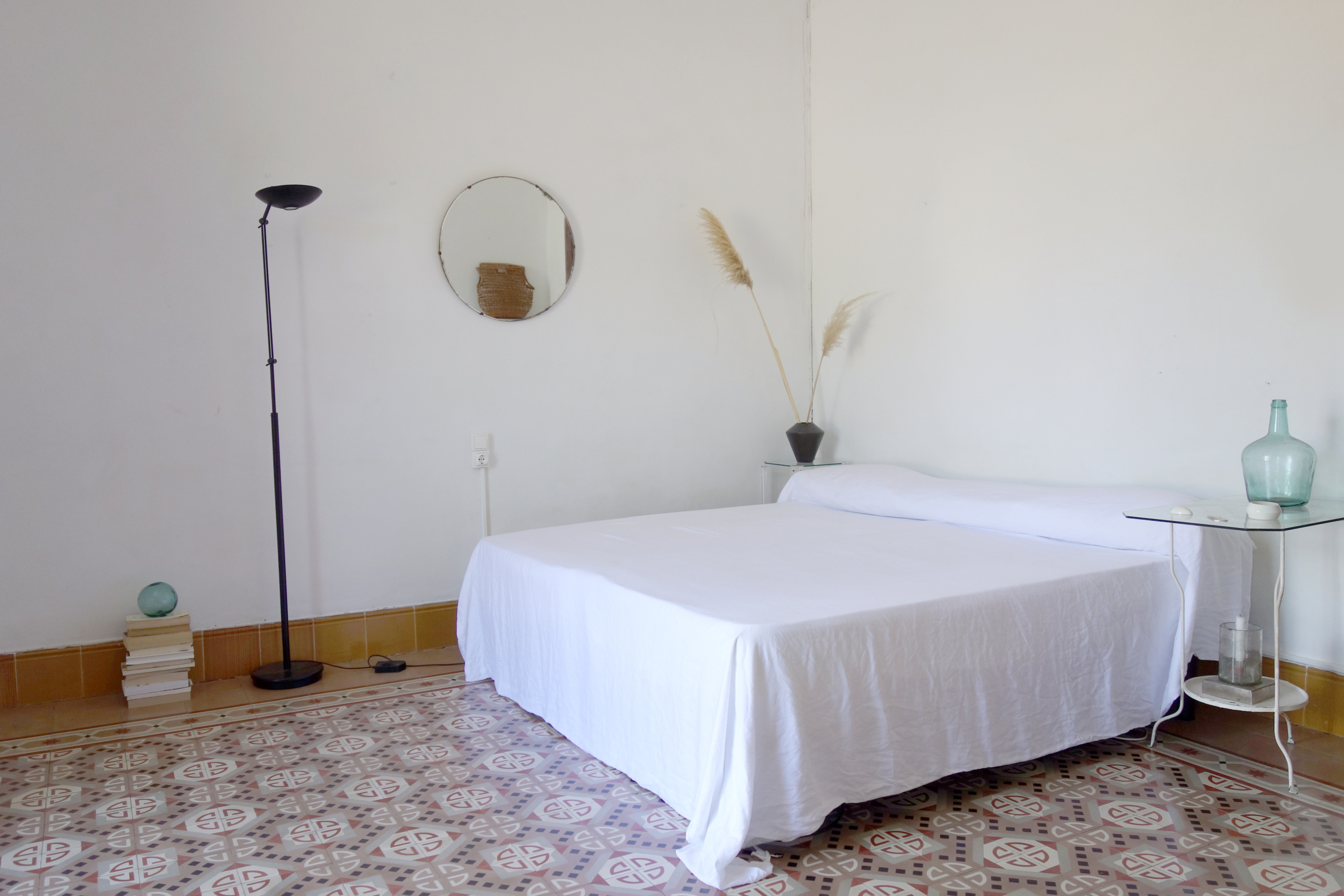
The original tiles are not treated as a problem to solve. They are the house’s accent language. Instead of competing with them, the rooms give them space. Pale walls, simple linens, modest furniture, and natural textures allow the patterns to feel intentional rather than chaotic.
This is one of the most useful lessons for anyone decorating an older home. If you inherit strong architectural details, do not immediately smother them with trends. Study them first. Notice their colors, rhythm, and scale. Then choose modern pieces that calm the room rather than argue with it.
2. Use White Space as a Design Material
Minimalism is often misunderstood as a lack of things. In a good Mediterranean summer house, minimalism is more like shade: it gives relief. Open floors, uncluttered surfaces, and loosely arranged rooms allow air and light to circulate. White space is not emptiness; it is the pause that makes the next texture matter.
This is especially important in warm climates. A room filled with heavy furniture and layered accessories can feel visually hot, even before the temperature rises. By contrast, a room with pale walls, a simple bed, a net canopy, and a view toward the outdoors feels cool in both senses of the word.
3. Turn Functional Objects Into Decor
One of the most charming aspects of this kind of home is that useful things are allowed to be beautiful. A hanging wooden drying rack becomes a sculptural element. Copper cookware becomes a wall display. Straw bags, ceramics, books, and glass vessels are not hidden away as clutter; they are used as quiet visual punctuation.
This is a very ceramicist-friendly idea. Handmade objects often look best when they are part of daily life. A bowl on a shelf, a pitcher on a table, a plate holding almonds, a vase with one branch: these are not decorations pretending to be useful. They are useful objects that happen to be gorgeous. Very efficient. Very civilized. Your junk drawer could never.
The Airy Mediterranean Formula: Light, Texture, and Flow
An airy summer house is not created by white paint alone. It comes from the relationship between architecture and climate. Mallorca’s traditional homes often use shutters, thick walls, shaded openings, tile, stone, and courtyards to manage heat and light. Modern Mediterranean design builds on the same wisdom with open transitions between indoors and outdoors, natural ventilation, pale finishes, and durable materials.
In this house, the open windows and balconies are not decorative gestures. They are part of how the home lives in summer. The tiled kitchen opens toward the outside. Bedrooms feel connected to the landscape. The garden is close enough to feel like another room. Even the studio-like basement, once associated with animals and practical storage, becomes a bright, useful, creative zone connected to the garden.
The lesson is simple: a summer house should not be sealed off from summer. It should filter it. Let in the morning air. Block the harshest sun. Invite the breeze. Give wet swimsuits somewhere to exist without creating a small domestic crisis. Design is glamorous, yes, but so is a place to dry towels.
How Ceramics Shape the Soul of the House
Ceramics belong naturally in Mediterranean interiors because they carry earth, fire, water, and handwork in one object. A ceramic plate is not just a surface; it is material memory. In Mallorca, where craft traditions include ceramics, weaving, glass, wood, stone, and palm work, handmade pieces feel rooted rather than ornamental.
In a ceramicist’s summer house, clay objects also influence how rooms are styled. Instead of relying on many colors, the home can lean on texture: matte porcelain, glazed tile, terracotta pots, rough plaster, woven straw, polished marble, old wood, and linen. This creates depth without clutter. The palette may be quiet, but the surfaces are busy in the best way.
For homeowners, this offers a practical decorating strategy. Choose fewer objects, but choose objects with presence. A handmade bowl with a slightly uneven rim can do more for a table than six generic accessories. A terracotta pot near a blue shutter can carry an entire color story. A ceramic lamp, tile backsplash, or sculptural vase can connect a room to place, craft, and daily ritual.
Decorating Lessons to Steal from the Look
You do not need a family house in Mallorca to borrow the maximalist/minimalist idea. You do, however, need discipline. The look works because it is edited. It is not “Mediterranean theme night,” and nobody is forcing seashells into a bowl against their will.
Choose a Calm Base
Start with pale walls, natural flooring, and breathable window treatments. White, cream, stone, sand, and sun-faded neutrals create a clean backdrop. This lets wood, ceramics, tile, books, baskets, plants, and textiles stand out.
Keep the Pattern Where It Counts
If you love maximalism, focus pattern in permanent or meaningful places: tile floors, a kitchen backsplash, a vintage textile, or a hand-painted ceramic collection. Then keep surrounding pieces quieter. Pattern needs a supporting cast, not a chorus line.
Mix Old and New Without Overexplaining It
The most beautiful rooms often include pieces from different eras. A modern ceramic bowl can sit beside an antique table. A branch can become a closet rail. A glass orb can rest on old books. The trick is to repeat materials and tones so the mix feels natural.
Let Nature Do Some Decorating
A Mediterranean-inspired home should include evidence of the outdoors. Think terracotta pots, branches, linen, rattan, stone, herbs, citrus, olive leaves, and open views where possible. Nature is the only decorator who never overcharges and somehow always gets the palette right.
Why the Kitchen Matters Most
In many summer houses, the kitchen is the emotional center. It is where fruit is sliced, coffee is brewed, fish is cleaned, tomatoes are salted, guests hover unhelpfully, and someone always asks where the bottle opener is while standing directly in front of it.
The Mallorca kitchen in this design story captures the beauty of practical charm. Mix-and-match tile, carved wood, copper pots, and a basin-like sink create a room that feels collected over time. It is maximalist in detail but minimalist in attitude. Nothing feels precious. Everything seems ready to work.
This is a key point for SEO readers searching for Mediterranean kitchen ideas: authenticity matters more than perfection. A kitchen can feel luxurious because it supports life gracefully. Open shelves, visible cookware, handmade plates, and natural materials create warmth. But the room still needs breathing space, especially in summer.
The Bedroom: Simple, Soft, and Slightly Dreamy
The bedroom continues the same philosophy. Rather than turning sleep into a design showroom, it relies on simple bedding, natural light, thrifted objects, and views. A mosquito-net canopy adds softness and function, while a branch used as a closet rail brings in a touch of improvisation. It is humble, poetic, and far more memorable than a matching furniture set named after a vague Italian village.
The best summer bedrooms feel easy. They do not need heavy drapes, mountains of pillows, or bedside tables large enough to file taxes on. They need air, shade, a good mattress, a place for a book, and perhaps one object that makes the room feel personal.
The Garden and Outdoor Rooms
A Mallorca summer house is incomplete without outdoor life. The garden, terrace, balcony, and pool area extend the home’s usable space and deepen the connection to the island. Terracotta pots, simple seating, climbing plants, and shaded corners create a sense of ease. The goal is not a manicured resort look; it is a garden that can handle bare feet, wet hair, late lunches, and the occasional heroic nap.
Outdoor design should repeat the interior’s materials without copying it too literally. If the rooms use ceramics, wood, stone, linen, and straw, the garden can echo those textures through pots, benches, baskets, gravel, and woven seating. This continuity makes the whole property feel calm and intentional.
Analysis: Why This Style Works for Modern Living
The maximalist/minimalist Mallorca look succeeds because it solves a modern design problem: people want homes with character, but they also want peace. Pure minimalism can feel sterile when stripped of memory. Pure maximalism can feel exhausting when every object demands attention. This hybrid approach offers a middle path.
It also reflects a broader shift toward craft, sustainability, and place-based design. Instead of buying a complete look from one catalog, the home grows from what already exists: old tile, inherited architecture, local materials, handmade objects, useful tools, and personal rituals. That makes the space harder to duplicate, which is precisely the point.
For homeowners and designers, the big takeaway is this: edit the room, not the soul out of it. Keep what has meaning. Remove what distracts. Add objects that improve daily life. Let sunlight, materials, and craft carry more of the design load.
Experience Notes: Living With the Maximalist/Minimalist Mallorca Idea
The most memorable experience of this style is not visual; it is physical. Imagine arriving at a summer house in the late afternoon, when the heat has softened but the walls still hold the day. The shutters are half-closed, so the light enters in slices. A ceramic bowl sits on the kitchen table with apricots inside, each one looking absurdly photogenic for a fruit that did nothing but exist. The floor tiles are patterned enough to make the room feel alive, but the furniture is simple enough that your shoulders drop the moment you enter.
This is where the maximalist/minimalist idea becomes more than a decorating phrase. It changes how you move. You do not rush through a house like this. You notice the coolness of tile underfoot. You notice the handle of a handmade cup. You notice how a pale wall can make a shadow look like art. You notice that a single branch in a vase sometimes has more presence than an entire floral arrangement trying very hard to be liked.
In my experience studying and writing about interiors, the homes that stay with people are rarely the most expensive ones. They are the homes with rhythm. This Mallorca-inspired approach has rhythm because it alternates between quiet and expression. A calm bedroom follows a lively tiled hallway. A simple table sits near a detailed staircase. A rustic garden pot balances a refined ceramic plate. Your eye gets to travel, then rest, then travel again.
For someone trying to recreate the feeling, the first step is not shopping. It is editing. Walk through your space and ask which objects genuinely improve the room. Keep the chipped bowl if it makes peaches look beautiful. Keep the old chair if it catches the morning light. Remove the decorative item you bought because a trend report bullied you. A home should not feel like evidence that you read the internet.
The second step is to add tactile materials slowly. Start with linen curtains, a terracotta planter, a handmade mug, a woven basket, or a vintage wooden stool. These pieces bring warmth without overwhelming the room. If you love color, introduce it through objects that can breathe: tile, ceramics, art, fruit, flowers, or textiles. Let the base remain calm.
The third step is to design for summer behavior. Where will you put a wet towel? Where does the afternoon sun land? Can a window stay open safely? Is there a comfortable chair near the breeziest spot? Can dinner move outdoors without turning into a logistical opera? Beautiful summer houses are practical first. Their romance comes from usefulness done gracefully.
Finally, remember that the ceramicist’s lesson is about attention. A plate, a cup, a hook, a shelf, a stair, a shuttereach can make daily life more pleasurable. The Mallorca maximalist/minimalist look is not about owning more or less. It is about noticing better.
Conclusion
“Maximalist/Minimalist: A Ceramicist’s Airy, Open Summer House on Mallorca” is more than a beautiful design idea; it is a philosophy for living lightly with history. The house proves that strong old details and quiet modern restraint can coexist beautifully. Wild tile can live with simple linen. A marble staircase can share space with a handmade branch closet. A small ceramic plate can hold both food and feeling.
For anyone seeking Mallorca summer house inspiration, the lesson is refreshingly clear: keep the soul, clear the clutter, honor craft, and let the outdoors participate. In a world of fast interiors and copy-paste trends, this home feels grounded, personal, and deeply human. It reminds us that the best rooms are not the ones that look perfect in silence, but the ones that make ordinary life feel more vivid. And if they can do that while keeping the breeze moving through the shutters, even better.