The first time my son told me he remembered my dad, I nearly dropped a plate of spaghetti. Not because remembering Grandpa was strange, but because my father died before my son was old enough to form a clear memory of him. My son described sitting on my dad’s lap, hearing him laugh, and being handed a red toy truck. It was touching, specific, and wildly inconvenient for my understanding of time.
At first, I wanted to believe it. What parent wouldn’t? The idea that love could sneak past the calendar and leave a little footprint in a child’s mind is beautiful. It is also, unfortunately, not how autobiographical memory usually works. So I had to figure out why my son had false memories of my dadand why those memories felt so real to him.
The answer turned out to be less spooky and more human. Children build memory from lived moments, family stories, photographs, repeated emotions, and imagination. In other words, the brain is not a filing cabinet. It is more like a tiny documentary crew with a limited budget, dramatic music, and a questionable fact-checking department.
What Are False Memories?
A false memory is a recollection that feels real but is inaccurate, blended, or based on something that did not happen in the way the person remembers it. False memories are not lies. A lie is intentional. A false memory is the brain saying, “I am pretty sure this happened,” while confidently holding a receipt from the wrong store.
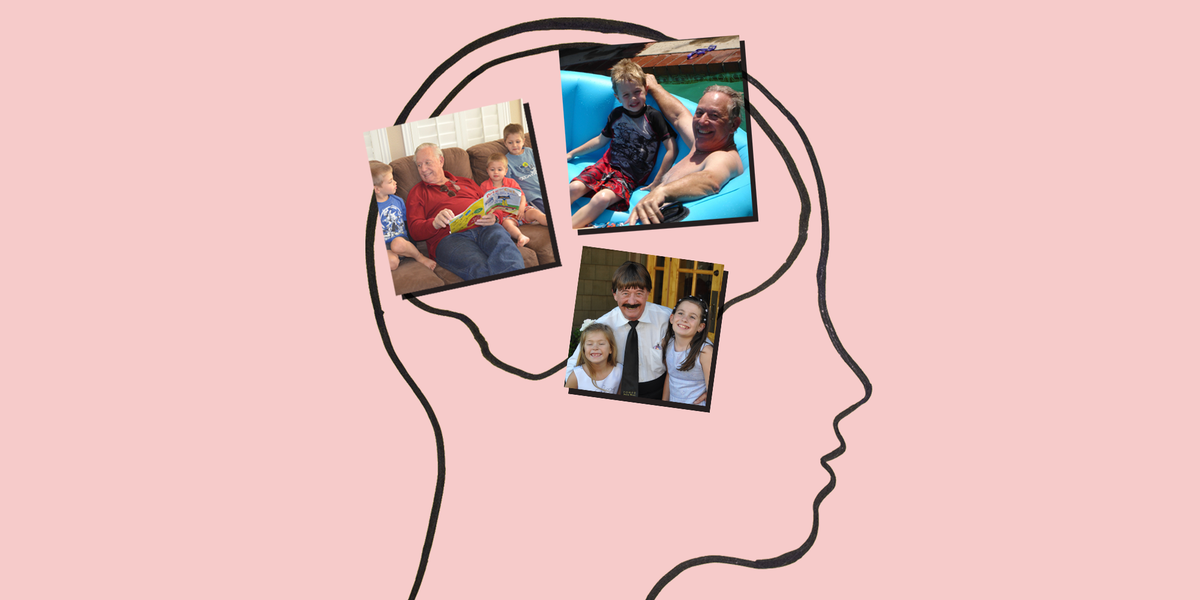
Researchers have long shown that memory is reconstructive. That means we do not simply replay the past like a home video. We rebuild it every time we remember it. During that rebuilding process, details can shift. A story someone told us, a photo we studied, a dream we had, or a strong emotion we felt can attach itself to the memory and become part of the final picture.
For adults, false memories might look like insisting a childhood restaurant had blue booths when they were actually green. For children, the process can be even more flexible because their autobiographical memory, language skills, sense of time, and ability to identify the source of information are still developing.
Why Children Can “Remember” Things They Only Heard About
My son did not wake up one morning and decide to invent a grandfather. He absorbed my dad through stories. He saw photos on the wall. He heard me say, “Grandpa would have loved that,” whenever he made a goofy face or demolished a stack of pancakes. He watched relatives smile and tear up when they talked about my father. Slowly, those bits and pieces became emotional material his brain could arrange into scenes.
1. Kids Struggle With Source Monitoring
Source monitoring is the ability to remember where information came from. Did I see that? Did someone tell me? Did I dream it? Did I imagine it while staring out the car window like a tiny philosopher in a booster seat?
Children are still learning how to sort those sources. A child might hear a story about Grandpa fixing a bicycle and later picture it so vividly that it feels like a personal memory. The image becomes familiar. Familiarity becomes confidence. Confidence becomes, “I remember Grandpa fixing my bike.”
2. Family Stories Become Mental Pictures
Family storytelling is powerful. It helps children understand where they come from, who loved them, and what kind of people belong to their family tree. The sweet catch is that a story told often enough can become visual. A child may not only know the story; they may begin to see it.
In our house, my dad became a character in dozens of stories: Grandpa who burned toast, Grandpa who whistled badly, Grandpa who called every dog “buddy” because remembering names was apparently too much paperwork. My son heard these stories so often that he built a living version of my dad in his imagination.
3. Photos Can Feel Like Memories
Photos are emotional shortcuts. A child sees himself as a baby in a room with Grandpa nearby, and the brain fills in the blanks. He may not remember the day, but he remembers seeing the photo. Over time, the photo can become the “memory.”
This is especially likely when adults narrate the image: “Look, Grandpa was so happy holding you.” That sentence is loving and harmless, but it gives the child a scene, a feeling, and a role. The child may later remember being held, even if he was too young to consciously store that moment.
The Role of Grief in False Family Memories
Grief does strange things to a household. It changes the volume of ordinary objects. A coffee mug becomes sacred. A sweater becomes a museum exhibit. A voicemail becomes emotional dynamite. Children notice this. Even when they do not fully understand death, they understand that a person mattered.
When a grandparent dies, children often process the loss in waves. They may ask blunt questions at inconvenient times, such as while you are paying for groceries or trying to reverse out of a parking space without hitting a shopping cart. They may also use play, drawings, and pretend conversations to understand what happened.
If a child never truly knew the person who died, they may still grieve the idea of that person. They grieve the missing relationship. They grieve the stories everyone else has. False memories can sometimes grow in that emotional spacenot as deception, but as connection.
When My Son’s Memories Started Making Sense
The red toy truck was my clue. My son said Grandpa gave it to him. I knew that could not be right because the truck was bought after my father died. Case closed, detective badge earned, dramatic courtroom music optional.
But then I remembered something else: I had once told my son that my dad loved old trucks. We had a photo of my father standing beside a beat-up red pickup from the 1970s, smiling like he had personally invented the steering wheel. My son loved that picture. He also had a toy red truck. His brain had stitched those pieces together into a memory that made emotional sense, even if it failed the calendar test.
That is when I stopped feeling alarmed and started feeling curious. His memory was inaccurate, but it was not random. It was built from real love, real stories, real images, and a real desire to belong to a family history that started before him.
Should Parents Correct False Memories?
Yes, but gently. A child’s false memory does not require a courtroom cross-examination. No parent needs to slam a folder on the kitchen table and say, “Explain Exhibit A: the toy truck receipt.”
The goal is not to embarrass the child or crush the emotional meaning of the memory. The goal is to help them understand the difference between remembering, imagining, and being told a story.
Try This Instead of “That Never Happened”
Instead of saying, “No, you don’t remember that,” I learned to say, “That sounds like a picture your mind made from the stories we tell about Grandpa.” This keeps the connection while correcting the facts. It also teaches a useful skill: memories can feel real and still need checking.
Another helpful phrase is, “You may be remembering the photo, not the day.” That sentence gives the child a bridge. It does not accuse them of making things up. It simply explains how memory works.
Use Honest, Age-Appropriate Language
When talking about death, clear language matters. Saying someone “went to sleep” or “went away” can confuse children, especially younger kids who are still developing a concrete understanding of death. It is better to say, “Grandpa died before you were old enough to remember him clearly, but we can still know him through stories.”
That may sound painfully direct, but children can handle honest words when they are delivered with warmth. In fact, direct language often makes them feel safer because they are not left trying to decode adult euphemisms like tiny grief detectives with juice boxes.
How to Preserve a Grandparent’s Memory Without Accidentally Creating Confusion
Parents do not need to stop telling family stories. Stories are how families pass down love, values, recipes, warnings, and legendary tales of Uncle Mike ruining Thanksgiving gravy. The key is to frame stories clearly.
Say “This Is a Story I Remember”
When sharing memories, label them. Say, “This is a story I remember about Grandpa,” or “Your aunt told me this story.” These small phrases help children separate personal experience from family history.
Create a Memory Box
A memory box can include photos, letters, a favorite hat, a recipe card, or a small object connected to the person who died. For children, physical items make abstract grief easier to understand. They can hold something real while learning about someone they may not remember firsthand.
Let Kids Ask Weird Questions
Children often ask questions adults would never dare ask. “Did Grandpa have bones?” “Can he see my math homework?” “Was he old like a turtle?” These questions are not disrespectful. They are part of how children build concepts of death, memory, and identity.
Answer simply. If you do not know, say so. There is no parenting trophy for pretending to understand the metaphysics of Grandpa’s opinion on third-grade multiplication.
When False Memories Might Be a Concern
Most childhood false memories are harmless. A child misremembering a grandparent giving them a toy is usually not a crisis. It may be a sign of imagination, emotional attachment, and active family storytelling.
However, parents should pay attention if a child’s memories are frightening, obsessive, highly distressing, or connected to signs of anxiety, sleep problems, behavior changes, or trauma. If a child seems stuck in fear or confusion, it may help to talk with a pediatrician, school counselor, or licensed child therapist.
Professional support is especially important if a child reports memories involving harm, abuse, or danger. In those situations, adults should avoid leading questions and seek qualified guidance. Children deserve to be heard carefully, without pressure, panic, or accidental suggestion.
What I Learned About Memory, Love, and Letting Grandpa Be Real
I eventually realized my son did not need a perfect historical record of my dad. He needed a truthful relationship with the idea of him. That meant I could say, “You probably do not remember Grandpa from when you were a baby, but you know him because we love him and talk about him.”
That sentence changed everything. It gave my son permission to feel close to someone he could not clearly remember. It gave me permission to share my father without pretending memory is magic. And it gave our family a way to honor Grandpa honestly.
False memories can feel unsettling because they challenge our sense of reality. But in families, they can also reveal something tender: children want to belong to the people who came before them. They want roots. They want stories. They want to know that love did not start on the day they were born.
Experiences Related to My Son’s False Memories of My Dad
After the toy truck conversation, I started noticing how often my son borrowed memories from the atmosphere of our home. He would say things like, “Grandpa liked pancakes with me,” when what he really knew was that Grandpa liked pancakes and he liked pancakes. Honestly, I understood the connection. Pancakes are a powerful emotional glue. Add syrup and suddenly three generations are spiritually seated at the same sticky table.
One Saturday, we made my dad’s favorite breakfast: scrambled eggs, toast, and coffee for me. My son asked if Grandpa had sat in our kitchen. I told him no, Grandpa had never been in this house. My son looked disappointed, so I added, “But he sat in kitchens like this with me when I was little.” That seemed to satisfy him. He did not need the exact chair. He needed the thread.
Another time, my son found an old baseball cap in a closet. It had belonged to my father, and it smelled like dust, cardboard, and the mysterious attic perfume known as “ancient blanket.” My son put it on and said, “I remember him wearing this.” I took a breath before answering. The old version of me might have rushed to correct him. Instead, I said, “You have seen pictures of him wearing hats like that. Your brain may be remembering the pictures.” Then I told him how my dad wore caps while mowing the lawn, grilling burgers, and pretending not to nap in patio chairs.
That became our rhythm. He would offer a memory. I would help him sort it. Not with a red pen, but with a flashlight.
We also started making a “Grandpa book.” On each page, we wrote one true thing: “Grandpa loved dogs.” “Grandpa laughed loudly.” “Grandpa once tried to fix a sink and created an indoor fountain.” My son illustrated the pages with charmingly inaccurate drawings. In one, my dad appeared to have six fingers and the body shape of a potato. I considered that a fair artistic interpretation.
The book helped because it turned vague feelings into clear family stories. It also gave me a place to say, “This happened before you were born,” or “This happened when I was a kid,” or “This is something Grandma told us.” Those labels mattered. They protected truth without draining the warmth from the story.
Over time, my son’s language changed. He began saying, “I know a story about Grandpa,” instead of “I remember Grandpa.” That may sound small, but it felt huge. He was learning that inherited memories are still valuable, even when they are not personal memories. He was learning that love can be passed down without needing to be misfiled as firsthand experience.
I learned something too. I had been afraid that correcting him would take my father away from him. It did not. If anything, honesty made Grandpa more real. My son now knows my dad as a person, not a foggy legend. He knows Grandpa was funny, stubborn, kind, and terrible at assembling furniture. He knows we miss him. He knows it is okay to talk about him.
And sometimes, when my son says, “Grandpa would have liked this,” I do not correct a thing. Because that is not a false memory. That is a relationship still finding its shape.
Conclusion: False Memories Are Not the Enemy of Family Truth
When my son first described memories of my dad that could not have happened, I worried something was wrong. But the deeper I looked, the more I understood: his mind was doing what children’s minds often do. It was blending stories, photos, emotions, and imagination into something that felt personal.
The solution was not to shut him down. It was to guide him gently. We can tell children the truth while still preserving wonder. We can say, “That did not happen exactly that way,” and also say, “I love that you feel close to him.” Both can be true.
In the end, my son’s false memories taught me that family history is not only stored in the brain. It is stored in conversations, rituals, recipes, pictures, jokes, and the way someone’s name still changes the air in a room. My dad may not live in my son’s direct memory, but he lives in our storiesand now, thankfully, in a much better-labeled section of my son’s imagination.
Note: This article is for general informational purposes and is not a medical or mental health diagnosis. If a child’s memories cause distress, fear, or major behavior changes, consider speaking with a pediatrician or licensed mental health professional.