A teenager’s ordinary walk to school became a frightening encounter when an unfamiliar man began following her, calling to her, and asking where she was going. Fortunately, one observant neighbor recognized that something was wrong and stepped in before the situation could escalate.
The widely shared story is both upsetting and hopeful. It shows how quickly a child can lose her sense of safety, but it also demonstrates the enormous difference one alert bystander can make. No superhero cape was required. The neighbor simply noticed, acted, and refused to leave a scared child alone.
A Bright Morning That Suddenly Felt Dangerous
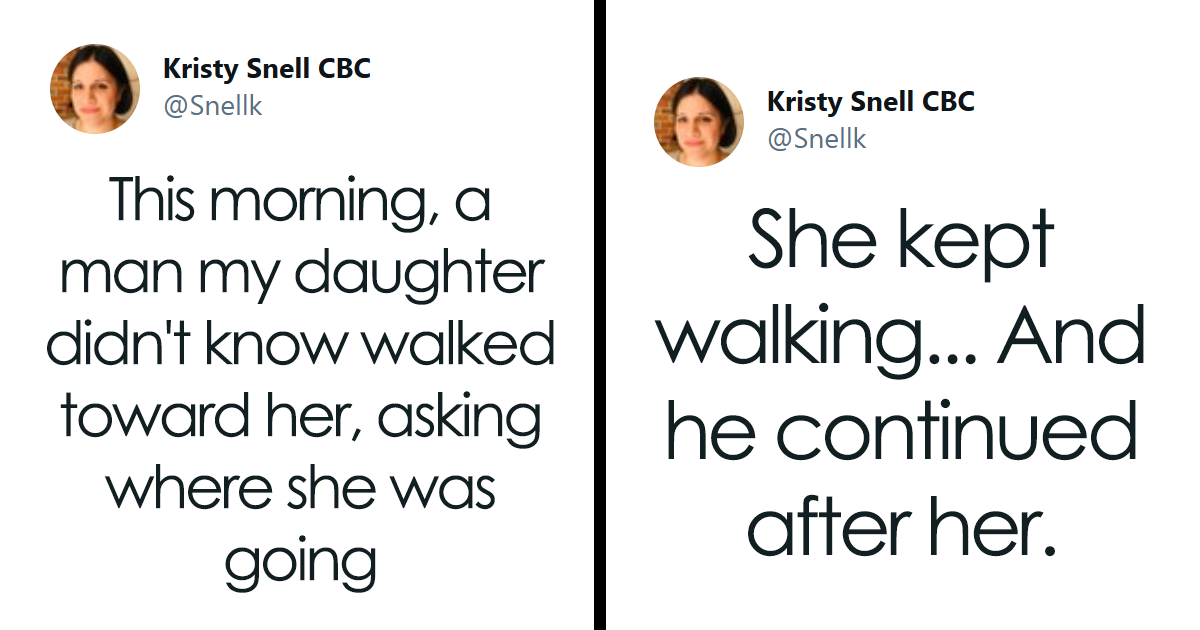
In May 2021, Canadian journalist and mother Kristy Snell shared an account of what happened to her 13-year-old daughter while the girl was heading to school. The teenager was walking through her own neighborhood, carrying a large backpack and lunch bag, when a man she did not know approached her.
According to Snell’s account, the man initially walked toward the girl and then changed direction to follow her. He called out, moved into her personal space, and asked where she was going. The teenager kept walking, but the man continued behind her.
That detail matters. A stranger does not have to touch someone for an encounter to become threatening. Persistent following, unwanted questions, crowding, and refusal to respect distance can create a genuine fear of harm. A child may not know whether the person is merely behaving badly or preparing to do something worse. She has to make safety decisions while her nervous system is sounding every alarm it owns.
“`
A Neighbor Named Andrea Saw the Warning Signs
A neighbor named Andrea noticed the interaction from across the street. Rather than assuming everything was fine or waiting for someone else to investigate, she hurried over, joined the teenager, and escorted her toward the metro station.
The girl reached safety physically unharmed, although she was crying and badly shaken. Snell later expressed gratitude for Andrea’s intervention and reportedly planned to thank her with cupcakes. Cupcakes are optional, of course. Looking out for children in the neighborhood should not be.
The incident ended without physical violence, but the emotional harm was real. A sunny trip to school had been transformed into a lesson about vulnerability, uncertainty, and how quickly a familiar street can feel hostile.
“`
Why the Story Resonated With So Many Families
The story spread widely because countless women and girls recognized the experience. Many have been followed, watched, cornered, shouted at, questioned, or pressured by strangers in public. These encounters are sometimes dismissed because “nothing happened,” meaning no physical assault occurred. That standard ignores what the targeted person actually endured.
Something did happen. The teenager was frightened in a place where she normally felt secure. She had to assess an adult man’s intentions while trying to continue her route. She learned that a routine walk could be interrupted by someone who felt entitled to her attention.
The viral headline described the man’s behavior as stalking. In everyday conversation, that word often refers to being deliberately followed. Legal definitions vary by jurisdiction and commonly require a repeated course of conduct, so “following” or “harassing” may be more precise when describing a single documented incident. Whatever label is used, the girl’s fear should not be minimized.
“`
Knowing Safety Rules Is Not the Same as Experiencing Danger
Snell’s daughter had previously discussed safety with her family. Yet afterward, she explained that knowing what to do had not prepared her for how powerless the encounter would make her feel.
That distinction is important. A teenager may know several sensible actions and still freeze, cry, lose track of her surroundings, or struggle to speak. These are normal stress responses, not failures of character. The responsibility belongs to the person creating the danger, not to the child for failing to produce a flawless action-movie escape sequence.
“`
How the Neighbor Practiced Effective Bystander Intervention
Andrea’s response worked because it was immediate, practical, and centered on the teenager. She did not need to debate the man, solve the mystery of his intentions, or deliver a dramatic speech. She recognized distress and made the child less isolated.
Bystander-intervention programs often teach several possible approaches: distract the harasser, directly address the behavior when safe, delegate to someone with authority, document relevant details, or check on the targeted person afterward. The safest choice depends on the setting and the likelihood of escalation.
“`
What a Bystander Can Do
- Approach the person being followed. A simple “Hey, there you are” can create the impression that the two of you know each other.
- Offer a safe destination. Walk with the person into a store, school, busy station, or nearby home with trusted occupants.
- Bring in help. Alert a teacher, transit employee, security worker, store manager, parent, or emergency dispatcher.
- Ask what the person needs. They may want company, a phone call, transportation, or police assistance.
- Avoid reckless confrontation. Supporting someone does not require provoking a potentially dangerous stranger.
The goal is not to become the neighborhood’s low-budget action hero. The goal is to interrupt isolation, increase safety, and get appropriate assistance.
“`
What Teenagers Can Do When Someone Follows Them
No strategy can guarantee safety, and children should never be blamed when a threatening person targets them. Still, practicing realistic options can make those options easier to remember under stress.
“`
Move Toward People, Not Toward Privacy
A teenager who believes someone is following her should move toward a populated, well-lit place such as a business, school office, library, transit booth, or group of families. Going directly home may reveal where she lives and could leave her alone at a doorway.
Be Specific When Asking for Help
Clear language can prompt faster action. Instead of quietly saying, “I feel weird,” a teen can tell a particular adult, “That man has been following me for two blocks. Please stay with me and call for help.” Pointing to one person is often more effective than making a general appeal to a crowd.
Use the Phone as a Safety Tool
When possible, teens can call a parent, trusted adult, or emergency services and describe their location, direction of travel, and the person following them. A speakerphone conversation may also signal that someone knows what is happening. Location-sharing features can help, but they should support awareness rather than replace it.
Make Noise When Necessary
Children are often taught to be polite to adults. In a threatening situation, politeness can take a well-earned vacation. A teenager has permission to shout, refuse questions, enter a business without buying anything, knock on a trusted neighbor’s door, or draw attention to unwanted behavior.
Do Not Approach a Suspicious Vehicle
If a vehicle is following alongside a child, moving in the opposite direction can force the driver to turn around. The child should avoid getting close enough for the driver or passenger to grab her and should seek adults and a safe indoor location immediately.
“`
How Parents Can Prepare Teens Without Terrifying Them
Safety education works best when it builds confidence instead of suggesting that danger is hiding behind every mailbox. Parents can acknowledge risks while reminding teenagers that most daily journeys are uneventful and that trustworthy adults are available.
“`
Create a No-Blame Communication Rule
Children should know they can report harassment, threats, unwanted attention, or mistakes without being blamed. Questions such as “Why did you go that way?” may sound practical to an anxious parent, but they can feel accusatory to a frightened child.
A better opening is: “I’m glad you told me. You did not cause this. Tell me what you need right now.” Details can be gathered after the child feels safe.
Practice Several Escape Options
Families can walk regular routes together and identify safe locations along the way. These might include a neighbor’s home, pharmacy, café, school entrance, fire station, or staffed transit area. Role-playing can cover different situations without turning dinner into a twelve-part crime documentary.
Build a Trusted-Adult Network
Parents can introduce children to dependable neighbors, relatives, school staff, and nearby business owners. Teens should know which homes they may approach and which adults they may call. A family code word can help confirm whether an unexpected person was genuinely sent by a parent.
Discuss Documentation and Reporting
Once the child is safe, write down the time, location, route, physical description, vehicle details, statements, and names of witnesses. Preserve messages or recordings if the behavior also occurred online. Contact local law enforcement when the conduct involved threats, repeated following, attempted contact, exposure, physical interference, or an immediate safety concern.
Local laws and reporting procedures differ. Families should avoid trying to investigate a suspicious person themselves, particularly when a minor is involved.
“`
Helping a Child Recover After a Frightening Encounter
Once the immediate danger has passed, adults may be tempted to celebrate the safe ending and move on. The child’s nervous system may have other plans. She might replay the incident, avoid the route, become unusually watchful, have trouble sleeping, experience headaches, or feel embarrassed about crying or freezing.
Parents can help by listening calmly and allowing the child to tell the story at her own pace. Reassurance should be honest rather than absolute. Saying “Nothing bad will ever happen” is not believable. Saying “You are safe now, we believe you, and we are making a plan together” offers something solid.
“`
Restore Choice and Routine
Threatening encounters often create a loss of control. Offer reasonable choices about returning to the route, getting a ride, walking with friends, speaking with school staff, or making a report. Maintaining ordinary routines can also signal that life remains manageable.
Temporary fear is understandable. Professional support may be helpful when distress persists, interferes with school or sleep, causes panic, or leads the child to withdraw from normal activities. A pediatrician, school counselor, therapist, or victim-support advocate can help the family decide what assistance is appropriate.
“`
Safer Neighborhoods Are Built Through Relationships
Andrea noticed Snell’s daughter because she was paying attention to the human beings around her. That is the heart of community safety. Cameras, phones, alarms, and well-lit streets can help, but technology is most useful when paired with people who care enough to act.
Neighbors can exchange contact information, introduce themselves to local families, organize walking groups, report repeated suspicious behavior, and agree on homes where children may seek help. Schools can teach students how to contact staff during their commute. Businesses can train employees to respond when someone enters and says they are being followed.
Community awareness should not become amateur surveillance or suspicion of every unfamiliar face. The focus should remain on behavior: persistent following, blocking someone’s path, unwanted sexual comments, attempts to isolate a child, or refusal to leave after being told to stop.
Related Experiences: What Similar Encounters Can Teach Us
The following composite scenarios reflect patterns commonly described in discussions of public harassment and youth safety. They are not presented as additional details from Snell’s family’s experience. Their purpose is to show how ordinary people can respond effectively.
“`
The Bus-Stop Bystander Who Pretends to Be an Aunt
A middle-school student is waiting at a bus stop when an older man begins asking personal questions. He wants to know her name, school, and whether she lives nearby. She gives short answers and moves away, but he follows her along the bench.
A woman waiting nearby notices that the girl is gripping her backpack and repeatedly looking toward the road. The woman walks over and cheerfully says, “There you are. Your mom asked me to wait with you.” She positions herself between the girl and the man and quietly asks whether the child wants help.
The man leaves when the bus arrives. The woman stays with the student, helps her call a parent, and gives a description to the transit employee. Her intervention succeeds because she creates connection without immediately escalating the encounter.
The Store Employee Who Takes a Teen Seriously
Another teenager notices that the same vehicle has passed her several times while she walks home. When it slows beside her, she enters a grocery store and approaches the customer-service desk.
Instead of dismissing her concern, the employee invites her behind the counter, alerts a supervisor, and calls the teen’s family. A staff member notes the vehicle’s description from a safe distance. The teenager waits indoors until a trusted adult arrives.
This experience illustrates why children need permission to enter businesses and ask for help. It also shows why employees should have a simple response plan. A frightened minor does not need an interrogation under fluorescent lighting. She needs a safe place, a calm adult, and practical assistance.
The Child Who Freezes Despite Knowing Every Rule
A parent carefully teaches her son what to do if someone threatens or follows him. During a real encounter, however, he freezes. He cannot remember the family code word, does not shout, and later feels ashamed because he believes he “did everything wrong.”
His parent resists the urge to review his mistakes. She tells him that freezing is an automatic stress response and that getting home safely matters more than performing perfectly. Together, they practice one simple action: enter the nearest staffed building and say, “I need help.”
This approach reduces the number of decisions the child must make under pressure. It also replaces shame with preparation.
The Neighborhood That Creates a Safety Map
After several reports of unwanted attention near a school route, local families meet with school administrators and community officers. They map staffed businesses, crossing guards, public phones, and trusted homes. Parents arrange rotating walking groups while the school reminds students how to report suspicious behavior.
The plan does not promise a risk-free neighborhood. Nothing can. It does ensure that children know where to go and that adults understand their responsibilities. The most valuable result is not the map itself but the message behind it: a frightened child will be noticed, believed, and helped.
Across all these experiences, the same principles appear. Notice changes in body language. Take discomfort seriously. Reduce isolation. Seek trained help when necessary. Avoid blaming the targeted person. Most importantly, do something safe rather than assuming another witness will handle it.
“`
Conclusion: One Neighbor Changed the Ending
The encounter shared by Kristy Snell could have become far worse. Instead, Andrea recognized a teenager in distress and chose to cross the street. That seemingly simple decision changed the balance of the situation. The girl was no longer alone, the man no longer controlled the interaction, and a frightening journey ended with a safe arrival.
The story is not comforting because harassment ended forever. It is comforting because community care worked exactly when it was needed. Parents can prepare children, teens can learn practical options, schools and businesses can create safe spaces, and bystanders can intervene without turning themselves into combatants.
A watchful neighbor cannot prevent every danger. But on one bright morning, one neighbor was enough.