A Minimal Wood Bicycle Hook sounds almost too simple to deserve a full conversation. Two pieces of wood, a wall, a bicycle, and suddenly your hallway looks like a design magazine got very serious about commuting. But that is exactly the charm. A well-made wooden bike hook does not scream “garage storage system.” It whispers, “Yes, I ride, and yes, I also own a level.”
For cyclists living in apartments, townhomes, studios, small houses, or garages that have become suspiciously full of mystery boxes, the minimal wood bicycle hook solves a real problem: where do you put a bike when you want it safe, accessible, and not leaning against the dining chair like an awkward roommate? Unlike bulky floor racks or industrial steel hooks, a wooden bicycle wall hook turns the bike into part of the room. It saves floor space, protects the frame when properly padded, and gives your bicycle a place that feels intentional rather than accidental.
This guide explores what a minimal wood bicycle hook is, why it works so well, what to look for before buying one, how to install it safely, and how to style it in a real home without making your living room feel like a repair shop with throw pillows.
What Is a Minimal Wood Bicycle Hook?
A minimal wood bicycle hook is a wall-mounted bike storage solution made primarily from wood. Most designs use two short arms, pegs, cradles, or hook-like supports that hold the bicycle by the top tube, frame, or sometimes by the wheel, depending on the model. The “minimal” part refers to its clean form: no oversized rails, no complicated folding machinery, no neon-orange garage brackets that look like they escaped from a hardware aisle.
These hooks are often made from oak, walnut, maple, ash, birch plywood, beech, or other hardwoods. Some include leather, felt, cork, EVA foam, or rubber padding where the bike touches the mount. Others use hidden screws, brass details, satin lacquer, natural oil, or matte finishes to blend with modern interiors. The best ones look good even when the bike is not hanging on themwhich matters, because sometimes your bike is out on the road doing bike things.
Why Choose Wood Instead of Metal?
Metal bike hooks are practical, affordable, and strong. They are also often designed for garages, sheds, and utility rooms. Wood brings a softer, warmer look that works better indoors. A minimal wooden bike hook can match hardwood floors, walnut desks, Scandinavian furniture, white walls, black fixtures, or a mid-century entryway setup. In short, it helps your bike storage look like a choice, not a compromise.
Wood also has a tactile advantage. A smooth hardwood hook feels more furniture-like than a steel arm. When paired with proper padding or a carefully rounded profile, it can cradle a bike frame without creating harsh pressure points. That said, wood is not magical. It must be properly designed, securely mounted, and rated for the weight of your bicycle. A lovely hook installed badly is just a decorative way to introduce your bike to gravity.
The Main Benefits of a Minimal Wood Bicycle Hook
1. It Saves Floor Space
The biggest reason people buy a bicycle wall hook is space. Bikes are long, handlebars are wide, pedals are sneaky ankle attackers, and a bike leaning in the wrong place can make a small room feel smaller. Mounting your bicycle on the wall clears the floor and makes narrow spaces easier to use.
For apartments, a horizontal wood bicycle hook works especially well in entryways, above low furniture, beside a desk, or along a hallway with enough clearance. In garages, it can lift a favorite road bike or commuter bike above bins, tools, or seasonal items.
2. It Turns the Bike Into Wall Art
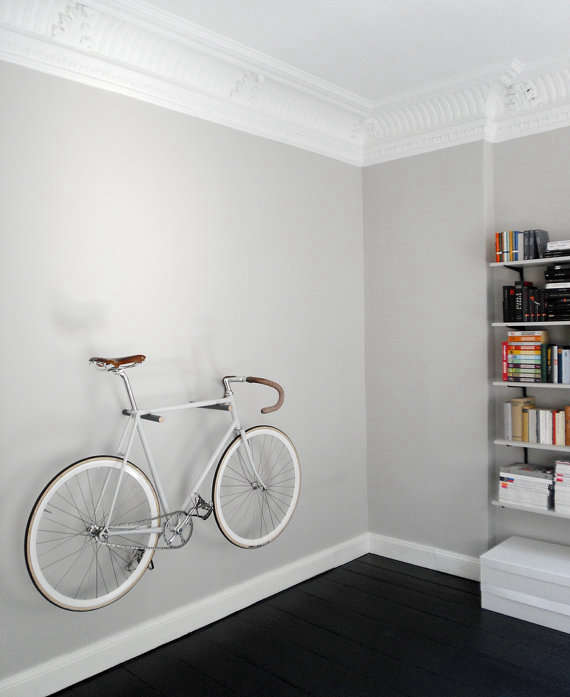
A clean bicycle frame already has a sculptural quality. A minimal wood bicycle hook simply gives it a stage. Road bikes, gravel bikes, fixies, and vintage steel frames look especially sharp on wooden wall mounts because the open frame shape contrasts beautifully with the warmth of wood.
This is why many wooden bike racks are marketed not only as storage but also as display pieces. For riders who love their bikesand possibly name them, no judgmentthe hook becomes part of the home’s personality.
3. It Keeps the Bike Easy to Access
Good storage should not punish you for using the thing it stores. A bike buried behind a lawn chair, two suitcases, and a box labeled “miscellaneous cables” is not convenient. A minimal wall hook keeps the bike visible and reachable. That makes daily rides easier and encourages regular use.
The right mounting height matters. Place the hook too high and every ride begins with an overhead weightlifting session. Place it too low and the wheels still steal floor space. The sweet spot is usually a height where you can lift the bike comfortably while keeping the bottom wheel, pedal, and handlebar clear of traffic paths.
4. It Works With Many Interior Styles
Minimal wood bicycle hooks are surprisingly flexible. In a modern apartment, choose black walnut or stained oak with hidden hardware. In a bright Scandinavian-style room, natural maple or ash looks clean and calm. In an industrial loft, oak with black fasteners or brass details can bridge the gap between rugged and refined.
Because the shape is simple, the hook does not fight with the room. It supports the star of the show: the bicycle.
Important Features to Look For
Weight Capacity
Always check the manufacturer’s weight rating. Many standard wall-mounted bike racks support bikes in the 40-pound range, while heavier-duty options can handle more. Lightweight road bikes and fixed-gear bikes are usually easy candidates for wooden hooks. Heavier mountain bikes, cargo bikes, fat-tire bikes, and e-bikes require extra caution because their weight and frame geometry may exceed what a minimal wooden hook is designed to hold.
If the product description does not clearly state weight capacity, do not guess. The wall does not care about optimism.
Frame Compatibility
Most horizontal wooden bicycle hooks support the bike by the top tube. That works beautifully for many diamond-frame bikes, but not all bicycles have a straight top tube. Step-through frames, full-suspension mountain bikes, small kids’ bikes, and some e-bikes may not sit evenly on simple peg-style mounts.
Before buying, measure the inside triangle of the frame, the slope of the top tube, handlebar width, and pedal position. A hook that looks perfect online may sit awkwardly if your bike has unusual geometry.
Protective Padding
Look for padding where the bike touches the hook. Leather, felt, rubber, cork, and foam can help protect the finish from scuffs. This is especially important for painted frames, carbon frames, polished metal, or bikes you care about enough to wipe down after rainy rides.
If the hook does not include padding, you can sometimes add discreet adhesive felt or leather strips. Keep it neat. The goal is “boutique storage,” not “craft project after midnight.”
Strong Mounting Hardware
A wall-mounted bicycle hook is only as strong as the wall and fasteners behind it. The safest installation is usually into a wood stud or solid structural backing. Drywall alone is not ideal for supporting a dynamic load, especially when you are repeatedly lifting a bike on and off the hook.
Quality wooden hooks should include appropriate screws, clear instructions, and mounting holes designed for secure attachment. For masonry, brick, or concrete, use compatible anchors and follow the hardware specifications carefully.
Finish and Moisture Resistance
Wood responds to moisture, sunlight, and temperature. If the hook will live in a garage, mudroom, or humid entryway, look for a sealed finish such as lacquer, oil, polyurethane, or another protective coating. Avoid placing unfinished wood where wet tires, damp walls, or direct sun can cause warping, discoloration, or cracking over time.
How to Install a Minimal Wood Bicycle Hook Safely
Step 1: Choose the Location
Start by holding the bike near the wall and checking real-world clearance. Pay attention to handlebar width, pedal position, door swings, hallway traffic, and whether the rear wheel might mark the wall. A beautiful bike mount behind a door is only beautiful until the doorknob introduces itself to your derailleur.
Step 2: Find the Stud
Use a stud finder to locate a wall stud. Mark the center, then verify it if needed. Studs give the screws something solid to bite into. If you cannot mount into a stud, use heavy-duty anchors rated for the load and wall type, but understand that anchors have limits. For a bike you use often, structural mounting is strongly preferred.
Step 3: Measure Twice
Measure the distance between the hook arms or mounting points. Use a level so the bike will sit straight. A slightly crooked hook can make a perfectly normal bicycle look like it is questioning its life choices.
Step 4: Drill Pilot Holes
Pilot holes help prevent wood splitting and make screw installation cleaner. Use the drill bit size recommended by the manufacturer. If you are drilling into masonry, use the correct masonry bit and anchors.
Step 5: Attach the Hook
Drive the screws firmly, but do not overtighten to the point of crushing the wood or damaging the finish. Check that the hook feels solid before placing the bike on it.
Step 6: Test Carefully
Lift the bike onto the hook slowly. Watch how the frame rests, whether the bike tilts, and whether any part rubs the wall. Remove the bike and tighten hardware if needed. After a few days of use, check the screws again.
Best Places to Use a Wooden Bike Hook
Apartment Entryway
An entryway is ideal for daily riders. You come home, lift the bike, and everything is tidy before your helmet even hits the shelf. Add a small tray for keys and lights, and your commute station is complete.
Living Room
If your bicycle is stylish, clean, and part of your lifestyle, the living room can work beautifully. Choose a wood tone that matches existing furniture and keep the surrounding wall simple. The bike becomes the artwork, so avoid overcrowding the area with too many frames or decorations.
Home Office
A bike above or beside a desk adds personality without taking up floor space. It also gently reminds you to ride after work instead of opening seventeen browser tabs about productivity.
Garage or Mudroom
In a garage, a wooden hook adds warmth and organization. Just make sure the wood is sealed and protected from moisture. If the bike is often dirty, install a small wall guard or washable panel behind the wheels.
Minimal Wood Bicycle Hook vs. Other Bike Storage Options
Wood Hook vs. Steel Hook
Steel hooks are often cheaper and more rugged. Wooden hooks are more attractive indoors and better suited for design-conscious spaces. Choose steel for heavy utility use and wood for visible home storage where appearance matters.
Wood Hook vs. Floor Stand
Floor stands require no wall drilling and are easy to move. However, they take up floor space. A minimal wood bicycle hook is better when you want the room to feel open and uncluttered.
Wood Hook vs. Ceiling Hoist
Ceiling hoists are excellent for garages with high ceilings, but they are less convenient for daily use. A wall hook is faster, simpler, and usually better for bikes you ride frequently.
Wood Hook vs. Multi-Bike Rack
Multi-bike racks are great for families or serious cyclists with several bikes. A minimal wooden hook is better for one prized bicycle or a small collection displayed across a wall with careful spacing.
Design Tips for a Better-Looking Bike Wall
First, keep the wall clean. Scuff marks from tires can ruin the polished effect. Use a clear wall protector, painted wood strip, or subtle tire tray if the wheel touches the wall.
Second, match materials. A walnut hook looks excellent near walnut furniture. Oak works well with light floors and neutral rooms. Black-stained wood suits modern interiors with dark metal accents.
Third, leave breathing room. Do not crowd the bike between shelves, lamps, and framed prints. A bicycle has visual width, especially at the handlebars. Treat it like a large piece of wall art.
Fourth, think about lighting. A small wall light or natural light from a nearby window can make the bike display feel intentional. Just avoid harsh direct sunlight on both the bike and the wooden hook for long periods.
Common Mistakes to Avoid
Ignoring the Bike’s Weight
Not every hook is built for every bike. E-bikes, cargo bikes, and heavy mountain bikes need stronger storage systems. When in doubt, choose a higher-rated mount or consult a professional installer.
Mounting Only Into Drywall
Drywall is not a structural superhero. For regular use, mount into studs whenever possible. If you must use anchors, choose the correct type and rating for your wall and bike weight.
Forgetting Handlebar Clearance
The frame may fit perfectly, but the handlebars might stick out farther than expected. Measure the full width before drilling holes.
Skipping Wall Protection
Even a clean bike can leave tire marks over time. A small wall guard keeps the display looking fresh.
Installing Too High
A bike hook should make storage easier, not turn every ride into an Olympic lift. Choose a comfortable height based on your strength, ceiling height, and bike weight.
Who Should Buy a Minimal Wood Bicycle Hook?
A minimal wood bicycle hook is a smart choice for riders who want indoor bike storage that looks refined. It is especially suitable for apartment dwellers, design lovers, commuters, road cyclists, gravel riders, and anyone who wants a bicycle rack that does not look like it belongs beside a lawn mower.
It may not be the best choice for very heavy bikes, households with many bikes, renters who cannot drill into walls, or riders who frequently store muddy bikes indoors. In those cases, a freestanding rack, garage rail system, or heavy-duty steel wall mount may be more practical.
Care and Maintenance
Maintaining a minimal wood bicycle hook is easy. Dust it occasionally with a soft cloth. Check the mounting screws every few months, especially if the bike is used daily. Keep the wood away from standing moisture and wipe off any water from wet tires or frames before hanging the bike.
If the hook uses leather or felt padding, inspect it for wear. Replace padding if it becomes compressed, torn, or dirty. For oiled wood, follow the maker’s care instructions; some pieces may benefit from occasional re-oiling. For lacquered or sealed wood, avoid abrasive cleaners.
Experience Notes: Living With a Minimal Wood Bicycle Hook
The first thing you notice after installing a minimal wood bicycle hook is not the hook itself. It is the floor. Suddenly, the same room feels larger. The bike that once leaned against the wall, slid two inches every time someone walked past, and occasionally jabbed a pedal into an innocent shin now has a proper address. It is amazing how much calmer a space feels when a bicycle stops behaving like loose furniture.
Using a wooden hook daily also changes how you treat the bike. When the bicycle is displayed at eye level, you notice details more often: a dusty chain, a low tire, a smudge on the top tube, a light that needs charging. That visibility can make maintenance easier because small problems are harder to ignore. The bike becomes part of your routine instead of a thing you remember only when you are already late.
The best experience comes from placing the hook where your natural movement already happens. Near the front door, it becomes part of the commute ritual. Helmet off, bike up, shoes changed, life continues. In a home office, it creates a quiet nudge toward movement after hours of sitting. In a living room, it becomes a conversation starter. Guests will either admire it or ask whether it is safe. Both reactions are normal.
One practical lesson: clean the tires before hanging the bike indoors. A minimal wood bicycle hook may be elegant, but tire dust on a white wall is not exactly gallery-level sophistication. A small microfiber cloth nearby solves the problem. Another useful trick is adding a discreet wall protector behind the rear wheel. It can be clear acrylic, painted wood, or a slim rubber pad. Done well, nobody notices it, which is the highest compliment for functional design.
The lifting motion matters too. A lightweight road bike is easy to hang with one smooth movement. A heavier commuter bike with racks, fenders, lights, and a lock attached can feel less graceful. Removing a heavy U-lock before lifting makes the process easier. So does choosing a height that does not require raising the bike above shoulder level. Good design should flatter your habits, not expose your lack of gym membership.
Over time, the wooden hook becomes less of a product and more of a small piece of household infrastructure. You stop thinking about it. That is when it is doing its job well. The bike is safe, the room is clearer, and the hook quietly holds everything together. Minimal design is not about having less for the sake of less. It is about removing the unnecessary so the useful thing can work beautifully.
For anyone who loves cycling but also loves a tidy home, a minimal wood bicycle hook is one of those rare objects that satisfies both sides. It respects the bike as equipment and as design. It saves space without making the room feel like storage. And it proves that even a humble wall hook can have a little personalitypreferably one made of walnut, mounted level, and strong enough to keep gravity out of the conversation.
Conclusion
A Minimal Wood Bicycle Hook is more than a pretty place to hang a bike. It is a smart storage solution for modern homes, small apartments, stylish garages, and riders who want convenience without visual clutter. The best wooden bike hooks combine strong mounting hardware, thoughtful frame support, protective padding, and a finish that complements your room.
Before choosing one, check your bike’s weight, frame shape, wall type, and available clearance. Install it into a stud whenever possible, protect the wall from tire marks, and place it at a height you can use comfortably. Do that, and your bicycle becomes easier to store, easier to admire, and much less likely to fall over during dinner.
Note: This article was written in original American English and synthesized from current real-world guidance on bicycle wall storage, home installation practices, wood bike mounts, wall anchors, stud mounting, and indoor bike organization.