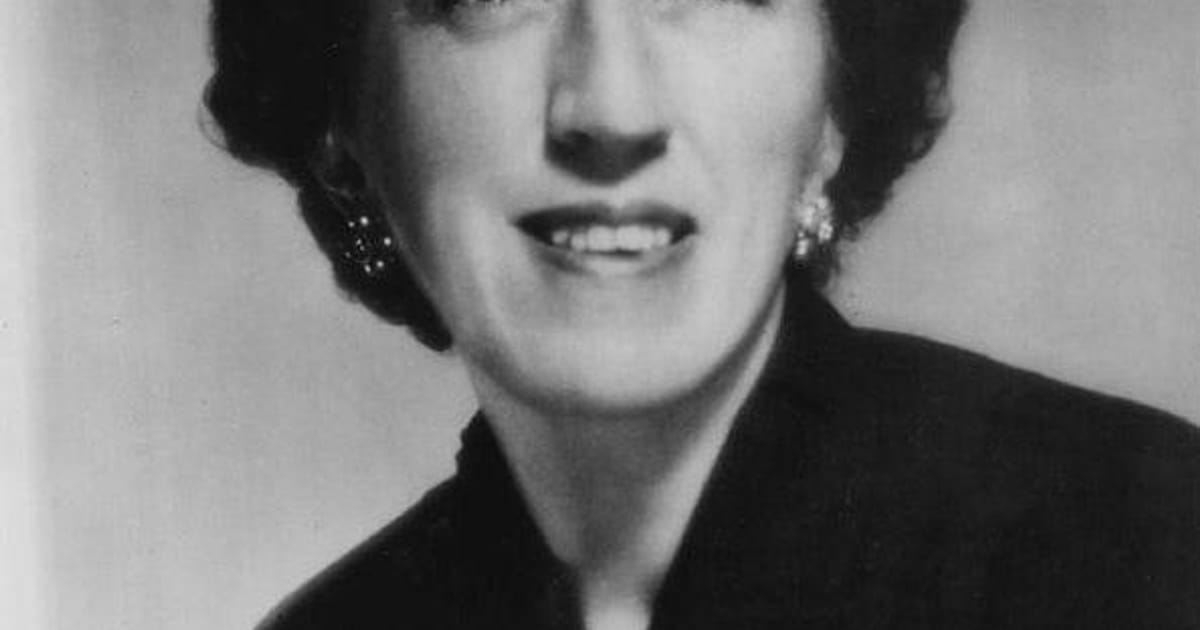
Type “Margaret Hamilton” into a search bar and you don’t just get one icon – you get two.
One Margaret Hamilton is the math-loving software engineer whose code helped land Apollo 11 on the moon and essentially invented modern software engineering.
The other is the character actress whose cackling Wicked Witch of the West became one of the most feared (and loved) movie villains of all time.
Together, they dominate two very different kinds of rankings: “greatest programmers” lists and “most unforgettable villains” polls.
This guide dives into how both Margaret Hamiltons are ranked, what critics and fans say about them, and why their reputations keep growing decades after the Apollo missions and
The Wizard of Oz. Think of it as a crossover episode between tech history and classic Hollywood – with a little bit of opinionated commentary thrown in.
Meet the Two Margaret Hamiltons Everyone Talks About
Margaret Hamilton, the Apollo Software Engineer
Margaret Elaine Heafield Hamilton, born in 1936 in Indiana, is the American computer scientist who directed the Software Engineering Division at MIT’s Instrumentation Laboratory.
Her team designed and wrote the onboard flight software for NASA’s Apollo Guidance Computer, which flew on both the command and lunar modules during the moon missions.
Hamilton’s rigorous approach to error detection and recovery – including the famous “priority displays” that surfaced critical alerts – helped save the Apollo 11 landing when the guidance
computer started throwing overload alarms just minutes before touchdown. Instead of crashing, the software calmly dropped low-priority tasks and kept the landing sequence running.
Over time, Hamilton became widely credited with popularizing the very term “software engineering,” framing programming as a serious engineering discipline at a moment when software was often treated as a fuzzy afterthought.
She later founded companies such as Higher Order Software and Hamilton Technologies, continued publishing, and in 2016 received the Presidential Medal of Freedom for her contributions to the Apollo program.
The photo that shows her standing beside a towering stack of printed Apollo code – almost as tall as she is – has become internet-famous.
It circulates widely on blogs, educational sites, and social media posts celebrating women in STEM, often captioned as “the code that took us to the moon.”
Margaret Hamilton, the Wicked Witch of the West
The other Margaret Hamilton, born in 1902 in Ohio, worked as a character actress in film, TV, and radio.
Her most legendary role is the Wicked Witch of the West in MGM’s 1939 classic The Wizard of Oz.
Her sharp features, green makeup, and chilling cackle turned a fairy-tale villain into an archetype – so iconic that kids for generations have ducked behind the couch when she rides in on that broomstick.
The American Film Institute’s major ranking of screen villains places the Wicked Witch at number four among the 50 greatest movie villains ever – and the single greatest female villain on film.
That one list alone keeps her in constant “best movie villain” debates, especially whenever people argue about which evil character scared them most as children.
Off screen, Hamilton was known as warm and modest, later appearing on Mister Rogers’ Neighborhood to reassure children that witches are just actors in costumes, “nice ladies” playing pretend.
The contrast between her gentle personality and her terrifying on-screen persona is a big part of why fans still rave about her performance.
How the Internet Ranks Margaret Hamilton the Software Engineer
From “Forgotten” to Front-Page STEM Hero
For years, Margaret Hamilton’s role in Apollo flew under the mainstream radar.
In tech and history circles, she was always respected, but she didn’t have the same name recognition as astronauts like Neil Armstrong.
That changed as the web began rediscovering overlooked women in science and engineering.
Articles on history and science platforms now regularly list her as one of the key figures without whom the moon landing might not have happened.
She appears in modern “incredible women forgotten by history” lists, often highlighted for leading the huge software effort behind Apollo 11 and for keeping the mission alive when the computer alarms started ringing.
Today, if you browse rankings of “most influential programmers” or “women who changed technology,” you’ll usually see Hamilton’s name alongside Ada Lovelace, Grace Hopper, and other pioneers.
Opinion pieces in outlets like Wired and Vox frame her as one of the people who defined what software engineering even is, thanks to her insistence on rigor, testing, and reliability in an era of punch cards and core memory rather than cloud services.
The Fame of a Single Photograph
In internet culture, however, Hamilton may actually rank number one in a very specific category: “Most Shared Photo of a Programmer Ever.”
That famous image of her with the towering stack of Apollo code has become a meme in the best possible way – it shows up in articles about women in STEM, inspirational posters, social media threads, and STEM classroom presentations.
It’s also heavily featured on educational blogs that highlight her as a role model for girls interested in coding and space.
In comment sections and tech forums, you’ll often see people ranking her as a “top-tier engineer” or “the mother of all mission-critical code.”
While those aren’t official lists, the sentiment is consistent: Hamilton is viewed as someone whose work meets the highest bar for reliability – the kind where failure means losing a spacecraft and human lives.
Professional Respect and Long-Term Legacy
When NASA and related organizations discuss their software engineering heritage, Hamilton’s team and the Apollo Guidance Computer are frequently used as a benchmark for reliability and process discipline.
Technical retrospectives point out that there were no known software bugs during any crewed Apollo mission – an astonishing fact that boosts her reputation among engineers.
Add to that her Presidential Medal of Freedom, decades of publications, and the continuing use of Apollo software as a teaching example, and it’s no surprise that rankings and expert opinions tend to place her near the very top of any list of space-program innovators.
How the Wicked Witch Ranks in Pop Culture
Fourth-Greatest Film Villain – and the Top Witch
If we switch over to pop culture rankings, Margaret Hamilton the actress enjoys an equally elite placement – just in a very different category.
According to the American Film Institute’s widely cited list of the 50 greatest screen villains, the Wicked Witch of the West ranks fourth overall and first among female villains.
That’s ahead of many modern cinematic bad guys armed with CGI, massive budgets, and Dolby Atmos sound.
Hamilton achieved her impact with practical effects, intense performance, and a voice that could slice through a crowded movie theater.
Classic movie fan communities and social media groups frequently echo this ranking.
Posts praising her “indelible” witch and calling her “the best witch ever” routinely rack up likes and nostalgic comments from viewers who were terrified of her as children but now admire the craft behind the performance.
Opinion Polls, Fan Lists, and Nostalgia
In online polls and ranking lists where fans vote for “scariest movie villains,” “most iconic witches,” or “best performances in The Wizard of Oz,” Hamilton’s Wicked Witch almost always lands near the top.
She’s usually competing with characters like Darth Vader, Hannibal Lecter, and Norman Bates in the upper tiers of villainy.
Pop culture articles also highlight how physically demanding and risky the role was – from intense makeup to on-set accidents – which adds to the sense that Hamilton gave more than just a performance; she poured herself into creating a character who still haunts audiences decades later.
Interestingly, while young viewers might not remember her name, they instantly recognize the silhouette: the pointed hat, long nose, and broom are now visual shorthand for “witch,” even in media that has nothing to do with Oz.
That kind of visual dominance is its own kind of top ranking.
Side-by-Side: Which Margaret Hamilton Comes Out on Top?
So if we had to rank the two Margaret Hamiltons, who “wins”? Spoiler: there’s no real loser here.
In Science and Engineering Circles
Among engineers, computer science students, and space history buffs, the software engineer is the clear number one.
She’s held up as a model of careful design, thorough testing, and anticipating failure in complex systems – exactly the habits modern software teams strive for when building mission-critical or safety-critical systems.
She also stands out as proof that women were present and instrumental at the dawn of modern computing, despite cultural stereotypes and historical erasure.
In that sense, she ranks not just as a great engineer but as a crucial counterexample to the “tech is a boys’ club” narrative.
In Pop Culture and Everyday Conversation
In everyday conversations about movies, childhood fears, and Halloween costumes, the Wicked Witch often gets more immediate recognition.
People may not know her first name, but they can quote her: “I’ll get you, my pretty, and your little dog too!” and instantly hear the voice.
When fans rank their favorite movie witches, Hamilton’s character virtually always appears at or near the top, overshadowing later interpretations of similar archetypes.
For sheer cultural penetration – especially outside technical circles – the actress arguably takes the crown.
Why Both Margaret Hamiltons Still Matter
Taken together, these two careers show how influence can look completely different while being equally powerful.
-
In engineering: Hamilton’s Apollo software reminds us that behind every historic “giant leap,” there are teams of people quietly anticipating every possible failure mode.
Her methodical thinking still shows up in how we teach software reliability, fault tolerance, and formal verification today. -
In storytelling: Hamilton’s Wicked Witch demonstrates how a single performance can define a character archetype for generations.
Her villain remains a touchstone for actors, designers, and writers trying to balance menace, personality, and a dash of camp.
Whether your interests lean more toward source code or classic cinema, there’s a Margaret Hamilton to admire – and in both cases, the rankings and opinions are clear: she’s near the very top of her field.
Experiences, Fan Debates, and Personal Takeaways
Spend enough time scrolling through online rankings and you start to see the same patterns in how people talk about both Margaret Hamiltons – and those patterns say a lot about what we value.
In engineering communities, the conversation often starts with that Apollo photograph.
Students seeing it for the first time are struck by how physical software once was: not gigabytes floating in the cloud, but binders of code stacked taller than the person who wrote it.
In classrooms, instructors use that image as a springboard to talk about constraints – how Hamilton’s team had to squeeze guidance software into tiny amounts of memory, write error-handling for every imaginable edge case, and do it all without modern debugging tools.
In interviews and retrospectives, engineers describing mission-critical projects still reference Apollo as the gold standard.
When they talk about “Hamilton-level reliability,” they mean designs where every failure mode has been mapped out, rehearsed, and guarded against.
The fact that crewed Apollo missions never experienced a known software bug has become a kind of mythic benchmark – something modern teams aspire to, even when today’s systems are far more complex.
On the fan side, posts about the Wicked Witch usually spark a very different kind of discussion.
People remember hiding under blankets during the flying monkey scenes or feeling uneasy whenever the green face appeared in close-up.
Many comment that rewatching the film as adults gives them new appreciation for how layered Hamilton’s performance is: yes, she’s terrifying, but there’s also humor, timing, and a theatrical flair that makes the witch more than just a generic villain.
In nostalgia forums and classic movie groups, debates about “best movie witch” tend to include modern fantasy franchises, but the Wicked Witch often wins out because she feels so human.
Without heavy digital effects, Hamilton relied on body language, vocal delivery, and simple practical tricks – like her dramatic entrances in clouds of smoke – to command the screen.
That grounded intensity is part of why the AFI ranking still feels justified decades later.
There’s also something oddly parallel about how both Margaret Hamiltons are “rediscovered” by each new generation.
For the software engineer, it might be a teacher showing the Apollo photo during a STEM unit or a social media thread highlighting women who changed technology.
For the actress, it’s often a parent or grandparent sitting down with a child to watch The Wizard of Oz for the first time and seeing the same mixture of awe and fear light up their face.
When you put all those experiences together – the classroom moments, the movie nights, the comment sections full of admiration – a pattern emerges.
Rankings and lists are fun, but what really keeps both Margaret Hamiltons near the top is the way they make people feel: inspired, spooked, impressed, and curious.
The engineer reminds us that quiet, meticulous work can literally change the trajectory of human history.
The actress reminds us that a single performance can live rent-free in our collective imagination for generations.
So the next time you stumble across a ranking that pits great engineers against one another or stacks famous movie villains from “least scary” to “nightmare fuel,” remember this:
somewhere near the top of at least two of those lists, a Margaret Hamilton is waiting – either holding a stack of code or a broom, and absolutely owning her place in history.