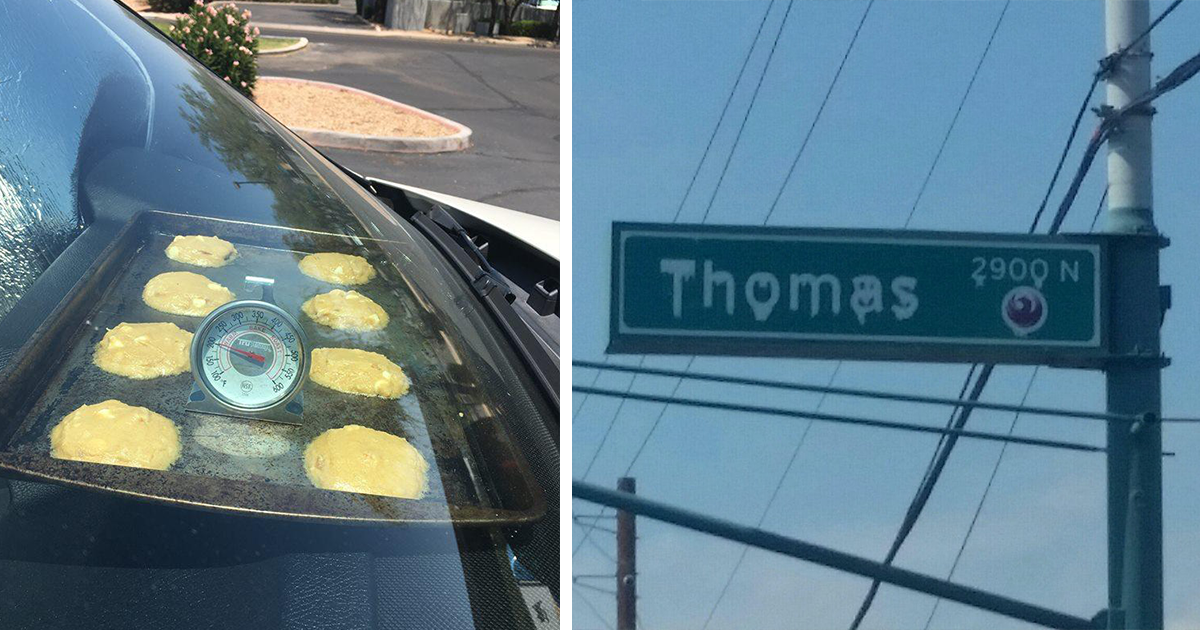
Arizona heat does not simply arrive. It makes an entrance. It kicks open the door, turns your steering wheel into a branding iron, and reminds your flip-flops that they were never emotionally prepared for asphalt. In many parts of the United States, summer means lemonade, pool floats, and maybe one dramatic complaint about humidity. In Arizona, summer can mean 110-degree afternoons, oven-like cars, pavement hot enough to injure skin, sagging plastic, exhausted air conditioners, and residents treating shade like beachfront property.
The phrase “It’s so hot in Arizona that things are literally melting” sounds like internet exaggeration, the kind of caption you expect under a photo of a warped mailbox or a sad trash bin leaning like it just heard bad news. But behind the viral humor is a very real story: extreme heat in Arizona, especially in metro Phoenix, has become longer, more intense, and more dangerous. Roads, cars, shoes, outdoor furniture, plastic bins, street signs, and even desert plants can suffer under brutal heat. More importantly, people can, too.
This article takes a closer look at why Arizona gets so hot, what kinds of things can actually melt or warp, how heat affects daily life, and what residents and visitors can do to stay safe when the desert decides to cosplay as a pizza oven.
Why Arizona Gets So Incredibly Hot
Arizona’s summer heat is not random. The state has a desert climate, intense sunshine, low humidity, and large stretches of land that absorb and radiate heat. Phoenix sits in the Sonoran Desert, where summer high-pressure systems can park overhead and trap hot air like a lid on a skillet. With fewer clouds and less moisture to moderate the temperature, sunlight goes straight to work on pavement, rooftops, vehicles, and anything else unlucky enough to be outside at 2 p.m.
The urban heat island effect makes the situation even more intense. Cities like Phoenix, Tempe, Mesa, Chandler, and Scottsdale are packed with asphalt, concrete, buildings, parking lots, and dark roofs. These surfaces absorb heat during the day and release it slowly at night. That means temperatures may not drop enough after sunset for people, animals, homes, and infrastructure to fully recover. In plain English: the city keeps baking even after the sun clocks out.
Is Arizona Really Hot Enough to Melt Things?
Yes, but with a little scientific fine print. Air temperature and surface temperature are not the same. When a weather app says it is 115 degrees Fahrenheit, the pavement, car dashboard, metal gate, or plastic mailbox sitting in direct sun may be far hotter. Asphalt and concrete can absorb enormous amounts of solar radiation. That is why a sidewalk can burn bare feet, a steering wheel can feel untouchable, and a plastic object can soften, bend, or deform.
Some viral photos of “melting Arizona” have included mailboxes, garbage bins, street signs, and plastic fixtures. Not every image shared online is independently verified, and some items may have been weakened by age, poor materials, reflected sunlight, or long-term sun exposure. Still, Arizona residents and local reports have documented everyday items showing heat damage. A school librarian in Chandler, for example, said the soles of his shoes came apart after he spent time helping children cross the street during a severe heat wave. That is not just hot. That is “your shoes are filing a workers’ compensation claim” hot.
Common Things That Can Warp, Soften, or Fail in Arizona Heat
Plastic is one of the most obvious victims. Trash cans, recycling bins, outdoor storage boxes, cheap patio furniture, garden tools, children’s toys, and mailbox parts can bend or fade after prolonged exposure. Adhesives can loosen. Rubber can crack. Vinyl can warp. The plastic trim inside vehicles can become brittle over time. Even sunglasses left on a dashboard may come back looking like they had a rough weekend.
Cars also take a beating. Extreme heat strains batteries, tires, coolant systems, belts, hoses, and air conditioning. Underinflated tires combined with hot pavement can raise the risk of blowouts. A car parked in direct sunlight can become dangerously hot in minutes, which is why children, pets, and vulnerable adults should never be left in a vehicle, even briefly. In Arizona, “I’ll only be a minute” is not a plan; it is a hazard wearing casual shoes.
Arizona Heat Is Funny Until It Is Not
The internet loves a good melting mailbox. It is strange, visual, and just absurd enough to make people click. But extreme heat is not just a quirky desert personality trait. It is a public health threat. Heat can cause dehydration, heat exhaustion, heat stroke, burns from pavement, and worsening symptoms for people with heart disease, respiratory conditions, kidney disease, diabetes, and other health concerns.
Older adults, infants, young children, outdoor workers, athletes, people without reliable air conditioning, people experiencing homelessness, and people taking certain medications face higher risk. Pets are also vulnerable. Dogs can burn their paws on pavement, overheat quickly, and struggle to cool themselves. If the pavement is too hot for your hand, it is too hot for your dog’s paws. Your golden retriever may look brave, but he is not built to be a rotisserie chicken.
What Happens to the Human Body in Extreme Heat?
Your body tries to cool itself mainly by sweating and increasing blood flow to the skin. In dry heat, sweat can evaporate quickly, which helps cooling, but it can also trick people into underestimating how much fluid they are losing. You may not feel drenched, but your body may still be losing water and salt at a rapid pace.
Heat exhaustion may bring heavy sweating, weakness, dizziness, nausea, headache, thirst, irritability, and elevated body temperature. Heat stroke is more severe and can become life-threatening. Warning signs may include confusion, fainting, very high body temperature, and loss of normal physical control. Heat stroke requires emergency medical care. This is not the moment to “walk it off.” The desert is not impressed by toughness.
Why Phoenix Nights Can Feel So Relentless
One of the most exhausting parts of Arizona heat is the lack of nighttime relief. In many places, evenings cool down enough for people to open windows, walk the dog, or recover from the day. In Phoenix, summer nights can remain brutally warm. Concrete, asphalt, and buildings continue releasing stored heat after sunset. Air conditioners run late into the night, energy bills climb, and sleep becomes harder.
Warm nights matter because the body needs recovery time. When nighttime temperatures stay high, people without reliable cooling are exposed for longer stretches. This is especially dangerous for those living in older homes, mobile homes, vehicles, tents, or apartments with poor insulation or broken cooling systems. Heat risk is not only about the daily high; it is also about how long the body is trapped in unsafe conditions.
How Extreme Heat Damages Roads and Infrastructure
Arizona roads are designed for heat, but even heat-ready infrastructure has limits. Long stretches of extreme temperature can soften pavement, stress asphalt binders, expand bridge materials, and make construction work more dangerous. Road crews, utility workers, landscapers, delivery drivers, airport ground crews, and construction teams face serious heat exposure while doing jobs the rest of us depend on.
Heat can also affect power demand. When millions of air conditioners run at full strength, the electrical grid faces heavy loads. Water systems, transit stops, public parks, schools, and emergency services all have to adapt. Shade structures, cooling centers, hydration stations, heat alerts, reflective surfaces, tree planting, and redesigned streets are not cosmetic upgrades. In Arizona, they are part of survival planning.
Desert Plants Are Tough, But Not Invincible
People often assume cactus can handle anything. That is understandable. A cactus looks like it was designed by nature after a long meeting about “low-maintenance living.” But even desert plants have limits. Extended extreme heat, drought, and reflected heat from walls, windows, rocks, and pavement can stress landscaping. Leaves scorch. Soil dries quickly. Young trees struggle. Plants in containers may cook from the roots upward.
Homeowners in Arizona often learn to rethink landscaping around shade, water efficiency, and heat tolerance. Native and desert-adapted plants can help, but placement matters. A plant that survives in open desert may still struggle next to a south-facing wall that reflects heat all afternoon. In extreme heat, even the cactus may look at the forecast and whisper, “Absolutely not.”
How Residents Adapt to Arizona’s Melting-Level Summers
Living in Arizona changes your habits. People learn to run errands early, park under shade even if it means walking farther, keep water in the car, use windshield shades, test door handles carefully, and avoid touching seat-belt buckles with bare skin. Grocery shopping becomes a timed event. Ice cream is transported like a medical organ. Chocolate left in a car is no longer candy; it is a beverage.
Many locals plan outdoor activities around sunrise. Hikers start before dawn or skip trails entirely during extreme heat warnings. Parents check playground equipment before children climb on it. Dog owners walk pets early in the morning or after pavement cools. Workers take more breaks, rotate tasks, hydrate, and look for shade. In Arizona, “summer schedule” is not a vibe. It is a practical operating system.
Safety Tips for Surviving Arizona Extreme Heat
1. Respect the Forecast
Check daily high temperatures, excessive heat warnings, and heat risk alerts. Do not base plans only on how you feel at 8 a.m. Arizona mornings can be sneaky. They start warm and polite, then turn into a convection oven by lunchtime.
2. Hydrate Before You Feel Thirsty
Drink water regularly, especially if you are outside, driving, exercising, or working. Thirst is a late reminder, not an early warning system. For longer outdoor activity, you may also need electrolytes or salty snacks, depending on your health needs and activity level.
3. Dress for Survival, Not Drama
Wear loose, lightweight, light-colored clothing. Use sunscreen, sunglasses, and a wide-brimmed hat. Breathable fabrics are your friend. Heavy dark clothing in the Arizona sun is a bold choice, and not in a good way.
4. Keep an Extreme Heat Road Kit
Drivers should carry extra water, sun protection, a charged phone, snacks, a flashlight, jumper cables or a portable battery, and any needed medication. Before longer drives, check tire pressure, coolant, battery health, and air conditioning. Arizona highways are beautiful, but they are not where you want to discover your radiator has chosen retirement.
5. Never Leave People or Pets in Cars
A parked vehicle can become dangerously hot very quickly. Cracking the windows does not make it safe. Children, pets, and older adults should never be left inside a parked car in the heat.
6. Use Cooling Centers and Public Resources
Many Arizona communities provide cooling centers, hydration stations, heat relief maps, and public alerts during extreme heat season. These resources are especially important for people without reliable air conditioning, outdoor workers, and anyone experiencing housing instability.
What Visitors Should Know Before Traveling to Arizona in Summer
Arizona is stunning in summer, but visitors should not treat it like a normal warm-weather destination. Hiking in the afternoon can be dangerous. Walking long distances without water can become risky fast. Touching metal railings, car surfaces, or playground equipment can hurt. Even short outdoor photo stops can feel intense if there is no shade.
If you are visiting Phoenix, Tucson, Sedona, Lake Havasu, Scottsdale, or the Grand Canyon region during hot months, plan carefully. Start outdoor activities early. Carry more water than you think you need. Tell someone where you are going. Avoid alcohol before outdoor heat exposure. Wear sun protection. Know the symptoms of heat illness. And please, do not attempt a midday desert hike just because the vacation itinerary has “adventure energy.” The desert has plenty of adventure. It also has no patience for poor planning.
The Bigger Picture: Climate, Growth, and the Future of Heat
Arizona’s heat problem is shaped by both natural desert conditions and human-driven changes. Climate change is increasing the odds of more intense heat events. Urban growth adds more pavement, buildings, traffic, and waste heat. At the same time, more people are moving into areas where summer heat is already extreme.
The solution is not one magic umbrella big enough to shade Phoenix, although that would be impressive. Communities need layered strategies: more shade trees where water use makes sense, reflective and cool roofing, better building standards, heat-aware urban planning, accessible cooling centers, worker protections, public transit shade, emergency alerts, and neighborhood designs that reduce heat exposure.
For homeowners, small choices matter too. Shade screens, insulated windows, lighter exterior colors, covered parking, desert-appropriate landscaping, efficient air conditioning, and smart thermostat use can improve comfort and reduce strain. For renters, safe and functioning cooling is essential. For cities, heat resilience must be treated as infrastructure, not an afterthought.
of Real-Life Experience: What “Melting Heat” Feels Like in Arizona
The first thing people notice about Arizona heat is not always the number on the thermometer. It is the sensation of opening a door and feeling the outside air push back. The heat has weight. It lands on your shoulders, fills your lungs, and makes the short walk from the parking lot to the grocery store feel like crossing a skillet. You quickly understand why locals compete for shaded parking spaces with the seriousness of Olympic athletes.
A typical summer errand can become a strategic mission. You park under the only tree in the lot, even if it is roughly in another zip code. You put up a windshield shade, crack jokes about your car becoming a toaster, and then return twenty minutes later to discover the steering wheel is still plotting against you. The seat-belt buckle is hot enough to deserve its own warning label. Any lip balm left in the cup holder has become modern art. A forgotten chocolate bar is now a puddle with branding.
Walking outside teaches you to respect surfaces. Pavement shimmers. Heat rises in visible waves. Sandals feel questionable. Thin soles suddenly seem like poor life choices. Anyone who has watched a shoe soften, a plastic bin warp, or a cheap patio chair sag in the sun understands that “melting” is not just a joke. It is what happens when materials meet relentless sunlight day after day.
Evenings bring their own strange experience. In cooler states, sunset feels like relief. In Arizona, sunset can feel like someone lowered the oven from broil to bake. The air remains hot, block walls radiate warmth, and patios may stay uncomfortable long after dark. People learn to water plants carefully, walk dogs late, and check pavement with a hand before letting paws touch it. The family dog may be enthusiastic, but enthusiasm does not protect paw pads.
There is also a social rhythm to extreme heat. Neighbors remind each other to drink water. Parents send kids to school with bottles that look big enough for a camping trip. Outdoor workers start early, take breaks, and seek shade whenever possible. Friends swap tips about the best cooling towels, strongest sunscreen, and which grocery store parking lot has the most shade. Heat becomes part of daily conversation, not as small talk, but as useful information.
And still, Arizona has beauty that survives the blast furnace. Sunrise over the desert can be breathtaking. Monsoon clouds can turn the sky theatrical. The mountains glow pink and gold. The same landscape that punishes carelessness rewards preparation. Living with Arizona heat means learning humility. You do not beat the desert by pretending to be tougher than it is. You adapt, plan, hydrate, shade yourself, protect others, and maybe stop leaving gummy bears in the car unless you enjoy drinking them.
Conclusion: Arizona Heat Is a Warning, Not Just a Meme
Arizona’s melting-level heat makes for unforgettable photos and viral jokes, but the reality is bigger than warped plastic and sticky shoe soles. Extreme heat affects transportation, homes, workers, pets, public health, energy use, and daily routines. It can damage objects, but it can also endanger lives.
The smartest response is not panic. It is respect. Respect the forecast, respect hot surfaces, respect your body’s warning signs, and respect the fact that desert heat can turn ordinary decisions into safety decisions. Arizona may be beautiful, bold, and full of sunshine, but during summer, that sunshine comes with terms and conditions.