A good scarf is one of the easiest upgrades a man can make to his wardrobe. It adds warmth, sure, but it also adds shape, color, texture, and a little bit of “this guy has his life together” energy. The problem is that many men treat scarves like emergency equipment. They grab one when the weather gets rude, wrap it around their neck like they are escaping a blizzard documentary, and call it style. That is not style. That is survival.
The truth is, learning how to wear a scarf for men is not complicated. You do not need a fashion degree, a mysterious European passport, or cheekbones sharp enough to cut glass. You just need the right scarf, the right outfit, and a few easy ways to wear it without looking overdone. In this guide, you will find 12 style ideas, practical outfit advice, common mistakes to avoid, and real-world experience tips that make men’s scarf styling feel effortless instead of awkward.
Why a Scarf Still Matters in Men’s Style
Scarves work because they solve two problems at the same time. First, they keep your neck warm, which is excellent news for anyone who enjoys not feeling like a human popsicle. Second, they help frame the face and break up the chest area of an outfit. That means even a simple coat, sweater, or denim jacket can look more complete with the right men’s scarf.
They also do something ties no longer do for a lot of guys: they add personality without making an outfit feel stiff. A scarf can look polished with tailoring, relaxed with casual wear, rugged with workwear, and refined with overcoats. That range is exactly why it remains one of the smartest cold-weather accessories in a man’s closet.
Before the Style Ideas: Choose the Right Scarf
Pick the right fabric
For everyday winter wear, wool, lambswool, merino wool, and cashmere are hard to beat. They bring warmth, texture, and a classic look that pairs well with peacoats, overcoats, bombers, and field jackets. If you want something dressier or lighter, go for silk or a silk-blend scarf. Lightweight scarves are especially useful in transitional weather when you want style without too much bulk.
Think about length and thickness
A medium-length scarf is the easiest to style. It gives you enough fabric for a drape, a loop, or a simple knot without turning your neck into a padded headrest. Chunky scarves are great for deep winter and casual outfits, but they can overpower a blazer or slim coat. Thin scarves are better for dress coats, business casual outfits, and mild weather.
Start with easy colors
If you are buying your first serious scarf, start with navy, charcoal, gray, camel, brown, or a subtle plaid. Those shades are easier to pair with men’s winter outfits and business casual looks. Bold colors and patterns can look fantastic, but they work best once the rest of your wardrobe is doing its job.
How to Wear a Scarf for Men: 12 Style Ideas
1. The Classic Drape
This is the simplest move in the book. Just place the scarf around your neck and let both ends hang down evenly in front. No knot, no loop, no drama. The classic drape works best with an overcoat, peacoat, sports coat, or blazer because the clean vertical lines look sharp and intentional.
Best for: dress coats, suits, business casual outfits, mild cold weather.
Style tip: keep the scarf medium weight and tuck it slightly inside the coat for a polished look.
2. The Once-Around Wrap
This is the scarf style most men naturally discover after realizing their neck is, in fact, exposed to wind. Drape the scarf around your neck with one end longer than the other, then wrap the longer end around once and leave both ends hanging. It looks relaxed, masculine, and practical.
Best for: casual jackets, wool coats, leather jackets, and city commutes.
Style tip: let the ends stay uneven for a more natural, less fussy appearance.
3. The Parisian or French Loop
Fold the scarf in half, place it around the back of your neck, and pull both loose ends through the loop. This is one of the most popular scarf knots for men because it is easy, neat, and warm. It works especially well with medium-weight wool and cashmere scarves.
Best for: overcoats, puffer jackets, peacoats, and clean casual outfits.
Style tip: do not yank it tight enough to look like your scarf is trying to collect rent from your throat. Leave a little breathing room.
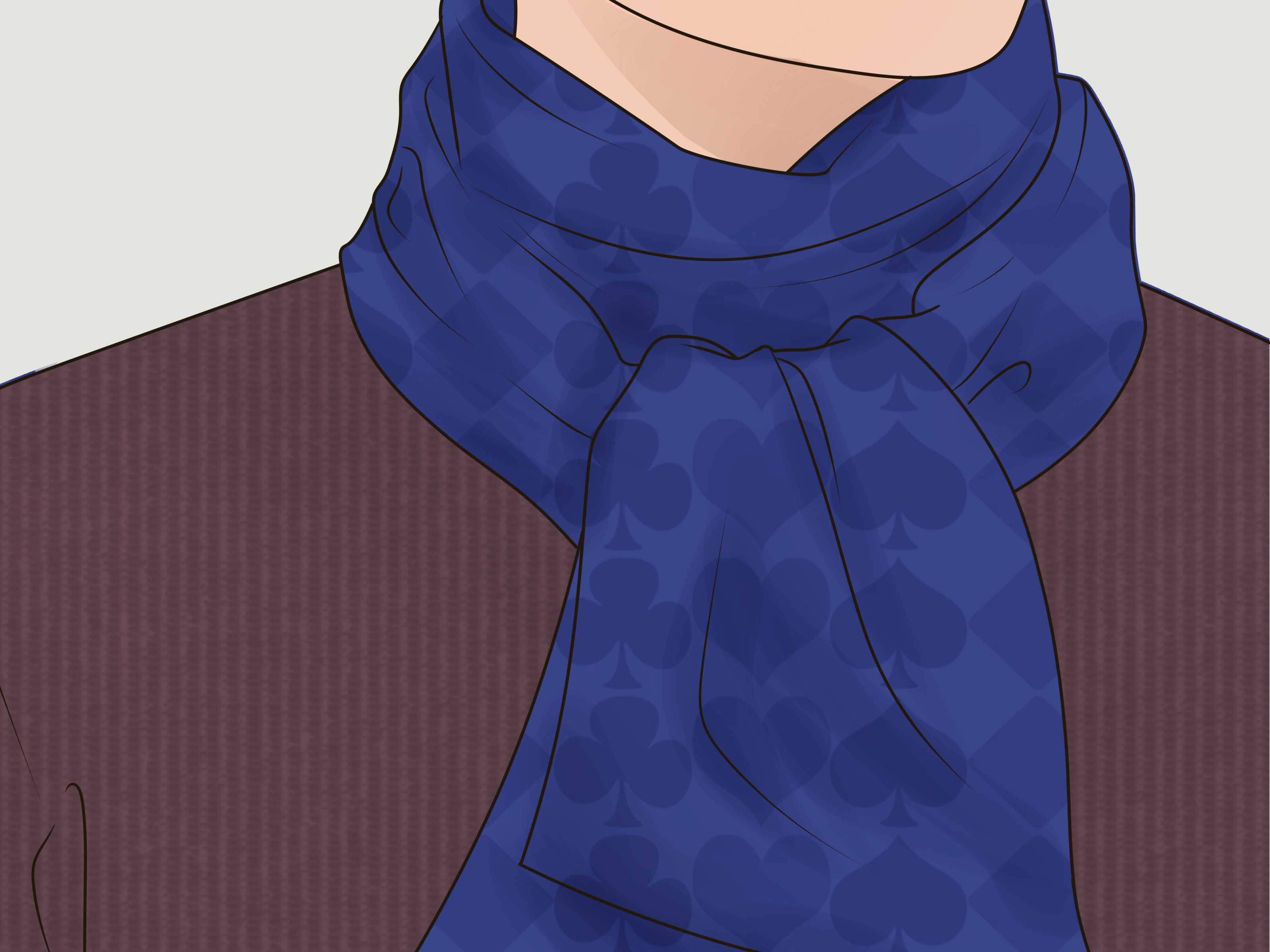
4. The Overhand Knot
Drape the scarf around your neck, make one end slightly longer, then tie a simple loose knot in front. This style feels tidy and classic without being too formal. It is a great middle ground between a relaxed drape and a more secure winter wrap.
Best for: smart casual outfits, wool coats, and office wear.
Style tip: keep the knot loose and centered. A scarf should not look like it is auditioning to be a necktie.
5. The Reverse Drape
Put the scarf around your neck evenly, then throw both ends over your shoulders so they hang behind you. It sounds dramatic, but in the right outfit it looks confident and modern. This is more about style than insulation, so save it for cool days rather than freezing weather.
Best for: tailored overcoats, fashion-forward city looks, and short walks when you want flair.
Style tip: wear this with structured outerwear so the silhouette stays sharp.
6. The Fake Knot
This one looks more advanced than it is. Drape the scarf with one end longer, create a loose loop on the longer side, then thread the other end through it. Once adjusted, it gives the outfit a refined, intentional finish. It is excellent when you want a scarf style that looks elevated without a huge amount of bulk.
Best for: dress coats, date-night outfits, elevated winter style.
Style tip: choose a smooth wool or cashmere scarf so the knot sits cleanly.
7. Tucked Into an Overcoat
This is less a knot and more a styling trick, but it is one of the best ways to wear a scarf for men who like a clean silhouette. Start with a drape or simple wrap, then tuck the scarf ends inside your overcoat. The result is sleek, understated, and very grown-man-on-purpose.
Best for: formal coats, suits, office outfits, dinners, and events.
Style tip: choose a scarf color that complements the coat instead of matching it too perfectly. Charcoal coat plus burgundy scarf? Strong move.
8. With a Blazer or Sport Coat
A scarf can absolutely work with tailoring as long as the fabric is refined and the bulk stays under control. A lightweight wool, cashmere, or silk-blend scarf draped inside a blazer or sport coat adds texture and visual interest without making you look like you are preparing for a snowstorm in a conference room.
Best for: business casual, dinners, holiday events, smart layering.
Style tip: keep the scarf slim and soft. Chunky knits and unstructured tailoring rarely get along.
9. With a Leather Jacket
This combination has real character. A leather jacket can sometimes look a little too tough-guy by itself, but a scarf softens the look in a good way and adds dimension. Try a once-around wrap or a loose overhand knot with a wool scarf in gray, black, or deep olive.
Best for: weekend wear, casual nights out, cold-weather street style.
Style tip: avoid overly polished silk scarves here. Texture is your friend.
10. With Denim or a Chore Coat
If your style leans rugged, workwear-inspired, or casually practical, a scarf can still fit right in. Pair a textured scarf with a denim jacket layered over a henley, flannel, or crewneck sweater, or wear it with a chore coat for an easy off-duty outfit.
Best for: casual weekend outfits, coffee runs, travel days, laid-back layering.
Style tip: plaid, ribbed knits, and earthy colors look especially good with denim, brown canvas, and olive outerwear.
11. The Chunky Knit Winter Look
When the temperature drops hard, bring in the heavier artillery. A chunky knit scarf paired with a peacoat, parka, or puffer jacket creates a cozy, substantial outfit that looks intentional rather than improvised. This is where texture does a lot of the style work for you.
Best for: real winter, snow days, outdoor events, cold commutes.
Style tip: balance the volume. If the scarf is big and textured, keep the rest of the outfit fairly simple.
12. The Lightweight Transitional Scarf
Not every scarf outfit needs to scream January. A lightweight scarf in silk, cotton, linen blend, or fine wool can add style in early fall, late spring, or cool evenings. Wear it with a bomber, lightweight trench, overshirt, or unstructured blazer. This style is more about elegance and personality than heavy warmth.
Best for: mild weather, travel, dressier casual looks, seasonal transitions.
Style tip: think drape, not bulk. A light scarf should float a little, not wrestle your collar into submission.
Common Scarf Mistakes Men Should Avoid
Wearing the wrong scarf with the wrong outfit
A thick cable-knit scarf with a trim suit jacket usually looks mismatched. So does a sleek silk scarf with a puffer and hiking boots. Match the texture and weight of the scarf to the rest of your outfit.
Going too bulky
More fabric does not automatically equal more style. If your neck disappears entirely, the scarf is winning the argument. You want warmth and shape, not full neck annexation.
Making it too tight
Unless you are battling arctic winds, leave some space. A scarf should frame the face and sit comfortably. Too tight looks stiff and feels worse.
Matching everything exactly
Your scarf does not need to be the same color as your coat, hat, gloves, socks, mood, and coffee order. Coordination is good. Overmatching can make the outfit feel overly programmed.
Ignoring proportion
If you are wearing a shorter jacket, a giant long scarf can overwhelm the look. If you are in a full-length overcoat, a tiny skinny scarf can look underpowered. Keep the scale balanced.
How to Make Men’s Scarf Outfits Look Effortless
The secret is simple: let the scarf support the outfit, not hijack it. Pick one thing for the scarf to do well. Maybe it adds warmth. Maybe it adds contrast. Maybe it introduces texture. Maybe it softens a structured coat. But it should not try to do everything at once.
If you are just starting out, build from these easy combinations:
Office: charcoal overcoat, light blue shirt, navy scarf, dark trousers, leather shoes.
Weekend: denim jacket, gray sweatshirt, plaid scarf, dark jeans, boots.
Date night: black wool coat, dark turtleneck, camel scarf, slim trousers, Chelsea boots.
Travel day: bomber jacket, knit sweater, soft wool scarf, comfortable chinos, sneakers or boots.
Once you find one or two scarf styles that feel natural, repeat them often. Style does not have to be complicated to be effective. In fact, it is usually better when it is not.
Experiences That Show What Actually Works
In real life, most men do not struggle with how to put on a scarf. They struggle with when a scarf feels right, which style looks natural on them, and how to keep it from feeling costume-like. That is why experience matters so much with this accessory. On paper, a scarf seems simple. In practice, the details decide whether you look polished or like you got dressed in the back seat of a moving car.
One of the most common experiences men have is discovering that the scarf they thought looked “stylish” online is just not practical for everyday wear. A long dramatic scarf may look fantastic in editorial photos, but on a normal commute it can swing around, catch wind, and spend half the morning trying to escape your coat. That is why many men end up returning to the French loop or the once-around wrap. Those options stay put, feel comfortable, and still look sharp. They are reliable, which matters more on a busy Monday morning than looking like a mysterious film director.
Another real-world lesson is that fabric changes everything. A stiff scarf can fight your jacket collar all day. A soft cashmere or fine wool scarf, on the other hand, settles into the outfit and moves naturally. Men often notice this the first time they wear a quality scarf with a structured overcoat. Suddenly, the entire outfit looks more intentional. The coat appears richer, the neckline looks cleaner, and even basic pieces such as a plain sweater and trousers feel more refined.
There is also a confidence factor that does not get talked about enough. Many guys avoid scarves because they worry they will look too dressed up, too flashy, or like they are trying too hard. Then they put on a simple gray or navy scarf with a peacoat, catch their reflection in a store window, and realize the opposite is true. The scarf does not make them look theatrical. It makes them look finished. That is an important shift. Once a man sees that a scarf can look masculine, practical, and low-maintenance, he usually starts wearing one more often.
Experience also teaches that different settings call for different scarf energy. The same scarf style that works for a weekend coffee run may feel too relaxed at the office. A casual chunky knit looks great with a puffer or chore coat, but a lightweight drape is usually better with tailoring. Men who get the most mileage from scarves are usually the ones who stop searching for one magic scarf and instead think in terms of use. One for business casual. One for weekends. One for serious cold. That approach makes styling easier and far less random.
Perhaps the biggest lesson of all is that a scarf works best when it feels like a natural extension of your clothes and your routine. If you are constantly adjusting it, overheating, or wondering whether everyone is staring at your neckwear, it is not the right style for that day. The best scarf outfits are the ones you stop thinking about after you put them on. They keep you warm, improve the proportions of the outfit, and quietly make you look better. That is the kind of menswear win worth repeating all season long.
Final Thoughts
If you have ever wondered how to wear a scarf for men without looking awkward, the answer is refreshingly simple: keep the style appropriate to the outfit, respect the season, and do not overcomplicate the knot. Start with a classic drape, a once-around wrap, or a French loop. Choose good materials, stay mindful of bulk, and let the scarf complement your coat instead of competing with it.
Done right, a scarf adds warmth, personality, and polish in one move. That is a pretty impressive workload for a strip of fabric. Frankly, your jacket has been carrying the whole team for long enough.