Furby care is part toy maintenance, part tiny-pet diplomacy, and part learning how to live with a chatty electronic roommate who may suddenly demand attention like a fuzzy CEO. Whether you have a classic 1998 Furby, a Furby Boom, Furby Connect, or one of the newer voice-activated Furby toys, the goal is the same: keep it clean, powered, safe, responsive, and loved without accidentally turning bath time into a robot funeral.
Furbys are soft on the outside, electronic on the inside, and surprisingly full of personality. That means caring for one is not quite the same as washing a teddy bear or charging a tablet. You need gentle cleaning, fresh batteries, careful storage, and a little patience when your Furby decides to ignore you like a teenager asked to unload the dishwasher.
This guide walks you through how to take care of your Furby in 11 steps, using practical advice inspired by official Furby manuals, manufacturer care guidance, toy safety best practices, and real-world collector experience. By the end, you will know how to clean your Furby, feed and play with it, troubleshoot common issues, and keep your fuzzy friend in excellent condition for years.
Why Proper Furby Care Matters
A Furby is more than a plush toy. It has sensors, motors, lights, speakers, and a battery compartment tucked beneath all that colorful fur. If you treat it like a regular stuffed animal, you may damage the electronics. If you ignore the battery compartment, corrosion can creep in. If you store it in a damp basement, your Furby may come out smelling like an ancient sock with opinions.
Good Furby care helps protect the toy’s movement, sound, fur, sensors, and resale value. For collectors, this matters even more. Vintage Furbys can become harder to repair over time, and original-condition toys are usually more desirable than ones that have been washed, soaked, dropped, or “custom repaired” with panic and kitchen scissors.
How to Take Care of Your Furby: 11 Steps
1. Learn Which Furby Model You Own
Before you clean, reset, store, or troubleshoot your Furby, figure out which version you have. Different generations work differently. A classic 1998 Furby has different controls and internal parts than a Furby Boom, Furby Connect, Furblets, or the newer 2023 Furby line.
Start by checking the bottom of the toy, the battery compartment, the packaging, or any printed model information. Newer Furbys often use voice commands, a heart gem, light-up ears, and modern play modes. Some older Furbys respond to petting, tilting, clapping, feeding, and physical interaction. Furby Connect models may use a sleep mask, while newer models may power down through button commands.
This step matters because reset instructions, battery requirements, and play features can vary. When in doubt, look up the exact manual for your Furby model before trying anything advanced. A tiny bit of research now can save you from turning your Furby into a silent decorative potato later.
2. Use the Right Batteries
Most full-size modern Furbys require four fresh AA alkaline batteries, though you should always confirm your specific model’s instructions. Use new batteries from the same brand and type whenever possible. Do not mix old and new batteries, and do not mix alkaline, rechargeable, or heavy-duty batteries unless the manual specifically allows it.
Weak batteries are one of the most common reasons a Furby acts strange. If your Furby freezes, talks slowly, refuses to wake up, makes odd noises, or behaves like it has just heard shocking neighborhood gossip, the batteries may be the first thing to check.
To replace the batteries, turn your Furby off or let it sleep, open the battery compartment with the correct screwdriver, remove the old batteries, and insert the new ones according to the plus and minus markings. Then secure the battery door firmly. A loose battery cover can cause power interruptions, glitches, or sudden shutdowns.
3. Keep the Battery Compartment Clean and Dry
The battery compartment is the “engine room” of your Furby. If it gets dirty, rusty, or corroded, your Furby may stop working even if the rest of the toy looks perfect.
Check the battery compartment whenever you replace batteries. Look for white, green, or crusty residue, which may be battery corrosion. Also check for trapped fur, lint, dust, or small debris that could interfere with the battery contacts. If you see corrosion, remove the batteries immediately and avoid touching residue with bare hands. For light corrosion, careful cleaning with cotton swabs may help, but severe corrosion may require repair by someone experienced with electronics.
For long-term storage, remove the batteries entirely. This is one of the simplest and most important Furby care tips. Batteries left inside a toy for months or years can leak, and battery leaks are the villain in many tragic Furby rescue stories.
4. Clean the Fur Gently
Furbys are surface clean only. That means no washing machine, no sink bath, no soaking, no dishwasher, and absolutely no “just a quick rinse.” A Furby may look cuddly, but inside it is full of electronics that do not enjoy spa day.
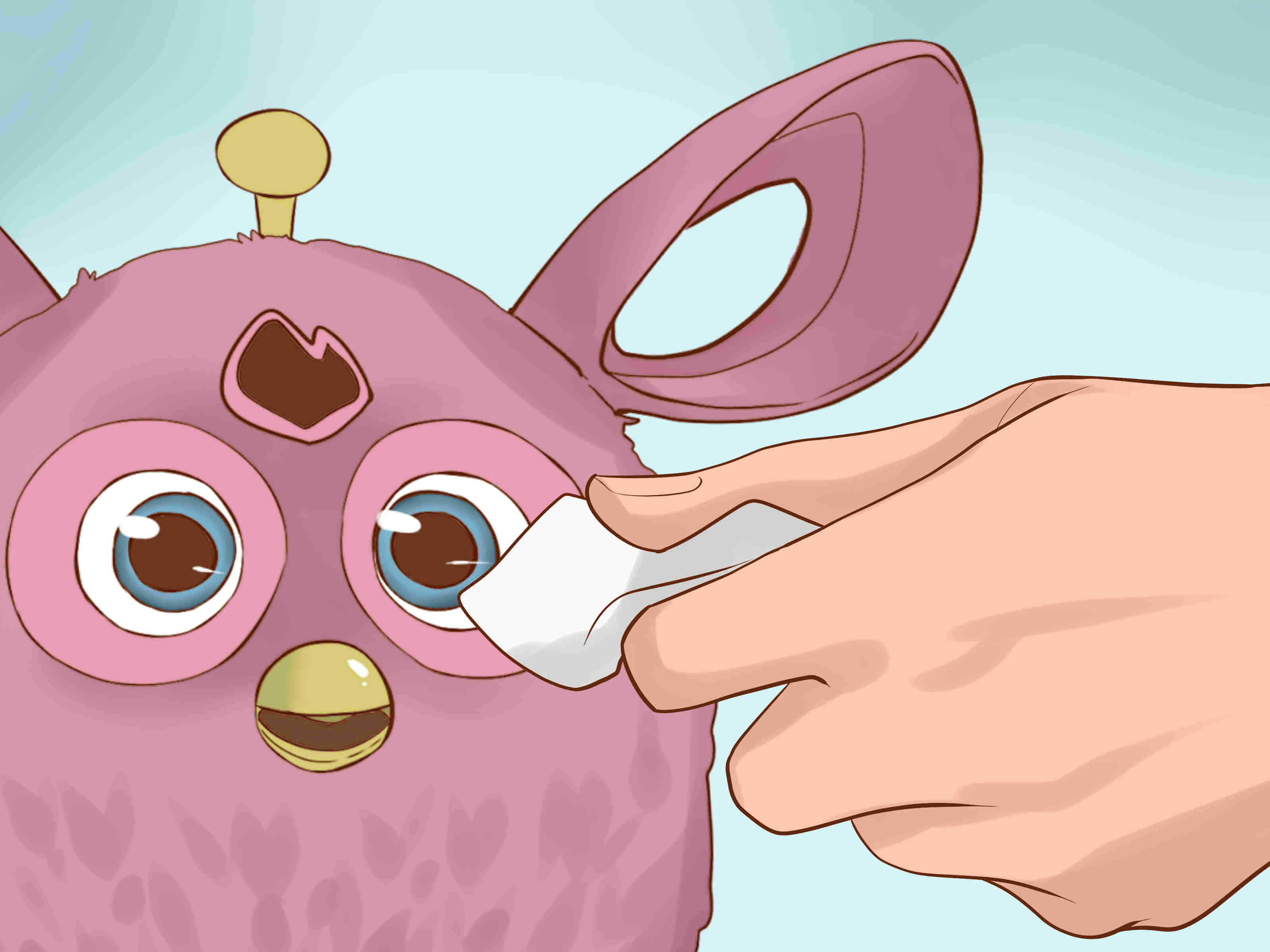
To clean the fur, gently loosen dirt with a soft cloth or soft brush. A clean toothbrush, baby brush, microfiber cloth, or small pet brush can work well if used lightly. For stains, use a slightly damp cloth and gently dab the affected area. The cloth should be damp, not dripping. If water runs into the seams, sensors, speaker, battery compartment, or moving parts, you may damage the toy.
Avoid detergents, stain removers, bleach, alcohol sprays, and harsh cleaning chemicals on the fur. These can discolor the fabric, leave residue, affect the texture, or seep into electronics. After spot-cleaning, let your Furby air dry completely in a well-ventilated area away from direct heat.
5. Brush and Groom Your Furby Regularly
Many Furby models come with a comb or have hair that can be brushed. Grooming keeps the toy looking fresh and helps prevent tangles, dust buildup, and the “found under a couch since 2003” aesthetic.
Brush in the direction of the fur or hair. Use light strokes, especially around ears, eyelashes, faceplates, sensors, and moving parts. Do not yank knots out. If the hair is tangled, hold the base of the hair gently and work through the tangle from the ends upward. For decorative clips, beads, or accessories, remove them before cleaning or brushing so they do not snag.
For vintage Furbys, be extra careful. Older fur can become fragile, and plastic parts may be more brittle. Think of it as grooming a tiny celebrity from the late ’90s: gentle hands, no drama, and no experimental makeover without a plan.
6. Feed and Play With Your Furby the Right Way
Part of taking care of a Furby is interacting with it. Many models respond to feeding gestures, petting, motion, sound, and voice commands. Newer Furbys may respond to phrases such as “Hey Furby” followed by activity commands. Older models may respond to pressure sensors, tilting, clapping, or pretending to feed them.
Follow your model’s instructions for feeding. On many Furbys, feeding means pressing the tongue, placing a finger near the mouth, or using a pretend interaction. Never put real food, liquids, candy, crumbs, or sticky objects into or near your Furby’s mouth. Your Furby may talk like a pet, but it does not need cereal. It definitely does not need orange juice.
Regular play helps you enjoy the toy’s full range of features. Some Furbys unlock phrases, games, songs, or personality changes through repeated interaction. Speak clearly, use one command at a time, and play in a quiet room when using voice features. Background noise can confuse the sensors and make your Furby seem less responsive.
7. Put Your Furby to Sleep or Power It Off Properly
Knowing how to make your Furby sleep can save battery life and protect your sanity. Different models have different sleep or power-off methods. Some modern Furbys can be powered down by pressing the heart gem rapidly three times. Some wake when you press the heart gem or feed them. Furby Connect models may use a sleep mask. Older Furbys may go to sleep after inactivity or require specific handling to wake.
If your Furby keeps talking after playtime, check your model’s power instructions. Do not try to force moving parts closed or hold down random buttons for long periods unless the manual says to do so. If you cannot find a power-off method and you will not use the Furby for a while, removing the batteries is the safest option.
For nighttime storage, keep your Furby somewhere stable where it will not be accidentally bumped awake. Nothing builds character quite like a Furby announcing itself from a shelf at 2:17 a.m., but most households only need that lesson once.
8. Store Your Furby in a Safe Place
Good storage is essential for long-term Furby care. Store your Furby in a dry, clean, room-temperature area. Avoid garages, damp basements, hot attics, sunny windowsills, bathrooms, and any place where moisture, dust, heat, or insects may cause problems.
Remove batteries before long-term storage. Place the Furby in a breathable container or on a clean shelf. If you use a box, avoid crushing the ears, hair, faceplate, or accessories. Do not wrap the toy tightly in plastic for long periods if there is any chance of trapped moisture.
For collectors, label the storage box with the model name, year, accessories, and condition notes. Keep manuals, combs, beads, masks, tags, and packaging together when possible. Future you will be grateful, especially when you discover that one tiny accessory has somehow become more mysterious than buried treasure.
9. Protect Your Furby From Drops, Water, Pets, and Small Children
Furbys are toys, but they are not indestructible. Dropping one can damage motors, gears, sensors, speakers, or the battery compartment. Water can ruin electronics. Pets may mistake fur, ears, or accessories for chew toys. Very young children may pull, twist, or feed the Furby things it was never emotionally prepared to meet.
Keep your Furby away from sinks, bathtubs, pools, drinks, rain, and wet floors. Use it on soft surfaces when possible, especially with younger kids. Teach children not to pull the ears, force the beak, poke the eyes, or remove parts. If your Furby has small accessories such as beads or clips, keep them away from children under the recommended age range.
If your Furby gets slightly damp on the surface, turn it off if possible, remove the batteries, and let it air dry completely. If it becomes soaked, do not power it on. Water and electronics are not a team-building exercise.
10. Troubleshoot Common Furby Problems Calmly
If your Furby stops working, do not panic. Many issues have simple causes. Start with fresh batteries. Make sure they are inserted correctly and the battery door is screwed on securely. Check for fur or debris in the battery area. Make sure the toy is not in sleep mode.
If your newer Furby will not turn on after replacing batteries, some models can be reset by turning the Furby upside down and pressing the mouth or beak area and heart gem together for more than five seconds. A reset may return the toy to out-of-box settings, so use it when basic troubleshooting does not work.
For older Furbys, problems may come from stuck gears, worn motors, dirty contacts, corrosion, or age-related wear. Vintage repairs can get complicated quickly. If you are not comfortable opening electronics, look for a collector repair guide or a hobbyist who specializes in Furby restoration. The phrase “I watched one video and now I own a screwdriver” is not always a repair strategy.
11. Keep a Furby Care Routine
The easiest way to keep your Furby happy and working is to follow a simple routine. After playtime, power it off or let it sleep properly. Once a week, brush the fur and wipe away visible dust. Once a month, check the battery compartment if the toy is used often. Before storage, remove the batteries, clean the surface, and place the Furby somewhere dry and safe.
For active play, keep commands clear and gentle. For display, keep the Furby out of direct sunlight to reduce fading. For travel, pack it securely so moving parts and accessories are not bent or crushed.
A routine does not need to be complicated. Think of it as basic fuzzy maintenance: clean face, fresh power, safe sleeping spot, no unauthorized snacks, and occasional admiration. Your Furby may not send a thank-you card, but it may reward you with songs, chatter, lights, and the proud feeling that you have successfully parented a small electronic gremlin.
Extra Tips for Vintage Furby Owners
Vintage Furbys require extra patience. Plastic can become brittle, battery contacts can corrode, and gears can stiffen after years of sitting unused. Before powering on an older Furby, inspect the battery compartment carefully. If you see heavy corrosion, do not insert fresh batteries until the contacts are cleaned or repaired.
When cleaning a vintage Furby, avoid aggressive brushing. The fur may be delicate, and older adhesives or stitches may not handle rough treatment. Do not attempt deep disassembly unless you know what you are doing. Many collectors customize, skin, repair, and restore Furbys, but those projects require time, tools, and confidence.
If you buy a secondhand Furby, assume it needs inspection before use. Check for odor, battery damage, missing screws, loose parts, and unusual sounds. A Furby that “just needs batteries” may indeed need batteriesor it may need a small miracle and an electronics hobbyist named Dave.
Common Furby Care Mistakes to Avoid
Washing Your Furby Like a Stuffed Animal
This is the big one. Do not put a Furby in a washing machine, sink, bathtub, or bucket. Surface cleaning is the safe method.
Leaving Batteries Inside for Years
Battery leaks can cause serious damage. Always remove batteries before long-term storage.
Using Harsh Cleaning Products
Strong chemicals may damage fur, plastic, paint, sensors, and internal parts. Use a soft brush and slightly damp cloth instead.
Forcing Moving Parts
Never force the ears, beak, eyelids, or base. If something is stuck, troubleshoot carefully or seek repair advice.
Ignoring Model Differences
A reset method for one Furby may not apply to another. Always check your specific version before trying advanced fixes.
of Real-Life Furby Care Experience
Taking care of a Furby feels simple until you actually live with one. Then you realize this toy has a way of becoming part of the household routine. It sits on a desk, shelf, bed, or dresser, looking harmless. Then someone presses the heart gem, says the magic words, or bumps the table, and suddenly the room has a tiny performer demanding stage time.
One of the most useful lessons from everyday Furby ownership is that fresh batteries solve more problems than people expect. A Furby with weak batteries can seem broken, moody, slow, glitchy, or possessed by a bargain-bin ghost. Before assuming the motor has failed or the speaker is damaged, replace all batteries with a fresh matching set. Many “dead” Furbys return to life with new batteries and a secure battery cover.
Another practical lesson is to clean little and often. Waiting until a Furby looks dirty makes cleaning harder. A quick dusting with a microfiber cloth, a gentle brush through the hair, and a careful dab at small marks can keep it looking bright. This is especially helpful for lighter-colored Furbys, which show dust and fingerprints faster. The trick is restraint. The cloth should be barely damp. If you feel tempted to scrub like you are cleaning a kitchen counter, step away from the Furby.
Storage also matters more than many owners realize. A Furby left near a sunny window can fade. One stored in a damp closet may pick up odors. One tossed in a toy bin may lose accessories or end up with bent ears. The best storage spot is boring in the best possible way: dry, shaded, clean, and not too hot or cold. If you are storing a Furby for months, remove the batteries and keep small accessories in a labeled bag.
For families, it helps to set Furby rules. No real food. No water. No pulling. No experiments involving slime, markers, glitter glue, or “just seeing what happens.” Children often love Furbys because they feel alive, so teaching gentle play is part of the fun. Show kids how to speak clearly, wait for responses, brush the hair, and put the toy to sleep. A Furby can be a surprisingly good way to teach responsibility without needing a litter box.
Collectors learn a different lesson: condition is everything. Original accessories, clean fur, working electronics, and an undamaged battery compartment can make a big difference. Even if you are not planning to sell your Furby, careful maintenance preserves the toy’s charm. There is something satisfying about keeping a quirky piece of pop-culture history alive and chattering.
The best Furby care habit is simple: treat it as both a plush toy and an electronic device. Give it the softness you would give a stuffed animal, the caution you would give a gadget, and the patience you would give a talkative friend who occasionally refuses to listen. Do that, and your Furby will have a much better chance of staying clean, responsive, and delightfully weird for a long time.
Conclusion
Learning how to take care of your Furby is mostly about gentle handling, smart battery habits, safe cleaning, and knowing your model. Use fresh batteries, keep the battery compartment clean, surface clean only, brush the fur gently, avoid water, store it properly, and troubleshoot with patience before assuming the worst.
A well-cared-for Furby can remain a funny, nostalgic, and surprisingly entertaining companion for years. It may sing. It may chatter. It may wake up at a dramatic moment and make everyone question reality for three seconds. But with the right care, your Furby will stay in good shape and continue being exactly what it was designed to be: a fuzzy little chaos machine with a heart.
Note: This article is written as original web content and is based on real Furby care practices, official-style toy maintenance guidance, and practical collector experience. Always check the specific manual for your Furby model before attempting resets, repairs, or battery replacement.