Want to say “I love you” in Korean without accidentally sounding like a dramatic K-drama character confessing in the rain? Good news: Korean gives you more than one way to express love, affection, attraction, and devotion. Even better news: once you understand the difference between casual, polite, and formal speech, choosing the right phrase becomes much easier.
The most famous Korean phrase for “I love you” is 사랑해 (saranghae). You have probably heard it in Korean dramas, K-pop lyrics, fan messages, and romantic scenes where someone finally confesses after twelve episodes of staring across coffee shops. But Korean is a language where context matters. Your relationship, the level of formality, age difference, and emotional timing all influence which phrase sounds natural.
In this guide, you will learn 10 different Korean love phrases, when to use each one, how to pronounce them, and what they really feel like in everyday conversation. Think of it as your romance phrasebookminus the awkward subtitles.
Why Korean Has Different Ways to Say “I Love You”
Korean uses speech levels to show respect, closeness, and social distance. That means the same basic idea can be expressed in several ways depending on who you are speaking to. English usually relies on tone: “I love you” can be sweet, serious, playful, or sarcastic depending on the situation. Korean does some of that with tone too, but grammar and endings also carry meaning.
The verb “to love” in Korean is 사랑하다 (saranghada). From that dictionary form, you can create several useful expressions. The three most important are:
- 사랑해 (saranghae) – casual and intimate
- 사랑해요 (saranghaeyo) – polite and warm
- 사랑합니다 (saranghamnida) – formal and respectful
Once you understand those three, the rest of Korean romantic expressions become much less mysterious. You will also know why shouting saranghamnida across a first date may sound less like “romantic hero” and more like “award ceremony acceptance speech.”
1. 사랑해 (Saranghae) I Love You
사랑해 (saranghae) is the most common casual way to say “I love you” in Korean. It is intimate, direct, and emotionally strong. Use it with a romantic partner, spouse, close friend, or family member when your relationship is already comfortable.
Example
사랑해.
Saranghae.
I love you.
This is the phrase you will hear often in K-dramas and songs. It feels natural between people who are close. However, it is not the safest phrase for strangers, new acquaintances, or someone you barely know. If you say it too early, the other person may feel like they accidentally walked into episode 16 of a romance drama.
2. 사랑해요 (Saranghaeyo) I Love You, Polite Version
사랑해요 (saranghaeyo) is a polite way to say “I love you.” It is softer and more respectful than saranghae, but still warm and sincere. If you are learning Korean and feel unsure about which version to use, saranghaeyo is usually the safest choice.
Example
정말 사랑해요.
Jeongmal saranghaeyo.
I really love you.
You can use this with someone you respect, someone older than you, or someone you are not fully casual with yet. It can also sound beautiful in letters, messages, wedding vows, or heartfelt family moments.
3. 사랑합니다 (Saranghamnida) I Love You, Formal Version
사랑합니다 (saranghamnida) is the formal version of “I love you.” It is respectful, serious, and often used in public speeches, ceremonies, formal messages, concerts, or professional settings where affection is expressed respectfully.
Example
여러분, 사랑합니다.
Yeoreobun, saranghamnida.
Everyone, I love you.
This phrase is common when celebrities address fans, when someone gives a public thank-you, or when a person wants to sound deeply respectful. In a private romantic moment, it can sound dramaticin a charming way if done right, and in a “why are you holding a microphone?” way if done wrong.
4. 많이 사랑해 (Mani Saranghae) I Love You a Lot
많이 사랑해 (mani saranghae) means “I love you a lot.” The word 많이 means “a lot” or “very much.” This phrase adds emotional weight without becoming overly formal.
Example
너를 많이 사랑해.
Neoreul mani saranghae.
I love you a lot.
This is a sweet phrase for romantic partners, spouses, and close loved ones. It works well in text messages, cards, anniversaries, or quiet moments when plain saranghae feels a little too short. Sometimes three syllables are not enough for all that heart traffic.
5. 진심으로 사랑해요 (Jinsimeuro Saranghaeyo) I Sincerely Love You
진심으로 사랑해요 (jinsimeuro saranghaeyo) means “I sincerely love you” or “I love you from the heart.” The word 진심 means “sincerity” or “true heart,” so this phrase feels deeper and more emotional.
Example
진심으로 사랑해요.
Jinsimeuro saranghaeyo.
I sincerely love you.
This is not something you throw into a casual chat between “What are you eating?” and “Did you watch that episode?” It is better for meaningful moments: a confession, a long-term relationship, a wedding letter, or a message to someone who truly matters.
6. 나도 사랑해 (Nado Saranghae) I Love You Too
나도 사랑해 (nado saranghae) means “I love you too.” This is the perfect response when someone says saranghae first and you want to return the feeling.
Example
A: 사랑해.
Saranghae.
I love you.
B: 나도 사랑해.
Nado saranghae.
I love you too.
For a polite version, say 저도 사랑해요 (jeodo saranghaeyo). Use nado saranghae with someone close and jeodo saranghaeyo when you want to sound more respectful.
7. 좋아해 (Joahae) I Like You
좋아해 (joahae) means “I like you.” This phrase is lighter than saranghae and is often used when confessing romantic interest before the relationship becomes serious.
Example
나 너 좋아해.
Na neo joahae.
I like you.
This is a great phrase when “I love you” feels too intense. In Korean dating culture, joahae can be a meaningful confession. It says, “I have feelings for you,” without immediately bringing emotional fireworks, matching rings, and a shared Netflix password into the conversation.
8. 정말 좋아해요 (Jeongmal Joahaeyo) I Really Like You
정말 좋아해요 (jeongmal joahaeyo) means “I really like you.” It is polite, clear, and emotionally warmer than simply saying joahae.
Example
저는 당신을 정말 좋아해요.
Jeoneun dangsineul jeongmal joahaeyo.
I really like you.
This phrase works well for a sincere confession when you want to be respectful. One important note: Korean speakers often avoid using 당신 (dangsin, “you”) in everyday conversation because it can sound too direct, poetic, or even awkward depending on context. In many natural conversations, the subject and object are simply omitted if the meaning is clear.
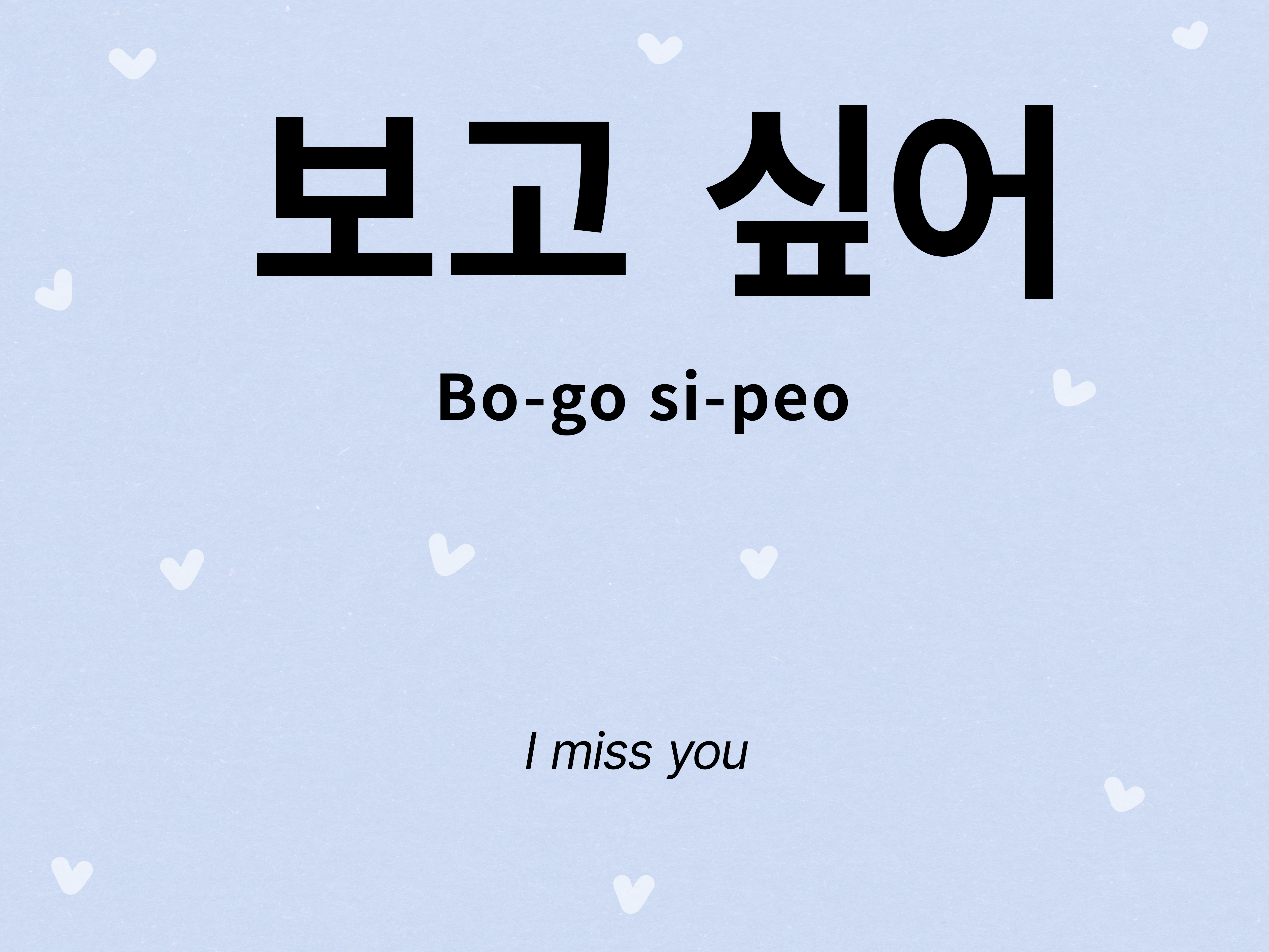
9. 보고 싶어 (Bogo Sipeo) I Miss You
보고 싶어 (bogo sipeo) literally means “I want to see you,” but it is commonly used to mean “I miss you.” This is one of the most useful Korean romantic phrases because it expresses affection without directly saying “love.”
Example
너무 보고 싶어.
Neomu bogo sipeo.
I miss you so much.
Use this when texting a partner, close friend, or family member. For a polite version, say 보고 싶어요 (bogo sipeoyo). It is sweet, simple, and less dramatic than announcing your eternal devotion while someone is just trying to finish lunch.
10. 평생 사랑할게 (Pyeongsaeng Saranghalge) I Will Love You Forever
평생 사랑할게 (pyeongsaeng saranghalge) means “I will love you forever” or “I will love you for my whole life.” The word 평생 means “a lifetime,” and 사랑할게 means “I will love.”
Example
평생 사랑할게.
Pyeongsaeng saranghalge.
I will love you forever.
This phrase is deeply romantic. It belongs in wedding vows, anniversary messages, serious relationships, and fictional scenes where two people finally stop misunderstanding each other. Use it with care. It is not ideal for a first date unless your goal is to make the other person check for emergency exits.
Quick Comparison: Which Korean Love Phrase Should You Use?
| Phrase | Romanization | Meaning | Best For |
|---|---|---|---|
| 사랑해 | Saranghae | I love you | Partner, close loved ones |
| 사랑해요 | Saranghaeyo | I love you | Polite or respectful affection |
| 사랑합니다 | Saranghamnida | I love you | Formal speeches, public messages |
| 많이 사랑해 | Mani saranghae | I love you a lot | Romantic or family messages |
| 진심으로 사랑해요 | Jinsimeuro saranghaeyo | I sincerely love you | Deep emotional moments |
| 나도 사랑해 | Nado saranghae | I love you too | Replying to “I love you” |
| 좋아해 | Joahae | I like you | Early romantic confession |
| 정말 좋아해요 | Jeongmal joahaeyo | I really like you | Polite confession |
| 보고 싶어 | Bogo sipeo | I miss you | Texts, long-distance love |
| 평생 사랑할게 | Pyeongsaeng saranghalge | I will love you forever | Serious romance, vows |
Pronunciation Tips for Saying “I Love You” in Korean
Pronunciation matters, especially when the phrase carries emotion. Here are a few easy tips:
- 사랑해 sounds like sa-rang-hae. The “rang” is not harsh; keep it smooth.
- 사랑해요 sounds like sa-rang-hae-yo. The final “yo” adds politeness.
- 사랑합니다 is often romanized as saranghamnida, but it may sound closer to sa-rang-ham-ni-da in careful speech.
- Do not over-pronounce every syllable like a robot reading a Valentine’s card. Natural rhythm matters.
- When in doubt, listen to native Korean audio and copy the melody, not just the letters.
Also, learn the Hangul spelling whenever possible. Romanization is helpful, but Hangul is more accurate. Think of romanization as training wheels. Useful? Absolutely. Stylish forever? Not really.
Common Mistakes to Avoid
Using 사랑해 Too Soon
In Korean, saranghae can feel emotionally strong. If you are just starting to date someone, 좋아해 or 정말 좋아해요 may sound more natural than jumping straight to “I love you.” Romance is not a microwave burrito; it does not always need maximum heat immediately.
Forgetting Politeness Levels
If you are speaking to someone older, someone you respect, or someone you do not know well, use 사랑해요 instead of 사랑해. Politeness is a major part of Korean communication.
Overusing 당신
Many Korean learners translate “I love you” word-for-word and try to include “I” and “you” every time. In Korean, pronouns are often omitted when the meaning is obvious. A simple 사랑해요 can sound more natural than a full sentence with every pronoun included.
Copying K-Dramas Without Context
K-dramas are great for exposure, but scripted romance is not always everyday speech. Some lines are poetic, dramatic, or intentionally intense. Learn from them, enjoy them, cry responsiblybut check context before using a phrase in real life.
How to Use Korean Love Phrases in Text Messages
Korean love phrases are popular in texting because they are short and expressive. Here are a few natural examples:
- 오늘도 사랑해. (Oneuldo saranghae.) I love you today too.
- 너무 보고 싶어. (Neomu bogo sipeo.) I miss you so much.
- 나도 사랑해. (Nado saranghae.) I love you too.
- 항상 고마워. 사랑해. (Hangsang gomawo. Saranghae.) Thank you always. I love you.
- 정말 좋아해요. (Jeongmal joahaeyo.) I really like you.
For a cute tone, some people may stretch sounds or add playful endings in casual texting. Still, beginners should first master standard phrases before experimenting with cute variations. Otherwise, you may think you sound adorable while your message looks like it lost a fight with autocorrect.
When Should You Say “I Love You” in Korean?
The best time to say “I love you” in Korean depends on the relationship. With family or a long-term partner, saranghae can be warm and natural. In a newer romantic situation, joahae may be more appropriate. In a formal setting, saranghamnida can express admiration and gratitude respectfully.
Here is a simple rule: if the relationship is close and casual, use 사랑해. If you want to be polite, use 사랑해요. If you are speaking formally or publicly, use 사랑합니다. If you are not ready for love but want to confess feelings, use 좋아해 or 정말 좋아해요.
Experience Section: What Learning Korean Love Phrases Teaches You
Learning how to say “I love you” in Korean is more than memorizing a romantic phrase. It teaches you how Korean communication works at a deeper level. Many beginners start with saranghae because it is famous, catchy, and emotionally satisfying to say. But once you learn the difference between saranghae, saranghaeyo, and saranghamnida, you begin to understand that Korean is not only about what you say. It is also about how carefully you place your words inside a relationship.
One of the most interesting experiences for Korean learners is realizing that direct translation does not always create natural speech. In English, “I love you” includes the subject “I” and the object “you.” In Korean, people often leave those parts out because the context already makes them clear. At first, this can feel strange. Learners may wonder, “Wait, where did the ‘I’ go? Where did the ‘you’ go? Did love just become invisible?” Not exactly. Korean often trusts context more than English does. The feeling is still there, even when the pronouns are not.
Another useful experience is learning emotional timing. In some cultures, saying “I love you” may happen quickly in a relationship. In Korean, the direct phrase can feel serious, especially in real life outside dramas and pop lyrics. That is why phrases like 좋아해 and 정말 좋아해요 are so valuable. They allow you to express interest without sounding as if you have already planned the wedding playlist, honeymoon itinerary, and couple phone case design.
Korean love phrases also show how language carries respect. Saying 사랑해요 instead of 사랑해 may seem like a small change, but the added 요 makes the phrase polite. That tiny syllable does real social work. It softens the sentence, respects distance, and helps the speaker avoid sounding too casual too soon. For English speakers, this can be eye-opening because English does not have the same built-in politeness endings.
Many learners also discover that “I miss you” in Korean, 보고 싶어, feels beautifully visual. Literally, it means “I want to see you.” Instead of describing absence in an abstract way, Korean expresses longing through the desire to see someone’s face. That small difference makes the phrase feel tender and human. It is perfect for long-distance relationships, late-night texts, and moments when “miss you” feels too ordinary.
The best way to practice these phrases is not to memorize them like vocabulary on a test. Use them in realistic situations. Write a short message to an imaginary partner. Practice saying 사랑해요 respectfully, then 사랑해 warmly. Compare how each one feels. Watch Korean content and notice who says which phrase, to whom, and at what emotional moment. Soon, you will stop thinking only about translation and start sensing tone.
And here is the most practical lesson: sincerity beats perfection. If your pronunciation is not flawless but your intention is kind, people will usually understand. Still, make the effort to learn the right form. A well-chosen Korean love phrase shows respect not only for the person you are speaking to, but also for the language itself. That is romantic in its own quiet wayno dramatic rain scene required.
Conclusion
So, how do you say “I love you” in Korean? The simplest answer is 사랑해 (saranghae). But the better answer depends on the situation. Use 사랑해 with someone close, 사랑해요 when you want to be polite, and 사랑합니다 when the moment is formal or deeply respectful. For softer romantic feelings, 좋아해 and 정말 좋아해요 are excellent choices. For longing, 보고 싶어 says “I miss you” in a beautifully Korean way.
The magic of Korean love phrases is that they do not only translate emotion; they shape it. A single ending can make your words casual, polite, formal, playful, or profound. Learn the phrase, learn the context, and say it with sincerity. Whether you are writing a love note, texting someone special, studying Korean, or preparing for your own tiny K-drama moment, you now have ten ways to let your heart speak Korean.
Note: Korean romanization can vary slightly across learning resources. For the most accurate reading and pronunciation, use the Hangul spelling as your main guide and treat romanization as a helpful support tool.