Measuring a bottom bracket sounds like one of those bike tasks invented by someone who owns three torque wrenches and says “interface standard” at dinner. But good news: you do not need to be a professional mechanic to understand the basics. You just need patience, a clean workspace, and the courage to admit that “close enough” is how people accidentally buy the wrong part twice.
The bottom bracket sits inside the bottom bracket shell of your bike frame and allows the crankset to spin smoothly. When it wears out, creaks, grinds, or needs upgrading, you cannot simply buy “a bottom bracket.” You need the correct shell width, shell diameter or thread type, crank spindle diameter, and sometimes spindle length. Miss one measurement, and your shiny new part may become a very expensive desk ornament.
This step-by-step guide explains how to measure a bottom bracket, identify the most important dimensions, avoid common mistakes, and record your numbers in a way that makes shopping much easier.
What You Need Before Measuring a Bottom Bracket
Before you begin, gather the right tools. A digital caliper is the best choice because bottom bracket measurements are usually in millimeters and small differences matter. You may also need a crank puller, hex keys, bottom bracket removal tool, ruler, rag, degreaser, notebook, and a flashlight. If you are only identifying the bottom bracket without removing it, you can still collect useful information, but your results may be less precise.
Clean the area around the bottom bracket before measuring. Dirt, grease, paint buildup, and old thread compound can make a 68 mm shell look slightly wider than it really is. That tiny difference may not sound dramatic, but bicycles love drama. They are basically mechanical soap operas with chains.
Bottom Bracket Measurements You Must Know
There are four main measurements or details to identify:
1. Bottom Bracket Shell Width
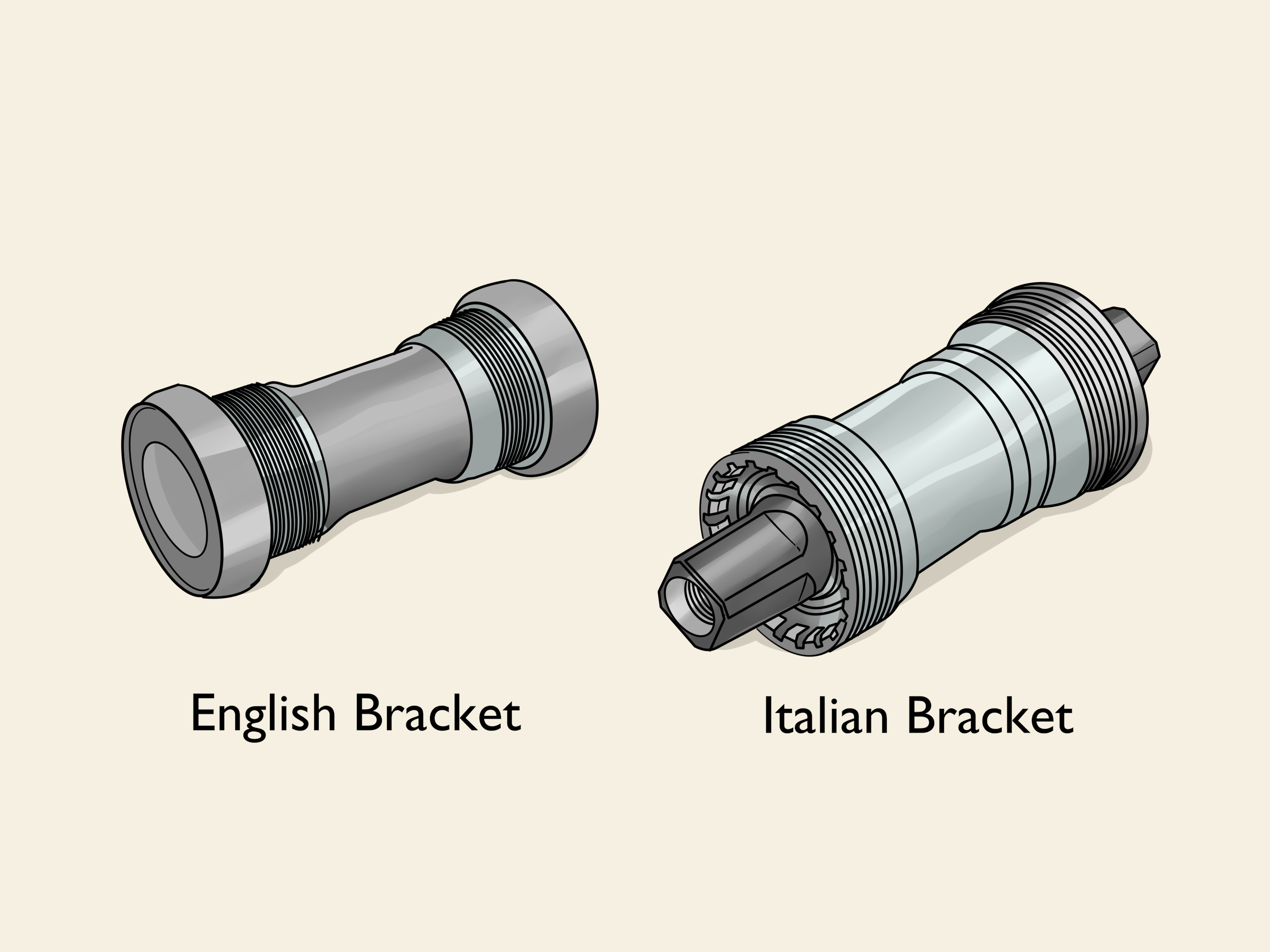
This is the width of the frame’s bottom bracket shell from one outer face to the other. Common threaded shell widths include 68 mm on many road bikes, 73 mm on many mountain bikes, 83 mm on some downhill bikes, and 100 mm or wider on some fat bikes. Italian threaded shells are commonly 70 mm. Press-fit systems may use widths such as 86.5 mm, 89.5 mm, 91.5 mm, or 92 mm depending on the frame standard.
2. Shell Inner Diameter or Thread Type
This tells you what kind of bottom bracket fits into the frame. A BSA or English threaded shell commonly uses 1.37 inch x 24 TPI threading. Many press-fit systems are identified by inner diameter, such as 41 mm, 42 mm, or 46 mm. For example, BB30 typically uses a 42 mm shell inner diameter, while PF30 commonly uses a 46 mm shell inner diameter. They sound similar, but they are not the same. This is where many wallets go to cry.
3. Crank Spindle Diameter
The crank spindle is the axle that passes through the bottom bracket bearings. Common modern spindle diameters include 24 mm for many Shimano-style cranks, 22/24 mm for SRAM GXP, about 29 mm for SRAM DUB, and 30 mm for many BB30, PF30, Race Face, Rotor, and similar crank systems. The bottom bracket must match both your frame and your crank spindle.
4. Spindle Length
Spindle length matters most for older cartridge bottom brackets, especially square-taper systems. It is measured from one end of the spindle to the other. Common examples include 107 mm, 110.5 mm, 113 mm, 118 mm, 122.5 mm, and longer. The correct length affects chainline, crank clearance, and front derailleur alignment. If the spindle is too short, the crank may hit the frame. If it is too long, the chainline may wander off like it forgot why it came here.
Step-by-Step: How to Measure a Bottom Bracket
Step 1: Identify What You Are Replacing
Start by looking at your current setup. Is the bottom bracket threaded into the frame, pressed into the frame, or hidden inside cups? Does your crank use a square-taper spindle, external bearings, or a one-piece spindle attached to the crank arm?
If your old bottom bracket has markings, write them down before removing anything. A cartridge bottom bracket may say something like “BC1.37 x 24” and “68 x 113.” In plain English, that usually means English/BSA threading, a 68 mm shell, and a 113 mm spindle length. Congratulations, the part is whispering its identity to you.
Step 2: Remove the Crankset
To measure accurately, remove the crankset. The method depends on your crank type. Modern two-piece cranks often use pinch bolts or a fixing bolt. Square-taper cranks usually need a crank puller. Do not pry crank arms off with random tools unless your goal is to create modern art from damaged aluminum.
Once the crank is removed, inspect the bottom bracket area. If the bearings are external, you may see cups outside the frame. If it is press-fit, the bearing cups may sit inside the shell. If it is square taper or cartridge style, the spindle may still be visible.
Step 3: Remove Cups or Bearings If Needed
For the most accurate frame measurement, remove the existing bottom bracket cups or bearings. This gives you direct access to the bare frame shell. If you are not comfortable doing this, a bike shop can help. Some press-fit systems require specific tools, and using the wrong tool can damage the frame.
If you do not remove the bottom bracket, you can still estimate the shell width and identify the crank spindle, but you may not be able to measure the shell inner diameter accurately.
Step 4: Measure the Shell Width
Place your caliper across the bare bottom bracket shell from the left outer face to the right outer face. Do not include spacers, bearing cups, seals, or dust covers. You are measuring the frame, not the accessories clinging to it.
For example, if the shell measures about 68 mm, you may have a common road BSA shell, BB30 road shell, PF30 road shell, or another 68 mm standard. If it measures about 73 mm, it is common on mountain bikes. If it measures around 86.5 mm, you may be looking at a BB86 or similar road press-fit system. If it measures around 91.5 mm or 92 mm, it may be a BB92 mountain-style press-fit shell.
Step 5: Measure the Shell Inner Diameter
For a press-fit frame, use the inside jaws of your caliper to measure the inner diameter of the bottom bracket shell. Take more than one measurement, rotating the caliper slightly to check consistency. A 41 mm inner diameter points toward PF41-style systems such as BB86 or BB92. A 42 mm inner diameter often suggests BB30. A 46 mm inner diameter may indicate PF30, BB386EVO, or related standards.
For threaded shells, measuring inner diameter is less useful than identifying the thread type. BSA/English threaded shells are very common and usually pair with 68 mm or 73 mm shell widths. Italian threaded shells are often 70 mm wide. BSA threading usually has a reverse-threaded drive side, while Italian threading uses normal threading on both sides.
Step 6: Measure the Crank Spindle Diameter
If your crank has an integrated spindle, measure the spindle with a caliper. Place the caliper around the round section where the bearings contact the spindle. A Shimano-style spindle will usually measure 24 mm. SRAM GXP is stepped, commonly 24 mm on one side and 22 mm on the other. SRAM DUB measures close to 29 mm. Many 30 mm systems measure right around 30 mm.
This number is essential because two bikes can have the same frame shell but need different bottom brackets depending on the crank. A 68 mm BSA frame can run a 24 mm Shimano crank, a DUB crank, or a 30 mm crank, but each setup requires a compatible bottom bracket.
Step 7: Measure Spindle Length for Square-Taper Bottom Brackets
If you are replacing a square-taper cartridge bottom bracket, remove it and measure the spindle from end to end. Use the outer tips of the spindle, not the body of the cartridge. If the old unit says “68 x 118,” the shell width is 68 mm and the spindle length is 118 mm.
Do not guess spindle length based only on the frame. The crank model determines the correct spindle length. Two square-taper cranks can both fit a 68 mm shell but require different spindle lengths for proper chainline.
Step 8: Record the Full Bottom Bracket Specification
Write your measurement in a complete format. Good examples include:
- BSA threaded, 68 mm shell, Shimano 24 mm spindle
- BSA threaded, 73 mm shell, SRAM DUB 29 mm spindle
- Square taper cartridge, English thread, 68 x 113 mm
- PF41/BB86, 86.5 mm shell width, 41 mm inner diameter, 24 mm spindle
- PF30, 68 mm shell width, 46 mm inner diameter, 30 mm spindle
This format tells you the frame standard and the crank requirement. That is the magic combination. Buying a bottom bracket based only on one number is like ordering shoes by color and hoping the size works out.
Examples of Common Bottom Bracket Measurements
Example 1: Road Bike With BSA Threading
You remove the crank and measure the frame shell. It reads 68 mm wide. The shell is threaded. Your crank spindle measures 24 mm. In this case, you likely need a BSA English threaded bottom bracket for a 68 mm shell and 24 mm spindle crank.
Example 2: Mountain Bike With a 73 mm Shell
Your mountain bike has a threaded shell measuring 73 mm. The crank is a SRAM DUB model, and the spindle measures close to 29 mm. You would look for a BSA 73 mm DUB-compatible bottom bracket. You would also check the manufacturer’s spacer chart because mountain bike setups often rely on correct spacer placement.
Example 3: Older Hybrid With Square Taper
You remove the cartridge bottom bracket and see “BC1.37 x 24 68 x 122.5” printed on the body. This means English threading, 68 mm shell width, and 122.5 mm spindle length. You should replace it with the same thread type, shell width, spindle length, and taper style unless you are changing the crankset too.
Common Mistakes When Measuring a Bottom Bracket
Measuring Cup-to-Cup Width Instead of Shell Width
External bearing cups add width outside the frame. If you measure the installed cup-to-cup distance, you are not measuring the frame shell. Always measure the bare shell when possible.
Confusing BB30 and PF30
BB30 and PF30 are both associated with 30 mm crank spindles, but the frame shell dimensions are different. BB30 typically uses a 42 mm shell inner diameter, while PF30 commonly uses a 46 mm shell inner diameter with cups pressed into the frame.
Ignoring Spacers
Many modern bottom bracket systems require spacers. The correct spacer setup depends on shell width, crank type, chainline, and sometimes rear hub spacing. Keep old spacers organized when removing parts, and follow the crank or bottom bracket maker’s setup chart.
Assuming All 68 mm Shells Are the Same
A 68 mm shell could be threaded BSA, Italian on some vintage or road frames, BB30, PF30, or another standard. Shell width is only one clue. You also need thread type or inner diameter.
Forgetting About Crank Compatibility
The bottom bracket is the handshake between the frame and crank. If it fits the frame but not the crank, the job is not done. Measure the spindle and identify the crank model before buying.
How to Measure Without Removing the Bottom Bracket
Sometimes you want a quick identification before taking the bike apart. You can inspect the shell area, search the bike manufacturer’s specifications, and look for printed markings on the bottom bracket or crank. You may also measure the visible shell width between the frame faces, although cups and spacers can get in the way.
This method is useful for research, but it is not perfect. If you are ordering an expensive part or dealing with a carbon frame, remove the crank and confirm the measurements properly. The five extra minutes can save you from ordering the wrong standard, waiting for shipping, and learning new vocabulary not suitable for polite company.
Buying the Right Replacement Bottom Bracket
Once you have your measurements, match three things: the frame standard, the crank spindle diameter, and the required bearing or cup style. For older cartridge systems, match the thread type, shell width, spindle length, and crank interface. For modern systems, focus on shell width, shell diameter or thread type, crank spindle diameter, and spacer requirements.
If your bike manufacturer provides a frame specification page, compare your measurements with it. If the numbers disagree, trust your caliper but investigate carefully. Previous owners sometimes install adapters, conversion cups, or unusual cranksets. Used bikes are full of surprises. Some are charming. Some are threaded in with too much enthusiasm.
Experience Notes: What Measuring Bottom Brackets Teaches You
After you measure a few bottom brackets, you begin to understand why bike mechanics ask so many questions before selling one. “What bike is it?” is only the opening scene. The real plot includes frame shell width, crank model, spindle diameter, chainline, spacers, and whether the last person who worked on the bike believed grease was optional.
One useful habit is to photograph everything before removal. Take a picture of the crank, spacers, bearing cups, printed markings, and cable guides near the shell. When the parts are spread across the bench, those photos become your memory backup. This is especially helpful when a small 2.5 mm spacer rolls under the workbench and begins its new life as a floor goblin.
Another lesson is that calipers are better than confidence. Many riders look at a frame and say, “That’s definitely BSA.” Sometimes they are right. Sometimes the bike is a press-fit frame with adapters installed. Sometimes it is an older Italian shell. Sometimes it is a proprietary standard that makes everyone sigh quietly. A thirty-second measurement beats a confident guess.
Square-taper bottom brackets deserve special respect. They look simple, but spindle length changes how the crank sits on the bike. Replacing a 113 mm spindle with a 122.5 mm spindle may install perfectly, yet shift the chainrings outward enough to affect front shifting. Replacing a long spindle with a short one can cause the crank arm or chainrings to rub the frame. When in doubt, match the old length unless you are intentionally changing cranksets and chainline.
Modern external and press-fit systems teach a different lesson: the crank spindle matters as much as the frame. A BSA shell does not automatically mean one bottom bracket fits every crank. A Shimano 24 mm crank, SRAM DUB crank, and 30 mm spindle crank may all work in a threaded frame, but each needs the correct bearing size and cup design. The frame opens the door; the crank decides who gets invited in.
Press-fit frames also remind you to measure carefully and gently. A difference between 41 mm, 42 mm, and 46 mm is not something to eyeball. Use clean caliper jaws, measure the bare shell, and take multiple readings. If the shell is damaged, ovalized, or noisy even with fresh bearings, the problem may not be the bottom bracket itself. Frame tolerances matter, and no bottom bracket can fully compensate for a shell that is out of spec.
Finally, keep a small bike measurement note on your phone. Record your frame model, bottom bracket standard, shell width, crank spindle diameter, chainring setup, and spacer arrangement. The next time you need service, you will not have to repeat the detective work. Future you will be grateful, possibly emotional, and maybe even smug in the bike shop aisle.
Conclusion
Learning how to measure a bottom bracket is really learning how your frame and crankset talk to each other. The most important numbers are shell width, shell inner diameter or thread type, crank spindle diameter, and spindle length for older cartridge systems. Once you understand those details, the bottom bracket aisle becomes much less mysterious.
Measure the bare frame shell whenever possible, use calipers instead of guesses, keep track of spacers, and write down the complete specification before shopping. A correct bottom bracket keeps your crank spinning smoothly, your chainline in order, and your ride free from mysterious creaks that make you question every life choice since breakfast.
Note: If your frame uses a proprietary standard, carbon press-fit shell, or unusual vintage threading, confirm the measurements with the frame manufacturer or a qualified bike mechanic before ordering replacement parts.