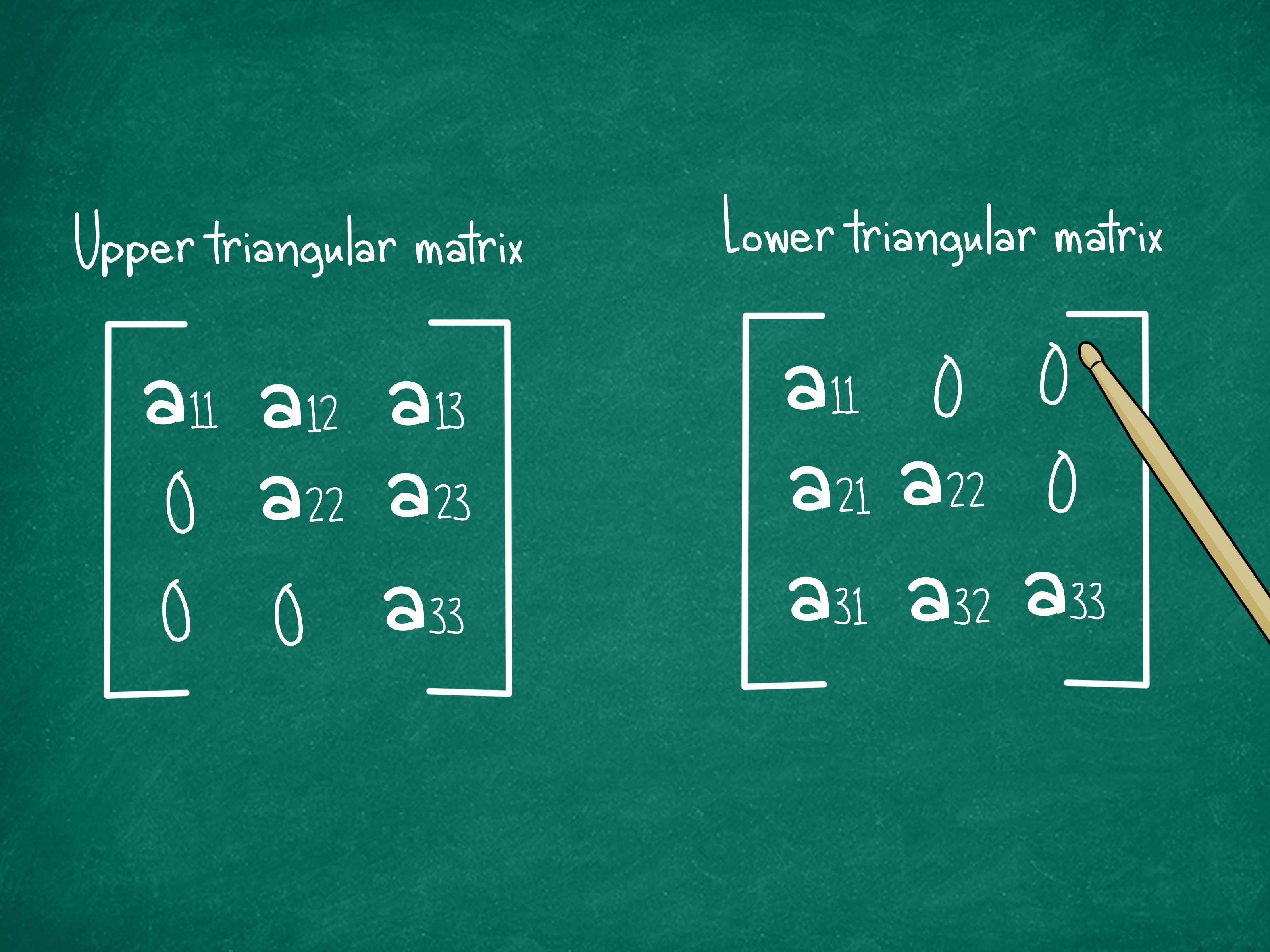
Finding the determinant of a 3×3 matrix may sound like something a calculator does while wearing a tiny graduation cap, but the process is surprisingly manageable once you understand the pattern. A determinant is a single number that tells you important information about a square matrix. For a 3×3 matrix, that number can help determine whether the matrix has an inverse, whether a system of equations has one unique solution, and how a transformation changes area or volume.
The good news? You do not need wizard-level math skills. You need patience, careful arithmetic, and the ability to keep track of plus and minus signs without letting them sneak off like mischievous raccoons. In this guide, you will learn how to find the determinant of a 3×3 matrix in 12 clear steps using cofactor expansion, one of the most reliable methods taught in algebra, precalculus, and linear algebra classes.
Main keyword: how to find the determinant of a 3×3 matrix. Related ideas include 3×3 determinant formula, cofactor expansion, minors, matrix determinant, Sarrus’ Rule, and linear algebra basics.
What Is a 3×3 Matrix Determinant?
A 3×3 matrix is a square arrangement of numbers with three rows and three columns. It usually looks like this:
The determinant of this matrix is written as det(A) or |A|. The standard formula is:
At first glance, this formula looks like alphabet soup with ambition. But each part has a job. You are breaking the large 3×3 determinant into smaller 2×2 determinants, then combining them with alternating signs.
Why Determinants Matter
Before jumping into the steps, it helps to know why anyone bothers with determinants in the first place. A determinant can tell you whether a matrix is invertible. If the determinant is zero, the matrix has no inverse. If the determinant is not zero, the matrix is invertible.
In systems of linear equations, a nonzero determinant usually means there is one unique solution. In geometry, determinants can describe how a matrix transformation scales space. For a 3×3 matrix, the determinant can represent how volume changes under a transformation. So yes, this little number has a bigger résumé than it first appears.
How to Find the Determinant of a 3×3 Matrix: 12 Steps
Let’s use this example matrix throughout the steps:
We will find det(A) using cofactor expansion along the first row.
Step 1: Write Down the Matrix Clearly
Start by copying the matrix neatly. This sounds obvious, but many determinant errors begin with messy handwriting or misplaced numbers. For our example:
Keep rows and columns aligned. A small visual mistake can turn a correct process into a math-themed treasure hunt.
Step 2: Label the Elements
For a general 3×3 matrix, label the entries like this:
In our example, the values are:
This labeling makes the determinant formula easier to apply.
Step 3: Choose the First Row for Expansion
The most common method is to expand along the first row. That means you use the top row values: 2, 1, and 3.
You can technically expand along any row or column, but the first row is a great place to learn because it matches the standard formula. Later, when you get more comfortable, you may choose a row or column with zeros to save time.
Step 4: Remember the Sign Pattern
The cofactor sign pattern for a 3×3 matrix is:
When expanding along the first row, the signs are:
This means the first term is positive, the second term is negative, and the third term is positive. The middle minus sign is where many mistakes happen, so treat it like a speed bump: slow down and pay attention.
Step 5: Create the First Minor
To create the minor for the first element, 2, delete the row and column containing that element. Since 2 is in row 1, column 1, remove row 1 and column 1.
The remaining 2×2 matrix is:
The determinant of a 2×2 matrix [p q; r s] is ps - qr. So here:
Step 6: Multiply the First Element by Its Minor
Now multiply the first top-row element, 2, by the minor determinant:
Because the first sign is positive, the first cofactor term is:
Step 7: Create the Second Minor
Now move to the second element in the first row, 1. Delete row 1 and column 2. The remaining matrix is:
Find its 2×2 determinant:
Step 8: Apply the Negative Sign to the Second Term
The second position in the first row has a negative sign. So instead of simply writing 1(-20), you write:
That becomes:
This is one of those moments where two negatives become positive, like when your teacher cancels a surprise quiz.
Step 9: Create the Third Minor
Now use the third element in the first row, 3. Delete row 1 and column 3. The remaining matrix is:
Calculate the determinant:
Step 10: Multiply the Third Element by Its Minor
The third sign is positive, so multiply directly:
The third cofactor term is:
Step 11: Add the Three Cofactor Terms
Now combine all three parts:
Add carefully:
So the determinant is:
Step 12: Check Whether the Answer Makes Sense
The determinant is 17, which is not zero. That tells us the matrix is invertible. If this matrix represented the coefficients of a system of three linear equations, a nonzero determinant would indicate that the system has one unique solution.
Checking your result matters because determinant calculations involve several moving parts. If your answer seems suspicious, recalculate the 2×2 minors and review the signs. Most errors come from arithmetic slips, not from misunderstanding the method.
The 3×3 Determinant Formula Explained
For the matrix:
The determinant formula is:
Each expression inside parentheses is a 2×2 determinant. The formula expands across the first row:
a(ei - fh)uses the minor formed by deleting the row and column ofa.-b(di - fg)uses the minor formed by deleting the row and column ofb, with the required negative sign.c(dh - eg)uses the minor formed by deleting the row and column ofc.
Once you understand that pattern, the formula becomes much less mysterious. It is not random; it is organized reduction. You are turning one 3×3 determinant into three smaller 2×2 determinants.
Alternative Method: Sarrus’ Rule
Sarrus’ Rule is a shortcut used only for 3×3 determinants. It works by copying the first two columns to the right of the matrix, multiplying along diagonals, and subtracting the upward diagonal products from the downward diagonal products.
For a matrix:
Sarrus’ Rule gives:
This is equivalent to the cofactor formula. Many students like Sarrus’ Rule because it feels visual. However, it is important to remember that Sarrus’ Rule does not extend neatly to larger matrices. Cofactor expansion and row-reduction methods are more flexible for advanced linear algebra.
Common Mistakes When Finding a 3×3 Determinant
Forgetting the Minus Sign in the Middle
The most common mistake is treating the first-row signs as + + + instead of + - +. Always write the sign pattern before calculating if you are new to determinants.
Mixing Up Rows and Columns
When finding a minor, you must delete the row and column of the selected element. Accidentally deleting the wrong column changes the entire calculation.
Making 2×2 Arithmetic Errors
The 2×2 determinant formula is ad - bc. Do not reverse it. Do not add instead of subtract. And definitely do not let negative numbers bully you.
Using Sarrus’ Rule on Larger Matrices
Sarrus’ Rule is only for 3×3 matrices. If you try to use it on a 4×4 matrix, the math police may not show up, but your answer will probably be wrong.
Tips for Solving Determinants Faster
Once you understand the basic method, you can speed things up. First, look for rows or columns with zeros. Expanding along a row or column with zeros reduces the number of terms you need to calculate. Second, keep your work organized vertically. Put each minor determinant on its own line. Third, check signs before doing arithmetic. A correct setup is half the battle.
If you are solving determinants by hand, use parentheses generously. Negative numbers are easier to manage when you write them clearly. For example, write -1(-20) instead of trying to do everything mentally. Mental math is great, but determinants are not the place to audition for a speed-arithmetic talent show.
Practice Example
Find the determinant of:
Expand along the first row:
Now simplify:
The determinant is 10. Since it is not zero, the matrix is invertible.
Real Learning Experience: What Students Usually Discover
When people first learn how to find the determinant of a 3×3 matrix, the process often feels longer than it really is. The first attempt may involve crossed-out numbers, suspicious eraser crumbs, and at least one dramatic sigh. That is normal. Determinants are not difficult because the concept is impossible; they are difficult because they demand neatness.
One helpful experience is to think of determinant practice as training your mathematical attention span. You are not just calculating; you are managing structure. You choose an element, delete its row and column, calculate a smaller determinant, apply the correct sign, and then repeat. The rhythm matters. Once that rhythm becomes familiar, the work becomes smoother.
Many students also discover that writing the formula is less scary than memorizing it blindly. If you understand where a(ei - fh), -b(di - fg), and c(dh - eg) come from, the formula becomes a shortcut instead of a mysterious spell. It is like learning a recipe: at first you follow every instruction carefully, but eventually you know why each ingredient is there.
Another useful lesson is that zeros are your friends. If a row or column contains a zero, expanding along that row or column can save time. In the practice example above, the zero in the first row made the third term disappear. That is not laziness; that is strategy. Good math often means doing less work in a smarter way.
Students who practice determinants also become better at handling negative numbers. A determinant problem can turn into a sign-management workout. The middle term in cofactor expansion is negative, and the smaller 2×2 determinants may include negative entries too. The best approach is to slow down, use parentheses, and avoid skipping steps too early. Speed comes after accuracy, not before it.
A practical classroom tip is to check your determinant using a second method when possible. For example, solve once using cofactor expansion and again using Sarrus’ Rule. If both methods produce the same answer, you can feel more confident. If they do not, compare the setups instead of immediately assuming the entire problem is cursed. Usually, the mistake is a copied number, a missing minus sign, or a 2×2 determinant calculated backward.
In real applications, determinants show up in physics, computer graphics, engineering, economics, and data science. You may not always calculate them by hand, especially when matrices get larger, but understanding a 3×3 determinant builds the foundation for interpreting what software and calculators are doing. It is the difference between pressing buttons and actually knowing why the answer matters.
The biggest experience-based advice is simple: do not rush the setup. A clean setup makes the arithmetic almost automatic. Write the matrix clearly, mark the row or column you are expanding along, use the sign pattern, and calculate each minor separately. When you work this way, determinants become less like a maze and more like a checklist.
And yes, after enough practice, finding a 3×3 determinant can even become satisfying. There is something pleasantly tidy about reducing a grid of nine numbers into one meaningful value. It is math with a before-and-after photo.
Conclusion
Learning how to find the determinant of a 3×3 matrix is an essential skill in algebra and linear algebra. The key method is cofactor expansion: choose a row or column, calculate the smaller 2×2 minors, apply the alternating signs, and add the results. For a matrix [a b c; d e f; g h i], the formula is a(ei - fh) - b(di - fg) + c(dh - eg).
Once you understand the pattern, the determinant becomes much less intimidating. It is not just a number; it tells you whether a matrix is invertible and helps explain how matrices behave in systems, transformations, and real-world applications. Keep your signs organized, use parentheses, and practice with several examples. Your future self, especially during exams, will be grateful.
Note: This article is written for educational publishing and explains the standard cofactor expansion method for calculating a 3×3 determinant in clear American English.