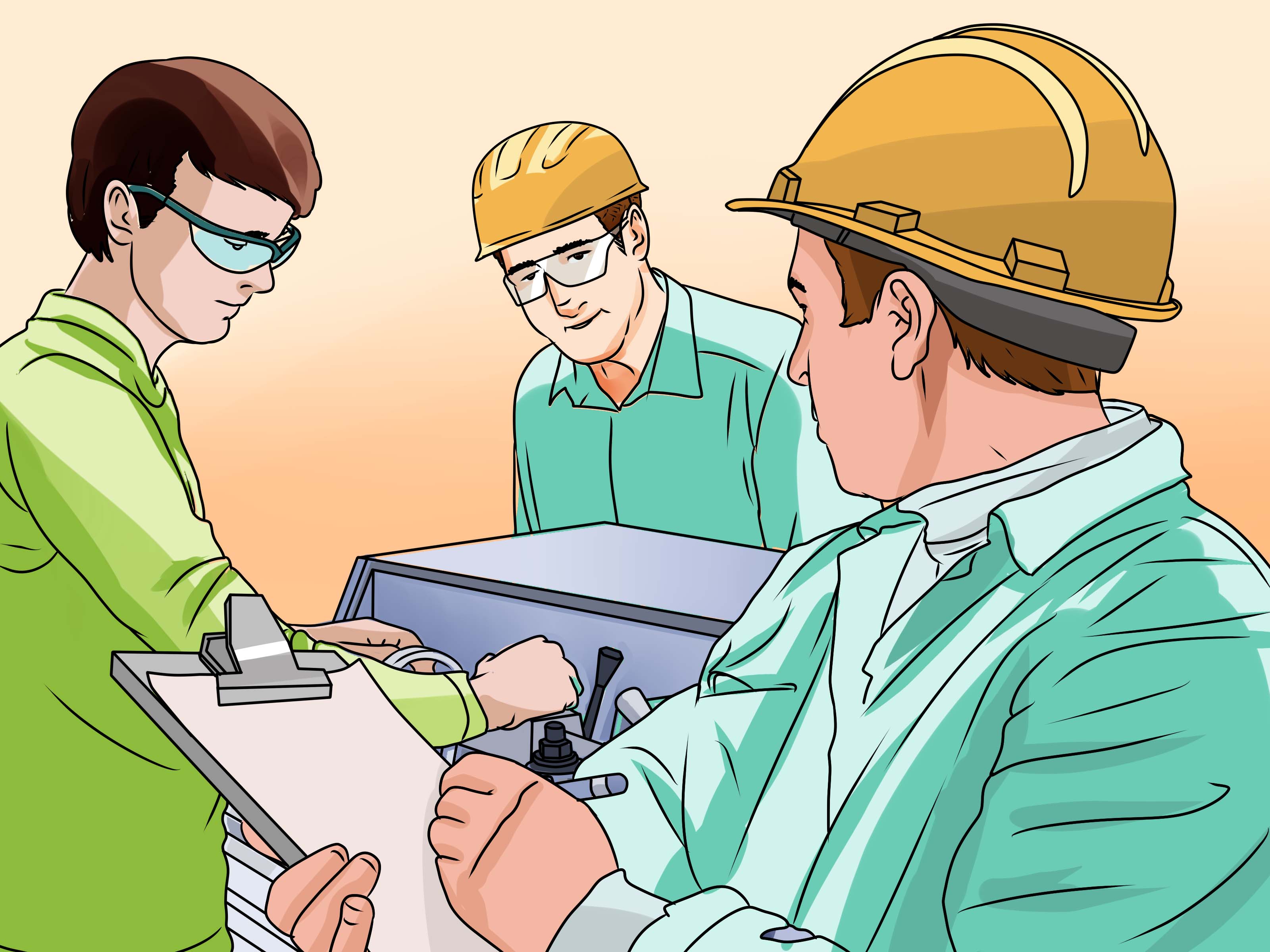
Some careers sound fancy on a business card. Others sound like they can fix the machine that makes the business cards. A millwright belongs firmly in the second group. Millwrights install, maintain, align, repair, dismantle, and move industrial machinerythe big, expensive, production-stopping equipment that keeps factories, power plants, food processing facilities, warehouses, refineries, sawmills, and manufacturing plants alive.
If you like solving mechanical puzzles, working with your hands, reading blueprints, measuring with frightening accuracy, and occasionally explaining to a machine that it is not the boss of you, becoming a millwright may be a strong career path. It is a skilled trade that blends mechanical knowledge, math, rigging, welding basics, safety training, troubleshooting, and old-fashioned patience. In the United States, many people enter the trade through a millwright apprenticeship, technical school, industrial maintenance program, union training center, or employer-sponsored training route.
This guide explains how to become a millwright in 12 practical steps, from building the right foundation to earning journeyman-level skills and advancing your career.
What Does a Millwright Do?
A millwright is a skilled tradesperson who works with industrial machinery and mechanical systems. The job may include installing conveyors, pumps, turbines, compressors, packaging machines, robotics, production lines, motors, gearboxes, and precision equipment. Millwrights also dismantle machinery, move heavy equipment, replace worn parts, align shafts, level machines, inspect bearings, troubleshoot breakdowns, and perform preventive maintenance.
In simple terms, if a giant machine must be moved, installed, aligned, repaired, or coaxed back into doing its job, a millwright is often nearby with tools, measurements, and a look that says, “I have seen worse.”
How to Become a Millwright: 12 Steps
1. Understand the Millwright Career Path
Before you invest time and money, learn what the career actually involves. Millwright work is hands-on, physical, technical, and detail-oriented. You may work in manufacturing plants, construction sites, power generation facilities, steel mills, distribution centers, food production plants, shipyards, or renewable energy projects. Some jobs are indoors and climate-controlled; others involve heights, confined spaces, loud environments, dust, grease, and weather that seems personally offended by your schedule.
The trade is best for people who enjoy mechanical systems, practical problem-solving, and teamwork. A millwright must think carefully, move safely, and communicate clearly. One misread measurement or rushed lift can damage expensive equipment or put people at risk. Precision is not optional; it is the entire game.
2. Finish High School or Earn a GED
Most millwright apprenticeship programs and entry-level employers prefer or require a high school diploma or GED. While the trade is hands-on, classroom basics matter more than many beginners expect. Math, physics, mechanical drawing, shop class, welding, computer-aided design, and industrial technology courses can all help.
Focus especially on algebra, geometry, measurement, fractions, decimals, ratios, and basic trigonometry. Millwrights use math to read layouts, calculate tolerances, interpret dimensions, align shafts, and measure machine positions. If fractions make you sweat, do not panic. You can improve. Many future millwrights start by simply getting comfortable with a tape measure, calculator, and conversion chart before leveling up to precision tools.
3. Build Mechanical Aptitude Early
Mechanical aptitude is the ability to understand how machines, tools, and systems work. You can build it through hobbies, school programs, part-time jobs, or personal projects. Repairing bicycles, rebuilding small engines, assembling furniture without yelling at the instructions, helping with farm equipment, working in a garage, or taking apart old appliances can teach useful instincts.
Employers and apprenticeship committees often look for applicants who can show genuine interest in mechanical work. You do not have to arrive as a master technician. You should arrive curious, teachable, and comfortable around tools. Learn the names and uses of common tools such as wrenches, sockets, torque wrenches, pry bars, levels, squares, calipers, micrometers, dial indicators, grinders, drills, impact drivers, and chain hoists.
4. Learn Basic Safety Before Touching Industrial Equipment
Safety is the backbone of millwright work. Industrial machinery can involve electrical energy, hydraulic pressure, pneumatic pressure, heat, rotating parts, pinch points, suspended loads, sharp edges, and stored energy. That is a polite way of saying: respect the machine, or it will not return the favor.
Key safety topics include lockout/tagout procedures, machine guarding, personal protective equipment, fall protection, rigging safety, confined space awareness, hazard communication, forklift awareness, and safe lifting techniques. Lockout/tagout is especially important because it helps prevent unexpected machine startup or release of stored energy during maintenance. A good millwright does not treat safety as paperwork. A good millwright treats safety as the reason everyone gets to go home with the same number of fingers they brought to work.
5. Explore Millwright Training Options
There are several ways to train for a millwright career. The most common route is a registered apprenticeship, which combines paid on-the-job training with classroom instruction. You can also start with a technical college program in industrial maintenance, mechanical maintenance, mechatronics, welding, machining, or manufacturing technology. Some employers hire entry-level maintenance helpers and train them internally.
Union training centers, especially those connected with millwright and carpenter organizations, may offer structured apprenticeship programs with classroom learning and jobsite experience. Nonunion employers may also sponsor apprenticeships or create their own maintenance trainee programs. Technical schools may offer certificates or associate degrees that make you more competitive when applying for apprenticeships or entry-level industrial maintenance jobs.
6. Apply for a Millwright Apprenticeship
A millwright apprenticeship is one of the strongest ways to enter the trade. Apprentices earn wages while learning from experienced journeypersons. Programs often take about four years, though the exact length can vary by state, sponsor, employer, and training model. Apprenticeships usually include thousands of hours of supervised jobsite training plus related classroom instruction.
To apply, search for registered apprenticeship opportunities through state apprenticeship offices, union locals, contractor associations, manufacturing employers, community colleges, and apprenticeship directories. Common requirements may include being at least 18 years old, having a high school diploma or GED, passing an aptitude test, holding a valid driver’s license, passing a drug screening, and being physically able to perform the work. Requirements vary, so read each program’s instructions carefully. Yes, actually read them. The trade will involve blueprints later, so consider this your warm-up.
7. Strengthen Your Math, Blueprint Reading, and Measurement Skills
Millwrights live in the land of accurate measurement. A machine that is “close enough” may vibrate, wear out bearings, ruin product, or fail completely. Learn to read blueprints, layout drawings, technical manuals, schematics, equipment specifications, and installation instructions. Practice identifying dimensions, tolerances, centerlines, elevations, bolt patterns, and alignment requirements.
You should also get comfortable with precision measuring tools. Millwrights may use micrometers, calipers, feeler gauges, dial indicators, laser alignment tools, levels, plumb bobs, and torque tools. Understanding thousandths of an inch is important in many settings. Your future self will thank you for practicing now instead of learning during a high-pressure shutdown while six people watch you measure the same coupling three times.
8. Learn Rigging, Hoisting, and Equipment Moving
Millwrights often move heavy machinery, and heavy machinery is not known for being forgiving. Rigging involves selecting and using slings, shackles, chain falls, come-alongs, cranes, forklifts, gantries, jacks, rollers, and other lifting or moving equipment. The goal is to move loads safely without damaging equipment, structures, or people.
Rigging training teaches load weight estimation, center of gravity, sling angles, hand signals, inspection procedures, lift planning, and communication with crane operators or equipment operators. Even if you are not the person operating the crane, you must understand how lifts work. A millwright who understands rigging is more valuable, safer, and less likely to become the star of a workplace incident report.
9. Gain Welding, Fabrication, and Machining Basics
Not every millwright is a full-time welder or machinist, but welding and fabrication skills are extremely useful. Millwrights may cut, grind, drill, fit, tack, modify guards, fabricate brackets, repair frames, or assist with structural supports. Basic knowledge of stick welding, MIG welding, oxy-fuel cutting, plasma cutting, drilling, tapping, and layout work can make you more capable on the job.
Machining knowledge is also valuable. Understanding lathes, mills, tolerances, shafts, bushings, keys, keyways, bearings, and fits helps you diagnose mechanical problems. You may not need to machine every part yourself, but knowing how parts are made and fitted helps you communicate with machinists and engineers.
10. Develop Troubleshooting Skills
Troubleshooting is where millwright work becomes detective work, except the suspect is usually a pump making a noise like a coffee grinder full of bolts. A millwright must identify why machinery is not operating correctly. Possible causes include misalignment, worn bearings, loose fasteners, improper lubrication, belt tension problems, damaged seals, vibration, broken couplings, faulty installation, contamination, or operator error.
Good troubleshooting starts with observation. Listen to the machine, inspect it visually, review maintenance records, ask operators what changed, check lubrication, measure alignment, and verify the basics before assuming the most dramatic failure. Experienced millwrights often say, “Start simple.” A loose bolt has embarrassed many people who were ready to blame advanced physics.
11. Earn Certifications and Keep Training
Certifications are not always mandatory, but they can improve your credibility and job options. Useful credentials may include OSHA safety training, forklift certification, rigging and signaling certification, welding certifications, first aid and CPR, confined space training, aerial lift certification, and manufacturer-specific equipment training. Some training programs also use nationally recognized craft curricula for millwrights and industrial maintenance workers.
As factories adopt more automation, robotics, sensors, programmable controls, and predictive maintenance systems, millwrights who understand both mechanical systems and modern technology will stand out. Consider learning about hydraulics, pneumatics, vibration analysis, lubrication systems, laser alignment, conveyors, pumps, motors, robotics, and basic electrical troubleshooting. The best millwrights never stop learning because the machines certainly never stop getting more complicated.
12. Build Experience and Advance to Journeyman Millwright
After completing an apprenticeship or gaining equivalent experience, you can progress toward journeyman-level work. A journeyman millwright can work more independently, handle complex installations, lead tasks, mentor apprentices, interpret drawings, coordinate with other trades, and solve difficult mechanical problems.
From there, career paths can branch in several directions. You might become a lead millwright, maintenance planner, foreperson, superintendent, reliability technician, vibration analyst, industrial mechanic, maintenance supervisor, project manager, trainer, or specialized technician in turbines, conveyors, robotics, packaging equipment, or precision alignment. Some millwrights travel for shutdowns and large installations; others prefer steady plant maintenance positions. The trade offers room to grow if you keep building skill, reputation, and reliability.
How Long Does It Take to Become a Millwright?
Many millwright apprenticeships take about four years, especially those with roughly 8,000 hours of on-the-job learning and hundreds of hours of related instruction. Some technical programs can be completed faster, often in months to two years, but a certificate or degree usually prepares you for entry-level work rather than replacing full field experience.
If you already have experience in welding, machining, industrial maintenance, mechanical repair, military mechanical roles, or manufacturing, you may be able to enter the trade faster. However, becoming truly skilled still takes time. Millwright work rewards repetition, attention, mentoring, and hands-on problem-solving. You cannot become excellent by watching three videos and buying shiny tools, although the shiny tools do help morale.
Millwright Salary and Job Outlook
Millwright pay varies by location, industry, union status, overtime, travel, skill level, and experience. U.S. labor data places millwrights in a strong skilled-trades category, with median pay above many entry-level jobs that require a traditional four-year degree. Industrial machinery mechanics, maintenance workers, and millwrights are also projected to see faster-than-average employment growth, supported by automation, manufacturing needs, infrastructure work, and ongoing machinery maintenance demands.
Industries that hire millwrights include manufacturing, construction, commercial machinery repair, utilities, mining, food production, paper mills, automotive plants, aerospace suppliers, logistics centers, and energy facilities. Jobs may involve regular shifts, overtime, emergency calls, planned shutdowns, or travel projects. The more flexible and skilled you are, the more opportunities you can pursue.
Important Skills Every Millwright Needs
Mechanical Knowledge
You must understand how machines transfer motion, power, pressure, and force. Bearings, shafts, gears, belts, chains, pumps, valves, motors, and couplings will become familiar territory.
Precision and Patience
Alignment and installation work can require tiny adjustments. A patient millwright saves time by doing the job correctly instead of doing it twice.
Physical Stamina
The work may involve standing, climbing, lifting, crouching, carrying tools, and working in awkward positions. Fitness matters, but smart body mechanics matter even more.
Communication
Millwrights coordinate with electricians, welders, engineers, operators, supervisors, crane operators, and safety teams. Clear communication prevents mistakes.
Problem-Solving
Machines rarely fail at convenient times or in obvious ways. Strong troubleshooting skills help you find the cause instead of replacing random parts and hoping for applause.
Experience Notes: What Becoming a Millwright Feels Like in the Real World
The experience of becoming a millwright is often a mix of excitement, humility, sore muscles, and small victories that slowly turn into real confidence. In the beginning, many apprentices feel like everyone else speaks a secret mechanical language. Someone mentions shaft runout, soft foot, backlash, shims, torque sequence, or thermal growth, and the new apprentice nods while mentally searching for subtitles. That is normal. The trade has a steep learning curve, and no serious journeyman expects a beginner to know everything on day one.
A typical early experience might involve helping unload tools, cleaning work areas, organizing parts, fetching hardware, watching a lockout/tagout procedure, and assisting with measurements. It may not feel glamorous, but these small tasks teach the rhythm of the job. You learn how crews communicate, how tools are staged, how safety meetings work, how drawings are checked, and how experienced millwrights think before they move. One of the first big lessons is that preparation saves more time than rushing ever will.
As your skills grow, you may start helping with equipment alignment. At first, using dial indicators or laser alignment tools can feel intimidating. You make an adjustment, the reading changes, then another reading changes, and suddenly the machine appears to be negotiating with you. Over time, you learn the logic. You understand how shims affect height, how horizontal movement affects coupling alignment, and why tightening bolts can change readings. That moment when a machine comes into tolerance is deeply satisfying. It is the mechanical version of solving a puzzle and hearing the universe quietly say, “Fine, you win.”
Shutdown work is another memorable part of the trade. During a plant shutdown, equipment is stopped so crews can perform maintenance, repairs, or upgrades. The schedule may be tight, the hours may be long, and every task may depend on another crew finishing first. These projects teach teamwork fast. You learn to communicate clearly, stay organized, protect your energy, and keep your sense of humor packed next to your gloves. Shutdowns can be demanding, but they are also where apprentices often gain huge amounts of experience in a short time.
Another real-world lesson is that operators are valuable sources of information. The person who runs a machine every day often knows its normal sounds, habits, and warning signs. A smart millwright listens. If an operator says, “It started vibrating after the last product change,” that clue may save hours of troubleshooting. Respect between maintenance and operations makes everyone better.
New millwrights also learn that tools are personal but knowledge is shared. You will see people who love certain brands, organize toolboxes with museum-level precision, and protect their micrometers like family heirlooms. But the best workers are not just tool collectors. They are careful thinkers. They ask good questions, verify measurements, clean as they go, and admit when they are unsure. In this trade, pretending can be expensive. Asking is cheaper.
The biggest experience-based advice is simple: be dependable. Show up early, bring your PPE, stay off your phone, listen closely, write things down, and volunteer for tasks. Nobody expects a beginner to be fast immediately. They do notice attitude. A reliable apprentice who wants to learn will usually get more teaching, more responsibility, and more chances to touch the interesting work.
Over months and years, the job changes how you see the world. Conveyor belts at airports become mechanical systems instead of background noise. Factory videos become more interesting. A smooth-running pump sounds beautiful. You may even develop strong opinions about lubrication, bolt storage, and people who abuse adjustable wrenches. That is when you know the trade is getting into your bones.
Conclusion
Becoming a millwright is not the easiest career path, but it is one of the most practical and rewarding for people who enjoy machinery, precision, teamwork, and hands-on problem-solving. The 12 steps are straightforward: understand the trade, finish high school or earn a GED, build mechanical aptitude, learn safety, explore training, apply for an apprenticeship, strengthen math and blueprint reading, learn rigging, gain welding and fabrication basics, develop troubleshooting skills, earn certifications, and build experience toward journeyman status.
This is a career for people who like useful skills, visible results, and the satisfaction of making heavy machinery run the way it should. If you are willing to learn, work safely, stay curious, and keep improving, the millwright trade can offer strong pay, steady demand, and a career that is never boring. Occasionally greasy, yes. Boring, no.
Note: This article was written in original American English and synthesized from current U.S. career, apprenticeship, labor, safety, and skilled-trade training information without inserting source links or unnecessary reference markers.