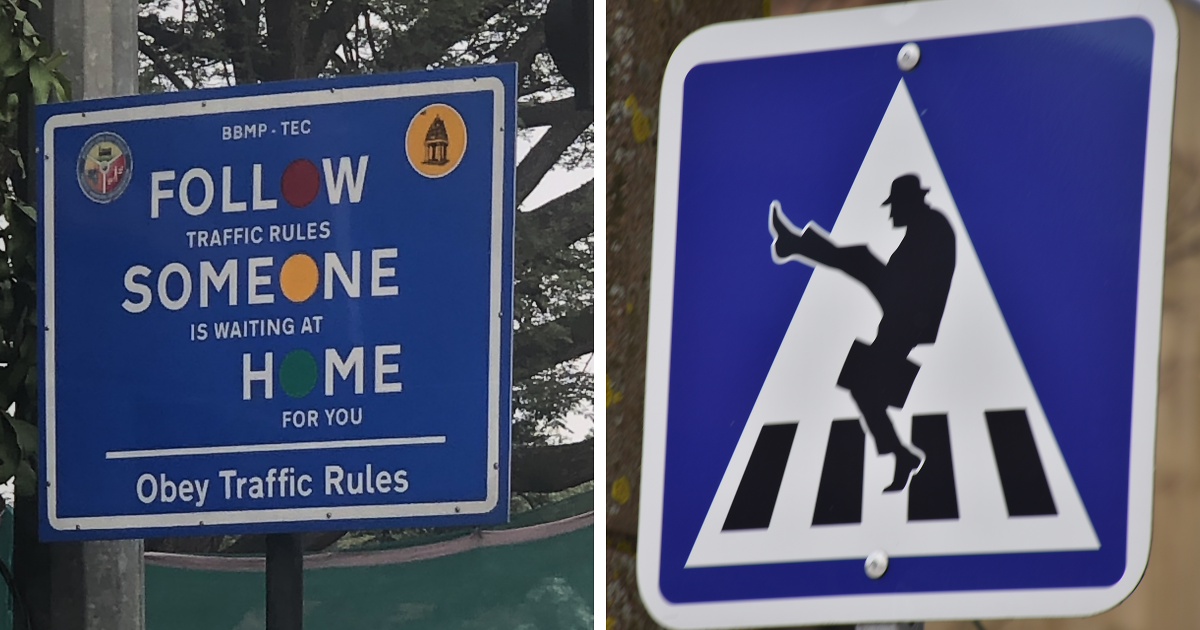
Some signs inform. Some signs warn. And some signs look like they were written during a town-hall meeting between a raccoon, a tired manager, and a graphic designer with three minutes left before lunch.
Why Funny Signs Stop Us In Our Tracks
We pass hundreds of signs every week without thinking much about them. Stop. Exit. Wet floor. No parking. Please wait to be seated. Most are designed to disappear into the background after doing their job. But every now and then, a sign jumps out of ordinary life wearing a tiny comedy hat. It might be a restaurant board that says, “Soup of the day: coffee,” a church sign with a pun so aggressive it deserves its own parking space, or a hand-painted warning that reads, “Do not feed the squirrels. They are already organized.”
That is why the question “Hey Pandas, what funny or strange sign have you snapped a picture of?” works so well as a community prompt. Funny signs are tiny public jokes. Strange signs are little mysteries. Together, they are proof that the world is not entirely run by spreadsheets, traffic cones, and people who say “circle back” in meetings.
From humorous road signs to weird public notices, people love photographing signs because they capture a perfect collision between real life and accidental comedy. A sign is supposed to be clear, serious, and practical. When it becomes confusing, too honest, weirdly poetic, or unintentionally dramatic, the camera comes out faster than a cat hearing a can opener.
The Best Funny Signs Usually Fall Into A Few Classic Categories
1. The brutally honest business sign
Some of the funniest sign pictures come from businesses that have abandoned corporate polish and gone straight for the truth. A bakery might write, “Our cookies fix problems you don’t want to discuss.” A coffee shop might post, “Unattended children will be given espresso and a free puppy.” A mechanic might announce, “We fix what your cousin said he could fix.” These signs work because they sound like a real person, not a marketing committee trapped in a conference room with a bowl of stale mints.
Honest signs also feel refreshing because modern advertising can be painfully shiny. When a small shop uses humor, sarcasm, or local personality, the message becomes memorable. People do not just walk by; they stop, laugh, snap a photo, and share it. That is free marketing with better jokes than most commercials.
2. The warning sign that raises more questions than it answers
Warning signs are supposed to reduce confusion. But the strange ones often create a brand-new category of concern. A sign that says, “Beware of attack goose” is useful, yes, but it also opens several emotional tabs in the brain. How many incidents led to this? Is the goose unionized? Has anyone tried negotiating?
Other classics include “Do not lick the fence,” “Caution: emotional support chickens crossing,” or “Please do not sit on the cactus.” The funniest warning signs often suggest a backstory. Somewhere, somehow, someone did exactly the thing the sign now forbids. Humanity is a majestic species, but we do keep forcing property owners to write things down.
3. The grammar disaster
Misspelled signs have been making people laugh since the first person painted “pubic parking” instead of “public parking” and accidentally created a local landmark. Typos are funny because signs have authority. They are mounted on walls, printed in bold letters, or nailed to posts as if they know what they are talking about. When the spelling collapses, the authority collapses with it.
That said, the humor is best when it stays kind. A funny typo can be shared without mocking the person behind it. Everyone has made a spelling mistake. Most of us are lucky our errors were not printed eight feet wide and installed next to a highway.
4. The oddly specific rule
Nothing says “there has been an incident” like a sign with a rule no normal person would have imagined. “No sword fighting in the produce aisle.” “Do not put sandwiches in the printer.” “Employees may not ride the mop bucket.” These signs are funny because they feel less like rules and more like documentary evidence.
Oddly specific signs invite the reader to become a detective. Who brought the sword? Was the sandwich toasted? How fast was the mop bucket going? A good strange sign does not simply communicate; it creates a tiny crime scene for the imagination.
Why “Signs In The Wild” Go Viral
Funny signs are made for the internet because they are quick, visual, and instantly understandable. You do not need a long setup. The sign is the setup and the punchline. A single photo can deliver a whole story in three seconds, which is perfect for people scrolling while waiting for noodles to boil.
They also work across communities. A weird sign outside a diner in Ohio, a roadside attraction in Arizona, a church sign in Alabama, or a yard sale poster in Oregon can make people from completely different places laugh for the same reason: the message feels human. It has personality. It may be charming, chaotic, passive-aggressive, poetic, or all four before breakfast.
There is also a nostalgic layer. Roadside signs, motel signs, diner boards, handmade flyers, and small-town billboards are part of American visual culture. Long before social media, signs were how local businesses announced themselves. Neon motel signs promised vacancy. hand-painted boards promised pie. Church signs promised salvation with occasional puns. Today, these signs still tell us something about place, humor, and community personality.
Funny Road Signs: Where Humor Meets Safety
Humorous road signs deserve their own lane. Across the United States, transportation departments have used electronic highway boards to remind drivers to buckle up, slow down, stay sober, or put down their phones. The funniest ones often use rhyme, pop-culture references, or dad-joke energy strong enough to power a minivan.
These messages can grab attention because they interrupt the usual pattern. Drivers expect “Crash ahead” or “Left lane closed.” When they see something witty, they notice it. However, road signs are not the same as coffee shop chalkboards. On highways, clarity matters more than comedy. Official guidance emphasizes simple, direct, legible messages because drivers have only a few seconds to read, understand, and react.
That tension is part of what makes funny road signs interesting. A joke on a sandwich board can be wonderfully weird. A joke on a highway sign must still be safe, short, and impossible to misunderstand. The best humorous traffic signs are clever without becoming puzzles. If a driver has to decode the punchline like it is a spy message hidden in a cereal box, the sign has failed its day job.
What Makes A Strange Sign Funny Instead Of Just Confusing?
Most funny signs rely on surprise. The brain expects one thing and gets another. A “No parking” sign is ordinary. A “No parking unless you are a wizard” sign creates a harmless violation of expectations. The message still makes sense, but it bends reality just enough to make people smile.
Context matters too. “Beware of dog” is normal. “Beware of dog, cat is shady too” adds character. “Please do not enter” is basic. “Please do not enter unless you are bringing tacos” turns a restriction into a tiny social contract. The humor usually comes from contrast: serious format, unserious message; official tone, personal complaint; simple instruction, wildly specific backstory.
Strange signs are especially funny when they feel unfiltered. A sign that says, “Closed because we are tired” may not win a corporate branding award, but it might win the internet for the day. People recognize the feeling. Sometimes honesty is the funniest font.
Examples Of Funny Or Strange Signs People Love To Photograph
Restaurant and cafe signs
Restaurants are prime territory for funny sign pictures. Food already makes people emotional, and chalkboards give staff permission to be playful. Common favorites include signs about caffeine dependency, pizza loyalty, tacos as therapy, or the eternal truth that “today’s special” is whatever the cook has not run out of yet.
Church signs
Funny church signs have become their own genre. Many use puns, seasonal jokes, or modern references to make spiritual messages more approachable. Some are clever enough to make even non-churchgoers slow down and grin. Others are so pun-heavy they should probably stretch first.
Yard sale and garage sale signs
Yard sale signs can be wonderfully chaotic because they are usually homemade, urgent, and competing with every other sign on the block. “Huge sale, tiny prices,” “My husband said sell it all,” or “Probably haunted antiques” are the kind of messages that make bargain hunting feel like entertainment.
Pet and animal signs
Animal-related signs are almost always funny because animals do not care about signage. “Do not feed the goats” is clear, but the goats are already planning a counterargument. “Cat lives here, you just visit” is not a warning; it is a legal statement. Signs about dogs, geese, chickens, llamas, and suspicious cats often become instant photo material.
Lost-and-found signs
A missing item poster can become strangely charming when the item is unusual. Lost keys are normal. Lost dentures, lost rubber duck, lost emotional support potato, or “found: one shoe, no questions asked” all turn everyday inconvenience into community theater.
How To Snap A Great Funny Sign Picture
If you see a funny or strange sign in the wild, the best photo is usually simple. Capture the sign clearly, include enough background to show the context, and avoid blocking sidewalks, roads, or doorways while taking the picture. If the sign is on private property, be respectful. A joke is not worth trespassing, startling employees, or becoming the reason for tomorrow’s new sign.
Good sign photography is about timing and framing. A weird sign next to an ordinary scene becomes funnier because of contrast. A “Do not enter” sign beside a wide-open empty field is funnier than the sign alone. A “fresh fish” sign next to a suspiciously empty aquarium tells a story. The surrounding details often provide the punchline’s backup dancers.
Also, avoid sharing personal information. If the photo includes addresses, phone numbers, license plates, or someone’s face, crop or blur it before posting. Funny signs should spread laughter, not accidentally turn a stranger’s front yard into a tourist attraction.
Why These Signs Feel So Human
The real charm of funny signs is that they remind us people are behind the messages. Someone had a bad day with customers and wrote, “Yes, we are open. No, we do not know why the door is weird.” Someone got tired of dog owners ignoring the lawn and created a sign with the emotional force of a courtroom closing argument. Someone at a diner looked at a blank board and decided the soup of the day was “regret.”
In a world full of polished branding, automated emails, and signs that sound like they were written by a committee of beige filing cabinets, funny signs feel personal. They are local. They are imperfect. They are little bursts of public personality. That is why people collect them, share them, and remember them.
Experience Stories: The Funny Sign Moments People Never Forget
One of the best things about funny sign pictures is that they usually arrive when nobody is looking for them. You are on a road trip, tired, hungry, and wondering whether the gas station coffee is legally coffee. Then you see a sign outside a diner that says, “Come in. We have air conditioning and fewer regrets than your last relationship.” Suddenly, the trip has a highlight. You may not remember the mile marker, but you remember the sign.
Another classic experience happens in small towns, where signs often have more personality than entire shopping malls. A handmade board outside a farm stand might say, “Sweet corn, fresh eggs, and questionable advice.” A bait shop might advertise, “Live worms, cold drinks, hot gossip.” These signs do more than sell products. They introduce the local sense of humor. They tell travelers, “Yes, you are somewhere specific. No, this place was not assembled from the same twelve national chains.”
Then there are the signs that become funny because of where they are placed. A “slow children playing” sign next to an empty field can sound unintentionally rude. A “do not feed wildlife” sign beside a squirrel staring directly at you can feel like the squirrel hired a lawyer. A “watch for falling rocks” sign on a peaceful mountain road may make every pebble look suspicious. The sign is practical, but the setting gives it personality.
Many people also have a favorite strange sign from work or school. Office kitchens are legendary for signs that start politely and slowly lose faith in humanity. “Please wash your dishes” becomes “Your mother does not work here” and eventually evolves into “The spoon situation is being monitored.” Break rooms, shared laundry rooms, dorm hallways, and apartment mail areas are all natural habitats for passive-aggressive signage. The fun lies in seeing civilization attempt to solve chaos with laminated paper.
Vacation signs are another rich category. Tourist towns often lean into silliness because travelers are already in a playful mood. You might see a beach sign warning visitors not to “argue with seagulls,” a motel sign promising “clean rooms and mysterious carpet,” or a souvenir shop declaring, “Yes, you need another magnet.” These signs become part of the trip’s story. Years later, the photo may matter more than the souvenir.
The funniest sign I would write into a community thread is the kind that feels like it has lived a full life before you arrived: slightly faded, crooked, maybe missing one letter, but still trying its best. A sign reading “Please keep gate closed, goat is faster than he looks” is not just information. It is a warning, a biography, and possibly a confession. You instantly imagine the goat, the chase, the regret, and the person who finally said, “We need a sign.”
That is why funny sign pictures keep circulating online. They are tiny stories with no homework attached. They make everyday errands feel like a scavenger hunt. They turn road trips into comedy tours. They remind us that behind every official-looking message, there may be a tired human with a marker, a problem, and just enough sarcasm to make the rest of us laugh.
Conclusion: Keep Your Camera Ready, Pandas
Funny and strange signs are everywhere once you start looking: in diners, churches, offices, parking lots, roadside attractions, small-town shops, trailheads, bathrooms, farms, and those mysterious gas stations that sell both hot dogs and phone chargers from 2009. They are part joke, part warning, part accidental art.
The best funny signs do not need to be perfect. In fact, perfection would ruin most of them. A crooked hand-painted board can be funnier than a polished ad campaign. A typo can become a landmark. A too-specific rule can tell a whole story in six words. That is the magic of signs in the wild: they catch ordinary life in the act of being ridiculous.
So, hey Pandas, keep your eyes open. The next hilarious sign might be waiting outside a coffee shop, nailed to a fence, taped to a break-room fridge, or glowing above a motel on a lonely highway. And when you find it, take the picture. Future internet strangers need joy, and apparently, the goat really is faster than he looks.