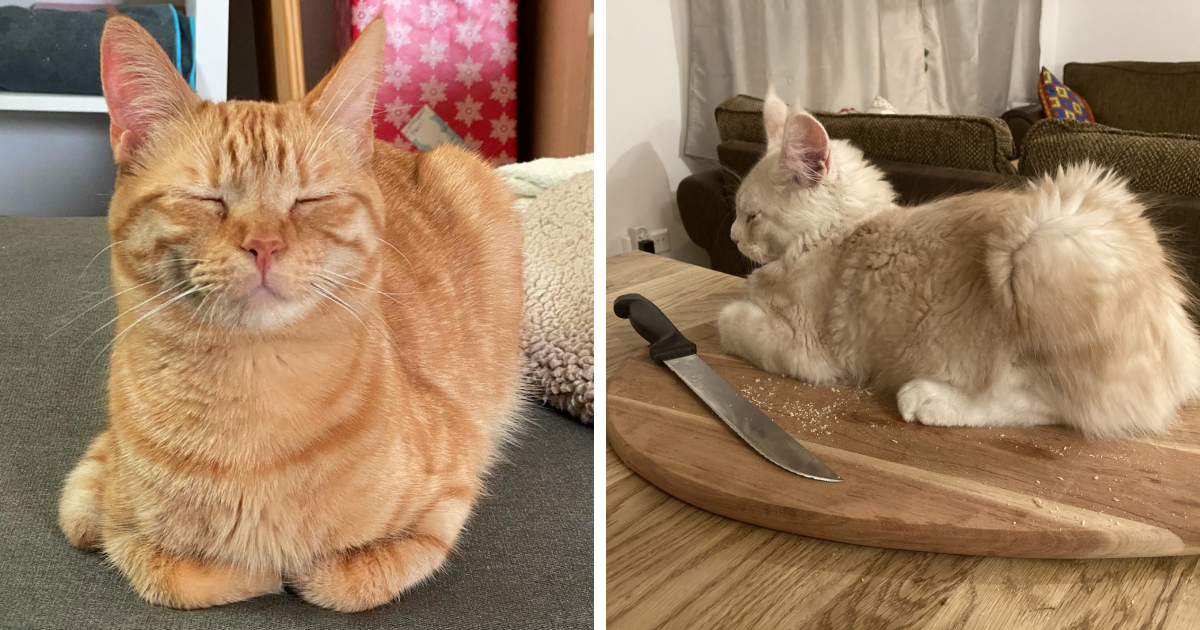
Some pets chase balls. Some pets guard the house. Others fold their legs beneath their bodies, become suspiciously rectangular, and spend the afternoon impersonating baked goods. Today, we celebrate those furry carbohydrates.
Welcome to the Cutest Bakery on the Internet
Calling all Pandas, pet parents, amateur photographers, and people whose camera rolls are 94 percent animal pictures: we want to see your cat or dog sitting in a bread position.
You know the pose. The paws disappear beneath the body, the shoulders settle, and the animal suddenly resembles a warm loaf that has somehow grown ears. Cats are the undisputed masters of this transformation, but dogs occasionally enter the bakery too. Depending on their size and shape, a loafing dog may resemble a baguette, a dinner roll, or an entire bag of flour that has given up on standing.
The mission is simple: find your pet in their finest bread position, take a picture without disturbing the royal loaf, and share the result. Perfect photography is unnecessary. A slightly blurry photo of a surprised corgi bun can be far more entertaining than a polished studio portrait.
This is not a competition, although your pet will probably assume they have already won.
What Is the Cat or Dog Bread Position?
The Classic Cat Loaf
A classic cat loaf forms when a cat rests upright with the front paws tucked beneath the chest and the back feet folded under the body. The tail may curl around the side or vanish underneath. From the correct angle, the cat appears to have no legs at allonly a compact body, a head, and perhaps one judgmental eyebrow.
Veterinary behavior resources generally describe this position as a common resting posture. A cat may be comfortable and relaxed while remaining alert enough to raise their head, track movement, or launch an emergency response when someone opens a treat bag three rooms away.
Grounding: VCA and PetMD describe the loaf as an upright, paws-tucked resting position that may combine relaxation with readiness to move.
The Canine Bread Experiment
Dogs do not always create the same compact loaf because canine bodies come in a truly ambitious range of proportions. A French bulldog may produce a respectable dinner roll, while a greyhound attempting the same pose could look like a folding ruler covered in velvet.
For this challenge, a dog bread position can include a tucked-paw rest, a compact sphinx-like pose, or any arrangement in which the legs seem to disappear and the body becomes bakery-shaped. The definition is intentionally generous. We are appreciating pets, not conducting a professional bread inspection.
Loaf, Sploot, or Croissant?
Pet posture vocabulary has become delightfully specific. A loaf keeps the limbs tucked underneath. A sploot usually involves lying on the belly with one or both back legs stretched behind. A curled pet may resemble a croissant, cinnamon roll, or furry donut. A dog lying on its back with all four feet in the air is not bread; that is an overturned table.
All forms are adorable, but the bread position earns special recognition because of its mysterious lack of visible paws. Where did the feet go? Are they still attached? Does the animal pay extra to store them somewhere? Science has answers to several of these questions, but not the last one.
Grounding: VCA distinguishes the paws-tucked loaf from the belly-down, rear-legs-extended sploot.
Why Do Cats Sit Like Loaves of Bread?
They May Feel Comfortable
When a cat tucks vulnerable paws beneath the body, settles into a loose posture, and displays neutral ears and a calm expression, comfort is a reasonable interpretation. The cat has chosen to rest rather than patrol, climb the curtains, or reorganize every object on your desk.
Still, posture should never be interpreted in isolation. Look at the whole cat. Soft facial muscles, normally positioned ears, calm breathing, neutral whiskers, and a quiet tail usually create a different picture from flattened ears, enlarged pupils, a tightly compressed body, or rapid tail movement.
Grounding: Humane Society, Cornell, Fear Free, Hill’s, and PetMD advise interpreting the entire body, including ears, eyes, tail, tension, and surrounding context.
They May Be Conserving Warmth
Paws contain less insulating mass than the torso, so tucking them beneath a warm body may help a cat remain comfortable in a cool room. You might notice more enthusiastic loafing near a sunny window, on a folded blanket, beside a heating vent, or directly on the clean laundry you intended to put away.
Cats also curl tightly when conserving body heat. The loaf is less spherical, but it follows the same general household policy: never allow a warm surface to remain unoccupied.
Grounding: VCA, Hill’s, The Spruce Pets, Daily Paws, and Rover discuss warmth or temperature regulation as a possible reason for tucked or compact resting positions.
They Can Rest Without Completely Switching Off
A loafing cat often keeps the head upright or only lightly lowered. This allows the animal to rest while continuing to monitor sounds, movement, and suspicious kitchen activity. Cats are skilled at appearing asleep while maintaining detailed records of who touched the treat cabinet.
The posture is therefore not necessarily a sign of deep sleep. Your loaf may be lightly dozing, relaxing, watching birds, or waiting for you to walk past so they can follow you into the bathroom for reasons that remain classified.
Why Do Dogs Try the Bread Position?
Dogs may settle with their paws tucked because the position feels comfortable, supports a quick transition back to standing, or simply suits the surface beneath them. A dog resting on a rug may arrange their legs differently from a dog lying on cool tile or sinking into a soft bed.
Breed structure also matters. Short-legged dogs can create compact buns with very little effort. Broad-chested breeds may produce sturdy farmhouse loaves. Long-legged dogs often attempt the pose but leave one elbow sticking out, as though the bread dough escaped during baking.
As with cats, the entire body provides context. A relaxed dog generally appears loose rather than rigid. Their face may look soft, their breathing should be easy, and they should respond normally to familiar sounds. Tail movement alone is not a complete emotional translation; posture, facial expression, ear position, movement, and the surrounding situation all contribute to canine body language.
Grounding: AKC guidance emphasizes reading a dog’s complete posture and context rather than assigning one fixed meaning to an isolated signal.
How to Photograph Your Furry Loaf
Do Not Disturb the Dough
The first rule of pet loaf photography is simple: never force the pose. Do not fold your pet’s legs, reposition a nervous animal, wake them repeatedly, or block their exit to obtain a funnier picture. A genuine loaf is better than a manufactured one, and your pet’s comfort matters more than internet applause.
Approach quietly, avoid sudden flashes, and use your camera’s zoom when possible. Some pets enjoy attention; others immediately unfold when a phone appears. Respect the animal who declines media interviews.
Get Down to Loaf Level
A photograph taken near the pet’s eye level often makes the shape clearer and the expression more engaging. Try placing the animal slightly off-center, leaving enough space around the body to show the missing-paw illusion.
Natural window light is usually flattering. Avoid placing the brightest light directly behind your pet unless you want a dramatic silhouette titled The Bread That Knew Too Much.
Capture the Surrounding Story
The funniest pet pictures often include context. Perhaps your black cat is loafing beside a burned piece of toast. Maybe your golden retriever is parked next to the bread box. A tiny kitten on a large kitchen mat can look like a roll waiting for the rest of the batch.
Look for harmless visual comparisons, but keep actual food out of reach when necessary. The joke is that your pet resembles breadnot that your pet should eat a random loaf, raw yeast dough, or baked goods containing unsafe ingredients.
Grounding: ASPCA and PetMD warn that certain baked-goods ingredients, including xylitol and raw yeast dough, can be dangerous to pets.
Wait for the Expression
A bread-position photo becomes unforgettable when the loaf looks mildly offended, deeply philosophical, or completely unaware that their feet are missing. Take several quiet shots rather than demanding that your pet look at the camera. The best expression often appears between poses.
Ideas for Captioning Your Cat or Dog Loaf Photo
A strong caption can turn an adorable pet picture into a tiny comedy routine. Include your pet’s name, approximate age, breed or mix if known, and the circumstances surrounding the loaf.
- “Freshly baked and already judging the chef.”
- “One organic tabby loaf, lightly toasted.”
- “The paws are currently unavailable.”
- “This baguette barks at delivery drivers.”
- “Proofing time: four hours and counting.”
- “No artificial ingredients, only natural shedding.”
- “Do not butter. Will bite.”
- “The bakery closes whenever she feels like moving.”
- “Gluten-free, furniture-destroying sourdough.”
- “He heard the word ‘walk’ and became unbreaded.”
You can also tell a short story: where your pet was sitting, what happened seconds later, and whether the loaf remained intact. A picture may be worth a thousand words, but “she launched herself at a moth immediately afterward” deserves at least eight more.
When a Bread Position Deserves a Closer Look
Most ordinary loafing is simply ordinary loafing. However, a posture that suddenly becomes frequent or looks tense should be considered alongside other behavioral or physical changes.
Contact a veterinarian when the position accompanies warning signs such as reduced appetite, hiding, unusual vocalization, repeated difficulty getting comfortable, reluctance to jump or walk, stiffness, limping, vomiting, weakness, or significant changes in grooming and litter-box habits. Labored breathing, open-mouth breathing in a cat, collapse, or severe distress requires prompt veterinary attention.
A relaxed loaf and a painful hunch can look similar in a single photograph. The difference may become clearer when you observe movement, breathing, facial tension, daily habits, and whether the pet is behaving normally. Owners know their animals’ routines well, so an unexplained change is worth documenting and discussing with a veterinary professional.
Grounding: VCA and Cornell identify changes in movement, appetite, social behavior, grooming, comfort, and usual activity as possible signs of pain or illness.
Why Sharing Funny Pet Photos Feels So Good
A loaf photo is small, harmless, and instantly understandable. It does not require a complicated backstory. One person sees a cat with invisible legs, laughs, and shows the picture to someone else. For a moment, the internet functions exactly as civilization intended.
Community pet-photo threads also give owners an easy way to celebrate animals as individuals. Two orange cats may use the same posture but produce entirely different results. One resembles an elegant brioche. The other looks like a baked potato that has received disappointing financial news.
These collections work best when participants add personality. Tell us whether your pet loafs only in winter, always chooses the same rug, or unfolds the moment you approach. Mention the unusual nickname the pose has earned in your household. “Bread position” is good, but “Captain No-Legs Mode” may be even better.
Pet-sharing communities have long used funny and affectionate photos to brighten one another’s day, and the bread-position challenge fits that tradition perfectly. It invites everyone to contribute, whether they own a champion show dog, a rescued senior cat, or a mixed-breed mystery whose official breed appears to be “comfortable.”
Grounding: Bored Panda pet-photo prompts explicitly encourage community members to share funny or uplifting animal images.
Experiences From the Household Pet Bakery
The Loaf That Lasted Six Seconds
Anyone who has tried to photograph a cat knows that perfection has a short expiration date. Imagine entering the living room and discovering Maple, a striped tabby, sitting in a flawless loaf on the arm of the couch. Her front paws are invisible. Her tail has been neatly filed away. Even her whiskers appear symmetrical.
You reach for your phone. Maple notices.
The first picture captures a perfect loaf. The second records one paw emerging from storage. In the third, Maple is standing. By the fourth, the couch is empty and the camera contains a blurry streak heading toward the kitchen. The entire event lasts six seconds, which is apparently the maximum permitted length of an unauthorized feline photo session.
The Dog Who Became a Baguette
Dogs bring their own interpretation to the bread position. Consider Winston, a long-bodied mixed breed who tucks his front paws but leaves his back legs stretched behind him. From the front, he is a loaf. From the side, he is a baguette. From above, he resembles a rug with opinions.
Winston chooses this pose every evening while his family watches television. He faces the screen but reacts only to doorbells, barking dogs, and the sound of cheese packaging. Photographing him is easy because he enjoys attention. The challenge is capturing the original position before his tail begins wagging and knocks three objects off the coffee table.
The Two-Pet Bakery
Multi-pet homes can produce extraordinary bakery displays. A small cat may loaf beside a large dog, creating the visual equivalent of a dinner roll parked next to a commercial loaf. Sometimes the animals face the same direction, as though attending an important meeting. Sometimes they sit back-to-back after a disagreement about who owns the blanket.
The best photographs often reveal these relationships without requiring elaborate captions. The cat appears confident. The dog looks patient. Both have tucked their feet away and agreed, temporarily, not to chase one another through the hallway.
The Senior Loaf With Special Requirements
Older pets may develop particular resting preferences. A senior cat might choose a heated bed instead of a windowsill, while an aging dog may favor a thick rug that is easier to rise from. Their bread positions can still be charming, but owners often become more observant about stiffness, movement, and changes in routine.
One useful experience is learning to compare rather than panic. A familiar, loose loaf followed by normal eating, grooming, walking, and play is different from a tense new posture accompanied by withdrawal or mobility trouble. Taking occasional photos can even help an owner notice gradual changes and show a veterinarian how the pet rests at home.
The Photo That Becomes a Family Favorite
The most meaningful loaf picture may not be technically impressive. The lighting might be uneven. A laundry basket may dominate the background. Someone’s sock could be making an unwanted guest appearance.
Yet the image captures the pet exactly as the family remembers them: calm, funny, slightly strange, and completely at home. Years later, nobody cares whether the photograph followed professional composition rules. They remember the sunny patch on the carpet, the tiny hidden paws, and the way their pet always looked as though they had been baked at 350 degrees until lightly golden.
That is the real joy of this challenge. The bread position is amusing, but the picture also preserves an ordinary moment of trust and companionship. A pet felt safe enough to settle down, and a person cared enough to notice.
Post Your Best Bread Position
Now it is your turn, Pandas. Search your camera roll or quietly inspect the nearest couch, blanket, rug, windowsill, and suspiciously warm laptop. Post a picture of your cat or dog sitting in a bread position, and tell us the story behind it.
Is your pet a neat sandwich loaf, a crooked dinner roll, a majestic sourdough boule, or a canine baguette with one leg escaping? Does the pose have a special household name? How long did your furry baked good remain intact before stretching, sneezing, or sprinting toward an imaginary emergency?
Share the photo, add a funny caption, and appreciate everyone else’s entries. Please keep the experience kind: use your own image or credit the photographer appropriately, protect personal information visible in the background, and never make an animal uncomfortable for a picture.
The internet bakery is officially open. May the loaves be fluffy, the captions be ridiculous, and the paws remain mysteriously absent.