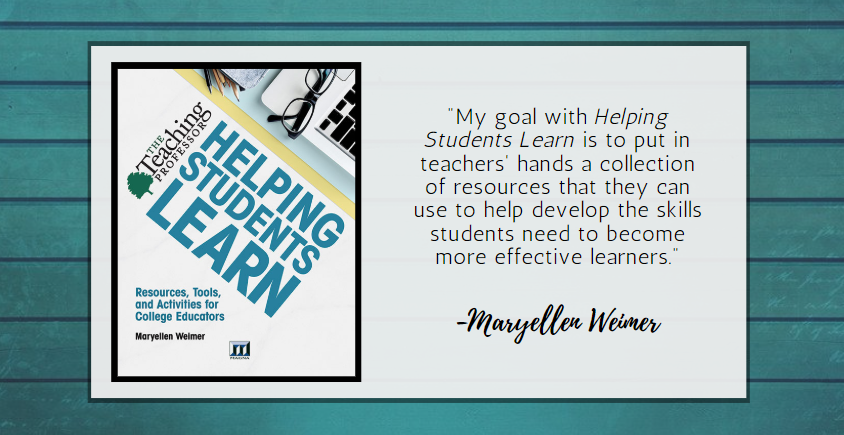
Some teachers walk into class with slides, handouts, and a caffeine level that could power a small city. Yet even the most prepared lesson can fall flat if students do not know how to learn from it. That is the heart of “Helping Students Learn: Insight from Maryellen,” inspired by the practical wisdom of Maryellen Weimer, PhD, a respected voice in college teaching and learner-centered education.
Weimer’s work reminds educators of a simple but often ignored truth: teaching is not the same as learning. A teacher can explain a concept beautifully, draw diagrams worthy of museum lighting, and tell jokes that are at least legally recognizable as jokes. But students still need guidance in how to process, practice, question, remember, and apply what they are learning.
Helping students learn means shifting from “How much content can I cover?” to “What will students be able to do with this knowledge?” That small change can transform a classroom from a content delivery truck into a thinking workshop. The students are no longer passengers on the bus; they are learning how to drive, read the map, and occasionally admit they took the wrong exit.
Who Is Maryellen Weimer, and Why Does Her Insight Matter?
Maryellen Weimer is widely known for her work on learner-centered teaching, faculty development, and practical strategies for improving college classrooms. Her books and essays have influenced instructors who want to move beyond performance-based teaching and toward learning-centered course design. In her approach, the goal is not to make teaching more theatrical, although a little drama near midterms never hurts. The goal is to help students become more capable, independent, and reflective learners.
One of Weimer’s key contributions is her insistence that students must share responsibility for learning. That does not mean teachers simply toss students into the academic ocean and yell, “Good luck with the sharks!” Instead, instructors design structured opportunities for students to practice learning behaviors: asking questions, evaluating their understanding, working through confusion, receiving feedback, and revising their approach.
This is especially important in college and higher education, where students often arrive with confidence in familiar study habits that may not work for advanced learning. Many have learned to highlight entire textbook pages until they glow like traffic cones. Others reread notes five times and mistake recognition for mastery. Weimer’s insight is that educators must teach the subject and, at the same time, teach students how learning in that subject actually works.
The Big Idea: Learning Is Work Students Must Do
One of the most useful lessons from learner-centered teaching is that learning requires mental effort. Students cannot outsource understanding to the professor, the textbook, a study guide, or the classmate who owns twelve colors of sticky notes. They have to retrieve ideas from memory, connect new information to prior knowledge, test assumptions, solve problems, and explain concepts in their own words.
That is why active learning matters. Active learning does not mean every class must become a game show with buzzers, confetti, and a suspiciously competitive accounting major. It means students regularly do something meaningful with course material. They might analyze a case, debate a question, solve a problem, complete a quick write, explain an idea to a partner, create a concept map, or predict what happens next in a demonstration.
The best active learning is not random activity. It is aligned with learning goals. If students need to interpret historical evidence, they should practice interpreting historical evidence. If they need to diagnose a business problem, they should practice diagnosing business problems. If they need to write clearly, they should write, receive feedback, and revise. Watching someone else perform a skill can help, but it is not the same as practicing the skill. Nobody learned to swim by watching a lifeguard PowerPoint.
Start with Prior Knowledge: The Invisible Guest in Every Classroom
Every student brings prior knowledge into class. Some of it is accurate and useful. Some of it is incomplete. Some of it is confidently wrong, which is a dangerous academic species. A student may believe they understand a concept because they heard the term before, but familiar vocabulary can hide major misunderstanding.
Effective teachers uncover prior knowledge early. They ask diagnostic questions, use opening polls, invite predictions, or give short low-stakes prompts such as, “What do you already know about this topic?” and “What seems confusing before we begin?” These quick checks help instructors see the mental furniture students have brought into the room. Sometimes it is sturdy oak. Sometimes it is a folding chair with one leg missing.
Once prior knowledge is visible, teachers can connect new material to what students already understand. They can also correct misconceptions before those misconceptions become permanent roommates in the student’s brain. This is a major part of helping students learn: do not assume the foundation is solid; inspect it before building the second floor.
Teach Students How to Study, Not Just What to Study
Many students study hard but not strategically. They may spend hours reviewing notes without testing themselves, organizing ideas, or identifying what they cannot yet do. The result is frustration: “I studied for six hours!” Yes, but if those six hours were mostly staring at highlighted paragraphs while eating cereal from the box, the learning return may be small.
Teachers can help by making effective learning strategies explicit. Retrieval practice, for example, asks students to recall information from memory rather than simply reread it. A three-question quiz, a blank-page brain dump, flashcards used correctly, or a quick “write everything you remember” activity can strengthen long-term learning. The point is not to punish students with more tests. The point is to help them practice remembering before the high-stakes exam arrives wearing a cape and scary music.
Spacing also matters. Students learn better when practice is distributed over time instead of packed into one heroic midnight session. Instructors can encourage spacing by using cumulative warm-ups, short weekly review questions, and assignments that require students to revisit earlier concepts. This tells students, gently but firmly, that learning is not a one-night rental; it is a long-term lease.
Feedback: The GPS of Learning
Feedback helps students understand where they are, where they need to go, and how to adjust their route. Without feedback, students may continue confidently in the wrong direction, like someone following a GPS that keeps saying, “Turn left into the lake.” Good feedback is timely, specific, and connected to learning goals.
In a learner-centered classroom, feedback is not limited to final grades. By the time students receive only a final grade, the course is over and the learning opportunity has already packed its suitcase. Formative feedback happens during the learning process. It can come through comments on drafts, peer review, practice quizzes, classroom polls, conferences, rubric notes, or quick instructor responses to common errors.
The strongest feedback tells students what to do next. “Needs work” may be true, but it is about as helpful as a road sign that says, “Somewhere else.” Better feedback might say, “Your claim is clear, but the paragraph needs evidence from the reading. Add one specific example and explain how it supports your point.” That gives the student a next move.
Make Students Partners in the Learning Process
Maryellen Weimer’s learner-centered philosophy asks teachers to involve students in decisions that affect learning. This does not mean students vote on whether homework should exist, because democracy has limits and so does the patience of instructors. It means students can have meaningful choices within a structured course.
For example, students might choose between project topics, select the format of a final demonstration, contribute questions for review sessions, help create discussion guidelines, or reflect on which study strategies worked best. Choice increases ownership. When students see themselves as participants rather than customers, the classroom becomes more productive and less like a complaint desk with fluorescent lighting.
Partnership also means transparency. Teachers should explain why activities are used. Students may resist active learning if they believe “real teaching” means the instructor talks nonstop while they copy notes like court stenographers. A short explanation can help: “We are doing this case analysis because the exam and your future work will require you to apply concepts, not just define them.” When students understand the purpose, they are more likely to engage.
Metacognition: Helping Students Think About Their Thinking
Metacognition is the ability to monitor and regulate one’s own learning. In plain English, it means students learn to ask, “Do I really understand this, or does it just look familiar because I stared at it for forty minutes?” That question alone could save many students from academic heartbreak.
Teachers can build metacognition with simple routines. Before a quiz, ask students to predict which topics they know well and which need more practice. After the quiz, ask them to compare their prediction with their performance. Before submitting a paper, ask students to identify the strongest part of their draft and the part most in need of revision. After a project, ask what strategy they would repeat and what they would change.
These reflections do not need to be long. A two-minute exit ticket can be enough: “What is one idea you understand better today? What is one question you still have? What will you do before the next class?” Over time, these prompts help students become more aware, strategic, and independent. In other words, they begin to carry their own learning toolbox instead of waiting for the instructor to hand them a hammer every Tuesday.
Inclusive Teaching Helps More Students Learn
Helping students learn also means designing classrooms where more students can participate, belong, and succeed. Inclusive teaching is not a decorative slogan for the syllabus. It is a practical commitment to clarity, access, respect, and academic challenge.
Inclusive strategies include explaining expectations clearly, using varied examples, learning students’ names when possible, creating structured discussion roles, offering multiple ways to participate, and checking whether course materials assume background knowledge not all students have. A classroom can be rigorous and supportive at the same time. In fact, support often makes rigor possible.
Students are more willing to attempt difficult work when they believe the classroom is a place where effort, questions, and mistakes are part of learning. This does not mean lowering standards. It means building ramps to the standards. The mountain is still there; the teacher is simply not hiding the trail map.
Design Courses Around Learning Outcomes
One of the most practical ways to help students learn is to design backward from learning outcomes. Instead of beginning with chapters, lectures, or favorite topics, begin with the question: “What should students be able to do by the end?” Then align assessments and activities with those outcomes.
If the outcome is “students will evaluate research claims,” then assignments should ask them to evaluate research claims. If the outcome is “students will communicate technical information to non-experts,” then students need practice translating complex material into clear language. Alignment prevents the common course design problem where lectures, homework, and exams all seem to be attending different meetings.
Clear outcomes also help students study. When students know the target, they can aim their effort. “Understand Chapter 6” is vague. “Explain three causes of inflation and apply them to a current economic example” is much better. The first sounds like a fog machine. The second gives students a flashlight.
Practical Classroom Strategies Inspired by Maryellen’s Insight
1. Begin Class with a Learning Question
Open with a question students should be able to answer by the end of the lesson. For example: “Why do two companies with the same revenue make different pricing decisions?” or “How can a writer make evidence do more than sit there looking academic?” A good question creates curiosity and gives the class a purpose.
2. Use Think-Pair-Share with a Real Task
Ask students to think individually, discuss with a partner, and then share selected ideas. The task should require thinking, not just opinion collecting. “Which explanation is stronger and why?” works better than “Do you like this?” unless the course is Advanced Personal Preferences, which, tragically, is not yet a major.
3. Replace Some Review with Retrieval
Instead of summarizing last class for students, ask them to retrieve it. Use a short prompt: “List three ideas from last class and one question you still have.” This takes only a few minutes and gives both students and teachers useful information.
4. Add Feedback Before the Grade
Let students submit a thesis statement, problem setup, outline, lab plan, or partial draft before the final version. Feedback at the midpoint is more useful than comments after everything is finished. Coaching works best before the game ends.
5. Teach Students to Reflect After Assessments
After a quiz or exam, ask students to analyze their preparation. Which questions did they miss? Why? Did they misunderstand the concept, misread the question, or fail to practice application? This turns assessment into learning instead of merely a dramatic reveal of points lost.
Common Mistakes Teachers Make When Trying to Help
One common mistake is doing too much of the work for students. Teachers are helpful people. That is beautiful. It is also dangerous. If the instructor explains every confusion immediately, students may never practice working through confusion themselves. Productive struggle is part of learning. The key is to provide enough support without stealing the thinking.
Another mistake is covering too much content. Instructors often feel pressure to move quickly, especially in survey courses. But racing through material can create the illusion of progress while students quietly fall off the back of the truck. Fewer topics taught with more practice, feedback, and application may lead to deeper learning.
A third mistake is assuming students know how to participate. Group work, discussion, peer review, and self-assessment all require guidance. Students need roles, models, criteria, and practice. “Discuss this” is not a strategy; it is a wish wearing a name tag.
Experiences Related to Helping Students Learn: Lessons from Real Classrooms
In many classrooms, the most powerful learning moments happen after the teacher stops explaining and students start wrestling with ideas. Consider a first-year writing class where students insist they understand thesis statements. They can define the term. They can identify one in a sample essay. But when asked to write their own, many produce broad observations such as, “Technology has many effects on society.” True? Yes. A thesis? Not quite. It is more like a sleepy fortune cookie.
A learner-centered instructor does not simply mark the sentence wrong and move on. Instead, the teacher gives students three sample thesis statements and asks them to rank the strongest one. Students discuss what makes a claim arguable, specific, and significant. Then they revise their own thesis and explain what changed. In that moment, students are not just receiving information about writing; they are practicing the judgment writers use.
In a biology course, students may memorize the steps of cellular respiration yet struggle to explain why the process matters. A teacher might pause the lecture and ask students to draw a concept map connecting energy, food, cells, and physical activity. The first maps may look like spaghetti with arrows. That is fine. The mess reveals thinking. Students compare maps, revise connections, and then answer an application question: “Why does muscle fatigue increase during intense exercise?” Now the memorized steps begin to function as usable knowledge.
In a business class, students may believe they understand ethical decision-making because they can repeat definitions from a chapter. But when presented with a realistic case involving profit pressure, employee welfare, and incomplete information, they discover that ethical reasoning is not a vocabulary quiz. The instructor can assign roles, ask groups to defend different decisions, and require each group to identify trade-offs. Students learn that real-world thinking involves evidence, values, consequences, and uncertainty. Conveniently, so does adulthood.
Another common experience involves students who perform poorly on the first exam and conclude, “I’m just bad at this subject.” A teacher influenced by Weimer’s approach would treat that moment as a learning intervention, not a final identity label. The instructor might ask students to complete an exam wrapper: How did you study? How many days did you spread practice over? Which errors came from misunderstanding, forgetting, or weak application? What will you do differently next time?
This kind of reflection helps students separate ability from strategy. A disappointing grade becomes information. It says, “This method did not work well enough yet,” not “You are doomed, please collect your academic thundercloud at the door.” Students begin to see learning as adjustable. They can change their habits, ask better questions, practice differently, and improve.
Teachers also learn from these experiences. When many students miss the same question, that is not merely a student problem. It is course data. Perhaps the concept was introduced too quickly. Perhaps students needed a worked example before independent practice. Perhaps the assessment asked for transfer, while class activities only required recognition. The teacher can revise instruction, add practice, or make expectations clearer.
One of the most encouraging experiences in teaching is watching students become more confident because they become more competent. Confidence built on vague praise is fragile. Confidence built on practice, feedback, revision, and evidence is sturdy. When a student says, “I finally know how to study for this class,” the teacher has accomplished something larger than delivering content. The student has gained a method.
Helping students learn is rarely flashy. It looks like better questions, clearer instructions, purposeful pauses, low-stakes practice, useful feedback, and honest reflection. It looks like a teacher resisting the urge to answer too quickly. It looks like students discovering that confusion is not failure; it is often the doorway to understanding. Maryellen Weimer’s insight matters because it keeps attention where it belongs: not on how brilliant the teacher appears, but on how deeply and independently students learn.
Conclusion: Teaching That Helps Students Become Learners
“Helping Students Learn: Insight from Maryellen” is more than a title; it is a reminder of what effective education is supposed to do. The best teachers do not merely deliver information. They design experiences that help students practice, reflect, question, apply, and grow. They make learning visible. They show students how to study, how to think, how to recover from mistakes, and how to take responsibility for progress.
Maryellen Weimer’s learner-centered perspective is valuable because it respects both teachers and students. It recognizes that teachers bring expertise, structure, and care, while students must bring effort, curiosity, and participation. Learning happens in that partnership. It is not magic, although a well-timed class discussion can feel close. It is design, practice, feedback, and persistence.
For educators, the message is practical: start small. Add one retrieval question. Clarify one learning outcome. Build one feedback checkpoint. Ask one metacognitive prompt. Explain the purpose behind one activity. Over time, these small changes create classrooms where students do more than survive the syllabus. They learn how to learn, which may be the most transferable skill education can offer.