Some retro-computing stories begin with a dusty attic, a mystery cable, and someone saying, “I’m pretty sure this still works.” This one begins with several thousand pounds of hardened steel that could have become a coffee table. Thankfully, sanityor at least the wonderfully specific kind of insanity found in vintage computer circleswon. The result was a new Commodore 64 case project that reminded the retro world of something important: sometimes the most valuable part of old technology is not the circuit board, the chips, or even the software. Sometimes it is the shell that made a generation fall in love with computers before computers learned how to nag us with notifications.
The story behind Hackaday Retro Edition: A New Commodore 64 Case is about more than plastic. It is about preservation, manufacturing history, community enthusiasm, and the strange emotional pull of beige hardware. The Commodore 64 was not merely a computer; it was a household object, a gaming machine, a programming classroom, a music studio, and for many people, the first glowing blue screen that made technology feel personal. So when original Commodore 64C injection molds resurfaced and were used to create new cases, retro fans understandably reacted as if someone had found a working time machine in a warehouse next to a box of unlabeled joysticks.
Why a New Commodore 64 Case Matters
To outsiders, a replacement Commodore 64 case may sound like a niche accessory for people who alphabetize floppy disks. To collectors, restorers, makers, and preservationists, it is closer to rescuing architecture. The case defines the machine’s identity. The original “breadbin” Commodore 64 has that chunky early-1980s confidence, while the later Commodore 64C brought a sleeker, lighter look inspired by Commodore’s evolving design language. Both are instantly recognizable, but the C64C case has a special place because it marked the machine’s transition from scrappy home-comput the machine’s transition from scrappy home-computing pioneer to polished consumer product.
Old cases also age badly. Vintage ABS plastic can yellow, become brittle, crack near screw posts, and collect scratches from decades of moves, garage storage, and “I’ll fix it someday” neglect. Retrobrighting can improve color temporarily, but it does not repair broken mounting points or reverse every chemical insult time has thrown at the plastic. Painting can look good, but it risks turning a historic computer into something that resembles a prop from a low-budget cyberpunk diner. A newly molded case gives owners another option: keep the original board, keyboard, and ports while giving the machine a fresh, structurally sound home.
The Hackaday Story: From Industrial Mold to Retro Treasure
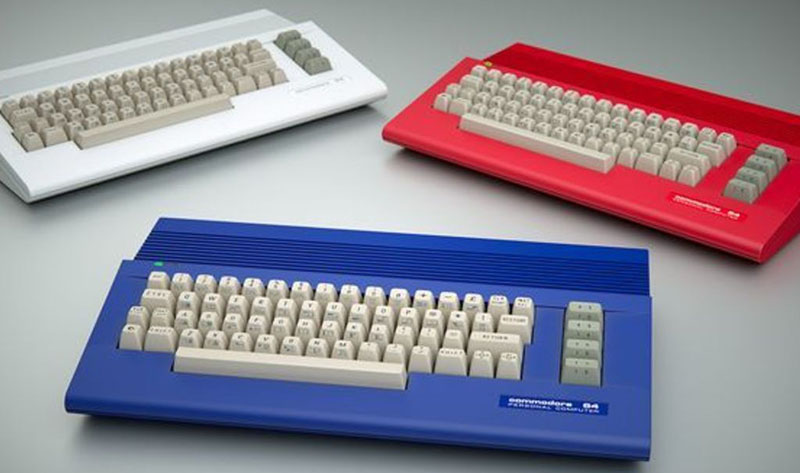
The Hackaday coverage focused on Dallas Moore, who discovered that original Commodore 64C molds were at risk of being treated as industrial junk. These were not cute little desktop molds. They were enormous pieces of tooling, roughly the sort of thing that makes you reconsider whether your pickup truck has lived a meaningful life. The reported plan was to press a run of new Commodore 64C cases in colors such as red, white, and blue, with funding handled through Kickstarter.
That is where the story becomes delightful. A normal person might see a 2,500-pound mold and think, “Absolutely not.” A retro-computing person sees it and thinks, “This is history, and also I wonder whether I can fit it through a door.” The project mattered because injection molds are the DNA of mass-produced hardware. A 3D print can copy a shape, but original tooling carries the manufacturing fingerprints of the period: exact curves, internal ribs, screw post geometry, surface texture, flow marks, and all the tiny decisions that made the original case feel like itself.
The Commodore 64: Small RAM, Huge Legacy
The emotional weight behind a new Commodore 64 case comes from the machine’s enormous cultural footprint. Introduced in 1982, the Commodore 64 packed 64 kilobytes of RAM, a MOS 6510 processor, colorful graphics, and the legendary SID sound chip into a package that could connect to a household television. It was powerful for its price, and Commodore’s distribution strategy put it in department stores, toy stores, college bookstores, and other mainstream retail channels rather than only specialist computer shops.
That mattered. The C64 did not wait politely for people to become computer hobbyists; it walked into ordinary homes and made them curious. Children learned BASIC. Parents used productivity software. Musicians experimented with the SID chip. Gamers discovered titles that still inspire affectionate arguments today. By many historical counts, the Commodore 64 became the best-selling single desktop computer model of all time, with estimates commonly ranging from roughly 12.5 million to 17 million units, and some older claims going higher. Exact numbers are debated, because apparently even computer history enjoys a little chaos.
C64C vs. Breadbin: The Shape of Nostalgia
The original Commodore 64 is often called the “breadbin” because of its rounded, bulky case. The Commodore 64C, introduced in 1986, was functionally similar but visually more modern. It adopted a flatter, wedge-like design that aligned more closely with the Commodore 128 and the Amiga family. For many users, the C64C is the machine they remember from later childhood, school computer clubs, bedroom coding sessions, or weekend gaming marathons powered by cereal and optimism.
This is why the C64C case is not simply a container. It is a memory trigger. The angle of the keyboard, the color of the plastic, the placement of the badge, the red power LED, and the satisfying footprint on a desk all contribute to the experience. A computer can be electronically compatible and still feel wrong if the case does not carry the right visual and tactile cues. Retro computing is not only about running old software; it is about restoring the ritual around that software.
Why Original Injection Molds Are a Big Deal
Injection molding is expensive, precise, and unforgiving. Creating new tooling for a complex computer housing can cost far more than most hobby projects can justify. That is why recovering original molds was such a big win. They allowed new cases to be produced with authentic proportions and internal structure rather than relying on approximations.
Original molds also tell a manufacturing story. The C64C tooling reportedly involved a two-point flow pattern, which created subtle semi-circular flow marks as plastic cooled. In the 1980s, such marks might have been viewed as an ordinary quirk of production. Today, they read almost like a signature. Modern collectors often value these imperfections because they separate genuine molded heritage from a perfectly smooth modern imitation. In other words, the tiny plastic swirls that once made factory engineers sigh can now make collectors reach for their wallets.
Kickstarter, Community, and the Retro Hardware Economy
The Kickstarter angle was essential because retro hardware lives or dies by community trust. Producing a case run requires tooling access, a plastics manufacturer, color decisions, packaging, shipping logistics, and enough buyers willing to commit before the product exists. That is a tall order for something whose ideal customer may own three soldering irons and still complain about a $5 shipping increase.
Yet the campaign captured exactly what crowdfunding does best. It connected a rare manufacturing opportunity with a passionate audience. Backers were not merely buying plastic; they were participating in a rescue mission. The promise of new colored housings gave restorers a way to personalize their machines without destroying original shells. It also created fresh possibilities for mods: Raspberry Pi builds, Ultimate 64 boards, transparent display builds, custom badges, LED experiments, and carefully staged desk photos that say, “I am normal,” while clearly proving the opposite.
Colors, Clear Cases, and Collector Personality
Color matters in retro computing because beige is not just beige. It is a lifestyle, a warning, and occasionally a cry for help. The new Commodore 64C cases brought playful color choices into a platform usually associated with aged cream and brown. Red, white, blue, and transparent versions gave collectors ways to build machines that felt both authentic and fresh.
Transparent cases were especially attractive because they let owners show off the motherboard, shielding, keyboard mounts, and internal layout. However, clear plastic also reveals everything. Mold channels, internal ribs, surface inconsistencies, and manufacturing artifacts that would be invisible in opaque plastic become part of the display. That is not necessarily a defect; it is a reminder that these machines were designed as consumer products, not museum diamonds. Still, transparent retro cases require realistic expectations. If you want perfect optical clarity, you may be shopping for the wrong decade.
Restoration Value: Saving Original Machines Without Freezing Them in Amber
A replacement case raises a philosophical question: is a restored Commodore 64 still “original”? The practical answer is: original enough for most people, especially if the alternative is a cracked, yellowed shell held together by hope and electrical tape. Preservation is not always about leaving every part untouched. Sometimes it is about keeping the machine usable, visible, and loved.
New cases are particularly valuable for machines with good internals but damaged exteriors. A clean C64C shell can protect the board, improve keyboard alignment, restore screw stability, and make the computer enjoyable to use again. It also allows owners to store original cases safely while using a replacement shell for daily retro sessions. That is a smart compromise: the collectible parts remain preserved, while the computer continues doing what it was made to dobooting, blinking, beeping, and occasionally refusing to load a program until you remember the correct command.
Modern Context: The C64C Ultimate and the Return of Tooling
The original case revival also connects neatly to newer retro-computing developments. In 2026, Commodore announced the C64C Ultimate, a modern FPGA-based machine in a slimline C64C-style case made from original 1986 tooling. Unlike software emulation, FPGA recreations attempt to reproduce hardware behavior at a lower level, giving enthusiasts a more authentic experience while adding modern conveniences such as HDMI, USB, Wi-Fi, and support for contemporary storage.
The interesting part is that the case remains central even when the internals change. A modern FPGA board could live in almost any enclosure, but placing it in a C64C-shaped shell changes how people perceive and use it. The case says, “This is a Commodore experience,” before the machine even powers on. That is branding, nostalgia, industrial design, and emotional engineering all working together. Not bad for plastic.
What Makers Can Learn From the New Commodore 64 Case
The Hackaday Retro Edition story offers several lessons for makers and hardware enthusiasts. First, tooling is history. Old molds, dies, fixtures, and jigs are often discarded when product lines end, but they can be as culturally important as finished devices. Second, communities can fund preservation when the object has shared emotional value. Third, authenticity is not always about perfection. Sometimes the original quirksthe flow marks, the screw posts, the odd interior geometryare exactly what make a recreation meaningful.
It also shows that retro hardware is not frozen in the past. The best projects balance respect and usability. A replacement Commodore 64 case does not erase history; it extends it. It lets old boards survive, new boards fit into familiar forms, and younger enthusiasts experience the physical design that defined early home computing. The C64 was always a machine for tinkerers. A new case simply gives that tinkering a cleaner desk presence.
Buying or Building Around a New C64 Case
If you are considering a replacement Commodore 64 case, start by identifying your board revision. Different C64 and C64C motherboards may require different keyboard mounts, shielding arrangements, or small installation details. Some late C64C models used cost-reduced short boards, while earlier units used larger boards with different shielding. A case may look universal from the outside, but the inside is where retro projects learn humility.
Next, decide your goal. Are you restoring a damaged machine? Building a display piece? Installing an Ultimate 64 board? Creating a transparent showcase? Keeping an original shell safe while using a new one? Each goal changes the best color, badge, keyboard, and internal setup. Also inspect screw posts carefully and avoid overtightening. Vintage-computing wisdom can be summarized as: if it is old plastic, do not treat it like a lug nut.
SEO-Friendly Takeaway: A Case Study in Retro Passion
The phrase new Commodore 64 case may sound narrow, but the subject touches a surprisingly wide audience: retro gamers, computer-history fans, electronics restorers, industrial designers, hardware hackers, collectors, and anyone fascinated by how technology becomes memory. The Commodore 64 was successful because it was accessible, affordable, and fun. The renewed interest in its case shows that physical design is part of that legacy.
In a world where modern devices often hide their workings behind sealed glass slabs, the C64 remains refreshingly approachable. You can open it, repair it, modify it, understand it, and argue about which case style looks best. That last part may not improve civilization, but it does make online forums lively.
Experience Section: What It Feels Like to Rebuild a Commodore 64 in a New Case
There is a particular rhythm to working with a Commodore 64 case that modern hardware rarely provides. You clear a table, gather screwdrivers, place the keyboard somewhere safe, and immediately realize that every cable inside the machine looks both simple and emotionally important. The job is not usually difficult, but it demands patience. You are not just moving parts from one plastic shell to another; you are handling a machine that may have survived four decades, multiple owners, a garage, a closet, and possibly a teenager who once believed soda and electronics could coexist peacefully.
The first experience is visual. A new C64C case looks almost suspiciously clean. The lines are crisp, the color is even, and the badge area waits like a tiny stage. If you are used to yellowed vintage plastic, the fresh shell can feel like seeing an old friend after they discovered sleep, hydration, and responsible financial planning. Then comes the comparison: old case beside new case, past beside restoration. The original shell may have scars, but the new one offers possibility.
Installation teaches respect for Commodore’s design. The keyboard is not just a keyboard; it is part of the machine’s structure and personality. The board layout, shield, LED placement, cartridge opening, joystick ports, and screw posts all need to line up. When everything seats correctly, there is a quiet satisfaction that no software update can provide. You are participating in the physical logic of the machine.
Transparent cases add another layer of fun. Suddenly the motherboard becomes part of the aesthetic. The chips, traces, shielding, and cables turn into a display. You may find yourself arranging internal wiring more neatly than necessary because now the computer has windows. This is where a simple restoration becomes a tiny museum exhibit. It is also where dust becomes your enemy, because transparent plastic has a talent for making every speck look historically significant.
The first power-on after a case swap is the best moment. The switch clicks, the LED glows, and the familiar screen appears. Nothing dramatic happens, and that is exactly the point. The machine looks renewed but behaves like itself. The blue BASIC screen still waits patiently. The keyboard still invites commands. The computer still has that charming confidence of a device that expects you to meet it halfway.
Using a C64 in a new case can change how often you use it. A machine that once felt too fragile or shabby to keep on a desk may become a regular part of your workspace. You might load games, type BASIC programs, test old cartridges, or simply leave it nearby as a reminder that computers used to feel more like instruments than appliances. A good restoration does not turn the Commodore 64 into a modern computer. Thank goodness. It lets the old computer be old in the best possible way: functional, characterful, and ready for one more command.
Conclusion
Hackaday Retro Edition: A New Commodore 64 Case is ultimately a story about saving the shape of a memory. The rediscovery and reuse of original Commodore 64C molds proved that retro preservation is not limited to ROM dumps, emulators, or museum shelves. It can involve heavy machinery, crowdfunding, plastic pellets, color choices, and a community willing to rally around the idea that old computers deserve more than nostalgiathey deserve maintenance, context, and sometimes a brand-new outfit.
The new Commodore 64 case movement celebrates the machine as an object, not just a platform. It reminds us that design matters, touch matters, and imperfections can become part of authenticity. Whether used for a faithful restoration, a colorful mod, or a modern FPGA build, the C64C case keeps one of computing’s most beloved forms alive. And if a few thousand pounds of steel can avoid becoming a coffee table along the way, retro history is better for it.
Note: This article is a fully rewritten synthesis based on publicly available historical, technical, and retro-computing information from reputable technology, museum, crowdfunding, and enthusiast sources. It is written for web publication without embedded source links or citation artifacts.