In January 2018, one of the most audacious technology contests of the modern era ran out of runway. The Google Lunar XPRIZE had promised a $20 million grand prize to the first privately funded team that could land a robotic spacecraft on the Moon, move it at least 500 meters, and send high-definition images and video back to Earth. After more than a decade of prototypes, launch contracts, fundraising campaigns, deadline extensions, and enough engineering anxiety to power a small city, organizers admitted that none of the five finalists would launch before the March 31 deadline.
At first glance, that sounds like a clean failure: no landing, no winner, and no giant novelty check held up for cameras. Yet the real story is more complicated. Google’s moonshot did not produce a champion on schedule, but it helped turn private lunar exploration from a science-fiction side project into a serious commercial industry. The prize money went unclaimed; the momentum did not.
What Was the Google Lunar XPRIZE?
Announced in 2007, the Google Lunar XPRIZE was created by XPRIZE with financial backing from Google. Its purpose was to push private teams to do something previously achieved only by national governments: reach the Moon and operate on its surface.
The competition offered a total purse of $30 million. The first successful team could claim the $20 million grand prize, the runner-up could receive $5 million, and another $5 million was reserved for bonus achievements and milestone awards. Those extras encouraged teams to demonstrate landing systems, mobility, imaging, long-distance travel, survival through the brutally cold lunar night, and other technologies that might support future missions.
The basic assignment sounded almost charmingly simple: land, travel 500 meters, and send pictures home. In practice, it was like asking a startup to build a self-driving car, ship it 238,000 miles without a repair shop, lower it onto a dusty world with no GPS, and livestream the result. Also, the startup had to raise most of the money itself.
Why the $20 Million Grand Prize Went Unclaimed
The Economics Never Quite Closed
A $20 million prize is enormous in ordinary business. In lunar exploration, it can feel more like a generous coupon. TeamIndus, for example, was associated with a mission budget of roughly $65 million, meaning a victory still would not have covered the total cost. Teams needed spacecraft hardware, testing, launch services, insurance, communications, regulatory work, mission control, and specialized engineering talent. Every category had a habit of developing expensive new categories beneath it.
That created a difficult fundraising pitch. Investors were being asked to finance a highly risky mission whose largest immediate payoff was smaller than the cost of completing it. The business case depended on what came after the contest: payload delivery, scientific services, sponsorships, data sales, technology licensing, or future lunar contracts. Those markets were promising, but in the early years they were still more PowerPoint than purchase order.
Launch Contracts Were Necessary but Not Sufficient
To remain eligible, teams had to secure verified launch arrangements. Five finalists reached that stage: SpaceIL, Moon Express, Synergy Moon, TeamIndus, and Hakuto. A signed contract, however, is not the same thing as a rocket leaving the pad. Launch schedules can slip, launch providers can change priorities, financing conditions can collapse, and spacecraft can miss integration windows.
Several finalists depended on rockets or mission plans that were themselves evolving. TeamIndus intended to fly on an Indian Polar Satellite Launch Vehicle and carry Japan’s Hakuto rover as a passenger. Moon Express planned missions connected to Rocket Lab. Synergy Moon relied on Interorbital Systems. SpaceIL arranged a rideshare path involving a SpaceX Falcon 9.
Each approach was inventive, but each contained a long chain of dependencies. On Earth, a delayed supplier is annoying. In spaceflight, one delayed supplier can move an entire mission into the next calendar year.
A Soft Lunar Landing Is Ridiculously Hard
The Moon has no atmosphere thick enough to slow a spacecraft with parachutes. A lander must reduce its speed using propulsion, navigation sensors, software, and precise timing. It must identify hazards, manage fuel, communicate across vast distances, and touch down without tipping over or smashing into the surface.
Lunar dust can interfere with hardware, temperature swings punish electronics, and a small navigation error can become a very large crater. Mission controllers also have limited opportunities to respond when something goes wrong during the final descent.
Moving 500 meters after landing added another layer of risk. Some teams designed wheeled rovers. SpaceIL proposed satisfying the mobility requirement by making its lander “hop” across the surface. Both strategies demanded extra fuel, mechanisms, software, and testing. The contest did not merely ask teams to arrive; it asked them to arrive gracefully, perform a chore, and send receipts.
The Deadline Had Already Been Stretched
The original target was much earlier than 2018, and the competition’s deadline was extended multiple times. Extensions gave teams breathing room, but they could not erase the underlying financial and technical constraints.
By January 23, 2018, XPRIZE concluded that none of the remaining teams would make a launch attempt before March 31. Organizers cited fundraising problems along with technical and regulatory challenges.
Google did not continue funding the prize beyond the final deadline. XPRIZE considered alternatives, including another sponsor or a non-cash continuation, but the original Google-backed competition ended without a grand-prize winner.
Who Were the Five Finalists?
SpaceIL
The Israeli nonprofit developed a compact lander that would later become Beresheet. Rather than deploying a traditional rover, the spacecraft was designed to use propulsion to cover the required surface distance. SpaceIL became the first finalist to secure a verified launch contract and ultimately came closest to converting the contest’s dream into a real lunar mission.
Moon Express
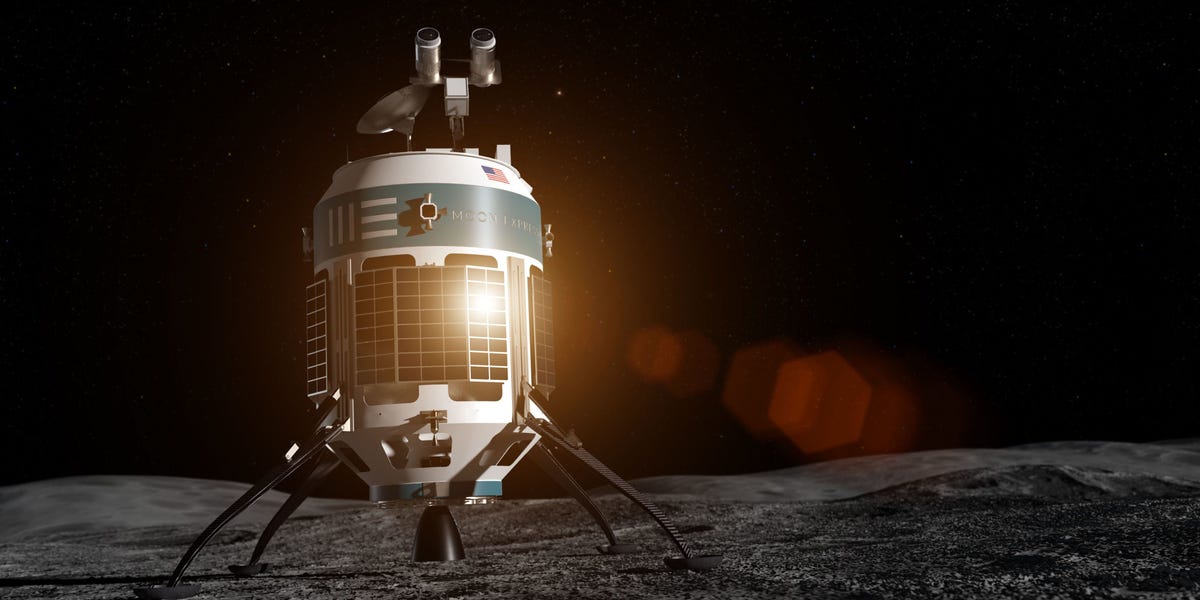
Based in the United States, Moon Express pursued a commercial lunar delivery model. It aimed to transport scientific and commercial payloads and positioned the Moon as an emerging destination for private enterprise rather than a once-in-a-generation government expedition.
TeamIndus
India’s TeamIndus built a youthful engineering organization around an ambitious lander-and-rover mission. It also created education and public-outreach programs intended to make the project feel like a national moonshot. The team showed how a prize could attract talent and attention even before a spacecraft flew.
Hakuto
Japan’s Hakuto team focused on a small rover and worked with TeamIndus on a shared launch plan. The organization behind Hakuto evolved into ispace, a commercial lunar company that continued developing landers and rovers long after the competition ended.
Synergy Moon
Synergy Moon brought together contributors from several countries and represented the competition’s global, unconventional spirit. Its plan depended on Interorbital Systems for launch services, illustrating both the creativity and fragility of pairing one ambitious startup with another.
Was the Google Lunar XPRIZE Actually a Failure?
If success means awarding the $20 million grand prize by the deadline, the answer is yes. The contest did not achieve its central, measurable objective. There is no value in pretending otherwise. A prize competition should be judged partly by its own rules, not only by the inspirational documentary made afterward.
But prizes are also designed to stimulate investment and experimentation far beyond the purse itself. On that measure, the Google Lunar XPRIZE had a substantial afterlife. XPRIZE now reports that the competition mobilized more than $420 million in private investment, contributed to more than 50 commercial spinoffs, and helped former teams secure more than $300 million in NASA contracts after the contest.
Before the competition ended, teams had already received millions of dollars in milestone, diversity, and technology awards. Those payments rewarded concrete progress in mobility, imaging, and landing systems even though nobody completed the full mission.
The contest also created international engineering communities, new companies, public interest, and a pipeline of technologies that did not vanish when the clock expired.
What Happened After the Competition Ended?
SpaceIL Reached the MoonBut Not Gently
SpaceIL launched Beresheet in February 2019. The spacecraft successfully traveled to the Moon and entered lunar orbit, an extraordinary achievement for a privately funded project. During its April 11 landing attempt, however, the lander suffered problems and crashed. XPRIZE later gave SpaceIL a $1 million Moonshot Award to recognize how far the team had progressed.
Beresheet’s fate underlined the exact lesson that had defeated the competition: reaching lunar orbit and landing safely are very different accomplishments. The Moon does not hand out participation trophies, although XPRIZE occasionally does.
Hakuto Became ispace
The Hakuto effort grew into ispace, which developed its own lunar landers. Its first HAKUTO-R mission reached lunar orbit but failed during the landing attempt in April 2023.
A second landing attempt with the RESILIENCE lander ended in a hard landing in June 2025. These missions did not produce soft landings, but they demonstrated that a team born in a prize competition could mature into a long-running commercial space company with repeated flight experience.
The Commercial Lunar Market Became Real
NASA’s Commercial Lunar Payload Services program began purchasing delivery services from private companies rather than owning every lander itself. Former Lunar XPRIZE participants and organizations influenced by the same commercial model became part of a broader ecosystem competing to transport instruments to the Moon.
By 2024, Intuitive Machines had achieved the first private soft landing on the Moon with its Odysseus spacecraft. The company was not one of the five final Google Lunar XPRIZE teams, so it did not retroactively win the prize. Still, its success showed that the commercial lunar market imagined by the competition was no longer hypothetical.
Experience-Based Lessons From Google’s Unclaimed Moonshot
1. Prize Money Must Match the Cost Curve
The first practical lesson is that a headline prize can motivate people without being large enough to finance the result. The Google Lunar XPRIZE worked brilliantly as a beacon. It attracted engineers, founders, investors, students, and sponsors. Yet the $20 million reward covered only a portion of a credible lunar mission.
For future competitions, organizers should compare the purse with realistic end-to-end costs, including testing, launch integration, licensing, insurance, contingency reserves, and post-launch operations. A prize does not have to pay for everything, but the gap cannot be so large that winning still resembles a financial loss.
2. Intermediate Milestones Keep Difficult Programs Alive
The competition’s milestone prizes were one of its smartest features. Teams could earn recognition and money for demonstrating specific capabilities before attempting the full mission. This approach creates evidence for investors, gives engineers achievable targets, and prevents an all-or-nothing program from becoming emotionally and financially impossible.
Any organization managing a moonshotwhether it involves clean energy, medical technology, robotics, or an actual Moonshould build a staircase rather than demand one heroic leap.
3. Dependencies Need Their Own Risk Plans
Most teams did not control their rockets, launch ranges, regulators, or all sources of funding. Their schedules depended on partners whose own schedules were uncertain. That is a familiar experience outside aerospace. A product launch may depend on a cloud vendor, a manufacturer, an app-store review, or one executive who keeps rescheduling the final approval meeting.
Ambitious programs should map dependencies early, identify single points of failure, and maintain alternatives where possible. “We have a contract” is not the same as “we have a resilient path.”
4. Deadlines Create Energy, but Physics Does Not Negotiate
Deadlines are useful because they force decisions and discourage endless tinkering. Yet extending a deadline repeatedly can reduce credibility without solving the main problem. The Lunar XPRIZE extensions bought time, but they did not magically reduce mission cost or make landing software easier.
Leaders should distinguish between delays caused by poor execution and delays caused by unrealistic assumptions. The first may require accountability; the second requires redesigning the plan.
5. Failure Should Produce Reusable Assets
The most valuable experience from the contest may be that an unsuccessful program does not need to end as a pile of invoices and a sad group photo. Teams produced hardware, software, patents, flight plans, supplier relationships, trained engineers, educational programs, and companies.
SpaceIL reached lunar orbit. Hakuto became ispace. Other participants helped normalize the idea of purchasing commercial lunar delivery. A well-designed moonshot should create assets at every stage, so that even a missed final target leaves behind something worth building on.
6. Public Inspiration Is a Real OutcomeJust Not the Only One
The competition inspired students and made private lunar exploration understandable to a broad audience. That matters. Inspiration can recruit talent and attract capital. However, inspirational impact should not be used to erase a missed objective.
The honest conclusion is stronger: the Google Lunar XPRIZE failed to produce a winner and succeeded in accelerating an industry. Both statements can be true at the same time.
Conclusion: A Prize Can Lose and Still Win
Google’s $20 million moonshot ended without a winner because private teams could not align funding, technology, launch access, regulation, and timing before the final deadline. The challenge was not defeated by a lack of imagination. It was defeated by the stubborn arithmetic of spaceflight and the even more stubborn physics of landing on another world.
Still, the competition helped create the conditions for what followed: privately funded lunar missions, commercial lander companies, NASA service contracts, and a new generation of engineers who viewed the Moon as a market as well as a destination.
Nobody collected the grand prize, but the teams moved the starting line for everyone else. For a contest built around traveling 500 meters on the Moon, that may be its most meaningful distance.