Netflix and LEGO have something surprisingly important in common: both can make a grown adult say, “Just one more,” at 1:17 a.m. One more episode. One more bag of bricks. One more tiny plastic goblet that definitely belongs in a supernatural séance scene. So when digital artists recreated iconic scenes from eight Netflix shows in LEGO form, the internet did what the internet does best: paused, zoomed in, and wondered how much money it would take to make the fantasy real.
The answer? In some cases, almost a thousand dollars. Yes, for a display scene made of tiny bricks. No, that does not include emotional damage from stepping on a 1×1 round tile barefoot.
The project, created by TheToyZone in collaboration with digital artists, imagined what several famous Netflix Originals might look like as official-style LEGO builds. The selected shows included The Queen’s Gambit, Tiger King, The Crown, The Witcher, Russian Doll, Bridgerton, Chilling Adventures of Sabrina, and Cobra Kai. Each scene was digitally constructed using LEGO design software, then refined with 3D modeling, texture work, camera matching, and post-production effects to mimic the look and mood of the original screen moments.
The result is more than cute fan art. It is a clever study in pop culture, digital design, collectible toys, and the oddly serious economics of rare LEGO pieces. These recreations are charming, but they also reveal why custom LEGO builds can get expensive fast: part rarity, color availability, minifigure accuracy, specialty accessories, and scene scale all matter.
Why Netflix Scenes Work So Well In LEGO
Netflix Originals are built for visual memory. Think of Beth Harmon facing a chessboard, Geralt standing in a banquet hall, Daphne and Simon surrounded by ballroom spectacle, or Johnny Lawrence glaring across a dojo. These moments stick because they are clear, dramatic, and instantly recognizable. LEGO thrives on the same ingredients: silhouette, color, character, and storytelling.
A great LEGO recreation does not need to reproduce every frame-perfect detail. It needs to capture the “Oh, I know exactly what this is!” feeling. That recognition is why a tiny chess table can evoke The Queen’s Gambit, why black-and-gold royal ceremony can suggest The Crown, and why one carefully chosen hairpiece can turn an ordinary minifigure into a fantasy monster, martial arts student, or eccentric tiger enthusiast.
The best part is the creative translation. A Netflix scene is made with actors, costumes, lights, lenses, sets, and editing. A LEGO version uses plates, tiles, slopes, clips, transparent elements, printed parts, minifigure accessories, and clever cheating. In other words, the digital artist becomes part set designer, part brick engineer, and part magician wearing sensible shoes.
How The Digital LEGO Recreations Were Made
The creative team used LEGO design software to assemble each scene virtually. Studio-style tools allow builders to work with digital LEGO parts, test colors, check connections, create renders, and plan models before a single physical brick is ordered. That matters because custom builds are not just about imagination; they also need structural logic. If a virtual model cannot be built in real life, it becomes a pretty picture rather than a true LEGO concept.
After blocking out the scenes, the designers refined the models in additional 3D software. This helped them add details that were not available directly in the brick library, adjust proportions, and match the original shots more closely. Costume textures were handled with vector design tools, while final renders were adjusted for image temperature, clarity, contrast, and mood. The goal was not merely to show LEGO figures standing around. The goal was to make the viewer feel as though Netflix had briefly opened a secret “brick mode.”
The team also estimated real-world build costs by calculating the number and type of bricks needed. This is where things become spicy. Common pieces are usually affordable, but rare colors, discontinued parts, unusual accessories, and high quantities can push a fan model into luxury-display territory. Suddenly, the difference between “fun weekend project” and “please do not tell my bank account” becomes very real.
The 8 Netflix Shows Recreated As LEGO Scenes
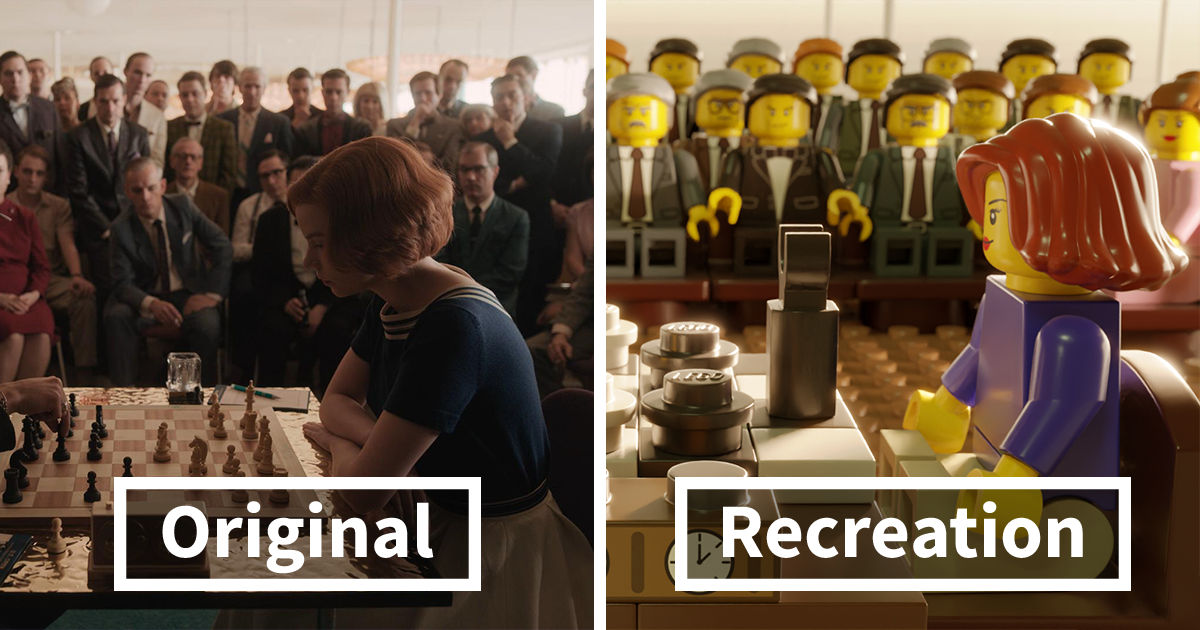
1. The Queen’s Gambit “Doubled Pawns”
The smallest build in the collection belongs to The Queen’s Gambit, the stylish chess drama starring Anya Taylor-Joy as Beth Harmon. The chosen moment comes from the episode “Doubled Pawns,” where Beth faces chess prodigy Benny Watts. It is a perfect LEGO subject because chess already looks like a tiny architectural war.
This recreation used 19 types of bricks and 214 pieces in total, with an estimated brick cost of $76.62. Compared with the other builds, that is practically pocket changeassuming your pockets are already full of tiny bishops, pawns, and existential dread. The scene works because it focuses on tension rather than size. A table, two players, and a chessboard are enough to tell the story.
2. Tiger King “Playing With Fire”
Tiger King was one of the loudest pop-culture explosions of the early streaming era, and its LEGO recreation leans into the documentary’s theatrical chaos. The selected scene, “Playing with Fire,” required far more brick variety than the chess scene. The model used 142 types of bricks and 1,380 pieces, with an estimated cost of $839.92.
Why so pricey? The throne-like setup, animal details, and character-specific elements require a lot of visual problem-solving. LEGO animals, decorative pieces, and unusual colors can become expensive, especially when the goal is to capture a scene that is part roadside zoo, part fever dream, and part reality-TV history lesson.
3. The Crown “Gold Stick”
The Crown received the grandest and most expensive treatment. The “Gold Stick” scene, based on the royal pageantry of the series, used 122 types of bricks and a massive 2,921 total pieces. Estimated cost: $989.79. That is close enough to $1,000 to make your wallet stand for the national anthem.
This build is expensive because ceremony is complicated. Royal interiors, uniforms, decorative walls, floors, gold accents, and repeated architectural details require scale. Unlike a compact chess scene, this one needs grandeur. LEGO can absolutely do grandeur, but it often demands repetition: columns, tiles, railings, windows, and decorative elements stacked until the model starts looking like something a very polite museum guard would ask you not to touch.
4. The Witcher “Of Banquets, Bastards and Burials”
The Witcher is practically begging for LEGO treatment. Swords? Monsters? Medieval halls? Dramatic hair? Done, done, done, and definitely done. The chosen episode, “Of Banquets, Bastards and Burials,” includes Geralt of Rivia and the infamous hedgehog-like Duny, making it a delightfully strange challenge for a brick artist.
The recreation used 131 types of bricks and 1,832 total pieces, with an estimated cost of $680.80. The cost reflects the fantasy setting: detailed floors, banquet hall elements, character accessories, armor-like pieces, and creature design. It is a strong example of how LEGO fan art must often invent solutions rather than wait for the perfect official part to exist.
5. Russian Doll “Nothing in This World Is Easy”
Russian Doll is built around repetition, and its LEGO recreation cleverly focuses on the bathroom where Nadia repeatedly resets. The scene used 72 types of bricks and 407 total pieces, with an estimated cost of $53.04, making it the most affordable build in the group.
That lower price makes sense. A small interior space can be recreated with fewer parts, especially when the most important detail is atmosphere rather than scale. The bathroom is colorful, specific, and narratively important. It proves that a great LEGO scene does not need to be enormous. Sometimes all you need is a sink, a mirror, a door, and the haunting feeling that you have lived this moment before.
6. Bridgerton “Diamond of the First Water”
Bridgerton is lavish, romantic, and visually obsessed with sparkle. Naturally, the LEGO version had to bring the drama. The “Diamond of the First Water” recreation used 81 types of bricks and 2,142 total pieces, with an estimated cost of $464.85.
This scene is interesting because it depends on mood: dancing, fireworks, formalwear, and Regency fantasy. The artists reportedly used transparent and decorative elements to suggest the glowing background effects. That is the secret sauce of LEGO visual storytelling. A small leaf piece can become a burst of light. A crystal can become fireworks. A ballroom can become a stage for tiny plastic gossip. Lady Whistledown would approve, then probably roast the color palette.
7. Chilling Adventures of Sabrina “A Midwinter’s Tale”
The Chilling Adventures of Sabrina scene comes from “Chapter Eleven: A Midwinter’s Tale,” a supernatural setting full of candles, ritual energy, and gothic atmosphere. The build used 167 types of bricks and 933 total pieces, with an estimated cost of $287.30.
This scene is not the biggest, but it likely requires many specific colors and small accessories. Gothic interiors are detail-heavy: goblets, books, dark furniture, hairpieces, robes, candles, and moody décor. LEGO is excellent at charm, but horror-adjacent charm takes finesse. Too little detail and the scene looks like a normal family dinner. Too much detail and your display shelf starts asking for a blood oath.
8. Cobra Kai “Quiver”
Cobra Kai is a gift to LEGO fans because dojos are clean, readable spaces, and martial arts poses translate well to minifigures. The “Quiver” scene used 167 types of bricks and 933 total pieces, with an estimated cost of $125.85.
The build captures the energy of the Karate Kid sequel series: rivalry, redemption, teen chaos, and senseis who communicate mostly through emotional damage and push-ups. A dojo scene benefits from strong visual structuremats, walls, students, and instructor positioning. It also shows how character design can carry a build. A mohawk, a gi, a stern face, and suddenly you are back in the Miyagi-Verse.
Why Some Custom LEGO Builds Cost So Much
At first glance, a $989 LEGO scene might sound absurd. But custom builds follow a different pricing logic than boxed retail sets. Official LEGO sets are mass-produced, packaged, and priced as complete products. A fan recreation often requires sourcing individual parts from marketplaces, and prices can vary depending on rarity, color, seller availability, shipping, and condition.
Rare pieces are the real budget gremlins. A common gray plate might cost very little. A discontinued decorative part in a specific shade, however, may cost several dollars on its own. Multiply that by dozens of specialty pieces, then add minifigure accessories, printed elements, and shipping from multiple sellers, and suddenly your “simple display scene” has turned into a financial side quest.
Color accuracy can also drive up cost. If a scene needs gold, dark red, sand green, pearl silver, transparent blue, or a discontinued shade, the artist may face a difficult choice: pay more for accuracy or substitute a cheaper part. Digital artists can choose the perfect piece in the perfect color, but real-world builders must deal with actual supply. In LEGO, as in life, fantasy is free until you click “checkout.”
LEGO, Netflix, And The Rise Of Adult Fan Builds
These digital recreations also reflect a larger trend: LEGO is no longer viewed only as a children’s toy. Adult builders collect display sets, design fan models, share custom creations online, and treat brick-building as art, engineering, therapy, and nostalgia all at once. LEGO itself has leaned into this with adult-focused display sets based on films, architecture, vehicles, art, and pop culture.
Netflix has also become a natural partner for brick-based fandom. Official LEGO sets based on Netflix titles, including Stranger Things and One Piece, show that streaming series can translate into physical collectibles when the world, characters, and scenes are visually strong enough. Fan projects like these eight recreations help prove demand. They answer a question toy companies quietly ask all the time: would people recognize this, want this, and proudly display it?
The answer seems to be yesespecially when the build captures a beloved moment rather than just a logo. Fans do not simply want “a Netflix set.” They want Beth’s chessboard, Geralt’s banquet, a Bridgerton ball, a Cobra Kai dojo, or a royal scene from The Crown. Specificity is what makes a model feel collectible instead of generic.
What Makes A Netflix Scene LEGO-Worthy?
A scene needs three qualities to work well in LEGO: recognizability, buildable structure, and emotional punch. Recognizability means viewers can identify it quickly. Buildable structure means the scene has objects, rooms, props, or architecture that can be translated into bricks. Emotional punch means the moment matters to fans.
The Queen’s Gambit works because the chessboard is iconic. Bridgerton works because the ballroom is visually lush. The Witcher works because fantasy characters and medieval interiors are already LEGO-friendly. Russian Doll works because the bathroom is narratively central. Even Tiger King, chaotic as it is, works because the scene has visual absurdity. LEGO is very good at turning absurdity into display value.
The trick is not to recreate everything. The trick is to choose the one moment that contains the show’s personality. That is why these digital artists succeeded. They did not merely build rooms; they built memories.
Experience Section: What It Feels Like To Imagine These Builds In Real Life
Anyone who has tried to create a custom LEGO scene knows the emotional journey. It begins with confidence. You open a digital builder or spread your bricks across the table and think, “How hard can this be?” Thirty minutes later, you are debating whether a dark tan 1×2 grille tile can spiritually represent 1980s wallpaper. This is the moment when a casual hobby becomes architecture with snacks.
Recreating Netflix scenes in LEGO would be especially fun because each show demands a different design mindset. Building The Queen’s Gambit would feel precise and quiet. You would focus on symmetry, board layout, chair shape, and Beth’s posture. It is the kind of build where one wrong tile feels like a bad chess move. The finished model would probably look elegant on a desk, silently judging your emails.
Tiger King, on the other hand, would be pure chaos engineering. The challenge would not be making it neat; the challenge would be making it messy in the correct way. You would need animal elements, loud colors, strange props, and a throne-like focal point. It would be the kind of model people notice immediately and then ask questions about, which is exactly what a Tiger King LEGO scene should do.
Building The Crown would be a patience test. Royal rooms require repetition: columns, wall panels, floor patterns, decorative trim, and formal arrangements. The final model might look beautiful, but getting there would involve sorting hundreds of similar pieces while whispering, “This is historically dignified,” to yourself. It would be expensive, but also deeply satisfying for builders who love order and detail.
The Witcher would appeal to fantasy builders. You could use swords, goblets, stone textures, banners, and dramatic minifigure positioning. The real joy would be improvisation. How do you suggest fur, armor, candlelight, and monster weirdness with existing pieces? That is where LEGO becomes a puzzle. The best solutions often come from using a piece “wrong” in exactly the right way.
Russian Doll would be the sleeper favorite. A small bathroom scene sounds simple, but compact builds reward clever detail. A mirror, patterned wall, sink, doorframe, and bold color choices could make the model instantly recognizable. Plus, smaller builds are easier to display, cheaper to source, and less likely to require explaining to guests why there is a royal procession covering half your dining table.
Bridgerton would be all about atmosphere. Transparent pieces, floral elements, elegant minifigures, and a dance-floor layout could turn the build into a tiny stage. It would probably be the prettiest of the bunch, and also the one most likely to make you say, “I need more sparkle,” which is how many LEGO budgets are destroyed.
Chilling Adventures of Sabrina would be a dream for builders who love moody interiors. Dark furniture, candles, books, and ritual props make excellent small-scale details. The danger would be overbuilding. Too many accessories and the scene becomes cluttered; too few and it loses its gothic bite. The sweet spot is spooky but readable.
Cobra Kai would be the most playable. A dojo has action built in. You could pose students, create training stations, add wall graphics, and build a clean display with strong lines. It would also be a great starter project for fans who want to recreate TV scenes without committing to thousands of pieces. Strike first, build carefully, sweep the floor afterward.
That is the magic of this project. It makes viewers imagine not only the finished images, but the building experience behind them. Every scene becomes a question: which pieces would you choose, what would you simplify, and how much accuracy is worth the price? For LEGO fans, those questions are half the fun. For Netflix fans, the payoff is seeing favorite shows transformed into something tactile, playful, and wonderfully nerdy.
Conclusion
The digital LEGO recreations of these eight Netflix shows prove that fan art can be more than a tribute. It can be design analysis, cost experiment, visual storytelling, and pop-culture celebration all at once. From the affordable elegance of Russian Doll and The Queen’s Gambit to the nearly $1,000 royal scale of The Crown, each build shows how tiny bricks can capture huge television moments.
These models also reveal why LEGO remains so powerful across generations. It turns passive watching into active imagination. Instead of only asking, “What happened in that scene?” fans can ask, “How would I build that?” And once that question appears, good luck. You are only one rare piece away from a new obsession.
Note: This HTML body is prepared for web publishing and avoids unnecessary citation placeholders or source-link markup in the article content.