A bicycle is a beautiful machine until it is leaning against your hallway wall, blocking the closet, nudging the shoe pile, and threatening to fall over every time someone looks at it too confidently. That is where the Elevate Bike Rack – Poplar earns its name. It does not simply hold a bike; it lifts the whole situationliterally, visually, and emotionally.
At its core, the Elevate Bike Rack – Poplar is a wall-mounted wooden bike rack designed for indoor bicycle storage. It combines the practical job of getting a bike off the floor with the warmer look of furniture. Instead of treating your road bike, city commuter, gravel rig, or vintage restoration like garage clutter, it turns the bicycle into part of the room. Think less “storage problem” and more “functional wall sculpture with pedals.”
The original Elevate Woodworks concept became known for pairing a clean wooden form with a shelf-like profile. In other words, it was not just a hook. It was a small piece of craftsmanship that could support the frame while giving the wall a neat, intentional look. The poplar version is especially interesting because poplar is practical, approachable, and well suited for interior woodworking. It brings a quiet, modern style without shouting, “I spent my entire furniture budget on a bike hanger.”
What Is the Elevate Bike Rack – Poplar?
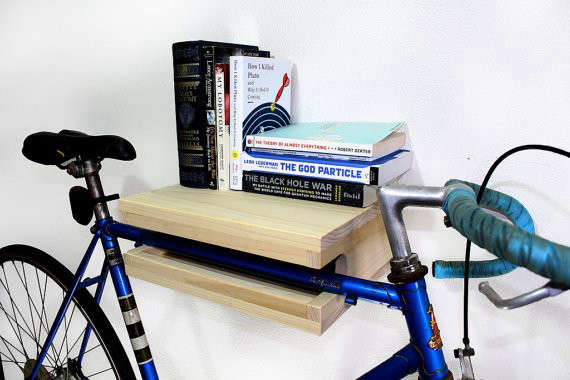
The Elevate Bike Rack – Poplar is best understood as a minimalist indoor bike storage solution made from poplar wood. It mounts to the wall and supports the bicycle horizontally, typically by the top tube or central frame area, depending on the bike’s geometry. Because the rack projects from the wall like a small shelf, it can also provide a convenient place for everyday cycling items such as sunglasses, gloves, a compact lock, keys, or a tire lever you swear you will not lose this time.
Unlike a basic metal hook that hangs a bike vertically by the wheel, this style of wooden bike rack presents the bicycle sideways. That is a major reason people like it in apartments, studios, offices, entryways, and design-conscious garages. A horizontal wall bike rack saves floor space while keeping the bike visible and easy to grab. For riders who use their bike several times a week, accessibility matters. If the bike is buried behind three storage bins and a mysterious box labeled “misc,” you are less likely to ride it.
The Elevate design also answers a common problem for urban cyclists: indoor storage often looks temporary, industrial, or awkward. Poplar softens the look. The wood adds texture, warmth, and a handcrafted feel, which helps the rack blend into interiors where a black steel utility hook might feel too harsh.
Why Poplar Works Well for a Bike Rack
Poplar is technically a hardwood, although it is softer than many famous furniture woods such as oak, maple, walnut, or cherry. That sounds like a contradiction, but wood categories love keeping us humble. In practical terms, poplar is valued because it is easy to machine, easy to shape, relatively lightweight, widely available, and friendly to paint, stain, and clear finishes.
For a wall-mounted bike rack, those qualities make sense. Poplar can be formed into clean lines and smooth surfaces without demanding the cost of premium hardwood. It is strong enough for many interior furniture and millwork uses when designed properly, yet it does not add unnecessary bulk. A bike rack should be sturdy, but it should not look like a medieval drawbridge bolted to the drywall.
The appearance of poplar is usually subtle. It may show pale cream, light brown, yellow-green, or occasional gray-green tones. Some people love that natural variation; others prefer to stain or finish it for a more uniform look. In the Elevate Bike Rack – Poplar concept, the beauty is in restraint. The rack is not trying to outshine the bike. It gives the bicycle a clean stage and then politely steps aside.
A Bike Rack That Doubles as Decor
The best indoor bike racks solve two problems at once: storage and appearance. The Elevate Bike Rack – Poplar does both. It keeps the bike off the floor, away from accidental kicks, vacuum cleaner attacks, and the classic “leaned bike slowly slides down the wall” drama. At the same time, it frames the bike as part of the room.
This matters more than many people think. In small homes, every visible object becomes part of the decor. If a bike lives in the living room, hallway, bedroom, or home office, it needs to look intentional. A wooden wall bike rack turns a necessary storage decision into a design feature. It says, “Yes, the bike belongs here,” instead of “I gave up and parked it next to the bookshelf.”
The shelf-like form is also useful. A small flat top can act as a landing zone for ride essentials. Place a compact helmet light, cycling cap, wallet, or mini pump there, and suddenly the bike station becomes a routine hub. For commuters, that can save real time. The fewer things you have to hunt down before leaving, the less likely you are to begin your morning by whispering unkind things about your missing gloves.
Space-Saving Benefits for Apartments and Small Homes
If you live in an apartment, condo, dorm, townhouse, or compact city home, bike storage is not a small detail. It is the difference between a tidy room and an obstacle course. A wall-mounted bike rack uses vertical wall space instead of valuable floor space. That makes the room feel larger and keeps pathways open.
Horizontal wall storage is especially appealing for one-bike households or riders with a favorite bike they use often. The bike remains easy to lift down, and the rack can be installed at a comfortable height. Compared with ceiling hoists, there is less fuss. Compared with freestanding racks, there is less floor footprint. Compared with leaning the bike against the wall, there is much less suspense.
For renters, the decision depends on lease rules and wall permissions. A rack like this usually requires drilling, so it may not be suitable for every rental. However, when drilling is allowed, a properly installed wooden bike rack can be more stable and attractive than temporary stands. The important word is “properly.” This is not the place for wishful thinking, mystery screws, or adhesive strips rated for “one decorative fern.”
Installation: The Wall Matters as Much as the Rack
A beautiful rack is only as reliable as its installation. Before mounting an Elevate Bike Rack – Poplar or any similar wall-mounted bike shelf, identify the wall structure. Ideally, the rack should be fastened into wood studs or another solid structural surface. Drywall alone is not enough for a bike, especially when the bike is lifted on and off regularly.
Use a stud finder, mark the stud positions, and confirm the location before drilling. In many American homes, studs are commonly spaced 16 or 24 inches apart, but do not assume your wall read the rulebook. Older houses, remodels, and apartment buildings can surprise you. If the rack’s mounting holes do not line up cleanly with studs, a smart solution is to install a sturdy backer board across two studs and then mount the bike rack to that board. The backer can be painted to match the wall or finished to complement the poplar rack.
Always check the rack’s rated weight capacity and compare it with your bike’s actual weight. Road bikes and many hybrid bikes are usually manageable, but e-bikes, cargo bikes, downhill mountain bikes, and heavy cruisers can be significantly heavier. If your bike requires a small forklift and a motivational speech to lift, choose a storage system designed for that load.
Bike Compatibility: What to Check Before You Buy
The Elevate Bike Rack – Poplar style works best for bicycles with a frame shape that can rest securely on horizontal support arms or a shelf-style cradle. Traditional diamond frames are usually the easiest match. Many road bikes, fixed-gear bikes, commuters, and gravel bikes fit this category well.
However, not every bike is shaped like a textbook diagram. Step-through frames, full-suspension mountain bikes, compact frames, kids’ bikes, fat bikes, and some e-bikes may need extra attention. Before choosing a horizontal wooden bike rack, check three things: frame shape, total weight, and handlebar width. Wide handlebars may push the bike farther into the room. Sloped top tubes may require a rack with a strap, cradle, or angle that keeps the bike stable.
Also think about wall clearance. Pedals, bars, baskets, racks, and mirrors all affect how neatly the bike sits. A minimal bike looks elegant on a wall. A commuter bike with panniers, fenders, a front basket, and a bell collection may still work, but it will bring more personality to the display. That is not a flaw. It is just your bike telling the room its life story.
How It Compares With Other Bike Storage Options
There are many ways to store a bicycle indoors, and each has a personality. A vertical hook is affordable and simple, but it can put the bike higher on the wall and may not suit every rim or tire setup. A pivoting wall rack is excellent for garages or multi-bike spaces because the bike can swing closer to the wall. A freestanding bike stand is renter-friendly and requires no drilling, but it still uses floor space. Ceiling hoists are great for seasonal storage, though they are not always convenient for daily riders.
The Elevate Bike Rack – Poplar sits in a different category. It is not merely utilitarian; it is furniture-adjacent. It appeals to riders who want their bicycle accessible, protected, and displayed. It is particularly strong for interiors where style counts: loft apartments, modern mudrooms, home offices, boutique retail spaces, and carefully organized garages.
If you own multiple bikes, a single poplar wall rack may not solve everything. You might combine it with vertical hooks, a track system, or a garage rail. Use the Elevate rack for the bike you ride most often or the bike you actually want to look at every day. The rusty backup cruiser with the squeaky brake can live somewhere less glamorous until it apologizes.
Care and Maintenance for the Rack and the Bike
Indoor bike storage protects a bicycle from rain, sun, theft exposure, and outdoor humidity, but indoor storage still requires common sense. If you ride in wet weather, wipe down the frame and tires before hanging the bike. Water, road grit, mud, and chain grime can stain walls, mark the rack, and make your entryway look like a cyclocross course moved in without asking.
For the poplar rack, a dry or slightly damp cloth is usually enough for routine cleaning. Avoid soaking the wood. If the rack has a clear finish, wax, oil, stain, or polyurethane coating, follow the maker’s care guidance. Wood is durable, but it is still wood; it prefers not to be treated like a boat dock.
For the bike, indoor storage is a good opportunity to build better habits. Keep the drivetrain clean, wipe the chain when needed, and avoid hanging a bike while it is dripping wet. If the bike has hydraulic disc brakes, follow the bike manufacturer’s guidance about long-term storage positions. Most modern bikes are sturdy, but components still appreciate a little respect.
Best Places to Use an Elevate Bike Rack – Poplar
Entryway
An entryway installation works well for commuters. The bike is easy to grab, and the shelf can hold small essentials. Just make sure the handlebars do not block the door swing unless you enjoy slapstick comedy before breakfast.
Living Room
In a living room, the rack becomes part of the design. Pair it with simple artwork, a neutral wall, or a small mat below the wheels. This setup is ideal for a bike that is clean, attractive, and worthy of display.
Home Office
A bike on the wall can add energy to a home office. It quietly says, “I have hobbies beyond email.” It also keeps the floor clear for chairs, filing cabinets, and the emotional support coffee mug.
Garage or Mudroom
In a garage or mudroom, the Elevate Bike Rack – Poplar adds polish to a practical area. It works especially well when paired with hooks for helmets, a small tray for tools, and a pump nearby.
Buying Checklist
Before choosing the Elevate Bike Rack – Poplar or a similar wooden wall bike rack, measure carefully. Check your bike’s weight, frame shape, handlebar width, and the available wall space. Confirm whether the rack includes mounting hardware or whether you need to supply screws, anchors, or a backer board. Look at the finish: natural poplar, stained poplar, painted poplar, or sealed wood will each create a different effect.
Also consider your daily routine. If you ride every morning, mount the rack at a height that feels easy and repeatable. If the bike is mostly decorative or seasonal, you can prioritize visual balance. A rack that looks perfect but requires a gym warm-up every time you lift the bike will become annoying quickly. Storage should make riding easier, not turn it into a pre-ride weightlifting event.
Experience: Living With an Elevate Bike Rack – Poplar
The everyday experience of using a poplar wall bike rack is less about dramatic transformation and more about small conveniences adding up. The first thing people usually notice is the floor. Suddenly, the bike is not occupying that awkward strip of space beside the sofa, behind the door, or next to the dining table. The room feels calmer because the bicycle has a clear home.
There is also a psychological shift. When a bike is stored neatly on the wall, it feels cared for. You are less likely to toss bags against it, stack boxes near it, or let it collect dust in a corner. The bike becomes visible in a good way. For many riders, that visibility encourages more frequent rides. A bike that is easy to access is a bike that gets used.
In an entryway, the experience is especially practical. You can come home, wipe the tires, lift the bike onto the rack, and place keys or gloves on the small shelf area. The next ride begins with less searching. Instead of checking the kitchen counter, jacket pocket, backpack, and laundry basket for your lock key, you know where the ride kit lives. That kind of organization feels boring until you experience it. Then it feels like luxury.
In a living room or studio apartment, the design experience matters just as much. A poplar rack has a softer presence than metal hardware. It warms up the wall and makes the bike feel like an intentional display. Guests may comment on it. Some will admire the craftsmanship. Others will ask if the bike is “art.” The correct answer is yes, especially if you paid for carbon wheels.
There are a few real-life lessons. First, installation height matters. Mount it too high, and daily use becomes awkward. Mount it too low, and the bike may interfere with furniture or foot traffic. Second, tire cleanliness matters more indoors than it does in the garage. A small towel, mat, or cleaning cloth nearby can prevent dirty wall marks. Third, heavy bikes are not fun to lift repeatedly. For e-bikes or bulky cruisers, a no-lift floor stand may be more realistic.
The most satisfying part is the blend of order and personality. The Elevate Bike Rack – Poplar does not hide the bike; it celebrates it. That is perfect for riders who see their bicycle as more than transportation. It is a fitness tool, a commuter companion, a weekend escape machine, and occasionally a very expensive coat rack. A good wall rack respects that relationship while making the home easier to live in.
Over time, the rack becomes part of the rhythm of the space. Walk in, lift, store, set down the gloves, move on. No clatter. No leaning. No slow-motion toppling at midnight. Just a bike on the wall, a floor you can actually use, and a small wooden shelf doing more work than it has any right to brag about.
Conclusion
The Elevate Bike Rack – Poplar is a smart choice for cyclists who want indoor bike storage that looks as good as it functions. It combines the warmth of poplar wood with the practical benefits of wall-mounted bicycle storage: saved floor space, easier access, better organization, and a cleaner-looking home.
It is not the right solution for every bike or every wall. Heavy e-bikes, unusual frame shapes, strict rental rules, and weak mounting surfaces may call for another option. But for the right rider and the right room, a poplar wall bike rack is a handsome upgrade. It turns a storage headache into a design moment and gives your bicycle the home it deserves. After all, if your bike works hard carrying you around town, the least you can do is stop making it lean sadly against the hallway like it missed the bus.