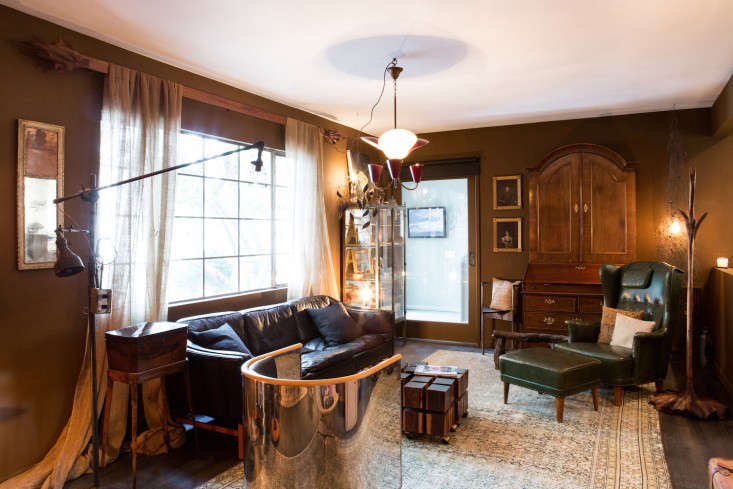
Some interior designers make rooms look “nice.” Jane Hallworth makes rooms feel as if they have been plotting something clever for at least 300 years. Her Los Angeles work is moody, layered, tactile, and just a little mischievousthe design equivalent of a velvet glove hiding a lockpick. That is why the phrase “Dastardly by Design” fits her so well. Hallworth does not decorate spaces into submission. She coaxes out their secret lives.
British-born and based in Southern California, Jane Hallworth has become one of the most distinctive names in luxury interior design in Los Angeles. Through Hallworth Design, her studio has built a reputation for interiors that blend architecture, decoration, landscape, antiques, custom lighting, and personal storytelling. Her rooms rarely look staged. They look lived-in by people with taste, memory, a few good secrets, and possibly a Victorian letter opener tucked into a drawer.
In an era when many homes are polished into Instagram sameness, Hallworth’s approach feels refreshingly human. Her rooms are not designed to scream, “Look at me!” They lean in and whisper, “Come closer.”
Who Is Jane Hallworth?
Jane Hallworth is an English-born interior and product designer who opened her Los Angeles design practice in 2000 after studying architecture. Her background matters because her rooms are not simply collections of beautiful objects. They are built with structure, proportion, circulation, light, and emotional atmosphere in mind.
Hallworth’s design philosophy centers on the idea that architecture, decoration, and landscape should work together to express the spirit of the client. Instead of stamping every project with a rigid signature style, she allows each home to develop its own identity. That sounds simple. It is not. Many designers claim to avoid a signature look, then leave behind the same sofa, same stone, same “curated” bowl, and same beige cloud of expensive calm. Hallworth’s work is more slippery, more literary, and far more interesting.
Her client list has included major creative figures, actors, entrepreneurs, and cultural tastemakers, but her true calling card is not celebrity access. It is her ability to turn personal history into atmosphere. A Hallworth room often feels as if every object has been interrogated, pardoned, and given a role in the story.
Why “Modern-Day Alchemist” Fits
Alchemy was the ancient pursuit of transformation: base matter into gold, ordinary materials into something mysterious and precious. Hallworth’s version is less about cauldrons and more about bronze, leather, glass, old textiles, patinated metal, architectural bones, and lighting that knows how to keep a secret.
She can take a worn carpet, a strange antique, a sculptural lamp, a dark wall, or an inherited object and make it feel essential. In her hands, imperfections become character. Age becomes depth. A room stops looking decorated and starts behaving like a memoir.
Story Comes Before Style
The strongest Hallworth interiors begin with narrative. Who lives here? What have they collected? What matters to them? What should the house remember? This is why her rooms do not feel like product catalogs. They feel like biographies written in wood, metal, fabric, shadow, and the occasional deliciously odd object.
Her work for actors and artists makes this especially clear. Creative clients often understand the power of props, costume, lighting, and mood. Hallworth translates those theatrical instincts into domestic space without making the home feel like a set. The result is cinematic but not fake, dramatic but not exhausting.
Lighting Is the Spell
Hallworth’s interiors often rely on layered lighting rather than one bright overhead source. This is one of the secrets behind her moody, romantic rooms. Low ambient light, multiple lamps, sconces, pendants, and sculptural fixtures create depth. A room lit from several points feels more alive than a room blasted from above like an interrogation chamber. Nobody wants their living room to look like airport security.
Her product designs push this idea even further. Her lighting collections often combine sculptural metalwork, glass lenses, unusual silhouettes, and poetic references. These are not timid fixtures designed to disappear. They are objects with attitude. They glow, brood, wink, and sometimes appear to have crawled out of a Gothic folktale wearing excellent jewelry.
Color Creates Emotional Weather
Hallworth’s palette often favors earthy, muddy, saturated tones: tobacco, ink, black, white, brown, bronze, cream, smoke, old gold, and shadowy neutrals. These colors are not gloomy when handled correctly. They are atmospheric. They give rooms gravity.
Her use of darker tones also challenges the idea that luxury must always be bright, white, and squeaky clean. A dark room can be intimate, restful, and deeply glamorous. It can also be practical. White linen sofas are lovely until real life enters with coffee, dogs, children, red wine, or a guest who thinks coasters are a rumor.
The LA Design Scene: Why Hallworth’s Work Belongs Here
Los Angeles is an ideal city for Hallworth’s sensibility. The city is layered with fantasy and history: Spanish Colonial Revival houses, midcentury experiments, Hollywood bungalows, canyon hideaways, glassy modern mansions, and old-world estates tucked behind gates. It is a place where image matters, but so does escape. The best LA homes do not just impress visitors; they protect the private lives of people who spend much of their public lives being watched.
Hallworth’s interiors understand that duality. They can be glamorous without being glossy. They can be theatrical without being loud. They can honor the strange emotional mix of Los Angeles: sunlight outside, shadows inside; casual living mixed with serious art; barefoot ease beside museum-quality objects.
Her work also fits the city’s creative ecosystem. LA is full of people who understand storytellingactors, directors, producers, stylists, musicians, designers, and entrepreneurs. Hallworth gives them homes that feel like personal scripts rather than generic luxury backdrops.
Famous Projects and What They Teach
Kirsten Dunst and Jesse Plemons: A Home With Memory
One of Hallworth’s most admired collaborations is with Kirsten Dunst, whose San Fernando Valley home with Jesse Plemons has been described as part country, part rock-and-roll, and entirely charming. The project reveals a key Hallworth principle: keep the meaningful things and let them grow into the next chapter.
Objects collected over many years, including vintage furniture, family pieces, antiques, and items connected to Dunst’s life and career, became part of the home’s emotional fabric. This is not fast decorating. It is slow design. Instead of wiping the slate clean, Hallworth helped build continuity between past and present.
The lesson is simple but powerful: a room gains soul when it includes evidence of a life actually lived. Newness alone is rarely enough. A perfect room with no memory can feel like a hotel lobby with better throw pillows.
Sean Rad and Lizzie Grover Rad: High Design With Friction
Hallworth’s work on the Los Angeles home of Tinder founder Sean Rad and fashion designer Lizzie Grover Rad shows another side of her talent: orchestrating contrast. Their home brings together minimalism, eccentricity, historical pieces, contemporary art, and bold materials. The result feels less like a showroom and more like an excellent dinner party where every guest is fascinating and one person may be wearing a cape.
In that project, a 16th-century marble wellhead used as a planter, distinctive vintage furniture, dramatic stone, bronze cabinetry, and highly personal offices created a home full of tension and harmony. Hallworth’s gift is not merely selecting rare pieces. It is making unusual combinations feel inevitable.
This matters because great interiors need friction. Too much matching makes a room sleepy. Too much chaos makes it exhausting. Hallworth works in the charged middle, where old and new, rough and refined, grand and odd can sit together like they have been gossiping for years.
West Hollywood: The Stair Runner That Started a Revolution
In one West Hollywood project, a request for a stair runner evolved into a larger reimagining of a 1950s home. This is peak design comedy: the kind of innocent home improvement task that begins with “the dog needs traction” and ends with patinated brass panels, custom lighting, cashmere walls, and a new design narrative. Home renovation, like sourdough starter, can get out of hand quickly.
Hallworth gave the house a stronger through line: masculine, tailored, machinelike, and collected. Materials such as brass, marble, teak, cashmere, and sculptural furniture created a grounded yet luxurious mood. The project demonstrates her ability to impose coherence without flattening personality.
The takeaway is practical. Before buying another chair, ask what story the room is telling. If the answer is “clearance sale with anxiety,” pause. A home needs a through line, even if that line is subtle.
Gloria Steinem: The Power of a Light Touch
Hallworth’s work with Gloria Steinem shows restraint, which is sometimes the most difficult luxury skill of all. In a deeply personal, historically rich Manhattan home, the goal was not to erase the past. It was to update what needed updating while preserving the spirit of the place.
This approach is especially relevant today, when renovation often means demolition first and questions later. Hallworth’s work suggests a more respectful path: listen before changing, preserve what has emotional force, and intervene only where the house needs help.
Product Design: From American Gothic to Cosmic Light
Hallworth is also known for product design, especially lighting. Her pieces often read like small myths made functional. The American Gothic collection, shown through Blackman Cruz, included lighting and furniture inspired by vernacular American forms, industrial fixtures, nautical references, bronze insects, and darkly witty details. Pieces such as Haunt, Mace, Ishmael, Pequod, and Ahab sound less like polite decor and more like members of a secret society.
That is part of the appeal. Hallworth’s products have narrative built into their bones. A bronze moth circling a milk-glass globe is not just decoration. It is a tiny drama about attraction, danger, and light. A fixture inspired by maritime forms brings with it the memory of ships, storms, and obsession. Yes, it also illuminates the room. But it does so with a backstory.
Her Moonage Daydream lighting collection expanded that fascination with light and mythology by drawing on David Bowie’s cosmic imagery. The result was sculptural, celestial, and theatrical, proving again that Hallworth is not interested in lighting as a mere utility. For her, light is atmosphere, sculpture, mood, and narrative engine.
Design Lessons From Jane Hallworth’s Work
1. Let the Home Reveal Its Character
Before imposing a style, study the architecture. A Spanish Revival house, a 1930s ranch, a midcentury home, and a Manhattan brownstone all ask for different treatments. Good design begins with listening.
2. Use Antiques Without Creating a Museum
Hallworth’s rooms often include important vintage and antique pieces, but they do not feel dusty. The trick is contrast. Pair age with comfort, patina with freshness, and history with practical living.
3. Treat Lighting as Architecture
Lighting should shape how a room feels at different times of day. A single ceiling fixture rarely does enough. Use lamps, sconces, pendants, picture lights, and low-level glow to create depth.
4. Embrace Imperfection
A faded rug, chipped object, worn leather chair, or darkened bronze surface can bring more soul than something flawless and new. Patina is not damage. Sometimes it is evidence.
5. Make Room for the Strange
Every memorable room needs at least one unexpected object. It might be an odd sculpture, an antique tool, a curious lamp, a handmade textile, or a family heirloom. Strange is not the enemy of elegance. In the right hands, strange is the seasoning.
Why Jane Hallworth Matters Now
Jane Hallworth’s work matters because it pushes back against the flattening effect of trend-driven interiors. Today, anyone can identify the “expensive neutral” look: pale oak, rounded sofa, plaster wall, beige rug, oversized branch, mysterious ceramic vessel, done. It can be beautiful, but after a while it begins to feel like every room is applying for the same wellness retreat.
Hallworth offers something richer. Her interiors are not afraid of age, darkness, humor, eccentricity, or emotional complexity. They remind us that luxury does not have to mean sterile perfection. It can mean craftsmanship, comfort, story, risk, and rooms that reward slow looking.
Her style is especially useful for homeowners who want depth without clutter and drama without chaos. The goal is not to copy her exact rooms. That would miss the point. The goal is to adopt the mindset: build a narrative, honor craft, mix periods, use light strategically, and let the home become unmistakably personal.
Experience Notes: Living With a Hallworth-Style Mindset
To understand the appeal of Jane Hallworth’s work, imagine walking into a room that does not immediately explain itself. Nothing shouts. Nothing begs for a like. The sofa is comfortable, but not generic. The lighting is low enough to flatter everyone, which is an underrated act of social kindness. A bronze fixture throws a pattern across the wall. A threadbare rug softens the floor. A strange object on a shelf makes you pause. You do not know whether it is valuable, inherited, handmade, or purchased from a shadowy shop with a bell over the door. You only know the room would be poorer without it.
That is the experience Hallworth-style design encourages: attention. In many modern homes, the eye skims across surfaces and finds everything pleasant but predictable. In a more layered room, the eye slows down. You notice texture first: leather, wool, brass, stone, old wood, woven fiber, glass. Then you notice contrast: a refined chair beside something rough, a sleek table under an antique light, a white wall made moodier by what sits against it. The pleasure is not instant spectacle. It is discovery.
For homeowners, this approach can be liberating. It means you do not need to throw everything away to create a beautiful room. Start with what has meaning. A family piece, a vintage find, a good lamp, a painting bought on vacation, an old textile, a chair with excellent bonesthese can become anchors. Then build around them with intention. The goal is not clutter. The goal is resonance.
Lighting is the easiest place to begin. Turn off the overhead light and see what happens. Add a table lamp in a corner, a picture light over art, a small lamp on a bookshelf, or a shaded floor lamp near a chair. Suddenly, the room has zones. Conversation becomes easier. Shadows appear. Even ordinary objects look more interesting. This is design magic available to almost everyone, no cauldron required.
Texture comes next. A flat room needs touchable materials. Try a wool throw, a woven shade, an old rug, a leather stool, a ceramic bowl, or a metal object that will age well. Avoid buying everything from the same store in the same week. Rooms, like people, become more interesting when they have history and a few unexpected opinions.
The most valuable experience-related lesson is patience. Hallworth’s best rooms feel collected over time because they respect time. They do not panic-buy personality. They let the house and the owner develop a shared language. That may be the real alchemy: transforming a residence from a place that contains furniture into a place that contains memory, humor, beauty, and life.
Conclusion
Jane Hallworth’s Los Angeles design world is moody, intelligent, tactile, and unmistakably alive. She is a modern-day alchemist because she transforms architecture, antiques, lighting, materials, and personal stories into rooms with atmosphere. Her interiors do not chase trends or flatten personality into safe luxury. They invite history, oddity, beauty, and wit to sit at the same table.
For anyone interested in interior design, Hallworth’s work offers a valuable reminder: the best rooms are not merely styled. They are composed, edited, lit, aged, and emotionally charged. They contain evidence of people, not just purchases. They know when to be elegant and when to be a little dastardly.