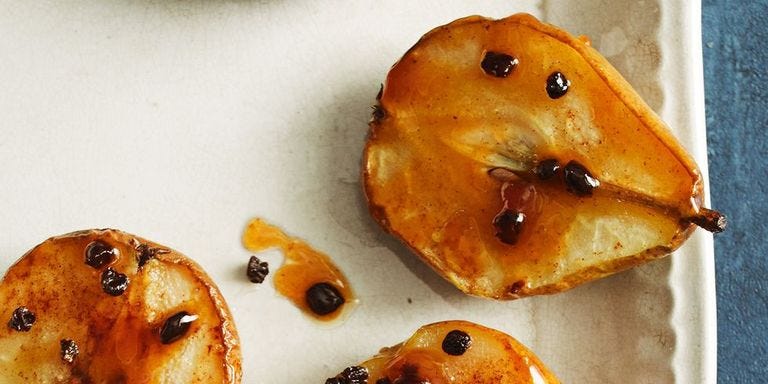
Some desserts arrive wearing a tuxedo. Others show up in fuzzy socks, smelling like cinnamon, and somehow win the whole evening. This baked pear with cinnamon and currants recipe belongs firmly in the second category: cozy, elegant, low-effort, and just dramatic enough to make people ask, “Wait, you made this?”
The beauty of baked pears is that they do not require pastry, frosting, a mixer, or the emotional courage needed to flip a cake upside down. You simply halve ripe-but-firm pears, tuck them with butter, cinnamon, currants, citrus, and a little sweet syrup, then bake until the fruit turns tender and glossy. The currants plump up in the warm juices, the cinnamon perfumes the kitchen, and the pears become spoon-soft without collapsing into baby food. That is the goal: tender, not tragic.
This recipe is inspired by classic American home-baking techniques for roasted fruit desserts, produce guidance for choosing baking pears, and the simple flavor logic that pears love warm spices, dried fruit, honey, maple syrup, vanilla, and a tiny pinch of salt. Serve these baked pears as a fall dessert, a holiday side-sweet, a brunch dish, or the kind of late-night treat that says, “I am taking care of myself, but I still believe in butter.”
Why This Is the Best Baked Pear with Cinnamon and Currants Recipe
A great baked pear recipe should do three things well: keep the fruit’s shape, create a spoonable syrup, and balance sweetness with brightness. Too much sugar can make pears taste flat. Too little liquid can leave currants dry and chewy. Overbaking can make the pears collapse like they just received bad news. This version solves those problems with a smart mix of maple syrup or honey, lemon juice, orange zest, butter, vanilla, cinnamon, and a small splash of water or apple cider.
The cinnamon gives warmth, the currants add tiny bursts of tangy sweetness, and the lemon keeps everything lively. A little butter melts into the pear juices and turns them into a glossy sauce. If you prefer a dairy-free baked pear recipe, coconut oil works beautifully and gives the dessert a subtle richness without taking over the flavor.
What Are the Best Pears for Baking?
The best pears for baking are firm, aromatic pears that can soften without falling apart. Bosc pears are a top choice because they hold their shape well and have a dense texture that responds beautifully to heat. Anjou pears, especially green Anjou, are also excellent because they stay sturdy and juicy. Bartlett pears can work, but they ripen quickly and may become too soft if they are already very ripe.
For this recipe, choose pears that yield slightly near the stem but still feel firm through the body. A rock-hard pear will bake, but it may need more time and more liquid. An overly soft pear will taste sweet but may slump in the pan like it has given up on ambition. The sweet spot is firm-ripe: fragrant, not mushy, and easy to cut cleanly.
Quick Pear Buying Tip
Do not judge most pears by color alone. Many varieties do not dramatically change color when ripe. Instead, gently press near the neck, close to the stem. If it gives just a little, the pear is ready. If your thumb sinks in like it is pressing a sofa cushion, use that pear for sauce, smoothies, or a very forgiving crumble.
Ingredients for Baked Pears with Cinnamon and Currants
This baked pear dessert uses pantry-friendly ingredients, which means you can make it when you want something special but have no interest in hunting down edible gold leaf.
Main Ingredients
- 4 firm-ripe Bosc or Anjou pears: Halved and cored. Peel them for a softer, more elegant dessert, or leave the skins on for a rustic look and extra texture.
- 1/3 cup dried currants: Tiny, sweet-tart dried grapes that plump beautifully in the baking juices.
- 2 tablespoons unsalted butter: Adds richness and helps create a silky sauce. Use coconut oil for a dairy-free version.
- 3 tablespoons maple syrup or honey: Sweetens the pears and helps them glaze as they bake.
- 1 tablespoon brown sugar: Optional, but helpful if your pears are not very sweet.
- 1 teaspoon ground cinnamon: The cozy backbone of the recipe.
- 1/2 teaspoon vanilla extract: Adds bakery-style warmth.
- 1 tablespoon fresh lemon juice: Brightens the sweetness and prevents the dessert from tasting heavy.
- 1 teaspoon orange zest: Optional, but highly recommended for a fragrant lift.
- 1/4 cup apple cider, white wine, or water: Provides moisture so the pears bake gently and the currants plump.
- Pinch of fine salt: Makes the fruit taste more like itself. Tiny ingredient, big personality.
Optional Toppings
- Toasted walnuts or pecans for crunch
- Greek yogurt for a tangy breakfast-style serving
- Mascarpone for a rich dinner-party dessert
- Vanilla ice cream for maximum happiness
- Whipped cream for holiday drama
- Granola for a brunch-friendly baked pear bowl
How to Make Baked Pear with Cinnamon and Currants
This recipe serves 4 to 8 people, depending on whether each person gets one pear half or two. In my professional dessert opinion, one half is “polite,” and two halves are “correct.”
Step 1: Preheat the Oven
Preheat your oven to 375°F. This temperature is warm enough to soften the pears and concentrate the juices, but not so aggressive that the currants burn or the butter browns too quickly.
Step 2: Prepare the Pears
Wash the pears, then cut them in half lengthwise. Use a melon baller, small spoon, or paring knife to scoop out the core and seeds. Try to make a small hollow in each pear half. This little pocket will hold the currants and syrup, which is exactly the kind of architectural planning dessert deserves.
If you want a refined presentation, peel the pears. If you want a more casual, farmhouse-style baked pear recipe, leave the skins on. Both versions are delicious.
Step 3: Make the Cinnamon-Currant Mixture
In a small bowl, combine the currants, maple syrup or honey, brown sugar if using, cinnamon, vanilla, lemon juice, orange zest, and salt. Stir until the currants are coated. Let the mixture sit for 5 minutes while the oven finishes heating. This quick rest helps the currants begin absorbing moisture.
Step 4: Arrange the Pears
Place the pear halves cut-side up in a baking dish. Choose a dish that holds them snugly in one layer. If the dish is too large, the syrup spreads out and evaporates too quickly. If it is too small, the pears steam more than bake. Snug but not crowded is the mood.
Step 5: Fill and Dot with Butter
Spoon the cinnamon-currant mixture into the center of each pear half. Scatter any extra currants around the baking dish. Dot each pear with small pieces of butter. Pour the apple cider, white wine, or water into the bottom of the dish, not directly over the pears.
Step 6: Bake Until Tender
Cover the baking dish loosely with foil and bake for 20 minutes. Remove the foil, spoon some pan juices over the pears, and continue baking uncovered for another 15 to 25 minutes, depending on the size and firmness of the fruit.
The pears are done when a knife slides into the thickest part with little resistance. They should be tender and glossy, with plump currants and a fragrant cinnamon syrup in the bottom of the dish.
Step 7: Rest and Serve
Let the baked pears rest for 5 to 10 minutes before serving. The syrup thickens slightly as it cools, and the fruit becomes easier to move without breaking. Spoon the warm juices over the pears right before serving. This is not optional. This is where the magic lives.
Best Baked Pear with Cinnamon and Currants Recipe Card
Ingredients
- 4 firm-ripe Bosc or Anjou pears, halved and cored
- 1/3 cup dried currants
- 3 tablespoons maple syrup or honey
- 1 tablespoon brown sugar, optional
- 2 tablespoons unsalted butter, cut into small pieces
- 1 teaspoon ground cinnamon
- 1/2 teaspoon vanilla extract
- 1 tablespoon fresh lemon juice
- 1 teaspoon orange zest, optional
- 1/4 cup apple cider, white wine, or water
- Pinch of fine salt
- Toasted nuts, yogurt, mascarpone, whipped cream, or vanilla ice cream for serving
Instructions
- Preheat oven to 375°F.
- Cut pears in half lengthwise and remove cores with a spoon or melon baller.
- In a small bowl, mix currants, maple syrup or honey, brown sugar, cinnamon, vanilla, lemon juice, orange zest, and salt.
- Place pears cut-side up in a snug baking dish.
- Spoon the currant mixture into the pear cavities and dot with butter.
- Pour apple cider, white wine, or water into the bottom of the baking dish.
- Cover loosely with foil and bake for 20 minutes.
- Uncover, baste with pan juices, and bake 15 to 25 minutes more, until tender.
- Rest for 5 to 10 minutes, then serve warm with pan syrup and your favorite topping.
Expert Tips for Perfect Baked Pears
Use Firm-Ripe Fruit
The most common baked pear mistake is using pears that are too ripe. Very soft pears taste sweet, but they can break down quickly in the oven. For the best baked pears with cinnamon and currants, choose fruit that gives slightly at the neck but remains firm around the middle.
Add Enough Liquid
Currants are small and intensely flavored, but they need moisture. Apple cider adds seasonal flavor, white wine creates a more grown-up dessert, and water keeps the recipe simple. Any of the three will work. The key is to include enough liquid to steam the pears gently and build a sauce.
Cover First, Uncover Later
Covering the dish at the beginning helps the pears soften evenly. Removing the foil later allows the syrup to reduce and the tops to glaze. This two-stage baking method gives you tender fruit without watery sauce.
Do Not Skip the Salt
A pinch of salt will not make the dessert salty. It will make the maple, cinnamon, currants, and pears taste clearer. Think of salt as the stage manager of dessert: not flashy, but absolutely responsible for keeping the show together.
Flavor Variations
Holiday Baked Pears
Add a pinch of nutmeg, ground ginger, and clove to the cinnamon mixture. Serve with mascarpone or whipped cream and toasted pecans. Suddenly your easy baked pear recipe is wearing a velvet blazer.
Healthy Breakfast Baked Pears
Use maple syrup, skip the brown sugar, and serve the pears with plain Greek yogurt and granola. This version feels breakfast-appropriate while still tasting like dessert snuck into the room wearing a cardigan.
Dairy-Free Baked Pears
Replace butter with coconut oil or a plant-based butter. Serve with coconut yogurt or dairy-free vanilla ice cream. The pears will still bake into a glossy, cinnamon-scented dessert.
Nutty Baked Pears
Add chopped walnuts, almonds, or pecans during the final 10 minutes of baking. This keeps the nuts crisp while letting them pick up a little syrup and spice.
What to Serve with Baked Pears
Warm baked pears with cinnamon and currants are flexible enough for simple weeknight dinners and festive holiday meals. For dessert, serve them with vanilla ice cream, whipped cream, mascarpone, or crème fraîche. For brunch, pair them with yogurt, oatmeal, pancakes, waffles, or French toast. For a cheese board, serve chilled or room-temperature baked pears with sharp cheddar, blue cheese, brie, or goat cheese.
If you are making a fall dinner, these pears are especially good after roast chicken, pork tenderloin, turkey, mushroom risotto, butternut squash soup, or a cozy grain salad. They bring sweetness without the heaviness of cake or pie, which is helpful when everyone at the table has already said, “I’m full,” while continuing to eat.
How to Store and Reheat Baked Pears
Store leftover baked pears in an airtight container in the refrigerator for up to 4 days. Keep the syrup with the pears so they stay moist. Reheat gently in a covered baking dish at 300°F until warm, or microwave in short intervals. You can also enjoy them cold over yogurt or oatmeal.
To make this baked pear recipe ahead of time, bake the pears until just tender, cool them, and refrigerate. Reheat before serving and spoon the syrup over the top. If the sauce thickens too much in the refrigerator, add a teaspoon or two of water or apple cider before reheating.
Common Mistakes to Avoid
Using a Baking Dish That Is Too Big
A large dish causes the syrup to spread thinly and evaporate. Use a dish that holds the pears comfortably but closely.
Forgetting to Baste
Basting helps the pears glaze and keeps the currants juicy. One or two spoonfuls of pan syrup during baking can make the final dessert look and taste much better.
Overloading the Spice
Cinnamon is lovely, but too much can make the pears taste dusty. One teaspoon is enough for warmth without overwhelming the fruit. Add nutmeg, ginger, or cloves only in small pinches.
Serving Straight from the Oven
Very hot pears are fragile. Resting them for a few minutes helps the texture settle and keeps you from performing emergency dessert surgery with a spatula.
Experience Notes: What I Learned Making Baked Pears with Cinnamon and Currants
The first time I made baked pears, I treated them like apples. This was a mistake, and the pears told me immediately. Apples can handle a little rough treatment. Pears are more delicate. They prefer a thoughtful hand, a modest amount of sugar, and a baking dish that does not make them feel abandoned. When I used pears that were too ripe, they tasted wonderful but looked like they had survived a tiny fruit avalanche. When I used pears that were too hard, the outside softened while the center stayed stubborn. Firm-ripe pears were the answer.
I also learned that currants behave differently from raisins. Raisins are bigger and juicier, while currants are tiny and concentrated. If you scatter dry currants over pears without enough liquid, they can become chewy little spice dots. Not terrible, but not luxurious. Letting them sit briefly with maple syrup, lemon juice, vanilla, and cinnamon gives them a head start. Once they bake in the pear juices, they become plump, shiny, and surprisingly elegant. Tiny fruit, big glow-up.
Another important lesson: lemon juice is not just there to prevent browning. It makes the whole dessert taste brighter. Without lemon, baked pears with cinnamon and currants can lean very sweet, especially if served with ice cream. With lemon, the flavor feels balanced and clean. Orange zest does something similar, but in a more perfumed way. It is optional, but if you have an orange sitting around, use it. The zest makes the kitchen smell like someone is about to host a charming holiday gathering with matching napkins.
The most reliable serving combination, in my experience, is warm baked pears with Greek yogurt and a drizzle of the pan syrup. It works for breakfast, dessert, or that mysterious time between lunch and dinner when snacks become philosophical. For a dinner party, mascarpone is the move. It melts slightly against the warm pear and tastes fancy with almost no effort. Vanilla ice cream is, of course, undefeated. The hot pear, cold ice cream, cinnamon syrup, and chewy currants create a dessert that feels far more complicated than it is.
If you want to make the recipe more rustic, leave the skins on and add toasted nuts. If you want it more elegant, peel the pears and serve each half in a shallow bowl with syrup spooned around it. If you want it more holiday-friendly, add a small pinch of ginger and nutmeg. The recipe is forgiving, but the main principle stays the same: good pears, enough moisture, gentle spice, and a little resting time after baking.
My favorite part of this dish is how quietly impressive it is. There is no frosting to smooth, no crust to crimp, and no cake layer waiting to betray you. Yet when the pears come out glossy and fragrant, they look like something from a cozy restaurant menu. It is the perfect recipe for people who want dessert without drama. The pears do the work. The cinnamon takes the credit. The currants show up like tiny jewels. And you, holding the spoon, get to look like a genius.
Conclusion
This best baked pear with cinnamon and currants recipe proves that simple fruit desserts can be every bit as satisfying as pies, cakes, and crumbles. With firm-ripe pears, warm cinnamon, tangy currants, a little maple syrup or honey, and a glossy pan sauce, you get a dessert that is cozy enough for a weeknight and pretty enough for a holiday table.
The key is balance: choose pears that hold their shape, give the currants enough liquid to plump, brighten the sweetness with lemon, and let the finished pears rest before serving. Whether you top them with yogurt, mascarpone, whipped cream, toasted nuts, or vanilla ice cream, these baked pears deliver comfort without complication. In other words, they are the dessert equivalent of a warm blanket with excellent manners.
Note: This article is written as original, publication-ready content based on established U.S. cooking practices for baked pear desserts, with no source placeholders or citation markers included.