Heat pumps already have a reputation for being the overachievers of home comfort. They do not create heat the way a toaster or electric baseboard heater does. Instead, they move heat from one place to another, which is why a well-designed heat pump system can deliver impressive heating, cooling, and water-heating performance without acting like it has a personal feud with your electric bill.
But here is the fun part: even efficient equipment can waste energy when its controls are too basic, too aggressive, or simply not matched to the way a household actually uses heat. That is where the idea behind “Custom Controller Ups Heat Pump Efficiency” becomes interesting. The headline points to a real-world tinkering story in which a heat pump water-heating setup was running more often than necessary. After careful observation, testing, and a little engineering stubbornness, a custom controller helped reduce unnecessary high-temperature cycles and improved overall efficiency.
This article explores what that means for homeowners, makers, energy nerds, and anyone who enjoys the phrase “timing relay” more than is socially expected. We will look at why heat pump efficiency depends so heavily on control strategy, how custom controllers can help, where the risks are, and what practical lessons can be applied without turning your utility room into a science fair volcano.
Why Heat Pumps Are Efficient in the First Place
A heat pump works by transferring heat rather than generating it directly. In heating mode, an air-source heat pump extracts heat from outdoor air and moves it indoors. In cooling mode, it reverses the process and removes heat from the home. A heat pump water heater uses similar refrigeration-cycle logic, but the goal is hot water instead of warm living rooms.
The performance advantage comes from the coefficient of performance, often called COP. A resistance heater has a practical COP of about 1: one unit of electricity becomes about one unit of heat. A heat pump can often deliver multiple units of heat for each unit of electricity consumed. That does not mean every heat pump performs like a superhero all day long. Outdoor temperature, water temperature, airflow, refrigerant charge, compressor speed, defrost behavior, duct design, and thermostat logic all matter.
In plain English: the machine may be efficient, but the way it is told to run can make it look brilliant or embarrassingly clumsy.
The Problem: Efficient Equipment, Inefficient Behavior
The custom-controller story behind this topic involved a heat pump used for water heating. The unit itself was not defective in the dramatic “sparks are flying” sense. The issue was subtler. The system was running more than needed and periodically ramping up to maximum temperature even when the tank already had enough hot water.
That matters because heat pumps usually work best when they are not forced into extreme operating conditions. For water heaters, raising water to a very high temperature can lower efficiency because the compressor must work harder. For space-heating heat pumps, recovering from deep thermostat setbacks can also push the compressor into less efficient high-output operation. The lesson is not that high temperature is always bad. Sometimes it is required for comfort, sanitation, or backup protection. The lesson is that unnecessary high-temperature operation is like revving your car engine at a red light: loud, wasteful, and unlikely to impress anyone except maybe your dog.
What a Custom Heat Pump Controller Actually Does
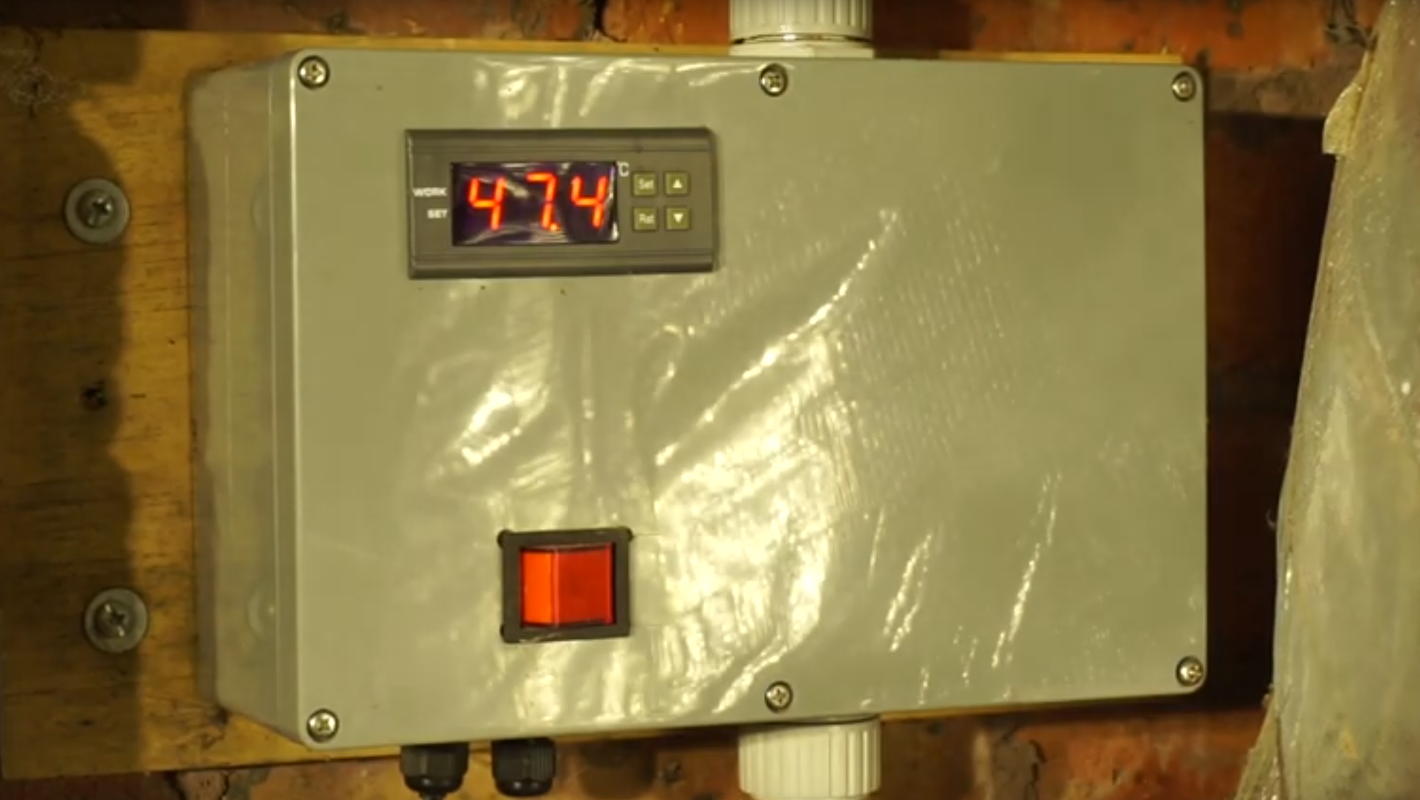
A custom controller is not necessarily a tiny robot overlord. In many cases, it is a carefully designed control layer that changes when and how the heat pump is allowed to operate. It may use temperature sensors, timers, relays, outdoor temperature data, tank temperature readings, flow sensors, or smart-home logic. The goal is to reduce waste while still protecting comfort, safety, and equipment life.
Common Custom Controller Functions
A custom heat pump controller may prevent unnecessary cycling, delay operation until cheaper off-peak electricity hours, coordinate a heat pump with backup heat, limit high-temperature water-heating cycles, or use outdoor temperature to decide when one heat source is more economical than another. In a more advanced setup, it may monitor tank stratification, prevent thermosiphoning losses, control circulation pumps, or log performance data so the homeowner can see what is really happening.
The best controllers are not “always run less” devices. They are “run smarter” devices. That distinction is crucial. A controller that saves energy by making the house cold or the shower lukewarm is not efficient; it is just annoying with a circuit board.
The Heat Pump Water Heater Angle
Heat pump water heaters are especially interesting because hot water demand is irregular. A family may use a lot of water in the morning, very little during the afternoon, and then another burst after dinner. Many units include modes such as efficiency, hybrid, electric, vacation, or timer settings. These built-in controls are useful, but they may not perfectly match every home.
A custom controller can add a more personal schedule. For example, it might allow the tank to recover during afternoon solar production, avoid peak utility rates in the early evening, or reduce high-temperature sterilization cycles to the minimum allowed by safety rules and local codes. It might also prevent the system from repeatedly reheating water that is already hot enough for normal household use.
That said, domestic hot water is not a playground for careless experimentation. Water heaters must be managed with attention to scalding risk, bacteria control, pressure relief, electrical safety, and manufacturer requirements. Any custom control strategy should preserve required safety features and should not bypass factory protections.
Why High-Temperature Cycles Can Hurt Efficiency
A heat pump water heater becomes less efficient as the temperature lift increases. Temperature lift is the difference between the heat source temperature and the target water temperature. If the surrounding air is cool and the water target is very hot, the compressor has a tougher job. The system may run longer, use backup electric resistance elements, or operate at a lower COP.
Some water heaters periodically raise tank temperature for sanitation. This may be necessary, but daily high-temperature operation may not always be required depending on the system design, local rules, and usage pattern. In the case that inspired this article, the big discovery was that the unit’s factory behavior was more aggressive than the household needed. By changing the schedule with a custom master controller, the system reduced unnecessary energy use while still meeting safety requirements.
Custom Controls for Space-Heating Heat Pumps
The same concept applies to air-source heat pumps used for home heating. Controls can make or break seasonal performance. A poorly configured thermostat may call for backup electric resistance heat too early. A deep nighttime setback may save a little during the night but force the heat pump into a high-speed recovery cycle in the morning. A dual-fuel setup may switch from heat pump to furnace at the wrong outdoor temperature. A ductless system may be set up with fan or vane behavior that hurts comfort and efficiency.
Good control keeps the heat pump operating in its efficient range for as many hours as possible. That often means steady operation, modest setpoint changes, intelligent backup lockout, and attention to balance points. The thermal balance point is the outdoor temperature at which the heat pump can just meet the home’s heating load. The economic balance point is the temperature at which another fuel source becomes cheaper to operate. A smart or custom controller can use those numbers to make better decisions than a simple “turn on when cold” thermostat.
Defrost: The Frosty Little Efficiency Thief
In cold, damp conditions, an outdoor heat pump coil can collect frost. Defrost cycles are necessary because frost blocks airflow and reduces heat transfer. However, defrost also consumes energy and temporarily interrupts heating. Some systems use timed defrost, while better systems use demand defrost that responds to actual coil conditions.
Custom control should be very careful here. Defrost is not a feature to disable casually. A controller can improve efficiency by avoiding unnecessary calls for heat, smoothing operation, or working with a heat pump’s built-in demand-defrost logic. But bypassing factory defrost protections can damage equipment or leave the system wheezing like it tried to inhale a snow cone.
The Role of Smart Thermostats
Smart thermostats can help heat pumps when they are compatible and correctly configured. The keyword is correctly. A thermostat designed mainly around conventional furnaces may not understand heat pump staging, auxiliary heat lockouts, compressor minimum run times, or dual-fuel balance points. A smart thermostat that constantly triggers backup heat can turn a high-efficiency heat pump into a very expensive space heater wearing a fancy app.
For many homeowners, the best “custom controller” may simply be a proper heat-pump-compatible thermostat installed by someone who understands the equipment. Useful features include outdoor temperature awareness, auxiliary heat control, compressor protection, scheduling, occupancy sensing, demand response support, and energy reporting. The goal is not to micromanage the heat pump every fifteen minutes. The goal is to set a control strategy that quietly does the right thing while you live your life.
Where a DIY Custom Controller Makes Sense
A custom controller makes the most sense when there is a clear, measured problem. Examples include a heat pump water heater performing unnecessary high-temperature cycles, a circulation loop causing standby losses, backup heat engaging too often, a dual-fuel system switching too early, or a home with solar panels that wants to shift heat-pump operation into sunny hours.
The key word is measured. Guessing is not engineering; it is astrology with screwdrivers. Before changing controls, collect data. Track run time, power use, tank temperature, indoor temperature, outdoor temperature, hot water availability, and comfort complaints. A plug-in energy monitor, smart panel, thermostat logs, or dedicated sensors can reveal whether the problem is real or merely suspicious.
Practical Example: Reducing Unnecessary Water Heating
Imagine a household with a heat pump water heater that performs a daily high-temperature cycle at noon. The family uses most of its hot water at 7 a.m. and 8 p.m. The tank is already warm enough at noon, but the unit still climbs to a higher target. The homeowner notices that daily electricity use stays stubbornly high even on low-demand days.
A control strategy might allow normal heat pump operation within a comfortable temperature range, schedule a higher-temperature cycle only as often as required, and avoid electric resistance mode unless hot water demand is unusually high. If the home has rooftop solar, the controller might allow recovery during solar production. If the utility has time-of-use rates, it might avoid the most expensive hours. The result is not magic. It is simply better timing.
Practical Example: Smarter Backup Heat
Now consider a ducted cold-climate heat pump with electric resistance backup. The homeowner notices huge power spikes on cold mornings. The thermostat is set back from 70°F to 62°F overnight, then programmed to return to 70°F at 6 a.m. The heat pump sees a large temperature gap and calls for auxiliary heat. Comfort returns quickly, but efficiency falls off a cliff wearing tap shoes.
A better controller might use a smaller setback, start recovery earlier with the compressor only, lock out auxiliary heat above a chosen outdoor temperature, and keep the heat pump running steadily. The home may feel just as comfortable, while the system avoids the expensive backup strip heat that can quietly dominate winter bills.
Safety Comes Before Savings
Custom controls must never defeat safety devices. Factory high-pressure switches, low-pressure switches, freeze protection, compressor delay timers, temperature limits, pressure relief valves, and sanitation requirements exist for good reasons. A homeowner may understand code, but equipment warranties and local regulations may still require licensed work.
For water heating, pay special attention to Legionella risk, anti-scald mixing valves, tank temperature, and local plumbing code. For space heating, pay attention to refrigerant safety, electrical wiring, airflow, condensate management, and backup heat operation. Saving a few kilowatt-hours is not worth creating a health hazard or turning your mechanical room into a cautionary tale.
How to Improve Heat Pump Efficiency Without Building a Controller
You do not need to solder anything to make a heat pump work better. Start with basic maintenance. Clean or replace filters, keep outdoor units clear of leaves and snow, make sure indoor airflow is strong, seal duct leaks, and schedule professional service. Poor airflow can make even advanced equipment perform badly.
Next, review settings. Use heat-pump-friendly thermostat schedules. Avoid large winter setbacks unless your system handles recovery efficiently. In dual-fuel systems, ask a qualified contractor to set balance points based on local energy prices and equipment performance. For heat pump water heaters, choose efficiency mode when practical, use vacation mode when away, and avoid unnecessary electric-resistance operation.
Finally, improve the building. Insulation, air sealing, window upgrades, and duct sealing reduce heating and cooling load. A smaller load lets the heat pump operate more gently and efficiently. The fanciest controller in the world cannot fully compensate for a house that leaks air like a screen door on a submarine.
What Makes a Good Custom Controller Design?
A good custom controller begins with a goal. “Save energy” is too vague. Better goals include reducing electric resistance use, limiting high-temperature tank cycles, shifting operation to solar hours, avoiding peak-rate windows, or maintaining comfort with fewer compressor starts.
It should also fail safely. If a sensor fails, the system should return to normal factory control or shut down in a safe state. It should log data so performance can be verified. It should be simple enough to troubleshoot. And it should preserve manual override because life happens: guests visit, teenagers take marathon showers, and sometimes you just want hot water without consulting a dashboard.
Data: The Secret Ingredient
The real hero of the custom-controller story is not just the relay or the code. It is observation. The homeowner noticed unusual consumption, investigated possible losses, tested fixes, and eventually identified a control behavior that did not match real demand. That is the mindset that improves systems.
For homeowners, useful data points include daily kilowatt-hours, run time, outdoor temperature, indoor temperature, water temperature, recovery time, auxiliary heat status, and utility rate periods. Once you see the pattern, the fix may be surprisingly simple. Sometimes the best efficiency upgrade is not a new compressor. It is telling the existing compressor to stop doing unnecessary push-ups.
Experiences and Lessons From Real-World Heat Pump Control
Anyone who has lived with a heat pump for more than one season learns that efficiency is personal. Not emotional personal, although some homeowners do develop strong feelings about auxiliary heat. Personal in the sense that every home has a different building envelope, climate, utility rate, water-use pattern, and comfort expectation. A control strategy that works beautifully in a mild coastal home may be a disaster in a drafty house during a Minnesota cold snap.
One common experience is the “new heat pump surprise.” A homeowner replaces an old system and expects instant savings, only to discover that settings matter. The installer leaves the thermostat in a default configuration, the backup heat comes on too often, and the bill is not as low as expected. After reviewing thermostat settings and auxiliary lockout temperatures, performance improves. The equipment did not change. The instructions did.
Another frequent lesson comes from heat pump water heaters. Many people install them in garages, basements, or utility rooms and then forget that these units interact with surrounding air. In a warm garage, efficiency can be excellent. In a cold basement, recovery can be slower. If a homeowner also has a recirculation loop or poorly insulated hot water pipes, standby losses may erase part of the expected savings. A controller can help, but pipe insulation, check valves, and smart scheduling may be just as important.
There is also a comfort lesson. Heat pumps often prefer steady operation. People accustomed to gas furnaces may expect big temperature swings and fast blasts of hot air. Heat pumps are usually happier acting like a calm marathon runner rather than a sprinter. A custom controller that encourages long, efficient cycles can feel different at first. The air may be warm rather than hot. The system may run longer but use less energy. Once homeowners understand that longer run time is not automatically bad, the machine becomes less mysterious.
For technically inclined users, the temptation is to automate everything. Outdoor temperature? Automate it. Utility rates? Automate them. Solar production? Automate that too. Dog lying on the floor register? Tempting, but maybe leave the dog out of the control loop. The best experience usually comes from starting simple. Change one variable, measure the result, and keep a rollback plan. Complex control without clear data can create hidden problems that take weeks to notice.
Contractors also bring an important perspective. Many service calls are not caused by bad equipment but by mismatched expectations, poor sizing, or incorrect settings. A custom controller can solve a specific problem, but it cannot fix everything. If a heat pump is badly oversized, poorly ducted, low on refrigerant, or installed in the wrong location, controls may only hide the symptoms. The most efficient system is a combination of good design, proper installation, smart controls, and regular maintenance.
The best takeaway from the “Custom Controller Ups Heat Pump Efficiency” idea is not that every homeowner should build a custom board. It is that heat pumps reward curiosity. Watch the system. Learn its patterns. Question unnecessary operation. Use built-in modes wisely. Bring in professionals when safety or code is involved. If a custom controller is appropriate, design it as a respectful assistant to the heat pump, not a reckless replacement for factory engineering.
Done well, better control can turn an already efficient appliance into a more disciplined one. It is like giving the heat pump a calendar, a budget, and a gentle reminder that maximum effort is not required for every cup of coffee, shower, or chilly morning.
Conclusion
A custom controller can improve heat pump efficiency when it solves a real control problem: unnecessary cycling, poorly timed high-temperature operation, excessive backup heat, or mismatched schedules. The biggest gains often come from understanding when the system runs, why it runs, and whether that operation is actually needed.
The original custom-controller case is valuable because it shows the practical side of efficiency. The homeowner did not simply buy a more expensive machine and hope for the best. He observed, measured, tested, and refined. That approach applies to heat pump water heaters, cold-climate air-source heat pumps, dual-fuel systems, and smart thermostats alike.
For most homeowners, the first step is not building a controller. It is checking thermostat settings, maintenance, airflow, water-heater mode, utility rates, and insulation. For advanced users, a custom controller can be powerful, but only when it preserves safety, code compliance, factory protections, and comfort. Efficiency is not about making the system run less at all costs. It is about making the system run wisely.