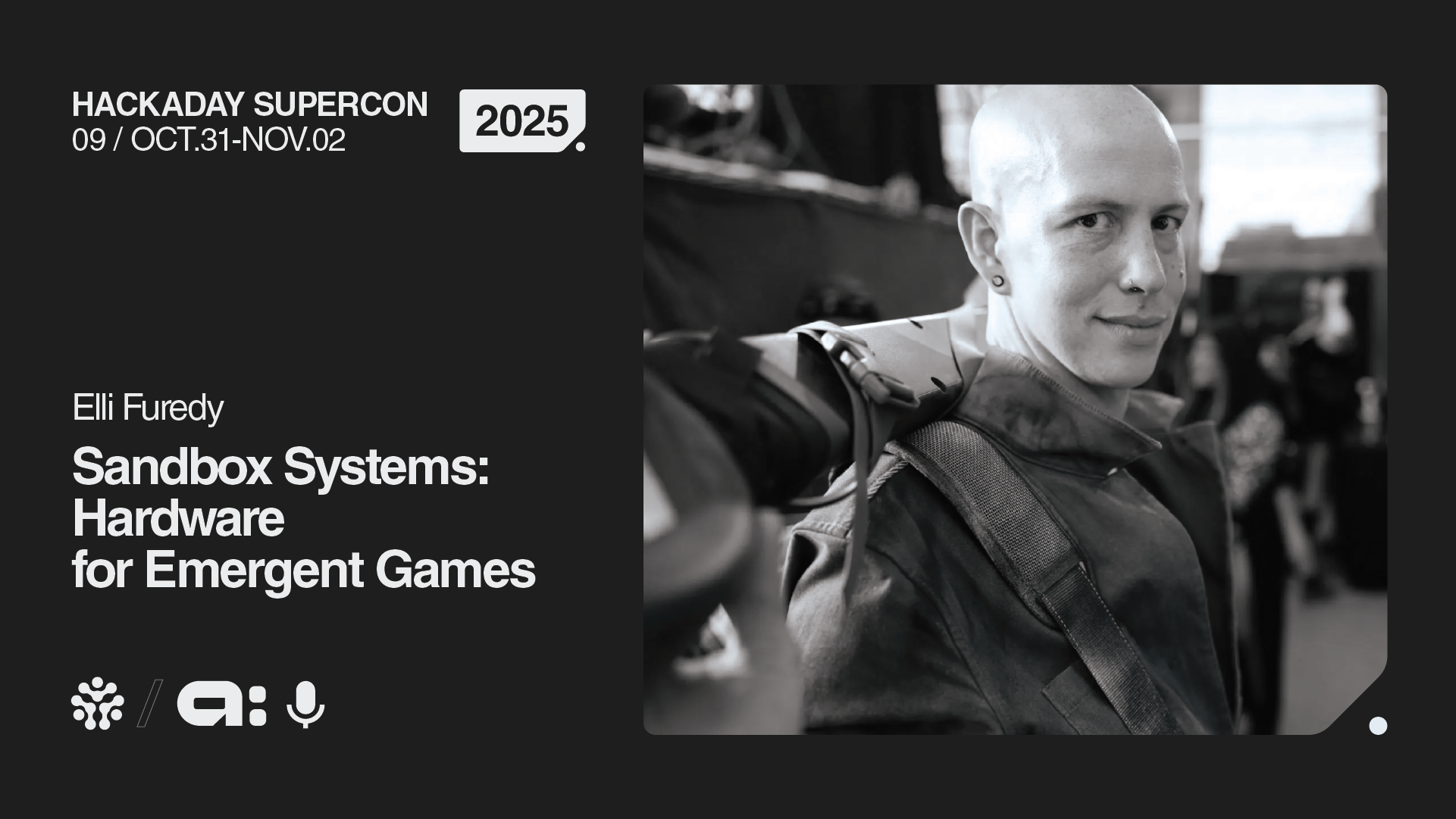
Some people look at the desert and see sand, sunburn, and the possibility of finding dust in places dust should not legally be allowed to enter. Elli Furedy looks at the desert and sees a living cyberpunk city, a networked game system, and hundreds of players ready to turn a simple mechanic into a story they will talk about long after their boots stop crunching.
That is the magic behind Elli Furedy’s work in cyberpunk immersive games. Her approach does not treat technology as a shiny toy begging for attention. Instead, hardware becomes a doorway. A handheld device becomes a character prop. A simple countdown becomes a showdown. A small OLED screen becomes a passport into another reality. Suddenly, a crowd is not just attending an event; they are participating in a playable world.
Furedy’s cyberpunk bounty-hunting experience, often discussed through the lens of her “Sandbox Systems” design philosophy, shows how live-action role-play, electronics, 3D printing, accessibility, and smart game design can merge into something that feels less like a gadget demo and more like stepping into a sci-fi video game with actual dust on your jacket.
The Cyberpunk Game That Starts With People, Not Gadgets
Cyberpunk is famous for neon, megacorporations, body mods, surveillance, hackers, and cities that look like someone spilled energy drinks all over a noir film. But the best cyberpunk experiences are not really about glowing signs or chunky hardware. They are about people trying to survive, improvise, and make meaning inside systems bigger than themselves.
That is where Furedy’s design stands out. Her work with Alleycat Asset Acquisitions and the bounty-hunting game at Neotropolis begins with a refreshingly human question: what will players actually do with this?
The answer is not “read a 47-page rulebook and politely panic.” Instead, the game creates a simple structure. Bounty hunters search for targets. A handheld Portable Data Node helps frame the encounter. When a hunter and target meet, the devices connect, a countdown begins, and the moment resolves through a fast reaction challenge. It is quick, understandable, and dramatic enough to make everyone nearby lean in like they are watching the final round of a championship, except with more goggles.
What Makes Elli Furedy’s Cyberpunk Game Design Work?
1. The Rules Live Inside the Hardware
One of the smartest parts of Furedy’s system is that the hardware handles much of the rule enforcement. In many live games, flow dies when someone has to stop and ask, “Wait, do I lose two tokens or three?” Nothing murders immersion faster than a rules dispute conducted under a plastic canopy while someone in mirrored sunglasses looks emotionally betrayed.
By embedding the game rules into the devices, Furedy reduces friction. The Portable Data Nodes decide outcomes, guide the timing, and help keep the experience fair. The player does not need to memorize every mechanical detail. They can focus on being a bounty hunter, outlaw, courier, corporate agent, street-level fixer, or whatever magnificent desert gremlin their character sheet has become.
2. The Tech Supports the Story
Good immersive hardware does more than function. It performs. It needs to look like it belongs in the world. In Furedy’s design, even decorative elements matter. Lights, interface details, chunky shapes, and “greebles” help sell the fantasy. Not every glowing bit needs to run the entire system. Sometimes a little sci-fi nonsense is doing very serious emotional labor.
This is important for cyberpunk games because atmosphere is half the interface. A device that looks like a normal TV remote does not invite role-play. A device that looks like it was smuggled out of a megacorp evidence locker absolutely does. Players respond to props that give them permission to act. The hardware whispers, “Yes, you are in the story now.”
3. The Design Leaves Room for Player Personality
Furedy’s game does not force players into a rigid script. Instead, it gives them opportunities. A bounty hunter may have a formal line or ritual to begin an encounter, but the personality comes from the player. That one choice opens a tiny door for humor, swagger, intimidation, awkward charm, or theatrical nonsense. In a live game, those little doors are everything.
This is the heart of emergent gameplay. The designer creates a playground with rules, tools, and boundaries. The players create moments no design document could fully predict. One hunter becomes terrifyingly professional. Another becomes a walking customer-service nightmare with a badge. Someone else turns every capture attempt into a monologue. The game system supports all of it without collapsing like a folding chair at a backyard barbecue.
Neotropolis: The Perfect Desert Playground
Furedy’s cyberpunk work fits naturally inside Neotropolis, a fully immersive science-fiction and cyberpunk desert festival in the California Mojave. Neotropolis is part interactive theater, part campout, part mission-based role-play, and part “what if a neon city appeared in the desert and everyone committed to the bit?”
The event emphasizes original characters and theme-appropriate costuming. That matters. Instead of filling the environment with recognizable franchise characters, Neotropolis encourages attendees to build their own identities. The result is closer to a living sandbox world than a standard fan convention. You are not standing next to fifteen versions of the same famous space wizard. You are meeting traders, mechanics, smugglers, corporate envoys, cybernetic wanderers, and people who look like they repaired their jacket with parts from a crashed satellite.
In that setting, Furedy’s bounty-hunting system becomes more than a minigame. It becomes social infrastructure. It gives strangers a reason to approach each other, talk in character, negotiate, run, bluff, laugh, and create shared memories. That is a rare achievement. Many games entertain players. Fewer games give players a socially acceptable excuse to become legends before lunch.
The Power of “Hardware for Emergent Games”
Furedy’s broader philosophy can be summed up as hardware that encourages human connection. That sounds poetic, but it is also practical. When a game is played by hundreds of people in a noisy, dusty, unpredictable physical environment, the design must survive reality. Batteries die. Signals get weird. People misunderstand instructions. Someone will always press the button early because excitement is apparently stronger than literacy.
Good physical game design anticipates these problems. The interface must be clear. Feedback must be immediate. The rules must be simple enough to explain fast and rich enough to inspire repeat play. The device must feel durable, readable, and fun to hold. It must also look cool, because this is cyberpunk and nobody wants to role-play with a sad beige rectangle.
That balance is difficult. Digital games can hide complexity behind code. Live immersive games must deal with bodies, weather, queues, attention spans, and the eternal human tendency to ask, “Can I break this in a funny way?” Furedy’s work succeeds because it does not fear that chaos. It designs for it.
Why Simplicity Is the Secret Weapon
The genius of the bounty-hunting concept is that it is simple on purpose. Find the target. Connect the devices. Wait for the cue. React. Resolve. Repeat. That loop is easy to understand, which means players can invest their creative energy in the scene rather than the rulebook.
This is also why the game feels video-game-like without being trapped behind a screen. It has the clarity of a digital mechanic but the unpredictability of real people. A player’s costume, voice, timing, confidence, and improvisation all change the encounter. The same basic rules can produce comedy, tension, rivalry, and cinematic standoffs.
In SEO terms, if the main keyword is “cyberpunk games,” the user intent here is not just “cool gadgets.” It is “how do you make cyberpunk feel alive?” Furedy’s answer is elegant: give players a clear mechanic, a believable prop, and enough freedom to make trouble.
Accessibility Makes the Whole World Better
Another important part of Furedy’s approach is accessibility. For example, cyberpunk-styled captions and inclusive onboarding do more than help players who need them. They also improve the experience for everyone. Clear communication is not a bonus feature. It is part of the game’s foundation.
This is especially true in immersive events where noise, lighting, crowds, costumes, and outdoor conditions can make basic communication harder. Accessible design keeps more people included and often adds style at the same time. In a cyberpunk world, captions, icons, color systems, and readable interfaces can feel perfectly on-theme. Function and fiction can shake hands instead of fighting in the parking lot.
From Android Engineering to Desert Cyberpunk
Furedy’s background in Android development, software systems, hardware hacking, and prototyping helps explain why her projects feel so grounded. She is not simply decorating an event with electronics. She is building systems that have to work in the hands of real users.
That practical engineering mindset matters. A cyberpunk prop may look futuristic, but it must survive very ordinary problems: charging, buttons, displays, wireless communication, onboarding, manufacturing, repair, and user confusion. The fantasy only works when the basics behave. Nobody feels like a cyber-enhanced bounty hunter when their device freezes at the worst possible moment and they have to find “the tech person.”
This is where Furedy’s work offers a lesson for game designers, makers, event producers, and interactive storytellers. The coolest experience is not always the most complicated one. It is the one where the technology disappears just enough for the human moment to shine.
Specific Examples of Design Lessons From Furedy’s Cyberpunk Games
Design the First 30 Seconds Carefully
The first moments of any immersive game are crucial. Players need to know what they are holding, what they can do, and why it matters. A strong onboarding experience helps players feel confident instead of confused. In Furedy’s game, the device and the social role work together, so players can quickly understand the fantasy: you have a target, a tool, and a reason to move through the world.
Make the Prop Feel Like Evidence
A great cyberpunk prop should feel like it has a job. The Portable Data Node is not just decorative. It carries identity, status, and game function. When a prop affects play, players treat it differently. They protect it, check it, show it off, and build character behavior around it.
Let Players Create the Best Content
Designers can write lore, build devices, and define mechanics, but players create the stories people repeat. A clever line during a bounty encounter, a dramatic escape, a ridiculous misunderstanding, or a rivalry that lasts all weekend can become the real highlight. Furedy’s sandbox approach understands that the designer’s job is not to control every moment. It is to make memorable moments more likely.
Why This Matters for the Future of Cyberpunk Games
Cyberpunk games have spent decades exploring the boundary between humans and technology. Most of those experiences live on screens, from tabletop RPGs to open-world video games. Furedy’s work pushes the genre into physical space. It asks what happens when the interface is in your hand, the city is around you, and the other characters are breathing, improvising, and possibly wearing a jacket with too many straps.
This matters because audiences increasingly want experiences, not just content. They want stories they can enter. They want games that spill into the real world. They want technology that creates social sparks instead of trapping everyone in separate little rectangles. Furedy’s cyberpunk systems point toward a future where live games, maker culture, interactive theater, and digital design overlap in exciting ways.
Experience Notes: What It Feels Like When Cyberpunk Comes Alive
Imagine walking into a temporary desert city at dusk. The sky is doing that dramatic orange-purple thing it does when nature wants credit for concept art. Around you, people are dressed like smugglers, technicians, rebels, corporate agents, desert hackers, and mysterious figures who definitely know where the black-market noodle stall is. The air smells like dust, food, sunscreen, and ambition.
Then someone checks a handheld device. Their posture changes. They are not just a person at a festival anymore. They are hunting. Across the crowd, another player notices. Maybe they are the target. Maybe they are pretending not to be. Maybe they are about to deliver the most theatrical lie anyone has heard all weekend.
This is where Furedy’s design becomes powerful. The device does not replace imagination. It activates it. The screen, the LEDs, the countdown, and the physical connection between devices give the players permission to behave as though the world is real. That permission is the secret ingredient in immersive games. Without it, everyone is just standing around in costumes wondering when the next scheduled activity begins.
The best moments in this kind of experience often come from small decisions. A bounty hunter chooses a ridiculous catchphrase and commits to it with alarming confidence. A target tries to negotiate, claiming there has been a “clerical error in the bounty database,” which is exactly the kind of lie a cyberpunk outlaw would use. A crowd gathers because everyone understands the countdown. Three seconds later, the result lands, and the group erupts. The rules are simple enough that spectators can enjoy the scene instantly.
There is also a special pleasure in physical interfaces. Pressing a real button has a different emotional weight than tapping a screen. Holding a custom device makes the game feel official, as if some fictional corporation has accidentally given you clearance. When the object is designed well, it becomes part of your body language. You glance at it like a detective. You grip it like contraband. You show it to strangers and instantly have a reason to speak.
For players who love cyberpunk, this kind of system scratches an itch that regular games cannot always reach. Open-world video games can create huge cities, but they cannot fully duplicate the strange joy of making eye contact with another human being and realizing both of you are about to improvise a scene. Tabletop games can create deep stories, but they rarely give you a glowing device in a dusty street while music thumps in the distance. Furedy’s work sits in that sweet spot between game mechanic and lived experience.
That is why the project feels memorable. It is not simply about who wins the quick-draw. It is about the thirty seconds before it happens, the laughter afterward, the rumors that spread, and the way players start treating the entire event like a connected system. The game gives people a reason to move, talk, chase, bluff, celebrate, and return for another round. In other words, it does what great cyberpunk games should do: it makes the world feel bigger than the hardware, bigger than the rules, and much bigger than the sum of its glowing parts.
Conclusion: Elli Furedy’s Real Achievement Is Human Connection
Elli Furedy brings cyberpunk games to life by understanding that immersion is not built from neon alone. It comes from the relationship between rules, props, people, and place. Her bounty-hunting system works because it respects the players. It gives them a clear goal, a believable tool, and enough freedom to make the experience their own.
For anyone interested in cyberpunk games, immersive theater, live-action role-play, maker projects, or interactive event design, Furedy’s work is a reminder that technology is strongest when it helps people connect. The device may blink, beep, count down, and decide the winner, but the real game happens in the human electricity around it.