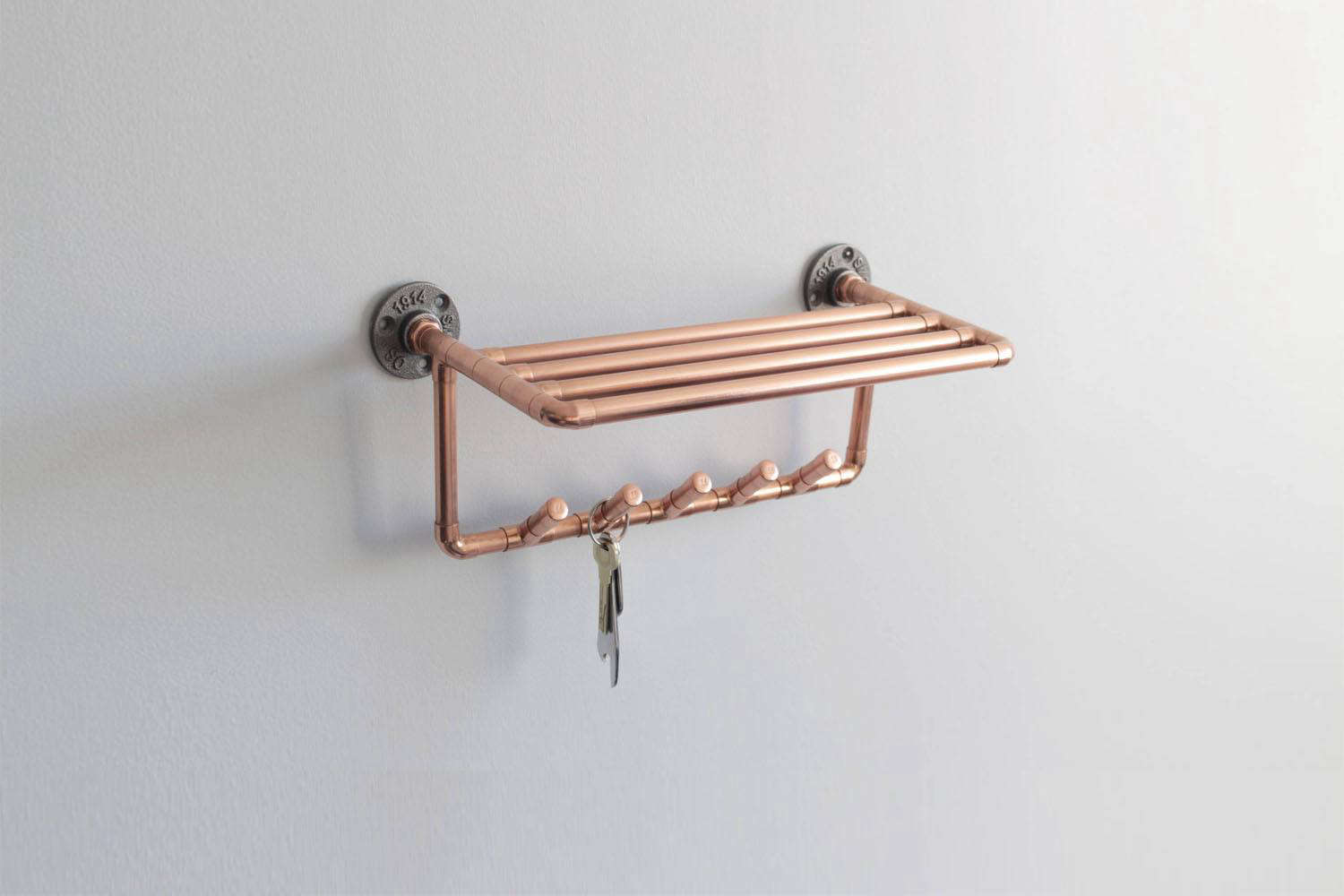
The entryway is where good intentions go to wrestle with reality. You walk in with keys, a bag, sunglasses, maybe a jacket, maybe a dog leash, and suddenly your console table looks like it lost a fight. That is exactly why a copper key rack or coat hooks with shelf can be such a smart little upgrade. It gives your daily essentials a landing strip, turns blank wall space into useful storage, and adds a warm metallic finish that feels more stylish than “I nailed random hooks into drywall and hoped for the best.”
Done well, this kind of piece is equal parts organizer and decor. The hooks handle coats, hats, bags, and keys. The shelf catches mail, wallets, candles, tiny plants, or the sunglasses you swear you will not lose again. And the copper finish? That is the secret sauce. It brings warmth, character, and a slightly elevated look that works with farmhouse, industrial, modern, vintage, and even minimal interiors that need one good-looking detail to keep them from feeling too serious.
If you are shopping for one, styling one, or writing product copy for one, the trick is not to treat it like just another wall rack. A great copper key rack with shelf solves a real problem, improves the flow of a room, and looks like it belongs there. That combination is what makes it memorable and web-worthy.
Why a Copper Key Rack With Shelf Works So Well
A wall organizer with hooks and a shelf succeeds because it handles the mess people actually create. Most homes do not need a dramatic foyer worthy of a period drama. They need a practical drop zone. Keys need a place. Coats need a place. Mail needs a place. The one thing nobody needs is another flat surface that invites clutter to multiply like rabbits with caffeine.
A copper key rack or coat hook shelf keeps storage vertical instead of letting everything spread across a bench, table, or countertop. That matters in apartments, narrow hallways, mudrooms, back doors, and those awkward “technically an entryway but really just a slice of wall” spaces. When storage goes upward, the room feels calmer and more intentional.
The copper finish also plays a larger role than people expect. While black hardware can feel sharp and brass can lean dressy, copper lands in a sweet spot. It feels warm, welcoming, and a little lived-in. It catches light beautifully without screaming for attention. In design terms, it is the friend who is stylish without posting about it every five minutes.
What Makes Copper Special in Entryway Decor
1. Warmth Without Heaviness
Copper has a reddish-brown glow that instantly softens a wall. In a white entryway, it adds warmth. Against dark paint, it stands out with a rich, moody edge. Paired with natural wood, it looks collected and grounded. Paired with marble, concrete, or matte black accents, it reads more modern and architectural.
2. A Finish That Ages With Character
One of copper’s most charming qualities is that it does not stay frozen in time. Depending on the finish, it may develop a deeper tone or soft patina over time. For many homeowners, that mellow evolution is part of the appeal. It gives the piece personality instead of keeping it in permanent showroom mode. If your design style leans collected, vintage, handmade, or European-inspired, copper’s changing character can actually make the rack look better as it gets used.
3. Style Flexibility
A copper wall rack can move across design styles more easily than you might think. In a farmhouse home, it looks charming with distressed wood and baskets. In a modern home, it adds contrast against streamlined walls and simple mirrors. In an eclectic home, it can tie together old and new pieces without feeling forced. Even in coastal or Scandinavian spaces, a soft copper accent can keep the palette from feeling too cold.
Best Places to Use a Copper Key Rack/Coat Hooks With Shelf
Entryway
This is the obvious star location. Install the rack near the front door so keys, light jackets, and everyday bags have a designated home. Add a mirror above or beside it, and the whole area suddenly looks less like a dumping ground and more like you have your life together. Whether or not that is true is between you and your overflowing tote bag.
Mudroom or Back Door
Families tend to use the back door like a backstage area. Shoes, backpacks, umbrellas, and sports gear appear out of thin air. A hook-and-shelf unit helps contain the chaos. Use hooks for outerwear and bags, and use the shelf for small baskets labeled gloves, dog stuff, sunscreen, or “things we keep forgetting.”
Kitchen Side Entrance
In homes where the side or garage entrance leads straight into the kitchen, this type of rack helps stop clutter before it migrates to the counter. Hang aprons, reusable shopping bags, and light jackets. Use the shelf for mail, car keys, and grocery lists.
Bedroom or Walk-In Closet
A copper hook shelf is not limited to front doors. In a bedroom, it can hold robes, tomorrow’s outfit, jewelry pouches, or handbags. In a closet, it can serve as a polished finishing station for accessories. The shelf becomes a place for perfume, a watch tray, or a tiny decorative box.
How to Choose the Right One
Look at the Hook Count
Start with your household habits, not just aesthetics. A single person might be fine with three or four hooks. A family of four probably needs more breathing room. If the hooks are too close together, everything overlaps and the rack turns into a fabric traffic jam. If the hooks are too few, you will be right back to tossing things on a chair.
Check Shelf Depth
The shelf should be useful, not symbolic. A very shallow shelf may be fine for mail and sunglasses, but not for a basket, candle, or catchall tray. Think about what you want it to hold every day. Keys and lip balm? Fine. A plant, wallet, and stack of unopened mail that you pretend is “important paperwork”? You need more depth.
Think About Materials
Many pieces mix materials, and that is usually a good thing. Wood adds warmth and body. Metal hooks add durability. A copper or copper-look finish gives the piece its visual identity. If you want a more premium feel, look for solid materials and sturdy construction. If you are styling a budget-friendly space, even a simpler unit can look upscale if the proportions are clean and the finish is thoughtfully matched to the room.
Match the Scale to the Wall
A tiny rack on a big empty wall can look stranded. A giant rack in a narrow hallway can feel bulky and bossy. Measure the wall first. Then think about what else lives nearby: a mirror, bench, shoe tray, art, or light switch. The best wall organizer is the one that fits like it was meant to be there, not the one that wins an arm-wrestling match with the space.
Pay Attention to Installation
The prettiest rack in the world is not helpful if it droops under one coat and a handbag. Look for reliable hardware, clear mounting instructions, and a setup appropriate for your wall type. If the rack will carry heavier outerwear or bags, secure installation matters a lot. In other words, this is not the moment for “close enough” energy.
How to Style It So It Looks Intentional
The goal is function with charm. A copper key rack with shelf should not look overdecorated, but it also should not look like an afterthought.
- Add one small tray or bowl: This keeps keys, coins, or earbuds from doing their usual disappearing act.
- Use a plant or dried stems: A little greenery softens the hardware and makes the shelf feel alive.
- Hang items with variety: A tote, scarf, and jacket look more relaxed than five identical dark coats stuffed together.
- Pair with a mirror: A mirror visually expands the entryway and makes the setup feel complete.
- Keep one hook empty: This sounds minor, but it makes the whole arrangement feel breathable and ready for guests.
If your style is minimal, keep the shelf almost bare and let the copper finish do the talking. If your style is cozy and layered, add a candle, framed mini art, or a woven basket. If your style is somewhere between “organized adult” and “person who buys decorative bowls for emotional support,” welcome, you are among friends.
Color Pairings That Make Copper Shine
Copper works beautifully with a surprising number of palettes. White and warm beige let it glow. Charcoal and navy create drama. Sage green, olive, and dusty blue make it feel earthy and relaxed. Black adds sharp contrast. Walnut, oak, and reclaimed wood bring out its warmth. If you are designing an entryway around a copper hook shelf, try repeating the finish in one or two other places, such as a picture frame, lamp base, mirror trim, or cabinet pull. That repetition makes the room feel cohesive rather than random.
Cleaning and Caring for Copper-Finish Hardware
Care depends on whether the piece is solid copper, unlacquered, sealed, or simply copper-toned metal. In practical terms, gentle care is usually the safest approach. Dust regularly, wipe with a soft cloth, and skip harsh scrubbing unless the manufacturer specifically recommends it. Some people love a bright polished look. Others prefer the richer, darker character that develops over time. Neither is wrong. This is one of the rare home decisions where “shiny” and “moody” are both valid personality types.
If you want to preserve a newer, brighter finish, keep the surface dry and clean up fingerprints or splashes promptly. If you love patina, relax a little and let the metal develop its own story. A well-used entryway piece should not look sterile anyway. It should look like it belongs to people who actually live there.
Who Should Buy a Copper Coat Hook Shelf?
This kind of organizer is ideal for renters who need compact storage, homeowners creating a polished drop zone, families trying to reduce entryway chaos, and decorators who want practical storage that still looks like decor. It is especially useful if you have:
- A small or narrow entryway
- No coat closet near the front door
- A habit of losing keys in spectacularly boring places
- A love for warm metallic accents
- A need to combine storage and display in one wall-mounted piece
Common Mistakes to Avoid
Choosing Style Over Function
Yes, the sculptural copper hooks are gorgeous. No, they are not helpful if they cannot comfortably hold the items you actually use. Beauty is lovely. Utility is what keeps your morning from starting with a scavenger hunt.
Overloading the Shelf
The shelf is there to support the setup, not become a junk drawer without walls. Keep only everyday items or a few decorative elements up top. When the shelf gets too crowded, the whole rack feels stressed, and frankly, so do you.
Ignoring the Room Around It
A copper rack should connect to the rest of the space. Repeat the tone elsewhere or balance it with wood, textiles, or art. If it is the only warm metallic item in a sea of cold gray, it may look accidental instead of intentional.
Final Thoughts
A copper key rack or coat hooks with shelf is one of those rare home pieces that earns its wall space. It helps organize the daily mess, improves the flow of a room, and adds visual warmth at the same time. That combination is what makes it so appealing. It is not just storage. It is a tiny system for making the front end and back end of your day easier.
If you choose the right size, install it properly, and style it with restraint, it can turn a forgettable stretch of wall into a hardworking focal point. And unlike many so-called “life-changing” home products, this one actually has a decent shot at changing at least one small part of your life: the part where you stop yelling, “Has anyone seen my keys?” while standing next to them.
Experiences With a Copper Key Rack/Coat Hooks With Shelf
People tend to underestimate how much impact one well-placed wall organizer can have until they live with it. The most common experience is not dramatic design bliss. It is relief. Relief that the keys are in the same place every morning. Relief that the entryway floor is not wearing three tote bags and a denim jacket like a costume. Relief that a wall once doing nothing now quietly handles the first five minutes of coming and going.
In a small apartment, a copper key rack with shelf often becomes the entire entryway strategy. There may be no closet, no mudroom, and barely enough room to turn around without bumping a shoe. In that setup, the rack becomes a miniature command center. One hook for the daily bag, one for a jacket, one for the dog leash, one for the umbrella, and suddenly the space feels workable. The shelf usually ends up holding a tray for keys, sunglasses, and mail. It is small, but it changes the rhythm of the room in a big way.
In family homes, the experience is a little more chaotic but just as useful. A copper hook shelf by the back door can become the place where reality gets sorted. School lanyards, baseball caps, light coats, and reusable grocery bags all compete for territory, but at least they are competing on the wall instead of the floor. Parents often find that the hooks create visual rules without needing a lecture. Kids learn where their stuff belongs because the storage is obvious and reachable. That alone deserves a round of applause and possibly cake.
There is also a decorative experience that people mention a lot: copper warms up a space fast. A plain hallway with white paint and not much personality can suddenly feel more finished once a copper-accented rack goes up. Even before it is fully styled, the finish reflects light in a softer, richer way than flat black or chrome. Add a small mirror, a woven basket, or a little plant, and the wall starts looking curated instead of forgotten.
Another real-world experience is that the shelf changes behavior. Without a shelf, small items wander. With a shelf, they tend to gather in one manageable zone. Wallet, mail, lip balm, headphones, receipts you absolutely meant to deal with three Tuesdays ago, all of it finally has a defined home. The shelf does not magically make people organized, but it removes one excuse for not being organized, which is honestly close enough.
Over time, people also grow attached to the way the piece ages. A copper-toned rack can pick up subtle character from regular use, and that often makes it feel more personal. Instead of staying frozen and untouchable, it becomes part of the daily routine. It is there on rushed school mornings, rainy evenings, grocery hauls, and those awkward moments when you come in carrying too many things and try to close the door with your elbow like a determined raccoon. Practical objects that survive real life gracefully tend to become favorites.
That is probably the best way to describe the experience overall: it is a small upgrade that keeps proving itself. It looks good, works hard, and asks very little in return. In home design, that is a strong résumé.