Paper does not usually get star treatment. Most of the time, it lives a humble life as a grocery list, a receipt, or that mysterious note in your junk drawer that just says “call Mike” with zero context. But in the hands of the right artist, paper stops being paper and starts behaving like a stage, a movie set, and a punchline all at once.
That is exactly what makes artists who recreate famous pop culture characters with paper so mesmerizing. A flat cutout becomes Mario mid-race. A supermarket potato suddenly turns into a Dune sandworm moment. A washing machine becomes a turntable. And somehow, with scissors, timing, perspective, and a delightfully mischievous brain, ordinary life starts looking like it was co-directed by Spielberg and a kid with unlimited imagination.
One of the strongest modern examples of this style is Rudy Willingham, a Seattle-area artist and creator whose paper cutouts have turned real-world environments into funny, handmade pop culture scenes. His work is clever on first glance, but the more you sit with it, the more impressive it becomes. These are not random jokes on cardstock. They are tightly composed visual ideas that rely on timing, framing, cultural memory, and an artist’s ability to make the familiar feel new again.
When Paper Stops Acting Like Paper
The appeal of Willingham’s work starts with a simple magic trick: he makes viewers forget the material. Instead of seeing “a paper cutout held in front of something,” you see a complete scene. That is a huge difference. In one setup, a sushi conveyor belt becomes a real-world version of Mario Kart. In another, a potato in a grocery store suddenly reads as a sandworm carrying Paul Atreides. A Valentine-themed image nods to Titanic. Elsewhere, movie references, memes, cartoon icons, athletes, and music figures slide into daily life like they had been hiding there the whole time.
That transformation is what separates good paper art from unforgettable paper art. Plenty of people can draw a recognizable character. Fewer can drop that character into a street corner, a kitchen appliance, or a store aisle and make the placement feel inevitable. The best pieces create that wonderful reaction every artist wants: “Wait, why does this make so much sense?” It is the visual equivalent of a perfect joke told with no wasted words.
There is also a childlike quality to the whole thing, and that is a compliment. Great paper art often taps into the instinct people had as kids when clouds looked like dragons and table legs looked like robot knees. Willingham’s work leans into that way of seeing. He does not just decorate the world. He reinterprets it. In his hands, the everyday becomes a co-star.
Why Pop Culture Characters Work So Well in Paper Art
They Are Instantly Recognizable
Pop culture characters are visual shorthand. Mario’s cap, Bruno’s silhouette, a movie hero’s pose, or a familiar athlete’s movement can be identified in seconds. That instant recognition matters because paper art often works fast. The viewer is not standing in a gallery with an audio guide and a dramatic scarf. The viewer is scrolling, walking, laughing, pausing, and then sharing. Pop culture gives the artist a shortcut into the audience’s memory.
They Carry Nostalgia Without Needing Explanation
Characters from movies, TV, comics, music, and games come with emotional baggage, in the best possible way. They remind people of childhood bedrooms, midnight premieres, game nights, favorite songs, and group-text obsessions. So when an artist recreates them in paper, the result is not just technically impressive. It is emotionally sticky. The viewer already knows the reference, which means the artist can spend more energy surprising them with the setting.
They Turn Humor Into a Visual Language
Paper art and pop culture are a terrific comedy duo. One provides the icon; the other provides the twist. A paper character placed against the right real-world object can create a joke without any caption at all. That matters online, where attention spans are shorter than a goldfish’s weekend plans. The best paper-pop-culture pieces are immediate, readable, and weirdly satisfying.
But there is something deeper happening too. Contemporary art has drawn from cartoons, comics, and mass media for decades. Artists working in pop and neo-pop traditions have long understood that familiar characters are not lowbrow leftovers. They are cultural symbols. When a paper artist borrows from that language, the result can be playful, nostalgic, critical, or all three at once. It can feel like fan art, design, sculpture, street art, and visual commentary sharing the same tiny stage.
The Real Skill Hiding Behind the “Simple” Look
This kind of work looks deceptively easy, which is usually how you know it is not easy at all. The medium is simple, but the execution is not. To make a paper character feel alive in a real setting, the artist has to control scale, perspective, light, camera angle, and timing. If the cutout is off by an inch, the illusion collapses. If the background is too busy, the character gets lost. If the motion does not line up, the joke dies on impact.
That is especially true when the work moves beyond a single image into stop-motion or sequential storytelling. In Willingham’s commercial and music-related projects, the labor expands fast. One Lil Nas X piece reportedly used dozens upon dozens of cutouts. A branded campaign for Whole Foods involved hundreds of cutouts and weeks of printing and cutting before filming even began. That level of craft is the opposite of casual. It is meticulous, time-intensive, and stubborn in the way all good handmade work tends to be.
There is also design intelligence behind the humor. The strongest paper artists know where the eye lands first. They understand silhouette. They simplify forms without making them boring. They edit aggressively. They know that a paper piece does not need fifty details if three details will do the job better. In cut-paper art, subtraction is not a limitation. It is the whole sport.
That is why the work feels clean instead of cluttered. The artist is not trying to imitate reality with a million tiny marks. He is building just enough information to trigger belief. It is almost like stage magic: show the audience exactly what they need, hide the rest, and let their brain do the final leap.
From Internet Delight to Serious Craft Tradition
It would be easy to look at viral paper-cutout art and treat it like disposable internet fun. That would be a mistake. Paper has a long history as an artistic, engineered, and illusion-based medium. Pop-up books, tunnel books, kirigami, paper sculpture, collage, and cut-paper portraiture all prove that paper has never been limited to “flat thing with words on it.” For centuries, artists and makers have used cuts, folds, layers, and perspective to create motion, depth, and surprise.
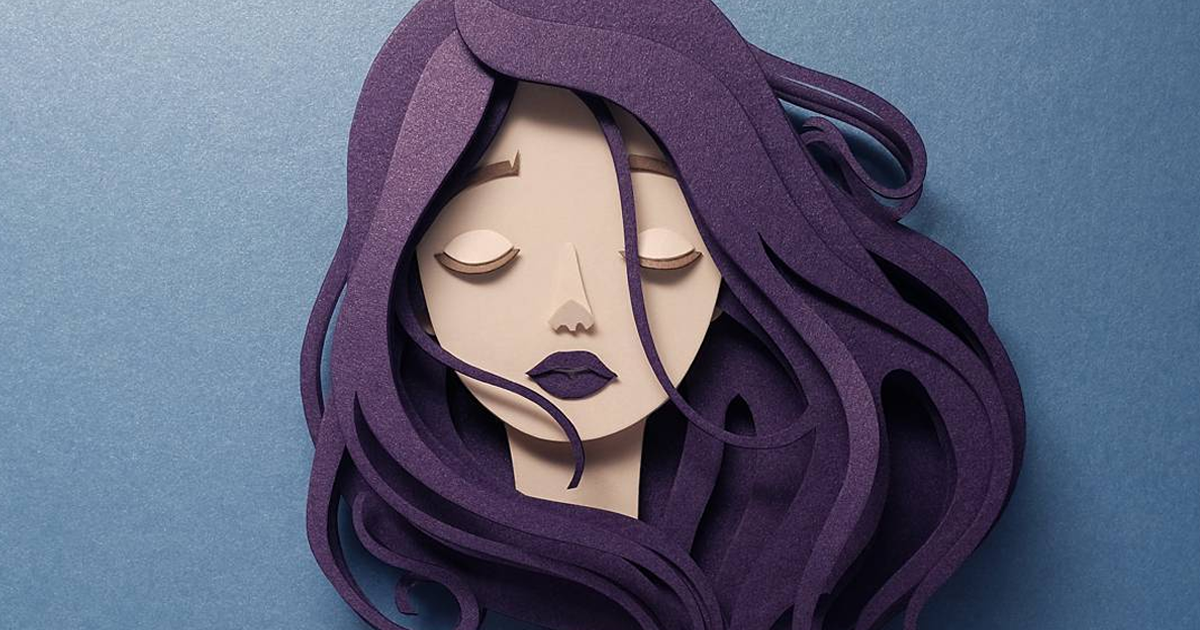
That history matters because it gives modern paper artists a much richer foundation than people assume. Today’s social-media-friendly paper illusion may look playful, but it sits inside a larger craft tradition built on patience and precision. Contemporary artists have used paper to create portraits, dioramas, impossible structures, nostalgic objects, and immersive miniature worlds. Some cut by hand. Some layer sheets for depth. Some build sculptural forms that unfold like engineered puzzles. Different methods, same core truth: paper is far more physically expressive than it gets credit for.
Willingham’s style feels especially modern because it merges that tradition with street photography, meme logic, advertising polish, and pop fandom. It has the old-school handmade discipline of cut-paper work, but it also understands how people consume images now. That hybrid quality is a big reason the work lands so hard. It is crafted like an artifact but delivered like a joke your smartest friend posted at exactly the right moment.
Why Handmade Pop Culture Art Feels So Good Right Now
We live in an era of filters, frictionless effects, AI-generated images, and digital perfection that can make everything start to feel a little suspiciously smooth. Against that backdrop, handmade paper art feels refreshing. It has edges. It has texture. It has tiny imperfections that quietly tell the viewer, “Yes, a human being was here, probably surrounded by scraps and caffeine.”
That tactile quality is part of the emotional pull. Even when the final piece appears on a screen, you can still sense the scissors, the printouts, the positioning, the failed attempts, the rearranging, the second-guessing, and the “okay, this angle finally works” moment. The analog look is not just aesthetic frosting. It is evidence of labor.
And audiences respond to that evidence. Handmade work often feels warmer because it carries the artist’s decision-making in visible ways. A digital effect can be spectacular, but paper introduces fragility, and fragility creates tension. The viewer knows, even subconsciously, that paper can bend, tear, wrinkle, or flop over in the wind like a diva who missed rehearsal. When the final image still works beautifully, the craft feels more impressive.
There is also something deeply satisfying about seeing massive pop culture icons translated into humble material. A blockbuster character built from paper becomes less corporate and more personal. The image stops feeling like brand property and starts feeling like creative conversation. That shift matters. It reminds us that fandom is not just consumption. It can also be reinterpretation, remix, tribute, and playful invention.
What Creators Can Learn From This Kind of Paper Work
Idea First, Material Second
The lesson is not “go buy cardstock.” The lesson is to start with the concept. The best paper pieces are powered by a strong visual idea, not by craft for craft’s sake. If the concept is weak, no amount of cutting will save it.
Use Constraints Like Fuel
Paper is limited. That is exactly why it works. Limited materials force strong choices. They push artists toward clarity, silhouette, and composition. Constraints are not always the enemy of creativity. Sometimes they are the reason creativity stops wandering around and finally gets to work.
Make the Everyday Do Some Acting
One of the smartest things about Willingham’s work is that the background is never passive. A machine, shelf, skyline, or object becomes part of the narrative. That is a useful reminder for any creator: your environment is not just where the work happens. It can be part of the work.
The Bigger Idea: Everything Can Become a Stage
At its core, this style of paper art is not really about paper. It is about perception. It is about training yourself to see a city, a store, a hallway, or a kitchen as raw material for visual storytelling. That mindset is what makes the art memorable. The pop culture references pull people in, but the transformation keeps them there.
That is why the best examples feel joyful rather than gimmicky. They suggest that creativity is not locked inside expensive software, giant studios, or intimidating art institutions. Sometimes it is just a sharp eye, a small cutout, and the willingness to look at the world sideways. Literally sideways, in some cases, because perspective is doing a lot of overtime here.
So yes, these pieces are funny. Yes, they are internet-friendly. Yes, they make excellent “how is this even paper?” content. But they also point to something bigger: people still crave wit, texture, and the unmistakable fingerprints of real craft. In a culture drowning in endless images, the handmade image still knows how to stop traffic.
Experience: Why Seeing Pop Culture Rebuilt in Paper Feels So Weirdly Magical
There is a very specific pleasure in encountering paper art that recreates famous pop culture characters, and it is not the same pleasure you get from a slick digital illustration or a polished 3D render. It hits differently. Part of the fun is surprise, of course. Your brain recognizes the character first, then recognizes the material second, and for one tiny glorious second it has no idea which reaction it is supposed to prioritize. “Oh, that is Mario,” your mind says. Then a beat later: “Wait, that is paper. Why am I emotionally invested in paper Mario driving through a sushi conveyor belt?”
That tiny delay is where the magic lives. The viewer experiences recognition and discovery at the same time. With a movie still or a poster, the character is expected. With a paper recreation, the character feels rescued from the giant machinery of entertainment and brought back into the human scale. Suddenly the icon is not locked behind corporate branding, visual effects budgets, and a 90-minute runtime. It is right there in front of you, cut by hand, slightly fragile, and somehow more charming because it could absolutely be destroyed by one enthusiastic sneeze.
The experience also taps into memory in a powerful way. Paper is one of the first art materials most people ever touch. Before many people knew what composition or design even meant, they were cutting, folding, gluing, sketching, and making glorious little disasters on construction paper. So when an artist uses paper to recreate pop culture, the result feels both advanced and familiar. It can trigger the same instincts as childhood craft time, but with the sophistication of a professional visual joke. That combination is unusually potent. It makes adults feel clever, nostalgic, and entertained all at once.
And then there is the physicality. Paper has edges. It casts tiny shadows. It behaves like an object, not just an image. Even when viewed on a phone screen, you can sense that physical presence. You know someone had to print it, cut it, carry it, position it, and hope the wind did not suddenly decide to become the final art director. That awareness changes the emotional temperature of the work. It feels less disposable. It feels earned.
There is another reason these pieces stick with people: they make the world feel more playable. A grocery store becomes a movie set. A city sidewalk becomes a comic panel. A household appliance gets promoted to supporting actor. That shift is oddly comforting. It suggests the world is still open to reinterpretation. It reminds viewers that imagination is not just for kids, and that creativity does not disappear because adulthood shows up waving bills and calendar alerts.
In that sense, the experience is bigger than fandom. Even if someone does not know every reference, they can still feel the delight of transformation. They can still appreciate the wit required to match object and character so precisely. They can still see the generosity in the act itself. Because that is what good paper pop-culture art often feels like: generous. It says, “Here is a familiar thing you love, but let me show it to you in a way that makes life feel a little lighter for a second.” Honestly, in a world that can be aggressively exhausting, that is not a small achievement. That is a skill. And yes, in this case, it is paperwork worth applauding.
Conclusion
Artists who recreate famous pop culture characters with paper are doing much more than making clever fan art. At their best, they combine classic craft discipline with contemporary visual culture, turning flat material into layered experience. Rudy Willingham’s work shows how powerful that combination can be. His paper cutouts are funny, yes, but they are also sharp examples of how perspective, nostalgia, humor, and handmade skill can collide to create something fresh.
In the end, the genius of this kind of paper work is not that it makes characters look real. It is that it makes the real world look more imaginative. And that is the kind of special effect no blockbuster budget can fully replace.