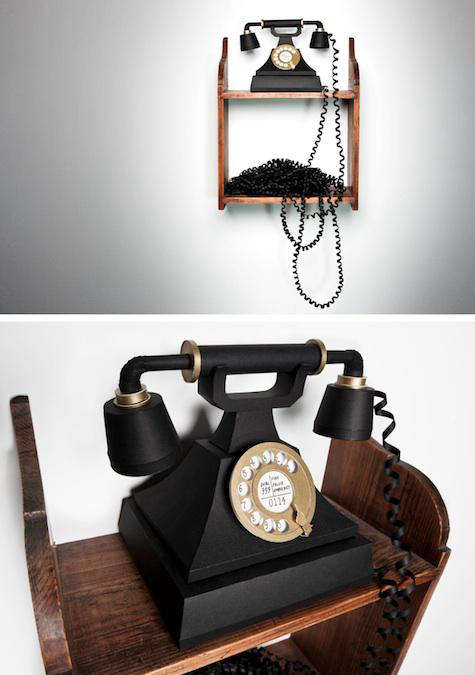
London has never been shy about drama. It has fog, double-decker buses, rebellious fashion, world-class galleries, and enough historic architecture to make your camera roll beg for mercy. But tucked into the city’s design imagination is a quieter kind of spectacle: The Makerie Studio, the paper-art collaboration of Julie Wilkinson and Joyanne Horscroft. Their work proves that paper is not merely something you lose tax forms under. In the right hands, it becomes sculpture, set design, fashion fantasy, photographic theater, and a tiny architectural rebellion.
Known for intricate three-dimensional paper sculptures, Makerie Studio works across art, photography, advertising, window installations, editorial imagery, and special projects. The studio’s creative footprint connects London with Oslo, New York, and Milan, but its London presence gives the work a special context: a city where old-world craft and contemporary visual culture constantly bump elbows, apologize politely, and then collaborate.
This article explores Art & Photography: The Makerie in London through the lens of paper sculpture, visual storytelling, set design, and the growing appreciation for handmade detail in a digital-first world. It is also a love letter to patient craft, because anyone who can turn paper into jewel-toned flowers, fantastical creatures, and luxury campaign showpieces deserves applause, tea, and probably a very organized drawer of blades.
The Makerie Studio: Where Paper Stops Behaving Like Paper
The Makerie Studio was founded by Julie Wilkinson and Joyanne Horscroft, two creatives who met while studying graphic design in the United Kingdom. What began as a shared interest in paper engineering evolved into a studio known for detailed, handmade showpieces that sit somewhere between sculpture, illustration, fashion set design, and photographic installation.
The word “paper” can sound humble, even ordinary. We use it for grocery lists, receipts, school notes, and that one mysterious document we swear we filed properly. Makerie Studio treats paper as a luxury material. Their pieces are cut, layered, folded, shaped, embellished, and staged until they feel like artifacts from a storybook museum. The result is delicate but not fragile in spirit. These artworks have presence. They pose for the camera like they know their good side.
In London’s visual culture, that matters. The city is home to galleries, fashion houses, editorial studios, window displays, and advertising agencies that understand the value of a memorable image. Makerie’s work fits naturally into this environment because it is both handmade and highly photogenic. It rewards close looking while still delivering instant visual impact.
Why London Is the Perfect Stage for The Makerie
London has a long relationship with craft, print, fashion, and theatrical display. From bookbinding and textile design to luxury retail windows and museum exhibitions, the city has always understood that surfaces can tell stories. Makerie Studio’s paper sculptures feel right at home in this tradition, yet they also bring something contemporary: a visual language designed for cameras, campaigns, and scroll-stopping digital imagery.
That balance is important. Modern art and photography often live online before they are experienced in person. A sculpture must survive the unforgiving attention span of a social media feed, but it also needs enough detail to reward a viewer who pauses. Makerie’s work does both. From a distance, the pieces read as bold compositions. Up close, they reveal hand-cut petals, patterned surfaces, miniature textures, and tiny decisions that feel almost obsessive in the best possible way.
London’s creative industry also values collaboration. A single image may involve an art director, photographer, stylist, set designer, brand team, lighting crew, retoucher, and client. Makerie Studio operates beautifully within that ecosystem because its paper sculptures can become the visual anchor of a shoot. They are not background decoration. They are the scene-stealer, the lead actor, and occasionally the diva with perfect edges.
The Art of Paper Sculpture in Photography
From Flat Sheet to Photographic Drama
Paper sculpture is a fascinating medium because it begins flat. Unlike clay or metal, paper carries an expectation of thinness. Makerie Studio plays with that expectation by building volume, shadow, rhythm, and movement. The camera then completes the transformation. Light hits a folded surface. Shadows gather between layers. A petal becomes theatrical. A feather becomes architectural. A creature appears to have wandered out of a dream, slightly overdressed and fully committed.
Photography is essential to how this work is understood. A paper sculpture may exist as a physical object, but the final image often becomes the public-facing artwork. This makes lighting, angle, composition, and styling central to the creative process. Makerie’s pieces are designed not only to exist, but to perform in front of a lens.
That performance quality explains why the studio’s work appears so naturally in editorial and commercial contexts. Luxury brands, fashion campaigns, and magazines often need images that feel tactile, original, and emotionally rich. Paper sculpture can deliver all three. It has the precision of design, the warmth of handcraft, and the fantasy of illustration.
Texture, Shadow, and the Camera’s Appetite
Cameras love texture. They love edges, layers, depth, and contrast. Makerie Studio’s paper art feeds that appetite generously. A single flower can contain multiple shades, cuts, curves, and surface finishes. A creature may include scales, wings, tendrils, or ornamental patterns. These details create micro-shadows, which make the final photograph feel dimensional and alive.
This is one reason Makerie’s work stands out in a visual market crowded with clean digital renderings. Digital images can be beautiful, but handmade objects introduce small irregularities that feel human. The viewer senses that someone spent hours, days, or weeks making the piece. That time becomes part of the image. In an age of instant everything, slowness can be surprisingly luxurious.
Signature Themes: Forgotten Worlds, Rare Prints, and Beautiful Details
Makerie Studio often draws inspiration from forgotten worlds, rare prints, intricate patterns, historical ornament, botanical forms, and the small details of everyday life. That mix gives the work its distinctive atmosphere. It does not feel like minimalism. It feels like maximalism with manners.
The studio’s visual world often includes flowers, insects, birds, mythical shapes, ornate patterns, and surreal natural forms. These motifs are familiar enough to invite viewers in, but strange enough to keep them looking. A flower might appear botanical at first, then reveal itself as theatrical costume. A bird might suggest nature, fashion, and folklore all at once. The pieces feel like illustrations that escaped the page and built themselves a tiny palace.
This approach also makes Makerie Studio relevant to both art lovers and photography professionals. The work is not just decorative. It is narrative. It suggests stories without spelling them out. That open-ended quality gives photographers, editors, and viewers room to interpret.
Notable Project: “Artemis” and the Beauty of Translating Pattern into Form
One of Makerie Studio’s widely admired projects is “Artemis,” a paper bouquet inspired by House of Hackney’s dramatic floral wallpaper. The project translated a two-dimensional pattern into a sculptural arrangement, turning printed botanical drama into a three-dimensional object. The result is moody, elegant, and lush, like a Victorian greenhouse that has been invited to a fashion shoot and decided to wear jewel tones.
The brilliance of “Artemis” lies in translation. Makerie did not simply copy a wallpaper pattern. The studio interpreted its mood, rhythm, and richness through paper construction. Each flower had to work as part of a sculptural composition while still honoring the original decorative language. This is where design intelligence becomes visible. The project required digital planning, hand-building, material sensitivity, and photographic awareness.
For anyone interested in paper art photography, “Artemis” is a useful example because it shows how a flat design can become an immersive visual object. It also demonstrates why handmade set pieces remain valuable in commercial imagery. A digital background can be impressive, but a physical paper bouquet creates real shadows, real surfaces, and real presence. The camera knows the difference. So do viewers, even if they cannot always explain why.
The Makerie and Luxury Visual Storytelling
Makerie Studio’s client list and creative direction place it within the world of luxury storytelling. The studio has created work for fashion, beauty, editorial, retail, and high-end commercial projects. This makes sense because luxury brands often depend on atmosphere. They are not simply selling an object; they are selling a world around that object.
Paper sculpture is surprisingly effective for this. It can be customized to match a brand’s colors, themes, history, season, or campaign mood. It can become a window installation that stops pedestrians mid-scroll. It can become a photographic set that makes a product look as though it belongs in a dream cabinet. It can also communicate care. When a brand uses handmade paper sculpture, it sends a subtle message: details matter here.
That message is especially powerful in London, where luxury retail and editorial culture are deeply visual. Window displays are not just windows; they are tiny public theaters. Campaign images are not just product shots; they are invitations into a mood. Makerie Studio understands that the object must be beautiful, but the image must be unforgettable.
Why Handmade Art Still Matters in a Digital Age
We live in a time when images can be generated, edited, filtered, and distributed faster than anyone can finish a cup of coffee. This speed has advantages, but it can also flatten visual culture. When everything looks polished, polish stops being enough. Handmade art offers a different kind of value: evidence of touch.
Makerie Studio’s work reminds viewers that patience has texture. Every cut, fold, and layer carries the memory of a hand. That does not make the work old-fashioned. In fact, it makes it feel current. The most compelling contemporary images often combine digital planning with physical making. Makerie’s process reflects that hybrid future: precise enough for commercial production, imaginative enough for fine art, and tactile enough to stand apart from purely digital visuals.
For photographers, this matters because physical sets change the energy of a shoot. Light behaves differently on real surfaces. Models and products interact differently with handmade objects. The final image gains depth not only visually, but emotionally. It feels built, not merely assembled on a screen.
Lessons Artists and Photographers Can Learn from The Makerie
1. Start with a Strong Visual World
Makerie Studio’s projects feel cohesive because they begin with atmosphere. Whether the inspiration is botanical, historical, surreal, or ornamental, the final work appears to belong to a complete world. Artists and photographers can learn from this by thinking beyond individual objects. Ask: what world does this image come from?
2. Let Materials Lead the Story
Paper has limits. It bends, cuts, folds, tears, curls, and catches light in particular ways. Makerie does not hide those qualities; it uses them. This is a valuable reminder for creators. Materials should not always be forced to imitate something else. Sometimes the best work happens when a material is allowed to be itself, just with better posture.
3. Design for the Camera, Not Just the Room
In art photography and commercial imagery, the final photograph often matters as much as the physical object. Makerie’s sculptures are highly camera-aware. They include depth, silhouette, shadow, and detail. For photographers, this is a reminder to consider how an object will behave under light and through a lens.
4. Make Detail Feel Intentional
Detail is not the same as clutter. Makerie Studio’s work can be elaborate, but it rarely feels random. The details support the mood. They help create rhythm and visual hierarchy. This is crucial for SEO-friendly visual content too: readers may arrive for the image, but they stay when the story behind the image feels thoughtful.
The SEO Value of Writing About Art, Photography, and The Makerie
From a content strategy perspective, Art & Photography: The Makerie in London is a strong topic because it sits at the intersection of multiple search interests: paper art, London design, creative studios, photography set design, handmade sculpture, visual branding, and contemporary craft. These related keywords create natural SEO opportunities without forcing awkward repetition.
Search engines increasingly reward useful, specific, human-centered content. A shallow article might simply say, “The Makerie makes beautiful paper art.” True, but not exactly a revelation. A stronger article explains why the work matters, how it functions in photography, what makes the London context relevant, and what artists can learn from it. That depth helps readers and search engines understand the value of the page.
Good SEO for an art topic should feel like a guided gallery walk, not a robot whispering keywords into a vase. Use terms such as paper sculpture, London art studio, paper art photography, creative set design, handmade installations, and contemporary craft where they naturally belong. The goal is clarity, not keyword confetti.
The Emotional Pull of Makerie’s Visual World
Part of the appeal of Makerie Studio is emotional. The work feels wonder-filled without becoming childish. It can be elegant, dark, floral, strange, delicate, and bold all at once. That complexity gives it staying power. Viewers are not only impressed by the technique; they are invited into a mood.
This emotional pull is essential in both art and photography. Technical perfection may earn respect, but atmosphere earns memory. Makerie’s work lingers because it creates a sense of discovery. You look once and see a beautiful object. You look again and notice the construction. You look a third time and begin imagining the story behind it. At that point, congratulations: the paper has won.
Experiences Related to Art & Photography: The Makerie in London
Experiencing Makerie Studio’s work, even through photographs, can change the way you look at paper. After seeing their sculptural compositions, an ordinary sheet of paper suddenly seems less like office supply and more like a sleeping dragon. It has potential. It is just waiting for someone with patience, sharp tools, and a healthy respect for symmetry to wake it up.
For visitors interested in London’s art and photography scene, Makerie’s approach offers a useful lens for exploring the city. London rewards people who notice layers. A street may contain Georgian brick, a neon shop sign, a luxury window display, a street-style photographer, and a museum poster all within the same glance. Makerie’s work operates similarly. It layers past and present, handcraft and commercial image-making, fantasy and precision.
One practical experience inspired by Makerie is to visit London with a “detail-first” mindset. Instead of only photographing famous landmarks, look for patterns, textures, and small visual stories. Notice the cut of a shadow on a shop window. Study the floral pattern on old tiles. Look at how luxury stores arrange objects under light. Pay attention to paper goods in museum shops, book covers in independent bookstores, and packaging in design-led boutiques. London is basically a giant mood board wearing comfortable shoes.
Another meaningful experience is to try making a small paper still life before photographing it. You do not need a professional studio. Start with colored paper, scissors, a craft knife used safely, glue, and natural window light. Cut simple leaf shapes, fold them gently, layer them into a small arrangement, and photograph the result from different angles. This exercise teaches what Makerie’s work demonstrates at a masterful level: tiny changes in depth and light can completely alter the image.
Photographers can also learn from Makerie by slowing down. Many shoots move quickly, especially in digital workflows. But handmade objects demand attention. You cannot rush a paper sculpture into being. That slowness encourages better looking. It makes you notice whether a shadow is too heavy, whether a curve needs support, or whether the composition has balance. In a world obsessed with speed, this kind of slow visual thinking feels almost rebellious.
For artists, the experience is equally valuable. Makerie Studio shows that a medium does not have to be expensive to be extraordinary. Paper is accessible, but the imagination applied to it can be luxurious. That lesson is encouraging. It means creativity is not always about having rare materials. Sometimes it is about asking better questions of ordinary ones. What can this sheet become? What happens if it folds? What if a flat pattern grows into a sculpture? What if a flower is not a flower, but a stage?
For content creators and bloggers, The Makerie in London is a reminder that visual storytelling works best when it has substance behind the beauty. A pretty image may attract attention, but a thoughtful process keeps people reading. When writing about art and photography, describe the technique, the context, the emotional effect, and the broader creative lesson. Give readers something to see and something to think about.
Ultimately, the experience of engaging with Makerie Studio’s work is an experience of rediscovering wonder. It is proof that contemporary craft can be sophisticated, commercially relevant, and deeply imaginative. It also proves that paper, despite centuries of being folded into bills, forms, and awkward birthday cards, still has secrets. Makerie Studio simply knows how to coax them out.
Conclusion: The Makerie’s Quiet Spectacle
Art & Photography: The Makerie in London is more than a niche design topic. It is a window into how handmade craft continues to shape modern visual culture. Julie Wilkinson and Joyanne Horscroft have built a creative practice where paper becomes sculpture, sculpture becomes photographic story, and photographic story becomes brand atmosphere, editorial drama, or personal wonder.
The Makerie Studio stands out because it respects detail without becoming stiff, embraces fantasy without losing sophistication, and uses humble material to create unforgettable images. In London’s rich creative landscape, that combination feels especially powerful. The city loves reinvention, and Makerie reinvents paper with every cut, fold, and flourish.
If great art makes us look again, Makerie’s work succeeds beautifully. It asks viewers to slow down, lean closer, and remember that magic does not always arrive with fireworks. Sometimes it arrives as a sheet of paper, carefully cut into something impossible.
Note
This article is written in original American English for web publication. It is based on publicly available information about Makerie Studio, its founders, creative direction, paper sculpture practice, photography collaborations, and related art-design coverage. No source-link blocks or unnecessary reference placeholders are included in the body content.