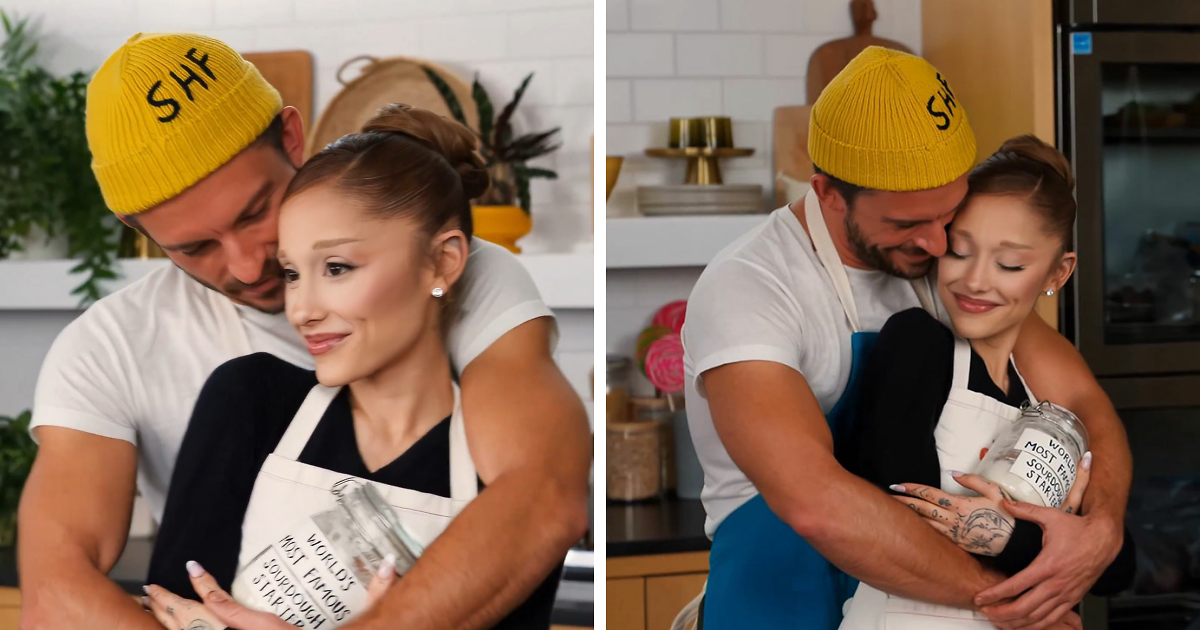
Ariana Grande and Jonathan Bailey only needed a pizza counter, a sourdough starter, and a few seconds of affectionate co-star energy to send the internet sprinting like it had just heard the first note of “Defying Gravity.” The viral moment came during a lighthearted New York Times Cooking appearance tied to Wicked: For Good, where the two stars made pizza, joked about food, and reminded fans that musical-theater people do not simply “promote a movie.” They perform friendship with Broadway-level commitment.
The clip that grabbed the most attention showed Bailey hugging Grande from behind during a playful photo-style moment. To many fans, it was adorable. To others, it was “too intimate.” To the internet, naturally, it became a full courtroom drama with no judge, too many lawyers, and at least one person yelling about pineapple on pizza. The frenzy says less about one hug and more about how celebrity culture now turns every gesture into a group project.
So, what actually happened? Why did Ariana Grande and Jonathan Bailey’s interaction spark such a loud reaction? And why do fans keep reading grand romantic novels into short promotional clips? Let’s unpack the moment, the context, the Wicked chemistry, and the larger lesson about how quickly the internet can turn a warm exchange into a trending spectacle.
The Viral Moment: Pizza, Playfulness, and a Hug Heard Around the Timeline
The interaction happened during NYT Cooking’s “Pizza Interview,” a format where celebrity guests answer questions while making pizza. Grande and Bailey, who play Glinda and Fiyero in the Wicked films, appeared together as part of the promotional cycle for Wicked: For Good. The setup was not exactly scandal central: flour, toppings, kitchen banter, and the kind of chaotic charm that happens when actors are asked to multitask with dough.
Still, one clip became the main event. Bailey embraced Grande in a warm, playful way while she smiled, and fans immediately began debating the body language. Some called it sweet co-star chemistry. Others joked about the moment being “too close.” A few social-media users dragged Grande’s dating life into the discussion, proving once again that the internet can turn a kitchen segment into a soap opera before the cheese has even melted.
Importantly, there is no solid public evidence that the interaction was anything more than affectionate friendship and promotional chemistry between co-stars. Grande and Bailey have spoken warmly about their bond, and their Wicked work naturally invites fans to notice their rapport. But noticing chemistry is not the same thing as proving a private story. That distinction matters, even if it is not nearly as clickable as a dramatic caption.
Why Fans Reacted So Strongly
1. Ariana Grande Is Always Under a Microscope
Ariana Grande has been famous for most of her life, and every era of her career has brought intense attention. Her voice, relationships, fashion, acting choices, public appearances, and even facial expressions are constantly dissected online. When a celebrity reaches her level of visibility, even casual moments can become “evidence” for whatever story fans already want to tell.
That is part of why the hug blew up. It was not just a hug in isolation. It arrived inside a much larger conversation around Grande’s personal life, her return to musical theater, her role as Glinda, and the emotional intensity of the Wicked press cycle. Fans were already watching closely. The clip simply gave them a new frame to freeze, replay, and debate.
2. Jonathan Bailey Has Become a Pop-Culture Magnet
Jonathan Bailey’s star has been rising fast thanks to Bridgerton, stage work, and his role as Fiyero in Wicked. He brings a polished, charming, theater-trained energy that reads well on camera. In interviews, he often seems relaxed, witty, and emotionally present which is exactly the kind of personality that fandoms turn into GIFs within minutes.
Bailey’s appeal also affects how people read his interactions. A friendly hug from an actor known for romantic leading-man roles may be interpreted as more dramatic than the same gesture from someone with a less romantic screen image. In other words, fans are not only reacting to Bailey the person; they are reacting to Bailey the character, Bailey the heartthrob, and Bailey the internet’s latest “please cast him in everything” obsession.
3. Wicked Already Trains Fans to Look for Chemistry
The Wicked story is built on emotional intensity. Glinda, Elphaba, and Fiyero are tied together through friendship, ambition, misunderstanding, heartbreak, and transformation. Grande’s Glinda and Bailey’s Fiyero share a complicated dynamic, so fans were already primed to watch their connection closely.
Adding fuel to the conversation, reports revealed that a Glinda and Fiyero kiss scene was filmed for Wicked: For Good but cut because it risked making their romantic connection feel too strong for the story’s later emotional direction. That detail gave fans another reason to revisit Grande and Bailey’s public chemistry. Suddenly, a playful pizza interview was not just a pizza interview. It became a bonus scene in the fandom’s imagination.
The Internet’s Favorite Hobby: Turning Body Language Into Breaking News
Online fandom has a talent for analyzing body language like it is a national-security briefing. A hand placement becomes a clue. A smile becomes a confession. A laugh becomes a five-part theory thread. In the case of Ariana Grande and Jonathan Bailey, the “intimate interaction” was interpreted through screenshots, reaction posts, jokes, and fan edits.
This is not new. Celebrity culture has always encouraged fans to look for hidden meanings. What has changed is speed. A single clip can jump from YouTube to TikTok to Instagram to X to gossip sites in hours. By the time a casual viewer sees it, the moment may already have a headline, a backlash, a counter-backlash, and several dramatic comments from people who were not in the room.
That speed creates entertainment, but it also creates distortion. A clip is not a full relationship. A photo is not a private diary. A hug is sometimes just a hug, even when the people hugging are famous, talented, attractive, and dressed like they came from a musical universe where everyone has perfect lighting.
What Ariana Grande and Jonathan Bailey’s Chemistry Really Shows
The more grounded interpretation is simple: Grande and Bailey appear comfortable with each other. They are theater people, co-stars, and collaborators who spent years inside a major musical production. Their connection reads as affectionate because they seem to share trust, humor, and performance instincts.
That kind of chemistry matters in a film like Wicked. Musical fantasy requires sincerity. If the cast feels cold or disconnected, the world of Oz loses sparkle. Grande, Bailey, and Cynthia Erivo have all been part of a promotional campaign built around emotional investment, friendship, and the transformative power of the story. Fans are responding because the cast’s bond feels visible.
In the NYT Cooking segment, that chemistry played out through food jokes, awkward pizza decisions, and gentle teasing. Bailey brought big “I have opinions about toppings” energy. Grande leaned into a lighter, slightly whimsical presence. Together, they gave fans the kind of relaxed, unscripted content that feels more revealing than a polished red-carpet answer.
The Role of “Intimacy” in Modern Celebrity Headlines
The word “intimate” is doing a lot of work in this story. In entertainment media, it often means “physically close,” “emotionally warm,” or “visually suggestive enough to make fans click.” But intimacy does not always mean romance. Friends can be intimate. Castmates can be intimate. Theater performers, especially, often develop a comfort level that looks unusually expressive to people outside that world.
Musical theater is built on trust. Actors rehearse emotionally charged scenes, learn choreography, sing close harmonies, and depend on each other’s timing. That environment can create bonds that appear intense in public because the performers are used to communicating through touch, eye contact, and exaggerated expression. Grande and Bailey’s interaction fits that world far more naturally than it fits a scandal narrative.
Still, headlines thrive on ambiguity. “Co-stars share friendly pizza moment” is accurate, but it does not exactly stop the scroll. “Intimate interaction sparks frenzy” captures the online reaction while leaving room for curiosity. The trick for responsible coverage is to describe the buzz without turning speculation into fact.
How Social Media Turned the Clip Into a Frenzy
The reaction followed a familiar pattern. First came the clip. Then came fans calling it cute. Then came jokes about jealousy, romance, and Grande’s personal life. Then came people criticizing those jokes. Then came articles explaining the reaction. Then came more people reacting to the articles about the reaction. At some point, the original pizza was probably cold.
This cycle is now a core part of celebrity promotion. Studios and stars do not need every viral moment to be perfectly controlled. Sometimes, harmless debate keeps a project visible. Wicked: For Good already had built-in attention because it concludes one of the biggest musical adaptations in recent memory. The Grande-Bailey moment added a more casual, meme-friendly layer to the campaign.
Fans love when stars seem genuinely connected. They want interviews that feel spontaneous, not robotic. The same authenticity that makes a clip charming also makes it vulnerable to overinterpretation. Grande and Bailey gave viewers a friendly moment; the internet supplied the footnotes, fan fiction, and emotional weather report.
Why the Cut Kiss Scene Added Extra Fuel
The frenzy did not happen in a vacuum. Around the same time, entertainment outlets reported that a romantic Glinda-and-Fiyero kiss scene had been cut from Wicked: For Good. Screenwriter Dana Fox explained that the scene was beautiful but risked making the Glinda-Fiyero relationship feel too passionate before Fiyero’s story moved toward Elphaba.
That behind-the-scenes detail changed how fans looked at Grande and Bailey’s chemistry. If a filmed scene was strong enough to be removed for story balance, fans naturally became more curious about what the actors brought to those roles. The public interaction then became part of a bigger conversation: how much chemistry is too much chemistry when the story needs heartbreak, redirection, and emotional clarity?
From a storytelling perspective, the cut makes sense. Wicked depends on audience sympathy for multiple characters. If Glinda and Fiyero seem too deeply attached, his later emotional shift could feel cruel rather than complicated. Cutting the kiss helped protect the arc. But from a fandom perspective, a deleted kiss is basically a treasure map with no X irresistible, frustrating, and guaranteed to generate theories.
Celebrity Friendship or Flirtation? Why the Difference Matters
It is fair for fans to enjoy chemistry. It is also fair to say a moment looks affectionate. The problem begins when viewers treat interpretation as confirmation. Grande and Bailey are performers promoting a film. Their job includes being engaging, charming, and comfortable in public. That does not mean every warm exchange has a hidden romantic meaning.
There is also a broader respect issue. Public figures may live in the spotlight, but they are still entitled to boundaries. Turning every touch into gossip can flatten real friendships into rumor fuel. It also ignores how people in creative industries often express connection differently from what audiences expect in everyday settings.
The healthiest fan response is probably the simplest one: enjoy the chemistry, laugh at the pizza chaos, appreciate the Wicked promotion, and avoid pretending that a short clip reveals anyone’s private life. That approach is less dramatic, yes. But it is also less likely to age like unrefrigerated mozzarella.
What the Frenzy Says About Ariana Grande’s Glinda Era
Grande’s Wicked era has been especially fascinating because it merges two versions of her public identity. On one side, she is a global pop star with one of the most recognizable voices in modern music. On the other, she is a lifelong theater fan stepping into a role that clearly means a great deal to her.
That emotional investment has shaped how fans read her. As Glinda, Grande leans into softness, theatricality, precision, and old-school musical comedy energy. In interviews, she often appears more delicate and formal than in earlier pop eras. Some fans love the transformation. Others analyze it intensely. The Bailey interaction landed right in the middle of that attention.
Seen through that lens, the viral hug is not only about Bailey. It is about how audiences are processing Grande’s evolution. She is not just releasing singles or walking red carpets; she is inhabiting a beloved character in a massive cultural property. Every co-star interaction becomes part of the Glinda-era scrapbook.
Why Jonathan Bailey Fits So Naturally Into the Conversation
Bailey brings a complementary energy. He is charming without seeming overly polished, theatrical without appearing stiff, and funny in a way that works well in unscripted settings. During the pizza interview, his food commentary and playful reactions gave fans plenty to enjoy beyond the hug.
His Fiyero role also makes him central to the emotional architecture of Wicked: For Good. Fiyero is not just a handsome prince-type figure; he becomes a character whose choices affect both Glinda and Elphaba. Bailey’s ability to project warmth helps make that tension believable. It also explains why fans are quick to notice chemistry with both leading women.
In short, Bailey is currently in the dangerous celebrity zone known as “everyone finds him delightful.” Once an actor reaches that stage, even a pizza topping opinion can become a headline. Calling pineapple on pizza a crime? Viral. Hugging a co-star? Viral. Existing near sourdough starter? Apparently also viral.
Experience Section: What This Viral Moment Feels Like From the Audience Side
For many entertainment fans, watching the Ariana Grande and Jonathan Bailey frenzy unfold felt familiar. You see a clip on your feed. At first, it looks harmless and cute. Maybe you smile because two co-stars seem comfortable together. Then you scroll down and discover that the comments have turned the moment into a courtroom, a comedy club, and a conspiracy board all at once.
That experience is part of modern fandom. Viewers are no longer passive consumers of celebrity content. They help build the story around it. A fan might post, “They’re adorable.” Another might say, “This feels too intimate.” Someone else adds a joke about Wicked, Glinda, Fiyero, or Cynthia Erivo. Then fan pages repost it with dramatic music. Within a few hours, people who never watched the full interview are reacting to a cropped clip as if it were the whole event.
The funny part is that the original setting was deeply ordinary. Pizza is not exactly a forbidden cinematic language. It is dough, sauce, cheese, toppings, and the occasional argument about pineapple. Yet when famous people make pizza, every laugh feels amplified. If Bailey teases Grande, fans call it chemistry. If Grande smiles, fans zoom in. If they hug, the internet starts typing like rent is due.
There is also a real lesson here for anyone who follows celebrity culture: context matters. Watching the full interview gives a different feeling than watching a five-second clip. The longer format shows two actors promoting a movie, joking through a cooking challenge, and leaning into a friendly dynamic. The short clip, separated from that context, becomes whatever viewers project onto it.
From a media-literacy perspective, this is a perfect example of how viral entertainment works. A small moment becomes content because it is visually clear, emotionally readable, and connected to stars people already care about. It has just enough ambiguity to invite debate, but not enough seriousness to require a hard news response. That makes it ideal social-media fuel.
Fans can enjoy that without going overboard. It is completely fine to say, “Their chemistry is fun,” or “That was a cute moment.” It is also fine to joke lightly about how dramatic the internet became. But it is better to avoid turning playful interactions into harsh accusations or invasive claims. Celebrities may be public figures, but a viral clip is still only a tiny slice of a much bigger life.
The best way to experience moments like this is with curiosity, humor, and a little restraint. Watch the clip. Laugh at the pizza chaos. Appreciate that Grande and Bailey are good at creating warm promotional moments. Then remember that not every affectionate exchange needs a scandal label. Sometimes the internet sees sparks because the stars are doing their job well and sometimes the sparks are just flour dust under good lighting.
Conclusion: A Sweet Moment Became a Social-Media Storm
Ariana Grande and Jonathan Bailey’s “intimate” interaction sparked frenzy because it had all the ingredients of a viral celebrity moment: beloved stars, visible chemistry, a major movie, a playful setting, and enough ambiguity for fans to debate. The hug itself was brief and affectionate. The reaction, however, became a full online event.
What makes the story interesting is not whether the internet can prove some hidden meaning. It cannot. What matters is how quickly fandom transforms casual warmth into cultural conversation. Grande and Bailey’s Wicked chemistry is clearly compelling, and the NYT Cooking appearance gave fans a relaxed glimpse of that bond. But the smartest reading is also the simplest: two co-stars shared a playful promotional moment, and the internet did what the internet does best made it dramatic, funny, messy, and impossible to ignore.
In the end, the frenzy says more about us than about them. We love chemistry. We love clues. We love a celebrity moment that lets us feel like detectives with Wi-Fi. But sometimes, the real story is just friendship, performance, and pizza. Honestly, that is still pretty entertaining.