Note: This article is written for web publication and synthesizes real historical facts from reputable science, medical-history, and biographical references without inserting source links into the article body.
Alexander Fleming is one of those historical figures who makes ranking people feel slightly unfair to everyone else. Some people invent gadgets. Some people write books. Fleming noticed a strange patch of mold on a bacterial culture plate and helped open the door to the antibiotic age. Not a bad day at the office, especially considering the “office” was a laboratory bench that, by all accounts, was not exactly winning cleanliness awards.
When people discuss Alexander Fleming rankings and opinions, they usually mean one big question: where does Fleming belong among the most influential scientists in history? Is he a top-tier medical hero? A lucky observer? An overrated name attached to a team achievement? Or all three at once? The honest answer is more interesting than a simple gold medal. Fleming deserves a high ranking, but his legacy makes the most sense when we separate discovery, development, public impact, and modern medical responsibility.
Who Was Alexander Fleming?
Sir Alexander Fleming was a Scottish physician, bacteriologist, and researcher born in Lochfield, Scotland, in 1881. He worked for much of his career at St. Mary’s Hospital in London, where he studied bacteria, infection, and the body’s defenses against disease. Before penicillin made him globally famous, Fleming had already discovered lysozyme, an enzyme found in substances such as tears and saliva that can damage certain bacteria.
That earlier discovery matters because it shows Fleming was not simply a lucky man with a messy bench. He was unusually alert to tiny biological clues. Plenty of people see odd things and throw them away. Fleming saw odd things and asked, “Why is that happening?” In science, that question is often where the magic hides.
Why Alexander Fleming Ranks So High In History
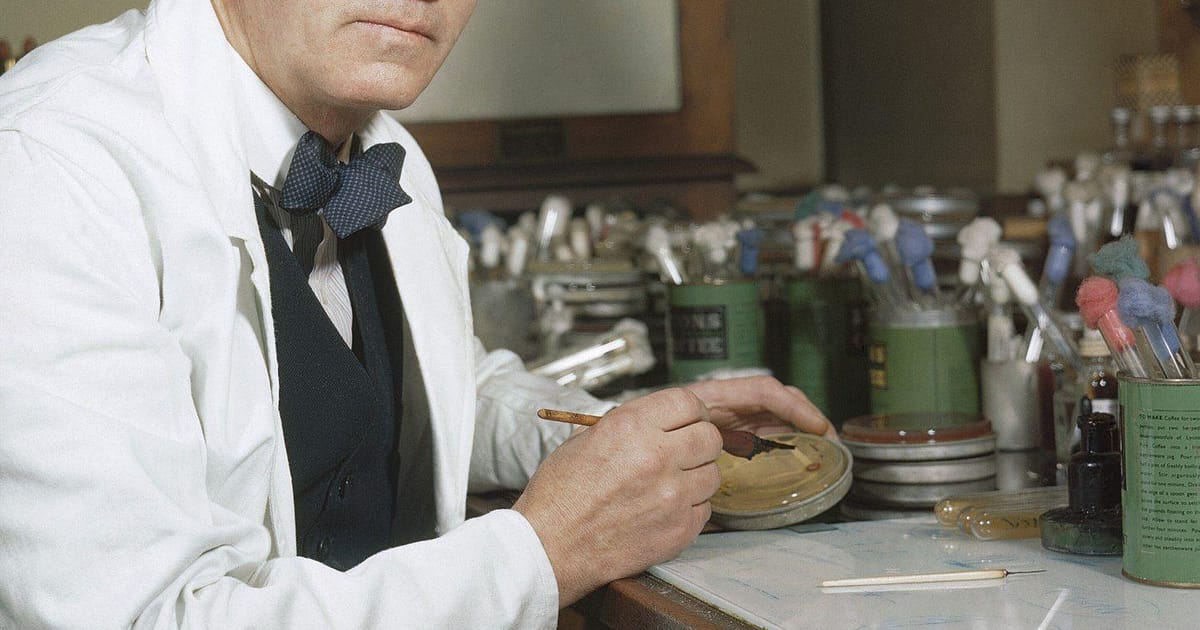
Fleming’s reputation rests mainly on his 1928 discovery of penicillin, the first true antibiotic substance widely associated with modern medicine. After returning from a vacation, he noticed that a mold contaminating one of his culture plates had killed nearby colonies of Staphylococcus bacteria. Instead of discarding the spoiled plate, he investigated it. The mold produced a bacteria-killing substance he later named penicillin.
That observation eventually changed the treatment of bacterial infections. Before antibiotics, infections from wounds, childbirth, pneumonia, and surgery could turn deadly with terrifying speed. Penicillin gave doctors a new weapon, especially during the 1940s when researchers and manufacturers helped transform it from a laboratory curiosity into a usable medicine.
Ranking Fleming By Medical Impact
In terms of medical impact, Fleming belongs near the very top. His discovery helped launch the antibiotic revolution, which reshaped surgery, battlefield medicine, infectious disease treatment, and hospital care. Antibiotics made many once-feared bacterial infections treatable and allowed modern medicine to become more ambitious. Complex operations, cancer treatments, organ transplants, and intensive care all depend on the ability to prevent or control infection.
If we were ranking scientists by how many ordinary people have benefited from their work, Fleming would be hard to push out of the top group. His discovery did not merely improve one narrow branch of medicine. It changed the risk calculations of everyday health. A cut, a dental infection, a case of pneumonia, or a surgical wound no longer had to be a potential death sentence in the same way it often had been before the antibiotic era.
Ranking Fleming By Scientific Originality
Here the opinion becomes more nuanced. Fleming did not design penicillin from scratch. He did not purify it into a reliable drug. He did not build the industrial production systems that made it available at scale. What he did was identify the antibacterial effect and understand that it mattered.
So, if ranking by pure laboratory development, Fleming shares the stage with Howard Florey, Ernst Boris Chain, Norman Heatley, and other researchers who made penicillin medically practical. Fleming found the door. Others helped build the road through it. That does not diminish Fleming; it simply gives the full story more oxygen.
Public Opinion: Why Fleming Became A Household Name
Public opinion tends to love simple origin stories, and Fleming’s story is almost too perfect. A scientist goes on vacation. A petri dish gets contaminated. Mold kills bacteria. Humanity gets a miracle drug. It has the clean dramatic shape of a movie scene, except the star is a fuzzy fungus and the supporting actor is laboratory clutter.
That story helped Fleming become one of the most recognizable scientific names of the 20th century. He was knighted in 1944 and shared the 1945 Nobel Prize in Physiology or Medicine with Florey and Chain. In popular rankings of influential people, he often appears as a symbol of scientific serendipity: the idea that chance favors a prepared mind.
But public opinion can also flatten teamwork. Many people can name Fleming but not Florey or Chain. That creates a common criticism: Fleming receives too much popular credit compared with the scientists who turned penicillin into a practical medicine. The fairest opinion is not that Fleming is overrated, but that the larger penicillin team is underrated.
The Case For Ranking Fleming Among The Greatest Scientists
There are several strong arguments for placing Alexander Fleming among the most important scientists in modern history.
1. His Discovery Changed Daily Life
Some discoveries are important mainly inside academic journals. Penicillin escaped the journal and walked straight into hospitals, pharmacies, military medicine, and family life. Its impact became visible in survival rates, infection treatment, and medical confidence. Fleming’s observation helped create a before-and-after line in health history.
2. He Recognized The Meaning Of An Accident
Accidents happen constantly in laboratories. Most are useless, annoying, or both. Fleming’s greatness was not in creating contamination. Anyone can do that by forgetting a plate. His greatness was in recognizing that the contamination had produced a meaningful biological effect. He did not see a ruined experiment; he saw a clue.
3. He Warned About Antibiotic Misuse
One reason Fleming still feels modern is that he warned early about the danger of bacteria becoming resistant to penicillin if the drug was misused. Today, antibiotic resistance is one of the major public health challenges in the United States and worldwide. That makes Fleming’s legacy more than historical trivia. It is a living warning label attached to modern medicine.
The Case Against Overranking Fleming
To rank Fleming responsibly, we also need the counterargument. Science is rarely a one-person parade. The popular version of the penicillin story can make it sound as if Fleming discovered mold, bottled medicine, and saved the world during one especially productive afternoon. Reality was messier, slower, and more collaborative.
Fleming struggled to purify penicillin and did not immediately turn it into a widely usable therapy. The breakthrough required later work by researchers at Oxford and major production efforts, including industrial fermentation methods. Without those contributions, penicillin might have remained a brilliant but limited laboratory observation.
So, should Fleming rank above the scientists who developed penicillin into medicine? That depends on the category. As the discoverer of the antibacterial substance, he ranks extremely high. As the person responsible for mass medical use, he must share credit. A mature ranking should celebrate Fleming while refusing to erase the team behind the miracle.
Alexander Fleming Compared With Other Medical Pioneers
When comparing Fleming with other medical giants, the most useful question is impact. Edward Jenner helped establish vaccination against smallpox. Louis Pasteur advanced germ theory and vaccination. Joseph Lister transformed surgery through antiseptic methods. Fleming’s contribution belongs in that same broad conversation because penicillin changed the treatment of infection at scale.
However, Fleming’s style of greatness was different. Pasteur and Lister built large systems of thought and practice. Fleming’s fame came from a discovery that required interpretation, patience, and later collaboration. His story is not “lone genius conquers nature.” It is closer to “observant scientist notices nature doing something strange and refuses to ignore it.” That is less theatrical, but far more accurate.
Best Opinions About Alexander Fleming’s Legacy
Opinion One: Fleming Was A Prepared Mind, Not Just A Lucky Man
The “lucky accident” version of Fleming’s story is fun, but incomplete. Luck placed the mold on the plate. Fleming’s training, curiosity, and experience made the discovery possible. A less careful observer might have cleaned up the mess and moved on. Fleming asked why bacteria were disappearing near the mold. That question changed medicine.
Opinion Two: His Fame Is Deserved, But Shared Credit Matters
Fleming deserves his fame, but the full penicillin story should include Florey, Chain, Heatley, and the many researchers, technicians, and manufacturers who helped make the drug usable. The best opinion is not “Fleming did everything” or “Fleming gets too much credit.” The best opinion is: Fleming made the essential discovery, and others made it medically world-changing.
Opinion Three: His Warning About Resistance May Be His Second Legacy
Fleming’s discovery saved lives, but his warning about careless antibiotic use may be just as relevant today. Antibiotics are powerful, but not magical. When overused or used incorrectly, they create pressure that helps resistant bacteria survive. Fleming saw this danger early, which makes him not only a discoverer of antibiotics but also an early voice for antibiotic stewardship.
Suggested Ranking: Where Does Alexander Fleming Belong?
If we rank Alexander Fleming among medical pioneers, he belongs in the top tier. His discovery of penicillin helped launch a new era of infection treatment. If we rank him among all scientists in history, he still belongs very high, especially because few discoveries have had such direct consequences for everyday survival.
A balanced ranking might place Fleming among the most influential medical scientists of the modern age, while clearly noting that the practical success of penicillin depended on a larger scientific and industrial network. He is not a mythic wizard who single-handedly cured infection. He is something better: a real scientist whose careful attention turned an accident into one of the greatest medical breakthroughs ever recorded.
Why Readers Still Debate Fleming
Fleming remains debated because his story touches several big themes at once: genius, luck, teamwork, fame, and responsibility. People enjoy arguing about whether he was the hero of penicillin or simply the first chapter. The truth is that he was the first chapter, and first chapters matter. Without them, the rest of the book does not exist.
His life also appeals to anyone who has ever had a messy desk and wanted to call it “creative research.” But Fleming’s messiness should not be the lesson. The lesson is observation. He noticed what others might have missed. He followed the evidence. He respected small clues. In science, that combination can be more powerful than a spotless workspace and a very expensive clipboard.
Experiences And Reflections Related To Alexander Fleming Rankings And Opinions
Thinking about Alexander Fleming’s rankings and opinions is surprisingly useful beyond the history of medicine. His story offers practical lessons about how people judge achievement, how credit gets assigned, and how breakthroughs often happen in ways that are more human than heroic.
One experience many readers can relate to is the moment when a mistake turns out to be useful. In school, work, writing, design, or research, people often rush to delete errors because errors feel embarrassing. Fleming’s story suggests a different habit: pause before throwing the mistake away. Ask what it is showing you. Of course, not every accident is a scientific revolution. Most mistakes are still just mistakes, and some are spectacularly annoying. But occasionally, a strange result is a doorway.
Another experience Fleming’s story highlights is the danger of judging success too quickly. When Fleming first studied penicillin, it did not instantly become a miracle medicine. It was unstable and difficult to purify. In modern terms, it was not exactly “launch-ready.” If Fleming’s discovery had been judged only by immediate usefulness, it might have seemed interesting but limited. Years later, with additional research and development, it became historic. That is a valuable reminder for anyone working on a difficult project: early versions rarely reveal the full value of an idea.
Fleming’s legacy also changes how we think about rankings. Public rankings often reward the most memorable name, not the whole network of contributors. That happens in science, business, entertainment, and even sports. The person attached to the famous moment becomes the symbol, while collaborators fade into the background. Fleming deserves admiration, but his story becomes richer when we also remember the people who purified, tested, produced, and distributed penicillin. A good ranking does not just ask, “Who is famous?” It asks, “Who contributed, and how?”
There is also a personal lesson in Fleming’s careful attention. Many breakthroughs begin as small observations: a pattern in data, a repeated complaint from customers, a strange behavior in a system, a detail in a conversation, or an unexpected result in an experiment. People who notice these small signals often create better outcomes. Fleming reminds us that intelligence is not only about having answers. Sometimes it is about noticing better questions.
Finally, Fleming’s warning about antibiotic resistance adds a serious modern layer to his legacy. A discovery can be life-saving and still require responsible use. That idea applies far beyond medicine. Powerful tools need wisdom. Whether the tool is an antibiotic, a technology platform, financial leverage, or artificial intelligence, the pattern is similar: use it carelessly, and the same power that helps people can create new risks. Fleming’s story is not only about the thrill of discovery. It is also about humility after discovery.
So, when ranking Alexander Fleming, the best opinion is not simply that he was lucky, brilliant, overrated, or heroic. He was a prepared observer whose discovery became world-changing through collaboration. He belongs near the top of medical history, not because the story is neat, but because its messy truth is even better.
Conclusion
Alexander Fleming ranks among the most influential medical figures in modern history because his discovery of penicillin helped transform the treatment of bacterial infections. His story is popular because it has everything: accident, curiosity, mold, Nobel-level consequences, and a laboratory bench that probably made neat freaks nervous. But the strongest opinion is the balanced one. Fleming deserves enormous credit for recognizing penicillin’s antibacterial power, while the broader penicillin story must also honor the researchers and manufacturers who made it practical medicine.
His legacy remains powerful today because antibiotics are still essential, and antibiotic resistance is still a serious challenge. Fleming’s greatest ranking may not be only as the discoverer of penicillin, but as a reminder that scientific progress requires curiosity, teamwork, and responsibility. That is a legacy worthy of a top spot.