Note: This article is written as a factual, historical, and analytical overview of publicly reported battlefield developments. It does not provide tactical instructions, technical build guidance, or operational advice.
In the Russia-Ukraine war, the sky has become crowded, dangerous, and frankly a little confusing. Once upon a time, “air-to-air missile” meant a missile fired from one aircraft at another aircraft. Simple enough. Then Ukraine looked at that tidy definition, looked at its shortage of traditional aircraft, looked at the Black Sea, and apparently asked: “What if the aircraft part was optional?”
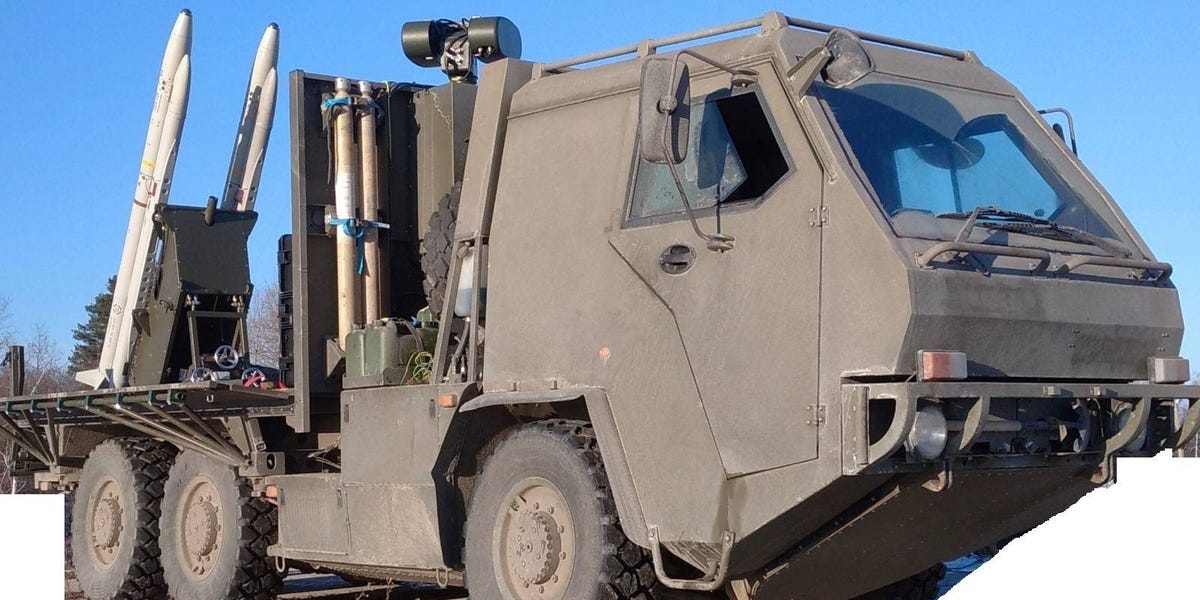
That question sits at the heart of one of the most striking aviation stories of the war: reports of air-to-air missiles being used from unconventional platforms to shoot at, damage, or destroy Russian helicopters in Ukraine and around the Black Sea theater. The most widely reported example came on December 31, 2024, when Ukraine’s military intelligence said a Magura naval drone destroyed a Russian Mi-8 helicopter and damaged another near occupied Crimea. The reported weapon was an adapted R-73, also described in Ukrainian reporting as a “Sea Dragon” missile. In plain English, a missile originally designed for aircraft was reportedly fired from a sea drone at a helicopter. Somewhere, a Cold War weapons manual probably spilled its coffee.
But behind the headline is a serious story about adaptation, attrition, air defense, and the rapid evolution of unmanned warfare. Russian helicoptersespecially Mi-8 transport helicopters, Mi-24/Mi-35 gunships, Mi-28s, and Ka-52 “Alligator” attack helicoptershave played major roles in the war. Ukraine’s answer has been a layered mix of classic air defenses, man-portable systems, drones, electronic warfare, and increasingly creative ways to put missiles where Russian pilots do not expect them.
What Does “Air-to-Air Missile” Mean in This Context?
An air-to-air missile is traditionally a guided weapon launched from an aircraft to engage another airborne target. Famous examples include the American AIM-9 Sidewinder and the Soviet/Russian R-73. These are not “big strategic missiles” in the movie-villain sense. They are short-range weapons designed for fast engagements against aircraft.
In Ukraine, however, the phrase has become more flexible. Reports have described air-to-air missiles being repurposed for air defense roles, including launch from non-aircraft platforms. That does not change their origin, but it changes the battlefield logic. Instead of waiting for a fighter jet to carry the missile, Ukrainian forces have explored ways to integrate available missiles into a broader defensive network.
This is part of a wider pattern. Ukraine has used old Soviet equipment with Western components, Western missiles with adapted launchers, commercial drones with military effects, and sea drones that make warships very nervous. The unofficial motto of Ukraine’s defense industry might as well be: “It works? Great. Bolt it oncarefully, legally, and preferably before sunrise.”
The Black Sea Incident: When a Sea Drone Reportedly Hit a Helicopter
The December 31, 2024 incident drew attention because it appeared to break a category boundary. Ukraine’s military intelligence said a Magura V5 naval drone destroyed a Russian Mi-8 helicopter during a clash near Cape Tarkhankut in occupied Crimea. The Mi-8 is a versatile Russian helicopter used for transport, support, and sometimes armed roles. According to Ukrainian statements and multiple news reports, another helicopter was hit but returned to base.
The reported weapon was an R-73 missile adapted for the maritime drone environment. The R-73 was originally designed as a short-range air-to-air missile. In this case, the key point for readers is not the technical setup, but the strategic effect: Ukraine signaled that Russian helicopters hunting sea drones could themselves become targets.
That matters because helicopters had been part of Russia’s response to Ukrainian naval drones in the Black Sea. Sea drones are small, fast, unmanned vessels that have helped Ukraine challenge Russia’s Black Sea Fleet despite Ukraine lacking a conventional large surface navy. If Russian helicopters can attack naval drones from above, then giving those drones a way to threaten helicopters changes the risk calculation.
Think of it like a chessboard where a pawn suddenly reveals it has been attending night classes in anti-air defense. It does not make the pawn invincible, but it does force the other side to stop treating it like a simple target.
Why Russian Helicopters Matter So Much
Russian helicopters have been both valuable and vulnerable throughout the war. Early in the full-scale invasion, Russian airborne and helicopter operations played a dramatic role, including around Hostomel Airport. Later, attack helicopters such as the Ka-52 became especially important during Ukraine’s 2023 counteroffensive, where they were reported to have helped slow armored advances with long-range anti-armor weapons.
The Ka-52 in particular became one of the most discussed Russian aircraft of the war. It is heavily armed, designed for attack missions, and equipped with systems intended to help it survive in contested environments. Analysts have noted that Russia adapted its helicopter tactics over time, using them more carefully after early losses. That said, Russian helicopter losses have remained significant, with open-source trackers and defense analysts repeatedly documenting destroyed or damaged aircraft.
The Mi-8 is less glamorous than the Ka-52, but it is arguably just as important. It is a workhorse: transport, logistics, evacuation, command support, electronic warfare variants, and more. Losing Mi-8s hurts because they are practical aircraft. They are the pickup trucks of military aviationexcept louder, more expensive, and much harder to parallel park.
Ukraine’s Layered Air Defense Problem
Ukraine’s challenge is not simply “shoot down helicopters.” It must defend cities, troops, energy infrastructure, supply lines, and ports from a huge menu of aerial threats: helicopters, jets, cruise missiles, ballistic missiles, glide bombs, reconnaissance drones, and one-way attack drones. No single system can cover all of that.
That is why Ukraine’s air defense has become layered. High-end systems such as Patriot are crucial against certain missile threats. NASAMS, IRIS-T, HAWK, S-300 variants, Buk systems, Stingers, Gepards, mobile fire teams, electronic warfare, and interceptor drones all contribute in different ways. The United States has also supplied Ukraine with AIM-9M missiles for air defense, along with other interceptors and air defense equipment.
The air-to-air missile story fits into that layered approach. Ukraine has treated missiles not only as weapons tied to one platform, but as interceptors that can be integrated wherever they add defensive value. That is not magic. It is engineering, testing, logistics, training, and risk management. But strategically, it shows why Ukraine’s defense ecosystem has remained difficult for Russia to solve.
From Aircraft Weapon to Air Defense Tool
The adaptation of air-to-air missiles for air defense is not entirely new in concept. Militaries have long experimented with using available missile stocks in different roles. What makes Ukraine’s case so notable is the speed and urgency of innovation under wartime pressure.
When a country faces repeated aerial attacks and limited supplies of expensive interceptors, it looks for ways to stretch every useful system. Missiles that once belonged mainly under the wing of a fighter jet may become part of a ground-based, naval, or improvised defensive arrangement. The exact technical details are not the public’s business, but the big picture is clear: Ukraine has been trying to turn scarcity into flexibility.
This is also why Western security assistance matters. U.S. support packages have included AIM-9M missiles for air defense, as well as AIM-7 and RIM-7 missiles in later packages. These deliveries reflect a broader effort to help Ukraine build an air defense network from multiple compatible and semi-compatible parts. It is less like buying a brand-new sports car and more like keeping a very complicated garage running while someone is throwing bricks through the windows.
Why Helicopters Are Vulnerable in Ukraine
Helicopters are useful because they can fly low, hover, land in rough areas, and support troops quickly. Those same qualities also make them vulnerable. Flying low can help avoid some radar threats, but it may expose helicopters to portable missiles, anti-aircraft guns, drones, and small-unit air defense teams. Flying higher may reduce some risks but increases exposure to other systems.
Ukraine’s battlefield is especially dangerous because sensors are everywhere. Drones watch roads, fields, tree lines, launch areas, and airfields. Electronic signals can reveal activity. Mobile teams can move quickly. Artillery and missiles can hit aircraft on the ground. Even when helicopters survive the air defense envelope, they may face threats while landing, refueling, or operating from forward bases.
That is one reason Russian helicopter tactics changed after early losses. Instead of bold deep penetrations, Russian helicopters often relied on standoff attacks or more cautious patterns. The Ka-52 remained dangerous, but its crews had to operate in an environment where being seen could quickly become being targeted.
The Drone Factor: A War of Improvisation
The war in Ukraine has made one thing painfully obvious: drones are not a side story. They are central characters. Aerial drones scout and strike. Naval drones threaten ships and coastal infrastructure. Ground drones carry supplies or explosives. Interceptor drones chase other drones. If drones had a union, they would be demanding top billing by now.
Ukraine’s use of naval drones in the Black Sea changed the naval balance. Russia’s Black Sea Fleet, once assumed to dominate the region, has had to adapt, disperse, and defend against relatively low-cost unmanned threats. When Ukraine reportedly added air-defense-style capability to some sea drones, it complicated Russia’s counter-drone operations further.
The helicopter incidents are important because they show a feedback loop. Russia uses helicopters to hunt drones. Ukraine modifies drones to threaten helicopters. Russia adjusts. Ukraine adjusts again. This is not a static war of fixed weapons; it is a moving contest of adaptation.
What About AIM-9 Sidewinders?
The AIM-9 Sidewinder is one of the best-known short-range air-to-air missiles in the world. U.S. security assistance announcements have listed AIM-9M missiles for Ukraine’s air defense. Public reporting has also described Ukrainian use of AIM-9-class weapons in adapted roles, including later claims involving naval drones and Russian aircraft over the Black Sea.
For this article’s helicopter focus, the most prominent publicly reported case involved the R-73 rather than the AIM-9. However, both missile families matter because they represent the same larger trend: weapons designed for aircraft being used in broader defensive architectures.
That trend is not about one “wonder weapon.” Wonder weapons make good headlines and bad strategy. The real story is integration. A missile is only as useful as the detection, command, training, maintenance, and decision-making system around it. In other words, the missile is the punchline; the air defense network is the whole joke setup.
How Reliable Are These Reports?
War reporting requires caution. Ukraine and Russia both have incentives to publicize successes and minimize losses. Some events are backed by video, geolocation, independent analysis, or confirmation from opposing sources. Others remain claims. The December 31, 2024 helicopter incident was widely reported and treated as significant, but responsible outlets noted that aspects of the engagement could not be fully independently verified at the time.
That does not mean the event should be dismissed. It means readers should separate three layers: what was officially claimed, what was visually supported, and what independent analysts could confirm. Good analysis lives in that middle zoneinterested, skeptical, and allergic to propaganda confetti.
Strategic Impact: More Than One Helicopter
The loss of a single helicopter rarely changes a war by itself. The bigger impact is behavioral. If Russian crews believe that naval drones can threaten helicopters, they may need to fly differently, engage from safer distances, use more support assets, or accept greater risk. That can make counter-drone work slower, more expensive, and less predictable.
For Ukraine, the message is equally important. It shows that innovation can offset disadvantages. Ukraine does not have a navy comparable to Russia’s traditional fleet. It does not have endless aircraft. It does not have unlimited missile stocks. Yet it has repeatedly found ways to make Russian forces defend against unexpected combinations of systems.
This is the central military lesson: modern warfare rewards flexible networks more than isolated platforms. A helicopter, drone, missile, radar, or ship is not decisive alone. What matters is how quickly each side can connect sensors, shooters, operators, and decisions.
Russian Countermoves
Russia is not standing still. It has adapted its Black Sea defenses, improved counter-drone measures, repositioned assets, and changed helicopter behavior. Russian forces have also used electronic warfare extensively, and they continue to modify tactics in response to Ukrainian innovations.
This is why the story should not be framed as “Ukraine solved helicopters.” It did not. Helicopters remain useful. Russian aviation remains dangerous. The more accurate conclusion is that Ukraine created new dilemmas for Russian aircraft operating near contested maritime and frontline areas.
That distinction matters. Wars are rarely decided by one dramatic video. They are shaped by cumulative pressure: one aircraft lost here, one base threatened there, one route made unsafe, one tactic forced into retirement. Slowly, the operating environment changes.
Lessons for Modern Air Warfare
1. Platform Labels Matter Less Than Effects
A naval drone threatening an aircraft sounds odd only if we cling to old categories. The battlefield cares less about labels and more about effects. If a system can detect, survive, and engage, it becomes part of the air defense fight.
2. Cheap Systems Can Force Expensive Responses
Unmanned systems often cost far less than the aircraft, ships, or infrastructure they threaten. Even when they fail, they can force the enemy to spend time, fuel, missiles, maintenance hours, and attention.
3. Adaptation Is Now a Core Combat Skill
The side that learns faster gains an edge. Ukraine’s missile-equipped naval drones are one example of battlefield adaptation. Russia’s counter-drone defenses are another. The contest never freezes.
4. Air Defense Is Becoming Everywhere
Air defense is no longer only a radar site and a missile battery. It can include mobile teams, electronic warfare, guns, drones, adapted missiles, and uncrewed platforms. The sky is defended by a web, not a single wall.
Experience-Based Reflections: What This Topic Teaches Readers
For anyone following the war from the outsidejournalists, students, analysts, veterans, aviation enthusiasts, or ordinary readers trying to understand a very complicated conflictthe story of air-to-air missiles shooting at Russian helicopters in Ukraine offers several useful experiences.
First, it teaches humility. Many early assumptions about the war did not survive contact with reality. Russia was expected by many observers to dominate the air. Instead, Ukrainian air defenses, dispersal, Western support, and battlefield improvisation prevented Russia from gaining uncontested control of the skies. Helicopters that looked powerful on paper still had to survive in a dense threat environment.
Second, it teaches the value of cautious reading. A dramatic battlefield claim can be true, partly true, exaggerated, misunderstood, or confirmed weeks later. The best habit is to read across multiple sources and ask: Who is making the claim? What evidence exists? Has the other side indirectly confirmed it? Are independent analysts cautious or confident? This approach may not be as exciting as instantly declaring every video “historic,” but it is much better for your blood pressure and your credibility.
Third, it shows that innovation often comes from pressure. Ukraine’s adaptations did not emerge from a comfortable laboratory with unlimited time. They emerged from urgent need. When traditional options are limited, engineers and commanders look for combinations that create new defensive effects. That does not make every idea successful, but it does create a culture of experimentation.
Fourth, it reminds readers that technology is never separate from people. Behind every drone, helicopter, missile, and radar screen are crews, technicians, commanders, factory workers, intelligence analysts, and civilians living under the consequences of war. It is easy to discuss systems as if they are chess pieces. Real war is not a game board. The human stakes are enormous.
Fifth, the topic highlights the future of military competition. Other countries are watching Ukraine closely. The lessons are not limited to the Black Sea. Navies, air forces, and armies worldwide are studying how unmanned systems interact with crewed aircraft, how older missiles can be adapted into new roles, and how layered defenses can survive under pressure.
Finally, this story offers a broader lesson about resilience. Ukraine’s defense has often depended on making imperfect tools work together. That is not glamorous, but it is powerful. In real life, success often looks less like a shiny miracle machine and more like a messy network of people solving problems faster than the problems can multiply. In Ukraine, that messy network has changed how the world thinks about helicopters, missiles, drones, and the future of air defense.
Conclusion
Air-to-air missiles shooting at Russian helicopters in Ukraine may sound like a niche aviation headline, but it captures one of the defining shifts of the war. Weapons are crossing old boundaries. Sea drones are threatening aircraft. Missiles designed for one role are appearing in another. Helicopters remain valuable, but they operate in a sky where danger can come from unexpected directions.
The reported Magura drone engagement near Crimea was not just about a Mi-8 helicopter. It was about the changing relationship between crewed aircraft and unmanned systems. It showed that in modern war, the platform carrying the weapon may matter less than the network that finds, tracks, and threatens the target.
For Russia, the lesson is uncomfortable: helicopters used to hunt drones may themselves become hunted. For Ukraine, the lesson is encouraging but not simple: innovation can create surprise, but sustaining that advantage requires constant adaptation. For the rest of the world, the message is clear. The future of air defense will be layered, improvised, unmanned, and deeply connected. Also, it may occasionally involve a sea drone doing something that makes aviation historians blink twice.