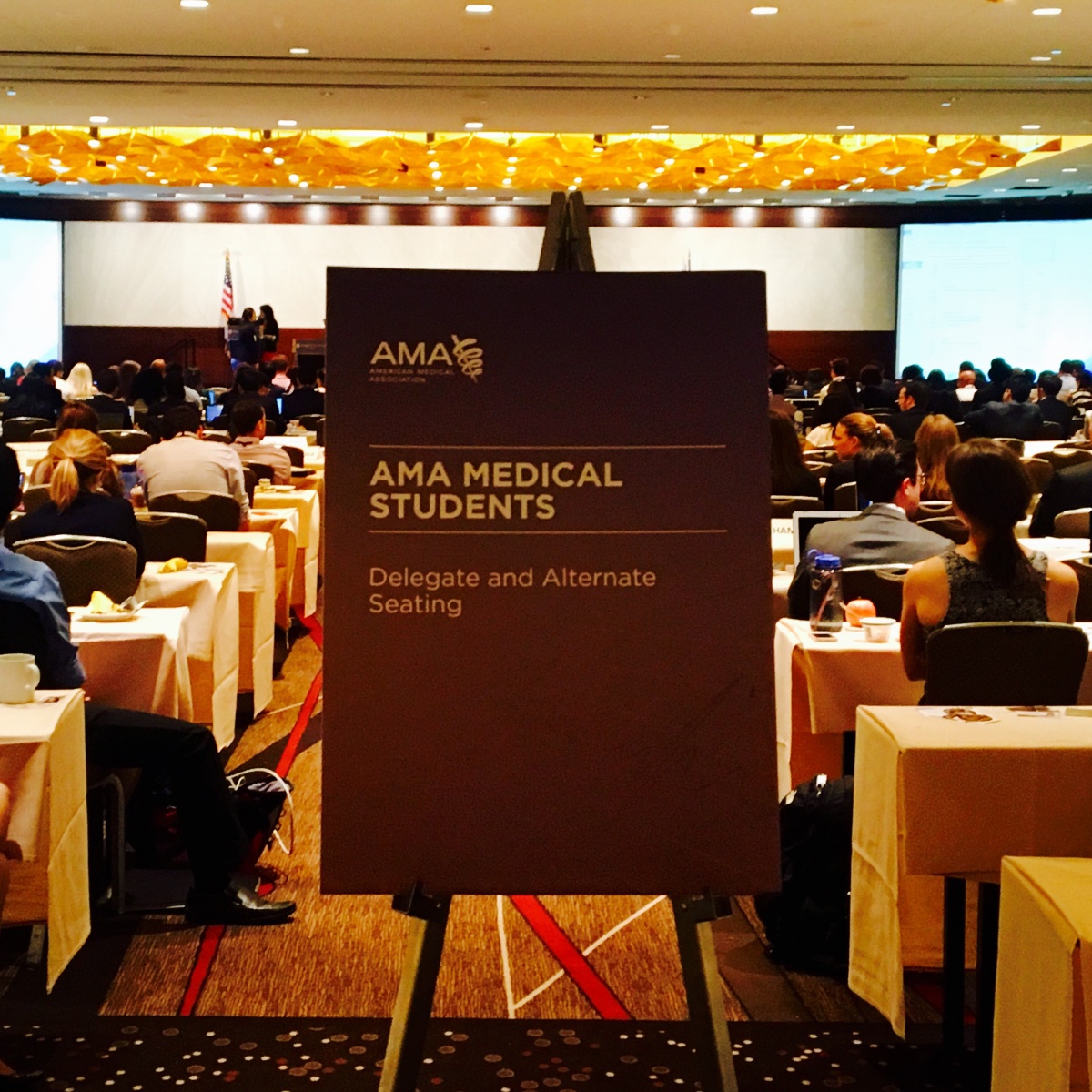
There are speeches that end when the applause fades, and then there are speeches that continue in the hallway, on the sidewalk, in a crowded conference lobby, andbecause medicine apparently needed one more vital signin a live-streamed Periscope interview. My AMA Medical Student Section keynote belonged to the second category. The formal talk may have had a stage, a microphone, and the kind of lighting that makes everyone look either heroic or slightly sleep-deprived, but the real magic happened afterward, when the conversation moved from prepared remarks to spontaneous questions.
The topic was simple enough to fit on a coffee mug, yet complicated enough to fill a career: if you want to make a difference in medicine, start with passion. Not prestige. Not a perfectly laminated résumé. Not a five-year plan color-coded so intensely it deserves its own billing code. Passion. That was the message I shared with the AMA Medical Student Section, a community built around student leadership, advocacy, medical education, and the future of the profession. And judging by the energy in the room, there was no shortage of it.
Then came the Periscope interview. For readers who joined the internet after the great “everything must be live-streamed” era, Periscope was a mobile live-video app that let people broadcast from almost anywhere. It felt immediate, slightly chaotic, and very humanbasically the emergency department of social media, minus the triage nurse and with more floating heart icons. After a keynote about medicine, voice, and influence, the platform was fitting. It turned one speech into a larger conversation about how medical students can lead before they have the long white coat, the attending badge, or the ability to find a hospital stairwell on the first try.
Why the AMA Medical Student Section Keynote Mattered
The AMA Medical Student Section, often called AMA-MSS, exists to give medical students a voice within organized medicine. That matters because medical students are not just future physicians waiting politely in the academic lobby. They are already witnesses to the strengths and cracks of the health care system. They see what works in classrooms, what fails on clinical rotations, what patients need, and what trainees quietly endure while trying to look “professional” on three hours of sleep and granola-bar-based nutrition.
A keynote to medical students is not the same as a keynote to a general audience. Medical students do not need vague inspiration sprinkled with stock photos of stethoscopes. They need practical encouragement. They need someone to say, “Yes, anatomy is hard. Yes, the system is imperfect. Yes, you can still help shape it.” They also need permission to care deeply without feeling naïve. In medicine, cynicism sometimes masquerades as wisdom. But passion, when paired with discipline, is not childish. It is fuel.
Passion Is Not a Soft Skill
In medical education, passion can sound suspiciously fluffy, like something printed on a conference tote bag. But passion is not fluff. It is the reason a student joins a policy committee after a long day of lectures. It is the reason someone raises a hand during a meeting to ask why the curriculum does not better address physician burnout, health equity, or patient communication. It is the reason a future surgeon, pediatrician, psychiatrist, family physician, or internist decides that “this is how things have always been done” is not a satisfactory diagnosis.
Passion becomes powerful when it is aimed. Unfocused passion is a group chat with 248 unread messages. Focused passion becomes advocacy, research, leadership, and service. That was the heart of the keynote: medical students do not need to wait until graduation to matter. They can begin by noticing a problem, finding collaborators, learning the policy process, speaking clearly, and refusing to confuse hierarchy with wisdom.
Periscope, Live Video, and the Medical Conversation
The Periscope interview after the keynote captured something traditional conference summaries often miss: the informal pulse of the room. A polished speech can present ideas, but a live interview tests whether those ideas can breathe in real time. There is no perfect edit, no dramatic pause added in post-production, no helpful subtitle that says, “Here the speaker makes a brilliant point.” There is only a phone, a question, an answer, and an audience that may include medical students, physicians, patients, and someone watching while eating cereal.
That immediacy was both exciting and risky. Medicine has always valued careful language for good reason. Patient privacy, professional boundaries, and public trust are not optional accessories. They are part of the job. But live video also offered an opportunity to humanize physicians and trainees. It allowed people to see the person behind the title. A doctor or medical educator could speak without a journal paywall, a press release, or a podium standing between them and the audience.
The Good Side of Going Live
Live social media can make medical ideas more accessible. A short interview after a keynote can bring conference energy to people who could not attend. It can introduce students to mentors. It can help patients understand how physicians think about advocacy, empathy, burnout, and communication. It can also show that medical professionals are not robots programmed to say, “Take two guidelines and call me in the morning.”
When used well, live video gives medicine a warmer voice. It helps explain why health policy is not some distant activity performed by people in suits whispering over spreadsheets. It affects exam rooms, training programs, insurance forms, patient access, and the daily moral weather of clinical care. For medical students, seeing leaders speak publicly can be an invitation: you, too, can contribute to this conversation.
The Caution Sign Nobody Should Ignore
Of course, “live” also means “you cannot unsay that thing you just said while your Wi-Fi was buffering.” Medical professionals must be especially careful online. Patient stories should be de-identified only when they truly cannot identify someone, and even then, caution is wise. Clinical advice should not replace a patient-physician relationship. Personal opinions should be separated from institutional statements. And if you are tempted to post from the hospital elevator, remember: elevators have ears, cameras, and occasionally the chief medical officer.
The best medical social media follows the same ethical instincts as good bedside care: respect privacy, be accurate, avoid arrogance, admit uncertainty, and remember there is a human being on the other side of the screen. A physician’s online presence does not need to be bland, but it does need to be trustworthy.
What Medical Students Can Learn From a Post-Keynote Interview
The real lesson of the Periscope interview was not about the app. Platforms come and go. Periscope had its moment, then its features were absorbed into the larger social media ecosystem. The deeper lesson is that physicians and medical students need to meet people where conversations are happening. Today that may be X, LinkedIn, Instagram, TikTok, YouTube, podcasts, newsletters, webinars, or whatever platform is currently being invented by three people in hoodies who believe buttons are outdated.
For medical students, the challenge is not whether to have an online presence. In many cases, they already do. The challenge is whether that presence reflects the kind of physician they are becoming. A student does not need to become a full-time influencer. In fact, most should not, unless they have discovered a 25th hour in the day and are willing to share it with the class. But every student can think intentionally about digital professionalism.
Build a Professional Identity Before Someone Else Builds It for You
Your online identity is not just what you post. It is what appears when someone searches your name, what your public profiles suggest, and whether your digital footprint supports or distracts from your professional goals. A thoughtful profile can highlight research, advocacy, community service, writing, leadership, and educational interests. It can also help students connect with mentors and peers who share their passions.
This does not mean every post must sound like it was approved by a committee of very serious people holding clipboards. Personality is allowed. Humor is allowed. Humanity is allowed. But professionalism should be the floor, not the ceiling. Before posting, a helpful test is: would I be comfortable if a patient, program director, dean, classmate, or future colleague saw this? If the answer is “only if they have a very forgiving sense of humor,” reconsider.
Passion, Advocacy, and the Future of Medicine
Medical students are entering a profession under pressure. Training is intense. The residency match is competitive. Physician burnout remains a major concern. Patients are navigating complex systems, confusing bills, uneven access, and an ocean of online health information ranging from excellent to “please do not put that in your smoothie.” Against that backdrop, student advocacy is not extracurricular decoration. It is part of preparing for the realities of modern medicine.
Advocacy can take many forms. Some students work on public health policy. Some focus on medical education reform. Some push for better mental health resources. Some study health disparities. Some teach communities about prevention, vaccines, nutrition, or chronic disease. Some write. Some organize. Some listen carefully and bring patient storiesethically and respectfullyinto rooms where decisions are made.
The keynote message was not that every student must become a national spokesperson. It was that every student should identify the problem that refuses to leave them alone. That persistent concern may be the start of meaningful work. Medicine changes because people care enough to ask inconvenient questions and stay long enough to help answer them.
Why Humanizing Physicians Still Matters
One reason a Periscope interview after a medical keynote felt so useful was that it showed medicine in conversation, not just medicine in announcement mode. The public often sees physicians through narrow frames: the rushed clinician, the expert on television, the mysterious person typing into the electronic health record while nodding thoughtfully. Social media, when used wisely, can widen that frame.
Humanizing physicians does not mean turning medical professionalism into a reality show. Nobody needs “Keeping Up With the Call Room.” It means showing that doctors and medical students are people who care, learn, struggle, reflect, and keep trying. It means making space for honest conversations about uncertainty, compassion, communication, and reform. It means demonstrating that physicians are not above patients, but beside them.
That message is especially important for medical students. Early training can make students feel small. They are graded, evaluated, corrected, observed, and occasionally asked questions so specific they wonder if the attending has a secret contract with their adrenal glands. A public conversation after a keynote can remind them that their voices matter now, not someday after the system has worn down their idealism.
Practical Takeaways for Medical Students
1. Start With One Issue You Genuinely Care About
Do not begin by asking, “What will look impressive?” Begin by asking, “What problem keeps bothering me?” The answer might be student well-being, rural health, patient literacy, health technology, primary care access, or the cost of medications. Passion lasts longer when it is connected to purpose.
2. Learn the Rules Before You Break the Mold
Advocacy works better when you understand the structure you are trying to influence. Learn how resolutions, committees, medical societies, school leadership, and policy processes work. A passionate idea with a practical path is much harder to ignore.
3. Treat Social Media Like a Public Microphone
Even when a platform feels casual, the audience may be larger than expected. Post with clarity, kindness, and restraint. Protect patients. Avoid giving personal medical advice to strangers. Be transparent when sharing opinions. And never underestimate the screenshot, the unofficial national bird of the internet.
4. Find Mentors Who Model the Career You Want
Mentorship is not only about specialty choice. Look for people who model the way you want to communicate, lead, advocate, and handle pressure. The best mentors do not clone themselves; they help you become more fully yourself.
5. Keep Your Humor, But Do Not Weaponize It
Medicine needs humor because medicine is hard. A well-timed joke can relieve tension and make a message memorable. But humor should never punch down at patients, colleagues, or vulnerable communities. The goal is connection, not cruelty with a punchline.
Additional Experiences: What the Moments After a Keynote Can Teach You
The most memorable part of a keynote often begins after the official program ends. That may sound strange, especially after weeks of preparing slides, polishing stories, and silently bargaining with the conference projector. But once the speech is over, the room changes. Students come forward with questions they were too shy to ask at the microphone. Someone shares a personal story about why they chose medicine. Someone else asks how to stay hopeful when the system feels too big, too slow, or too allergic to common sense.
In that post-keynote space, the speaker becomes less of a lecturer and more of a listener. The Periscope interview captured that same spirit. It felt less like a broadcast and more like an open door. The questions were immediate. The answers had to be honest. There was no time to hide behind jargon. If a student asked how to make a difference, the answer could not be “leverage multidisciplinary stakeholder alignment,” because nobody should say that without first drinking a glass of water and apologizing to the English language. The answer had to be practical: start with what you care about, find people who care too, learn the process, and keep showing up.
One experience related to this topic is the realization that medical students are often far more ready to lead than they believe. Many are waiting for permission. They assume leadership begins after residency, after fellowship, after the first faculty appointment, or after they finally understand every abbreviation in the hospital. But leadership in medicine often begins with noticing. A student notices that classmates are burned out. A student notices that patients do not understand discharge instructions. A student notices that a policy sounds good on paper but fails in the clinic. Noticing becomes questioning. Questioning becomes organizing. Organizing becomes change.
Another experience is learning how powerful short-form conversations can be. A keynote may introduce the big idea, but a five-minute interview can make it portable. People remember a clear sentence they can repeat. They remember a story. They remember the moment someone said, “Your voice matters.” In a world overflowing with information, clarity is an act of service. Medical professionals do not need to make every message viral. They need to make important messages understandable.
There is also humility in live conversation. A live interview reminds speakers that communication is not performance alone. It is relationship. You can prepare your points, but you cannot fully script the audience. That is a good thing. The unscripted question often reveals what people truly need. In medical education, students do not only need advice about exams and applications. They need guidance on identity. How do I become a good doctor without losing myself? How do I speak up respectfully? How do I use social media without damaging my future? How do I care deeply and still survive the workload?
Finally, the experience reinforces a truth that applies far beyond Periscope, the AMA, or any single keynote: the future of medicine depends on conversations that are public enough to invite participation and careful enough to preserve trust. Medical students should be encouraged to use their voices, but also taught how to use them wisely. A smartphone can amplify a message; it cannot supply judgment. That part still comes from ethics, mentorship, reflection, and practice.
The Periscope interview after the AMA Medical Student Section keynote was a small moment in format but a large one in meaning. It showed that leadership does not always arrive wearing a name badge and standing behind a podium. Sometimes it appears in a quick conversation after the applause, when the camera turns on, the questions begin, and a room full of future physicians realizes that passion is not a decorative word. It is the beginning of the work.
Conclusion
A Periscope interview after an AMA Medical Student Section keynote may sound like a tiny digital artifact from 2016, but its message remains surprisingly current. Platforms change. Medical education evolves. Students face new pressures. Yet the essential challenge is the same: how can future physicians use their voices to improve medicine while protecting trust, professionalism, and patient dignity?
The answer begins with passion, but it does not end there. Passion must become disciplined advocacy. Online visibility must become responsible communication. Student energy must become organized leadership. And keynote inspiration must become the kind of daily action that survives long after the conference coffee has gone cold.
For medical students, the lesson is clear: do not wait until you feel perfectly ready. Medicine needs thoughtful voices now. Speak carefully. Listen generously. Learn constantly. Protect patients fiercely. And when the next opportunity comeswhether it is a podium, a committee meeting, a podcast, a live stream, or a conversation in the hallwayuse it to make medicine a little more human.