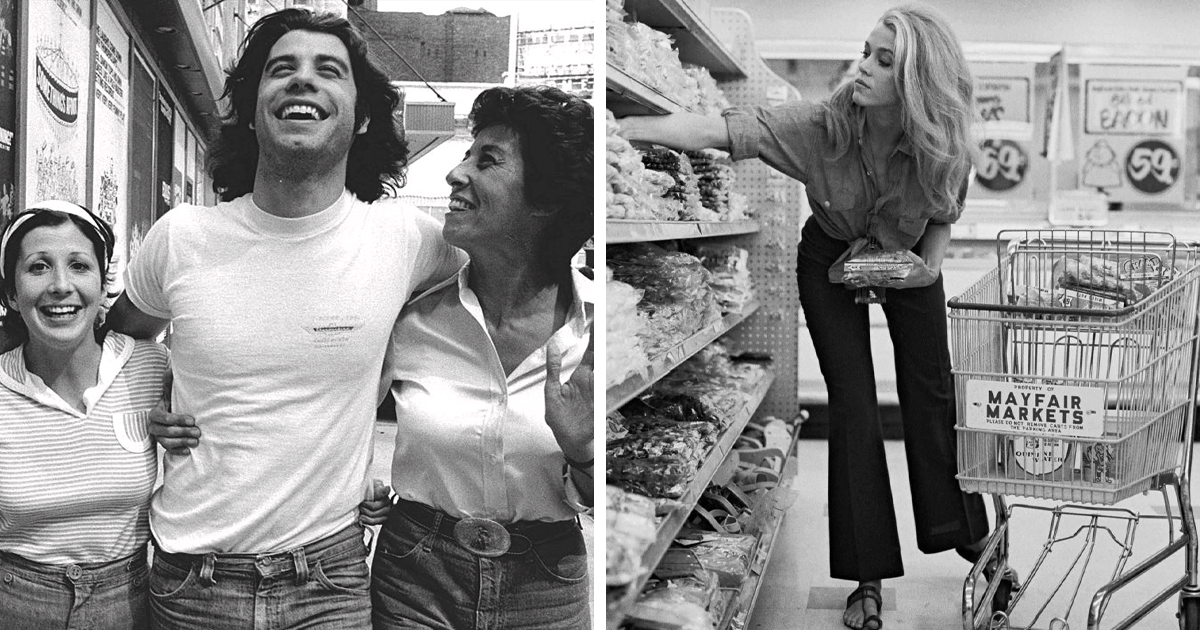
Old Hollywood photos have a special kind of magic. They do not just show famous faces; they open a little trapdoor in time. One minute you are scrolling through your phone in sweatpants, and the next you are backstage in Las Vegas with Carrie Fisher watching Debbie Reynolds perform, or standing near the Great Sphinx as Louis Armstrong plays trumpet for Lucille. That is the delightful spell behind the Instagram account Vintage Movie Stars, an online gallery dedicated to rare, nostalgic, and wonderfully human images of Hollywood celebrities, movie icons, musicians, and cultural legends.
The viral gallery titled “50 Rarely Seen Old Pics Of Hollywood Celebs Shared On This Instagram Account” celebrates exactly what makes vintage celebrity photography so addictive: it captures stars before the filter, before the branding team, before every eyebrow had a publicist. These are not just glossy portraits of Marilyn Monroe, Audrey Hepburn, Elvis Presley, Judy Garland, Dolly Parton, or Debbie Reynolds. They are windows into personality, work, family, style, and the strange machinery of fame.
In an age when celebrities can post breakfast, gym selfies, apology notes, and suspiciously perfect “candid” shots within the same afternoon, old Hollywood pictures feel refreshingly mysterious. They remind us that glamour once moved slower. A photograph could become a legend, not because it was boosted by an algorithm, but because it carried mood, story, and charisma in one frozen frame.
Why Rare Old Hollywood Photos Still Stop the Scroll
Vintage Hollywood photos work because they combine three irresistible ingredients: beauty, nostalgia, and surprise. We know the famous names, but we do not always know the private moments. Seeing Shirley Temple reading fan mail at home, Jamie Lee Curtis smiling beside Janet Leigh, or a young Carrie Fisher quietly observing her mother from backstage changes the scale of celebrity. Suddenly, the icon becomes a person again.
That emotional shift is powerful. Studio-era Hollywood was built on carefully managed images. During the Golden Age, stars were photographed, styled, contracted, promoted, and protected by studios that understood image as both art and business. A great portrait could make an actor look eternal. A candid photo, however, could make them look real. That is why rare celebrity photos feel like finding a handwritten note inside a museum display case.
The Instagram Account Behind the Nostalgia
The account at the center of the gallery, Vintage Movie Stars, is curated by Caitlin and focuses on black-and-white photographs, archival snapshots, behind-the-scenes images, and memorable moments from film, television, and music history. The account’s charm lies in its range. It does not only celebrate the usual Mount Rushmore of Hollywood glamour, although Marilyn, Audrey, Elvis, and Judy certainly appear. It also gives space to lesser-seen images, family moments, musicians, directors, and stars in relaxed settings.
That variety matters. Old Hollywood is often remembered as one giant glitter bomb of red lips, tuxedos, champagne, and dramatic lighting. But the real history is much richer. It includes studio lots, rehearsals, costume fittings, hotel rooms, fan mail, radio appearances, political tours, marriages, friendships, and quiet minutes between public performances. A strong vintage photo account does not just say, “Look, famous person!” It says, “Look closer. There is a story hiding in the corner.”
Old Hollywood Was More Than Glamour
Hollywood’s Golden Age is usually associated with the 1920s through the 1960s, when the studio system shaped American entertainment. Major studios controlled production, distribution, theaters, contracts, publicity, and star images. MGM, Paramount, Warner Bros., 20th Century Fox, and RKO became powerful engines of celebrity manufacturing. If modern celebrity culture is a ring light, old Hollywood was a whole electrical grid.
That system created unforgettable screen legends, but it also shaped what audiences were allowed to see. Stars were often presented as dream figures, not complicated humans. Publicity photos were carefully lit. Costumes were chosen with surgical precision. Gossip was managed. Scandals were softened, buried, or repackaged. So when rare old Hollywood celebrity pictures appear today, they feel like tiny rebellions against the machine that originally polished everyone to a shine.
The Studio Portrait: Glamour With a Blueprint
Classic Hollywood portrait photography was not accidental. Photographers such as George Hurrell helped define the visual language of stardom in the 1930s and 1940s. His dramatic lighting, sculptural shadows, and luxurious compositions turned actors into icons. Those portraits are still studied because they do something modern promotional images often chase but rarely catch: they create myth.
A Hurrell-style portrait does not simply document a face. It announces a presence. The cheekbones become architecture. The cigarette smoke becomes weather. The eyes say, “I know something you do not,” which is basically the official slogan of Golden Age glamour.
The Candid Photo: Where the Magic Gets Messy
Yet the candid images shared by vintage accounts often hit even harder. A backstage photo can reveal exhaustion, tenderness, nerves, boredom, mischief, or family love. That is why the image of Carrie Fisher watching Debbie Reynolds at the Riviera Hotel in 1963 remains so moving. Reynolds is the performer in the distance, glowing in stage light. Fisher, still a child, watches from the wings. The picture contains show business, motherhood, longing, admiration, and a little heartbreak, all without needing a caption the size of a college thesis.
Another unforgettable example is Louis Armstrong serenading his wife Lucille near the Great Sphinx of Giza in 1961. The scene feels almost too cinematic to be real: jazz royalty, ancient stone, desert light, and a private romantic gesture made public by the camera. It is the kind of photograph that makes you wonder why your own vacation photos mostly involve blurry sandwiches.
Why These Photos Feel So Personal
Rare old pictures of Hollywood celebrities feel personal because they interrupt the official version of fame. We are used to seeing stars as finished products: the movie poster, the award speech, the magazine cover, the red-carpet pose. Vintage photos often catch the in-between moments. They show stars before they step onstage, after they wrap a scene, while they are laughing with friends, sitting with family, or simply existing without a spotlight aimed directly at their soul.
Take Dolly Parton and Carl Dean, for example. Their relationship has long fascinated fans because Dean lived almost entirely outside the spotlight. A vintage image of the couple carries extra weight because it shows a private love story attached to one of the most public personalities in American entertainment. Parton’s real-life meeting with Dean outside a Nashville laundromat in 1964 sounds like the beginning of a country song because, frankly, Dolly Parton’s life has better writers than most movies.
The Power of Black-and-White Photography
Many of the photos shared by vintage Hollywood accounts are black and white, which adds to their emotional pull. Black-and-white photography strips away the noise of color and makes viewers focus on light, expression, texture, and composition. A satin dress becomes a river of silver. A tired smile becomes a headline. A shadow across a face becomes drama with excellent cheekbones.
There is also a psychological effect. Black-and-white images immediately signal “past,” even when the subject feels alive and modern. They make time visible. Looking at them is not the same as looking at a modern celebrity post with a retro filter. Real vintage photos carry the grain, contrast, and imperfections of their era. They have not been engineered to look old; they are old. That authenticity is part of the charm.
Celebrity Before Social Media
Today, celebrities can speak directly to fans. They can correct rumors, promote projects, post family moments, and release behind-the-scenes content in seconds. In old Hollywood, access was slower and more controlled. Fans received images through movie magazines, newspapers, lobby cards, studio portraits, television appearances, and publicity campaigns. That scarcity made photographs feel more valuable.
Now, paradoxically, scarcity has returned in a new way. We are drowning in images, but rare archival images still feel precious because they show something outside the daily content machine. A single old photograph of Audrey Hepburn at a tennis match or Elvis Presley behind the scenes can generate more wonder than a hundred polished celebrity posts because it feels discovered rather than delivered.
What These 50 Rare Photos Reveal About Hollywood Celebs
The best rare Hollywood photos reveal that fame is both performance and daily life. They show that stars had families, bad hair days, inside jokes, quiet romances, long work hours, and moments of uncertainty. They also reveal how much effort went into making celebrity look effortless.
1. Family Legacies Were Everywhere
Images of Hollywood families are especially compelling because they show fame being inherited, resisted, or quietly observed. Carrie Fisher and Debbie Reynolds, Jamie Lee Curtis and Janet Leigh, and other parent-child celebrity pairings remind us that Hollywood was never just an industry. It was also a family business, sometimes warm, sometimes complicated, always dramatic enough to deserve orchestral music.
2. Musicians Were Part of the Movie-Star Mythology
The gallery’s inclusion of figures such as Louis Armstrong proves that vintage Hollywood culture was never limited to film actors. Musicians, dancers, comedians, and television personalities all contributed to the larger ecosystem of American stardom. Armstrong’s presence in a photo collection like this makes perfect sense: his charisma was cinematic even when he was not acting.
3. Private Love Stories Made Public Images More Fascinating
Photos of couples such as Dolly Parton and Carl Dean attract attention because they show a softer, quieter side of fame. The more private the relationship, the more powerful the image becomes. It gives fans a glimpse without making the subjects feel overexposed.
4. Behind-the-Scenes Images Humanize Legends
Backstage and on-set photos are often the most beloved because they show the labor behind the sparkle. A star waiting in costume, reading fan mail, rehearsing, laughing with crew members, or watching another performer reminds us that Hollywood magic was built by people working extremely long days under hot lights. Glamour, as it turns out, sometimes needs a lunch break.
Why Instagram Is Perfect for Vintage Hollywood Archives
Instagram may seem like the natural home of modern influencers, smoothie bowls, and vacation photos captioned “needed this,” but it is also surprisingly well suited for visual history. A well-curated vintage account turns scrolling into discovery. Each post functions like a miniature museum label, inviting viewers to pause, learn, comment, and share memories.
For younger audiences, these accounts can be an entry point into classic cinema. Someone may arrive for a pretty photo of Marilyn Monroe and leave curious about Some Like It Hot. They may see Audrey Hepburn off duty and finally watch Roman Holiday. They may encounter Debbie Reynolds through a backstage image and then discover Singin’ in the Rain. That is the quiet educational power of social media when it is used well: it can turn curiosity into cultural preservation.
The Difference Between Nostalgia and History
Of course, vintage celebrity photos should be enjoyed with both affection and awareness. Nostalgia can make the past look simpler than it was. Old Hollywood gave the world extraordinary films, unforgettable stars, and visual beauty that still influences fashion and photography. It also operated within strict studio control, censorship pressures, racial exclusions, gender double standards, and intense public-image management.
That does not make the photos less valuable. It makes them more interesting. A rare image can be beautiful and complicated at the same time. In fact, that tension is part of why old Hollywood remains so endlessly discussable. The sparkle is real. So are the shadows.
How to Appreciate Rare Celebrity Photos Like a Film Historian
You do not need a cinema studies degree to enjoy rare old pics of Hollywood celebs. But a few habits can make the experience richer. First, look beyond the famous face. Notice the setting, clothing, body language, props, and other people in the frame. Second, read the caption carefully, but remember that captions can travel online with mistakes. Third, ask what the image was originally for. Was it a studio portrait, a magazine shoot, a candid photo, a family snapshot, or a publicity still?
Finally, let the photo lead you somewhere. Watch the film. Listen to the album. Read the biography. Look up the photographer. The best vintage images are not endpoints; they are invitations.
Experiences Inspired by Rare Old Hollywood Photos
Spending time with rare old Hollywood photos can feel surprisingly intimate. At first, you may think you are simply enjoying glamorous pictures. Then, somewhere around the third backstage image and the fifth impossibly elegant coat, you realize you are studying how people wanted to be remembered. That is a deeper experience than casual scrolling, and it is one reason vintage celebrity accounts are so satisfying.
One of the most enjoyable ways to experience these photos is to treat them like a visual playlist. Instead of rushing through fifty images, slow down and choose a few that pull you in. Maybe it is a photo of a young star before fame fully arrived. Maybe it is a candid image of a legend laughing with someone just outside the frame. Maybe it is a portrait so perfectly lit that your desk lamp suddenly feels personally inadequate. Sit with the image for a moment. Ask yourself what mood it creates. Is it glamorous, lonely, funny, romantic, chaotic, or peaceful?
These photos also make great conversation starters. Show a rare old Hollywood picture to a group of friends or family members and watch how quickly people begin telling stories. Someone remembers watching old movies with grandparents. Someone else recognizes an actor from a Christmas marathon. Another person insists that nobody today has “that kind of style,” which is usually code for “I would like hats to make a comeback.” Vintage images connect personal memory with pop culture history, and that makes them more than decorative nostalgia.
There is also a creative lesson hidden in these photographs. Modern content often tries very hard to look casual. Old candid photos, by contrast, often feel casual because they were not designed for endless digital performance. The imperfections are part of the appeal: a slightly blurred movement, an odd background, a face caught mid-thought, a room that looks lived in rather than staged. For writers, photographers, designers, and content creators, that is a useful reminder. Personality beats polish more often than we admit.
Another rewarding experience is pairing photos with films. See a candid shot of Audrey Hepburn, then watch one of her movies with that image in mind. Notice how her public elegance relates to her off-screen warmth. Look at a dramatic studio portrait of a noir actor, then watch how lighting shapes mood in the film itself. A single picture can become a doorway into costume design, cinematography, music, performance, and the business of fame.
Rare Hollywood photos can even change how we think about celebrity today. They remind us that every era creates its own version of fame. The studio system had fan magazines and controlled portraits. Today we have livestreams, podcasts, paparazzi, short-form video, and carefully casual Instagram dumps. The tools changed, but the fascination remains the same. We still want to see the person behind the performance.
That is why the experience of browsing Vintage Movie Stars feels both relaxing and meaningful. It is fun, yes. It is stylish, absolutely. But it also teaches us how images preserve emotion. A rare photo can hold a career, a romance, a family bond, a cultural moment, or a whole era of entertainment history. Not bad for something you found while scrolling with one thumb and pretending you were only going to check Instagram for five minutes.
Conclusion: Why We Still Love Rare Old Hollywood Pics
The enduring appeal of 50 Rarely Seen Old Pics Of Hollywood Celebs Shared On This Instagram Account comes from more than star power. These images let us meet familiar legends in unfamiliar ways. They show Marilyn Monroe not only as a symbol, but as a working performer with control over her image. They show Debbie Reynolds not only as a screen favorite, but as a mother being watched from the wings. They show Louis Armstrong not only as a jazz giant, but as a husband creating a private moment in a spectacular public place.
That is the beauty of rare old Hollywood photos: they make icons breathe again. They preserve style, humor, romance, ambition, exhaustion, and wonder. In a digital world where images appear and vanish at ridiculous speed, vintage photographs ask us to slow down. They remind us that fame is temporary, but a great photo can keep whispering across generations.
Note: This article is written as an original SEO-focused feature based on real public information about vintage Hollywood photography, the Vintage Movie Stars Instagram gallery, classic film history, and archival celebrity culture.