Note: This article is based on real Apollo 11 mission history, NASA historical records, the StoryCorps/NPR account of Greg Force, Apollo tracking-network context, and documented recovery details from the 1969 lunar mission.
The Small Arm That Solved a Moon-Sized Problem
When people talk about Apollo 11, the spotlight usually lands on three names: Neil Armstrong, Buzz Aldrin, and Michael Collins. Fair enough. Armstrong and Aldrin walked on the Moon, Collins orbited above them in the command module, and all three rode a fire-breathing Saturn V into history. That is not exactly a low-pressure work week.
But Apollo 11 was never just a three-person achievement. It was a global puzzle made of astronauts, engineers, mathematicians, mechanics, communications specialists, recovery crews, contractors, Navy divers, software programmers, and a whole lot of people staring at blinking consoles while pretending their coffee was still hot. At its peak, the Apollo program involved hundreds of thousands of workers across NASA, universities, the military, and private industry.
And, in one of the most charmingly improbable moments in space history, it also involved a 10-year-old boy named Greg Force.
Yes, really. During Apollo 11’s return from the Moon, a critical antenna at NASA’s tracking station on Guam developed a mechanical problem. The adults could diagnose the issue. They had the training, the tools, the mission knowledge, and the very serious NASA expressions. What they did not have was an arm small enough to reach through a narrow access opening and pack grease around a stuck bearing.
Greg did.
That is how a kid on Guam, probably much closer to bedtime than to a job title, ended up helping NASA keep communications support in place as Apollo 11 came home.
First, Why Apollo 11’s Return Was Such a Big Deal
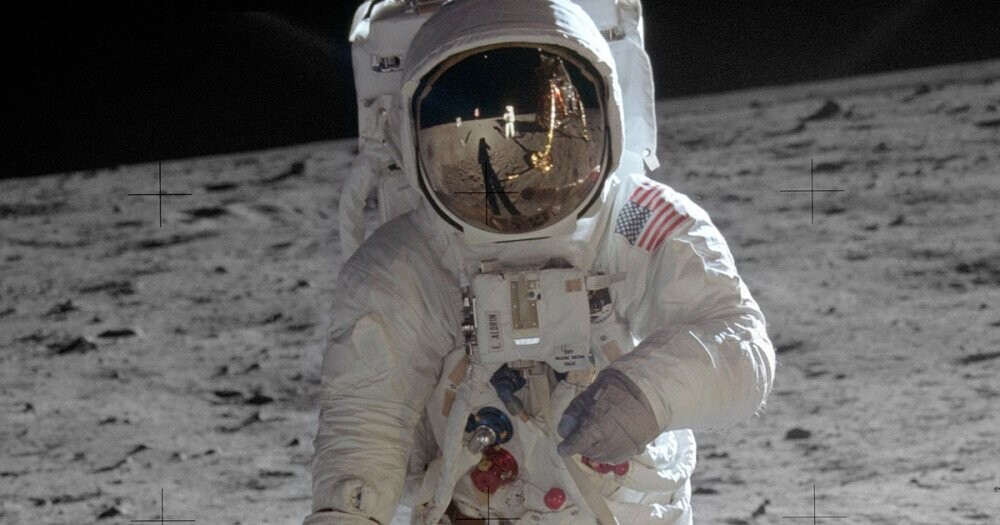
Apollo 11 launched from Kennedy Space Center on July 16, 1969, carrying Commander Neil Armstrong, Command Module Pilot Michael Collins, and Lunar Module Pilot Edwin “Buzz” Aldrin. The mission’s primary goal was simple to say and wildly difficult to do: land humans on the Moon and return them safely to Earth.
The landing happened on July 20, 1969, when the lunar module Eagle touched down in the Sea of Tranquility. Armstrong stepped onto the lunar surface, Aldrin followed, and millions of people on Earth watched the grainy broadcast with the kind of silence usually reserved for church, courtrooms, and someone trying to fix the family television by smacking the side of it.
But the Moon landing was only half the story. Getting to the Moon was astonishing. Walking on it was historic. Returning safely was the part that made the mission a success instead of a tragedy.
The Crew Had to Come Home Through a Narrow Chain of Events
After Armstrong and Aldrin completed their moonwalk, they launched from the lunar surface in the Eagle’s ascent stage and rejoined Collins in the command module Columbia. From there, the crew fired the service propulsion system to leave lunar orbit and begin the journey back to Earth.
That return path required precision. Apollo 11 had to hit Earth’s atmosphere at the correct angle. Too shallow, and the spacecraft could skip off the atmosphere like a stone on a pond. Too steep, and the heat and stress could become deadly. NASA needed accurate tracking, reliable communications, and constant coordination between the spacecraft and Mission Control.
In other words, this was not the moment for a ground antenna to say, “I have decided to become modern art.”
The Unsung Hero of Apollo: The Tracking Network
Space missions look glamorous in photographs, but behind every iconic image is infrastructure. Apollo 11 depended on the Manned Space Flight Network, a worldwide system of ground stations, ships, aircraft, antennas, computers, and communications links. These stations tracked the spacecraft, received telemetry, relayed voice communications, and helped Mission Control understand exactly where the astronauts were and how the spacecraft was performing.
Because Earth rotates and spacecraft move, no single station could handle everything all the time. NASA needed a planet-wide relay team. As Apollo 11 traveled between Earth and the Moon, different stations took turns “seeing” the spacecraft and passing data back to Houston.
Guam was one of those important links.
Why Guam Mattered
Guam’s location in the western Pacific made it valuable for tracking and communication coverage. During Apollo, the island hosted a NASA tracking station with a large dish antenna used to support communications between the astronauts and Mission Control. For the Force family, this was not distant news. It was daily life.
Greg Force’s father, Charles Force, worked on Apollo missions and served as director of the NASA tracking station on Guam. Greg grew up around the sounds of spaceflight. He later recalled that in his father’s office, a small speaker box played live communications between astronauts and Mission Control. For a boy who dreamed of space, that was not background noise. That was the soundtrack of the future.
The Night the Antenna Bearing Failed
On the evening of July 23, 1969, Apollo 11 was on its way back to Earth. The astronauts had already done what humanity had dreamed about for centuries. Now they were racing home inside the command module, and NASA’s tracking teams were preparing for the final stretch before splashdown.
At the Guam tracking station, trouble arrived in the form of a bearing problem in the large dish antenna. A bearing helps a mechanical structure move smoothly. In an antenna that has to point accurately at a spacecraft, smooth motion is not a luxury. It is the difference between “we have the signal” and “everybody please stop breathing loudly.”
The antenna needed to move. The bearing would not cooperate. A full repair would have taken too long, and time was exactly what the team did not have. Apollo 11 was not going to pause politely in space while someone dismantled an antenna on Guam.
Charles Force Had an Unusual Idea
Charles Force and the station team needed a workaround. The idea was to pack grease around the troublesome bearing, hoping lubrication would allow the antenna to keep moving well enough to perform its role. The plan was practical, fast, and deeply unglamorous, which is often how real engineering works.
There was just one problem: the access hole was tiny. Adults could not get their arms through it. Tools were not doing the job. The team needed someone with a smaller arm and enough courage to climb up into the antenna structure and do the messy work by hand.
So Charles Force called home.
Enter Greg Force, Age 10
Greg Force was 10 years old. He was at home with his mother and brothers when his father called. Most kids get summoned for chores like taking out the trash or finding the TV remote. Greg was summoned to help NASA communicate with Apollo 11.
He was brought to the tracking station, climbed access ladders on the big antenna, and was handed grease. His job was simple in description and nerve-racking in context: reach through the narrow opening and pack grease around the bearing as well as he could.
Greg later described taking handfuls of grease, squeezing it through his fingers, and pushing it into the hard-to-reach area. It was not glamorous. There was no cape, no dramatic soundtrack, and probably no adult nearby saying, “Excellent viscosity, young man.” But it worked.
The antenna became functional enough to complete its communications role. Apollo 11 continued its return. The next day, July 24, 1969, Armstrong, Aldrin, and Collins splashed down safely in the Pacific Ocean.
Did Greg Force “Save” Apollo 11?
The phrase “a 10-year-old helped bring Apollo 11 back from the Moon” is true, but it should be understood carefully. Greg Force did not calculate the trajectory, pilot the command module, design the heat shield, or personally catch the capsule with a baseball glove.
What he did was smaller, more specific, and still remarkable: he helped solve a real communications-support problem at a real NASA tracking station during a real mission-critical period. His small arm allowed the station team to lubricate a bearing they could not otherwise reach in time.
That matters because Apollo’s success depended on thousands of “small” tasks being done correctly. A mission can be threatened by a faulty switch, a software alarm, a guidance error, a weather change, a communications gap, or, yes, a stubborn antenna bearing. Spaceflight is a chain. The famous links are easy to admire, but the hidden links hold the chain together.
The Beauty of a Practical Fix
Greg’s story is a perfect example of engineering under pressure. The team did not need a perfect repair. They needed a good-enough solution, fast. Charles Force recognized the real constraint: not intelligence, not motivation, not tools, but physical access. The opening was too small for adults. Greg’s arm fit.
That is problem-solving at its best. It is not always about inventing a new machine. Sometimes it is about noticing that the solution is standing nearby, wearing kid-sized clothes and wondering whether he is going to be late for bed.
Apollo 11 Was Built on Human Teamwork
The Apollo 11 mission often gets compressed into a few unforgettable moments: the Saturn V launch, “The Eagle has landed,” Armstrong’s first step, Aldrin beside the flag, Columbia under parachutes. Those moments deserve their place in history. But the full story is more interesting because it is more human.
NASA’s achievement came from teamwork on a scale that still feels staggering. Engineers built the Saturn V rocket. Seamstresses helped assemble spacesuits. Programmers created guidance software. Mathematicians checked trajectories. Tracking stations around the world kept watch. Navy crews prepared for recovery. Mission Control coordinated everything from Houston.
And on Guam, when a bearing misbehaved, a station director trusted his 10-year-old son to help.
That trust is one of the most moving parts of the story. Charles Force did not call Greg because it would make a cute anecdote later. He called because there was a job to do, and Greg could do it. In that moment, Greg was not a mascot. He was part of the solution.
The Safe Splashdown of Apollo 11
On July 24, 1969, Apollo 11 returned to Earth. The command module entered the atmosphere, survived the fiery reentry, deployed its parachutes, and splashed down in the Pacific Ocean southwest of Hawaii. The USS Hornet served as the prime recovery ship. Navy swimmers reached the capsule, the astronauts were recovered, and the world exhaled.
Because of concerns about possible lunar contamination, the astronauts entered quarantine after recovery. It sounds strange now, but at the time NASA had to consider unknown risks. The Moon had just become a place humans could visit, and nobody wanted the sequel to be “Congratulations, you brought back space germs.”
The mission lasted just over eight days. In that time, Apollo 11 changed science, technology, politics, culture, and the way humanity saw itself. The astronauts had traveled to another world and returned. And tucked inside that enormous story was a boy with grease on his hands.
Why Greg Force’s Story Still Matters
Greg Force’s role in Apollo 11 remains powerful because it reminds us that history is not only made by the people standing in the brightest light. It is also made by people who fix things, support things, notice things, and step forward when the moment asks for them.
For students, it is an especially encouraging story. You do not have to be an astronaut to contribute to space exploration. You do not have to be the person on camera to matter. Curiosity, readiness, courage, and a willingness to get your hands dirty can put you closer to history than you expect.
For adults, the lesson is just as good: never underestimate young people. Greg’s father understood that capability can come in unexpected sizes. Sometimes the person who solves the problem is not the most senior person in the room. Sometimes it is the person whose arm fits.
Experiences and Lessons From the Story of a 10-Year-Old Helping NASA
The story of Greg Force offers more than a fun Apollo 11 footnote. It feels like a lived experience that many families, teachers, engineers, and students can understand. A child watches adults work on something important. He listens, learns, absorbs the atmosphere, and dreams of being useful. Then, suddenly, the door opens. He is not asked to pretend. He is asked to help.
That experience is familiar to anyone who grew up near a parent’s workbench, kitchen, farm, garage, clinic, newsroom, laboratory, classroom, or small business. Children notice more than adults think. They hear the urgency in voices. They remember the tools. They understand when something matters. Greg had spent time around the Guam tracking station. He knew his father’s work was important. When he climbed that antenna, he was stepping into a world he already respected.
One lesson is that exposure matters. A child who hears live communications between astronauts and Mission Control may begin to imagine science and engineering as real human activities, not just textbook chapters. Space becomes less like a poster and more like a place connected by antennas, people, wires, procedures, and decisions. That kind of exposure can shape ambition. It tells a young person, “This world is complicated, but you are allowed to be curious about it.”
Another lesson is that confidence often comes from being trusted with real responsibility. Greg did not need a lecture about teamwork; he experienced it. He did not need a motivational poster about doing your part; he climbed a ladder and did his part. For a 10-year-old, that is unforgettable. Adults can create those moments by giving children safe, meaningful responsibilities instead of assuming they are only spectators.
The story also shows that problem-solving is not always elegant. Many people imagine NASA work as glowing control panels and perfect equations. Those things existed, of course, but Apollo also required duct-tape thinking, quick decisions, mechanical instincts, and people willing to improvise within disciplined systems. A stuck bearing and a handful of grease may not sound futuristic, but they belonged to the same mission as lunar orbit rendezvous and computer-guided descent.
For modern readers, Greg’s experience is a reminder to respect small contributions. In schools, workplaces, and communities, people often wait for a grand role before they believe they matter. Apollo 11 argues the opposite. The mission succeeded because countless people handled specific responsibilities at the right time. The person who checks a valve, writes a line of code, verifies a number, tightens a bolt, or solves a communications issue may never become famous, but the mission needs them.
Finally, the story is simply joyful. It has the structure of a childhood adventure: a phone call at night, a rushed trip to a NASA station, a climb up a huge antenna, a messy repair, and the next day’s realization that the astronauts made it home. It is the kind of true story that sounds invented because reality occasionally has excellent comic timing.
Greg Force did not set out to become part of Apollo 11 history. He happened to be in the right place, with the right small arm, at the right urgent moment. But that is how many important experiences happen. Preparation meets opportunity. Curiosity meets trust. A child gets called into the grown-up world and discovers he can help.
Conclusion: The Moon Mission With a Human Touch
Apollo 11 will always be remembered as the mission that first landed humans on the Moon. Yet the story of Greg Force gives that giant achievement a wonderfully human detail. It turns the space race from a distant national triumph into something personal, practical, and almost delightfully ordinary: a father trusted his son, a child climbed a ladder, and grease helped keep a space-age antenna moving.
That does not shrink Apollo 11. It makes it larger. It shows that history is built from both spectacular moments and humble ones. The first bootprint on the Moon mattered. So did the tracking networks, the recovery ships, the software, the math, the hardware, and the kid on Guam who could reach what adults could not.
In the end, Apollo 11 was not only a story about going farther than humanity had ever gone. It was a story about coming home. And somewhere in that journey home, a 10-year-old helped.