Most surprise proposals require one nervous person, one carefully hidden ring, and one partner who has no idea why everyone suddenly cares about the sunset. Savi and Sharath’s engagement story doubled every ingredient.
Each secretly planned to propose during the same couples photoshoot. Neither knew what the other was preparing. The photographer, Miranda Anderson, became the only person holding the entire romantic puzzle togetherand somehow managed not to explode from the pressure.
What followed was an accidental double proposal filled with laughter, tears, matching intentions, and two people dropping to one knee at practically the same moment. It was the kind of scene romantic comedies usually need three screenwriters and a suspiciously generous flower budget to create.
A Simple Photoshoot With Two Secret Agendas
Savi and Sharath had been together for more than two and a half years. Their relationship had already survived a difficult test: They spent approximately six months apart because of COVID-19 restrictions and the realities of long-distance dating.
After finally reuniting, they both knew they wanted to build a future together. The important question was no longer whether marriage made sense. The question was who would make the first move.
Savi appeared to have the advantage. She contacted photographer Miranda Anderson and arranged what Sharath believed would be a regular couples photoshoot. Behind the scenes, however, Savi was planning a surprise engagement complete with flowers, candles, and a scenic viewpoint.
Sharath arrived expecting some attractive photographs and perhaps a few instructions involving walking slowly, looking into the distance, and pretending not to notice the camera. He did not know that Savi was carrying an engagement ring and waiting for the right moment to propose.
Then, two days before the session, Miranda received another message. It came from Sharathand he wanted help proposing to Savi during that exact same photoshoot. Neither partner had copied the other’s idea. They had independently reached the same conclusion and selected the same occasion to express it.
The Photographer Realized What Was Happening
At that point, Miranda faced a situation that probably does not appear in the average photography contract. She had two clients, two secret rings, two surprise proposals, and exactly zero room to say, “By the way, you should probably talk to each other.”
Rather than allow one person to propose first and unintentionally spoil the other person’s plan, she created a shared cue. The strategy was beautifully simple: Savi and Sharath would stand back-to-back, wait for a countdown, and turn around on the count of three.
Each partner privately understood that this was the signal to get down on one knee. Each assumed the other person would merely turn around and react.
The Countdown That Changed Everything
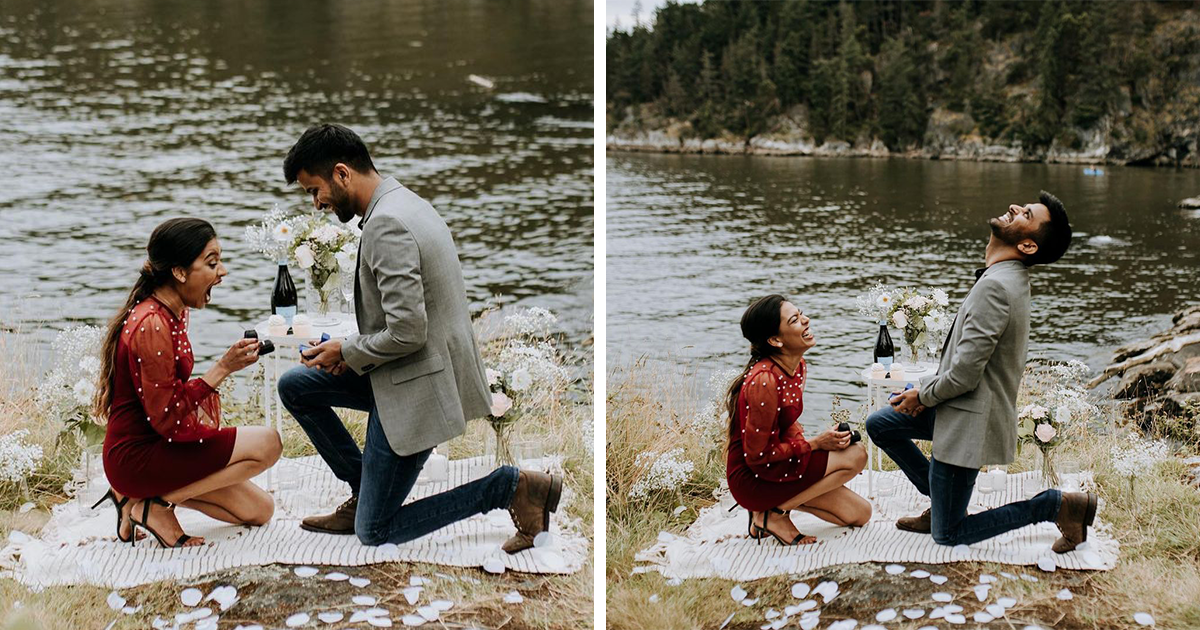
When Miranda reached three, both Savi and Sharath turnedand both dropped to one knee.
For a moment, the carefully planned proposals became complete emotional chaos. Each person had expected to surprise the other. Instead, they saw a partner holding a ring and asking the same life-changing question.
The photographs captured the entire sequence: the simultaneous movement, the confusion, the realization, the laughter, and the tears. Miranda later described it as one of her favorite proposal stories and said watching the moment unfold brought tears to her own eyes.
Technically, the timing was not an accident because Miranda coordinated the countdown. The coincidence was deeper and more meaningful: Savi and Sharath had independently decided to propose during the same session without knowing the other had made the same plan.
Why the Accidental Double Proposal Felt So Special
Plenty of proposals are romantic. This one became unforgettable because it revealed something about the couple before either person had time to prepare a polished response.
They Reached the Same Decision Separately
Savi and Sharath did not simply agree to become engaged after one partner initiated the conversation. Each had already purchased or prepared a ring, contacted the photographer, developed a plan, and accepted the possibility of being the vulnerable person who asked the question.
The double proposal demonstrated mutual certainty. Neither person was reluctantly following the other’s timeline. They were moving toward the same future from opposite sides of the same photoshoot.
The Surprise Was Real, but the Commitment Was Not a Guess
A healthy surprise proposal should generally surprise someone with its timing or presentationnot with the previously unmentioned concept of marriage.
Savi and Sharath reportedly already knew they wanted to get married. Their surprise concerned who would propose, when it would happen, and how the moment would unfold. That distinction matters. Marriage is a major joint decision, even when the ring box appears unexpectedly.
Modern engagement experts increasingly recommend discussing marriage, broad timing, finances, family expectations, and proposal preferences before anyone kneels in public beside an increasingly nervous violinist. The creative details can remain secret while the future itself remains collaborative.
Their Reunion Added Emotional Weight
Spending months apart can make ordinary moments feel unusually valuable. After six months of pandemic-related separation and long-distance dating, the photoshoot represented more than an attractive collection of pictures. It marked a reunion and the beginning of a more permanent chapter.
Research and relationship guidance suggest that long-distance couples can maintain strong bonds when they communicate consistently, establish trust, and treat separation as a shared challenge rather than an individual inconvenience. Savi and Sharath’s story offered a visually perfect symbol of that idea: After being kept apart, they turned around and found each other making the same promise.
Miranda Anderson’s Role Was More Than Taking Pictures
A proposal photographer normally needs to manage composition, lighting, distance, timing, weather, crowds, and the proposer’s nerves. Miranda also had to protect two overlapping secrets while preventing either partner from proposing too early.
Her back-to-back countdown solved several problems at once. It positioned the couple clearly, gave both partners an unmistakable signal, created visual symmetry, and allowed the camera to record both reactions. Most importantly, it preserved the surprise for everyone except the increasingly well-informed photographer.
Professional proposal photographers often help select a precise location, determine where the proposer should stand, plan a believable cover story, and choose a signal that will not sound suspicious. They may use longer lenses to remain hidden or disguise themselves as tourists when the session is not already presented as a photoshoot.
Wedding photography experts also recommend discussing lighting conditions, backup locations, crowd control, post-proposal portraits, and the photographer’s experience with unpredictable live moments. A beautiful landscape cannot rescue a proposal photograph if the camera is pointed at the back of someone’s jacket.
Double Proposals Reflect Changing Engagement Traditions
For generations, popular culture presented proposals as a one-directional ritual. One partnertraditionally the manselected a ring, asked the question, and waited for the other person to accept or decline.
Many couples now prefer a more flexible approach. Some shop for rings together. Some agree that both partners will propose at different times. Others plan a shared engagement experience. Occasionally, as Savi and Sharath demonstrated, two private plans collide in spectacular fashion.
Double proposals can feel especially meaningful because both partners experience the vulnerability of asking and the joy of being asked. They also challenge the assumption that one person must direct the relationship while the other waits for a decision.
The format has received particular attention as an inclusive option for LGBTQ+ couples, but its appeal is much broader. Any couple can create engagement traditions that reflect equality, personality, culture, or simple logistical reality. There is no international proposal police department waiting to confiscate a second ring.
What Happened After the Photoshoot?
The proposal photographs were only the beginning of Savi and Sharath’s next chapter. According to the published account, the couple later married in front of ten close friends. Other relatives and friends from around the world watched the ceremony through a livestream.
That intimate arrangement reflected the pandemic era in which their engagement occurred. Large gatherings were difficult or impossible for many couples, so weddings frequently became smaller, more digital, and more personal.
There is also something fitting about their story ending with loved ones attending from different locations. Distance had shaped their relationship, delayed their reunion, and influenced their wedding. Yet technology allowed the people they cared about to witness the commitment, even when they could not share the same room.
How to Plan a Surprise Photoshoot Proposal
Not every couple will accidentally arrange two proposals at once. However, anyone planning a surprise engagement photoshoot can borrow several practical ideas from this story.
Confirm That Marriage Is a Shared Goal
Discuss marriage before purchasing a ring or hiring a string quartet. Talk about long-term goals, living arrangements, finances, children, careers, family expectations, and general timing. The proposal can be surprising; the possibility of marriage should not arrive like an unexpected software update.
Choose a Meaningful Setting
A location does not need to resemble a luxury travel advertisement. A favorite park, neighborhood café, hiking trail, family property, or first-date location may tell a more personal story than a famous landmark crowded with tourists and selfie sticks.
Recent engagement photography trends increasingly favor ordinary places with emotional significance. Familiar settings often help couples relax, creating images that feel personal rather than staged.
Hire Someone Who Has Photographed Proposals
Ask prospective photographers how they handle low light, unexpected crowds, sudden weather, missed cues, and nervous clients. Confirm whether the package includes portraits after the proposal and whether a second photographer is available.
Create an Unmistakable Signal
The signal should sound natural but be specific enough to prevent confusion. A countdown, a pose change, a request to face a particular direction, or a predetermined phrase can work. Avoid vague instructions such as “Do it when the moment feels right,” because nervous people can spend forty minutes debating whether the moment has submitted the proper paperwork.
Prepare a Backup Plan
Outdoor proposals need alternatives for rain, wind, crowds, closures, and unexpected events. Share phone numbers, arrival times, maps, photographs of the exact spot, and clothing descriptions with the photographer.
Protect the Rings
Keep each ring in a secure location that does not create an obvious rectangular outline in a pocket. Avoid hiding valuable jewelry in food, near deep water, inside balloons, or anywhere a helpful dog could become involved.
Pause Before Posting
After the proposal, take a few minutes to experience the moment privately. Contact close family and friends before posting publicly, especially when loved ones would prefer hearing the news directly rather than discovering it between a recipe video and an advertisement for patio furniture.
Experiences and Lessons From Proposal Photoshoots
Real proposal sessions tend to teach the same lesson: The most memorable photographs rarely come from flawless posing. They come from genuine reactions occurring inside a reasonably well-prepared plan.
A Cover Story Must Fit the Couple
A surprise photoshoot works best when being photographed is not wildly out of character. For a couple who regularly books portrait sessions, the invitation may seem ordinary. For someone who has avoided cameras since the invention of the yearbook, a sudden request to wear formal clothes beside a candlelit overlook may trigger immediate suspicion.
The strongest cover stories connect naturally to birthdays, anniversaries, vacations, family gifts, or previously discussed photo sessions. The goal is not to construct an espionage thriller. It is simply to get both people to the right place, dressed appropriately, without forcing anyone to lie so elaborately that they forget their own imaginary dinner reservation.
Emotional Reactions Do Not Follow a Script
Some people cry instantly. Others laugh, freeze, cover their faces, walk in circles, or ask, “Are you serious?” several times despite the ring and kneeling partner providing fairly strong evidence.
A photographer must keep shooting through the confusion. The first reaction may last only a fraction of a second, while the emotional meaning becomes clearer across a sequence of images. Savi and Sharath’s simultaneous proposal worked visually because the photographs showed the complete progressionfrom expectation to shock to shared joy.
The Best Photographers Direct Without Taking Over
Proposal photography involves a delicate balance. Too little direction can leave the couple facing away from the camera. Too much direction can make an intimate moment feel like a commercial production for premium dental insurance.
An experienced photographer establishes positions and cues beforehand, then becomes quiet when the proposal begins. Once the question is asked, the couple should have room to hug, laugh, cry, speak, and examine the rings without immediately being ordered into twelve poses.
Small Problems Often Become Part of the Story
Wind may disturb the flowers. A tourist may wander into the background. Someone may struggle to open a ring box. A dog may bark precisely when the proposer begins a carefully memorized speech.
These imperfections rarely ruin the experience. In many cases, they make the photographs more personal. The goal is not to manufacture a flawless viral moment. It is to preserve an honest turning point in two people’s lives.
Going Viral Should Never Be the Main Objective
Double proposals attract attention because they are unusual, but planning primarily for social media can shift focus away from the relationship. Public reaction is unpredictable, online attention is temporary, and strangers will occasionally criticize everything from the rings to the weather.
The photographs should first belong to the couple. They may later become an engagement announcement, a wedding display, or a widely shared romantic story. Their lasting value, however, comes from helping two people remember what they felt when their lives changed.
The Experience Continues After the Countdown
A proposal session should include time for post-engagement portraits once the surprise has settled. These photographs often feel different from the earlier images because the couple is no longer performing a routine photoshoot. They are processing the reality that they have just become engaged.
That transition produces relaxed smiles, spontaneous affection, and small details that may matter more years later than the dramatic kneeling photograph. The first shot captures the question. The photographs afterward capture the answer beginning to sink in.
A Romantic Accident With Perfect Timing
Savi and Sharath’s photoshoot became extraordinary because two private plans arrived at the same destination. Each wanted to surprise the other. Each was prepared to ask for a lifelong commitment. Each turned around expecting to see a reactionand instead discovered an equal partner kneeling with a ring.
Miranda Anderson’s quick thinking transformed that coincidence into a beautifully coordinated simultaneous proposal. Her photographs preserved not merely an engagement but a rare moment of mutual certainty.
The story is charming, funny, and almost suspiciously cinematic. More importantly, it proves that romance does not always follow a traditional script. Sometimes both people write the same ending without realizing itand a very calm photographer counts to three.