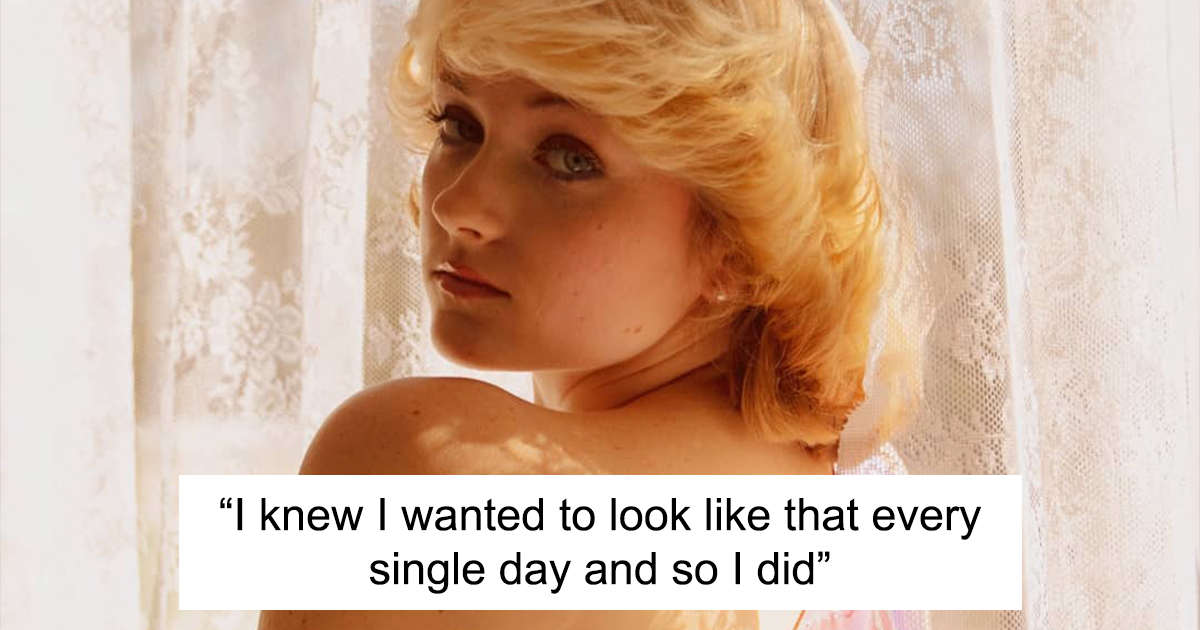
Most people discover an old ABBA song, add it to a playlist, and continue wearing whatever clean shirt happens to be closest to the bed. Rose Van Rijn took a slightly more ambitious route. After falling in love with the music, energy, hair, and fashion of the 1970s, she transformed her everyday appearance into a walking tribute to the decadeand TikTok could not stop watching.
Known online as @70srose, the Dutch content creator attracted attention with feathered hair, flared jeans, colorful blouses, vintage-inspired dresses, and transformations that made her look as though she had stepped through a portal located somewhere between an ABBA concert and a 1978 department-store catalog.
Her popularity is not simply a story about one TikTok user dressing like it is the ’70s. It reveals why vintage fashion performs so well on visual platforms, how music shapes personal style, and why choosing clothes from another era can become a surprisingly modern form of self-expression.
Who Is the TikTok User Behind the Viral ’70s Style?
Rose Van Rijn began exploring the decade after finding an old ABBA CD several years before her story attracted widespread attention in 2021. The discovery led her toward other major artists of the era, including the Bee Gees and Olivia Newton-John. She became as fascinated by their clothing and hairstyles as she was by their music.
Instead of treating that fascination as a theme for one costume party, Rose changed her haircut, rebuilt her wardrobe, and began incorporating 1970s fashion into everyday life. She later shared outfit videos, hair tutorials, musical references, and retro transformations on TikTok and Instagram.
The result was immediately recognizable. Rose’s combination of voluminous blond hair, soft layers, colorful prints, and period-inspired styling prompted viewers to compare her with ABBA singer Agnetha Fältskog. Others saw similarities to Princess Diana, particularly when Rose adopted a shorter, carefully feathered hairstyle.
Those comparisons eventually became part of her content. In one widely viewed transformation, she recreated Princess Diana’s blue 1987 Cannes Film Festival look, complete with a replica of the royal’s Catherine Walker dress. The video succeeded because it offered both familiarity and transformation: viewers knew the reference, but they still wanted to see how convincingly Rose could recreate it.
Why Rose Van Rijn’s Vintage Fashion Became So Watchable
Her Style Is Instantly Recognizable
Social media feeds move at roughly the speed of a caffeinated squirrel. A creator has only a moment to communicate an idea before the viewer scrolls to a dancing dog, a kitchen renovation, or someone explaining taxes while applying eyeliner.
Rose’s style works because it can be understood almost immediately. The feathered hair, warm colors, dramatic collars, flared trousers, and vintage silhouettes clearly communicate “1970s” before she says a word. That visual clarity is especially valuable on TikTok, where an outfit must often function as the opening sentence, headline, and thumbnail simultaneously.
Her videos also offer contrast. The setting, camera, and platform belong to the present, while her appearance points toward another decade. That small visual contradiction makes viewers pause. She is not filming an archival fashion documentary; she is buying records, styling her hair, and living an ordinary modern life while looking like the newest member of a forgotten disco group.
She Turned a Personal Interest Into a Consistent Identity
Occasionally wearing flared jeans is a fashion choice. Building an entire creative identity around the decade is storytelling.
Rose did not rely on one viral outfit. Her hair tutorials, record-related posts, transformations, vintage clothing, and references to musicians all supported the same recognizable world. Each new video felt like another chapter rather than an unrelated attempt to catch the algorithm’s attention.
Consistency also gave followers a reason to return. Viewers knew they might see a new hairstyle, an unusual vintage find, an ABBA-inspired combination, or a Princess Diana recreation. The subject remained familiar while the individual looks changed.
The 1970s Offered More Than Bell-Bottoms and Disco
One reason the decade remains so useful to modern fashion creators is its variety. The 1970s did not have a single uniform. It contained multiple styles that often overlapped, argued with one another, and occasionally met at a party wearing the same enormous collar.
Early in the decade, fashion carried forward hippie influences such as flowing fabrics, handmade details, embroidery, earthy colors, and romantic silhouettes. Denim became an everyday foundation. Sportswear and ready-to-wear clothing grew increasingly important as people embraced more casual approaches to dressing.
Disco later introduced shine, body-conscious cuts, platform shoes, jumpsuits, metallic materials, and outfits designed to move under nightclub lights. Meanwhile, punk developed its own deliberately disruptive visual language through torn garments, safety pins, leather, and do-it-yourself customization.
The decade also included wrap dresses, pantsuits, prairie-inspired clothing, streetwear, unisex experimentation, glam-rock theatricality, and tailored professional looks. Fashion history collections show that the era’s clothing reflected changing ideas about work, gender, youth culture, politics, music, and personal freedom.
That diversity gives Rose plenty of material. She can move from a casual blouse-and-denim outfit to a glamorous dress without abandoning her central theme. The decade is broad enough to support years of contentand enough sleeve shapes to threaten several doorways.
How ABBA Helped Create the @70srose Aesthetic
Music and fashion have always exchanged ideas. Performers do not merely introduce audiences to songs; they introduce hairstyles, makeup, footwear, silhouettes, and attitudes.
ABBA was particularly effective at turning clothing into part of a performance. The group’s coordinated stage costumes included flared pants, dramatic sleeves, fitted jumpsuits, bright colors, sparkling fabrics, boots, and theatrical combinations designed to remain visible under stage lighting.
Many of those outfits were created by costume designer Owe Sandström, whose designs helped turn the group into visual as well as musical icons. Modern designers and social media creators continue to borrow from that highly recognizable combination of pop, glam, disco, and playful exaggeration.
For Rose, discovering ABBA appears to have offered more than wardrobe references. It provided an entire atmosphere. The optimistic melodies, energetic performances, styled hair, and coordinated outfits demonstrated how clothing could make ordinary life feel more theatrical.
That is an important part of her appeal. She is not presenting the 1970s as a dusty museum display. She treats the decade as something joyful, wearable, and available for reinterpretation.
The Hair Is Doing Serious Work
Clothing may establish the decade, but Rose’s hair often completes the illusion. Her layered cuts, rounded volume, flipped ends, and feathered sections recall the styles associated with Farrah Fawcett, late-’70s disco performers, and Princess Diana’s early public image.
These hairstyles have repeatedly resurfaced on TikTok because they are dramatic enough to create satisfying before-and-after videos. A creator can begin with relatively flat hair, apply rollers or heat tools, brush out the layers, shake the finished style, and reveal a silhouette that looks completely different.
Beauty editors experimenting with viral ’70s hair have noted that layered cuts and curtain-style fringe make the flipped shape easier to create. The technique is learnable, but it requires more than simply pointing a hair dryer at one’s head and hoping Donna Summer appears.
Rose’s tutorials therefore add practical value to the visual entertainment. Followers are not limited to admiring the final result; they can study how she sections, shapes, and finishes the look. That combination of inspiration and instruction is highly shareable.
Why Vintage Fashion Thrives on TikTok
The Platform Rewards Transformation
Vintage fashion naturally creates strong transformation videos. A creator can begin in modern casual clothing, turn toward the camera, and reappear in a complete retro outfit. The change is easy to understand even with the sound off.
Hair styling, makeup application, thrift-store discoveries, clothing repairs, and historical recreations also fit neatly into short-form storytelling. Each process contains a beginning, a problem, and a revealthe three ingredients required for a miniature narrative.
Viewers Can Participate
Rose’s content invites questions. Where did she find the blouse? Is the dress authentically vintage? How does she create that much volume? Which decade should she recreate next? Does she really resemble Princess Diana?
Questions generate comments, while tutorials encourage saves, recreations, and response videos. Viewers become participants rather than passive spectators. Research into TikTok’s recommendation system has found that viewing behavior, follows, and likes influence what users are shown, helping distinct interests develop into highly active communities.
The potential audience is enormous. Pew Research Center found that TikTok remained widely used among American teenagers in 2024, with roughly six in ten saying they used the platform and a similar share visiting it daily. Vintage creators can therefore reach viewers who may never open a traditional fashion-history book but will happily watch a 30-second tutorial about feathered bangs.
Why Her Look Feels Authentic Rather Than Costume-Like
There is a noticeable difference between wearing a retro costume and developing vintage personal style. Costumes usually emphasize the loudest clichés: a giant peace-sign necklace, plastic platform boots, and a wig that appears to have survived an argument with a leaf blower.
Rose’s wardrobe feels more convincing because she pays attention to the complete silhouette. The hair works with the neckline. The color palette supports the print. The accessories fit the outfit instead of shouting the name of the decade from across the room.
She also wears the clothing with ease. Confidence matters because even a historically accurate outfit can feel theatrical when the wearer appears uncomfortable. Repetition has made retro fashion part of Rose’s normal presentation, so the clothes look lived in rather than temporarily borrowed.
Most importantly, she adapts the past instead of pretending that the present does not exist. Her videos use current technology, editing styles, and social platforms. The result is not historical reenactment. It is a modern identity built from vintage references.
Vintage Style Can Also Encourage More Thoughtful Shopping
A fascination with earlier fashion often directs people toward thrift stores, resale platforms, flea markets, repaired garments, and pieces already circulating in the world. That does not automatically make every vintage outfit environmentally perfect, but extending the useful life of clothing can reduce the demand to replace items immediately.
The environmental argument matters because discarded clothing remains a major source of textile waste. According to the U.S. Environmental Protection Agency’s most recently reported national textile estimates, millions of tons of textiles entered American landfills in 2018, while the recycling rate for clothing and footwear remained relatively low. The agency encourages reuse, donation, repair, and appropriate textile recycling where those options are available.
Vintage fashion also changes the shopping objective. Instead of purchasing everything required for a trend in one afternoon, a person may spend months slowly finding the right jacket, boots, scarf, or pair of jeans. The resulting wardrobe often feels more personal because it cannot be duplicated with a single checkout button.
How to Create a Wearable 1970s-Inspired Look
Begin With One Strong Silhouette
Start with flared or wide-leg pants, a fitted knit top, a wrap dress, a flowing midi skirt, or high-waisted denim. One recognizable shape is usually more effective than wearing six retro signals simultaneously.
Use a Period-Friendly Color Palette
Warm brown, rust, mustard, cream, avocado green, orange, burgundy, denim blue, and dusty floral shades can create a ’70s mood without requiring a complete vintage wardrobe. Disco-inspired looks may use silver, gold, white, black, or saturated jewel tones.
Add Texture and Pattern
Corduroy, suede, crochet, velvet, denim, satin, and lightweight printed fabrics all fit different sides of the decade. Paisley, florals, geometric prints, stripes, and abstract motifs can help, although combining every pattern at once may cause innocent wallpaper to feel threatened.
Let Hair and Accessories Finish the Story
Layered hair, flipped ends, a scarf, tinted glasses, a narrow belt, platform-style shoes, or a structured vintage bag can establish the era without making the outfit impractical. Choose one or two details that support the clothing rather than competing with it.
Mix Vintage and Modern Pieces
An authentic vintage blouse can work with modern jeans. A new wrap dress can be paired with a secondhand leather bag. Mixing periods makes the outfit easier to wear, easier to clean, and considerably less dependent on discovering untouched 1974 inventory in perfect condition.
The Real-Life Experience of Dressing Like the ’70s
Trying a fully retro look for the first time can feel unexpectedly vulnerable. Modern basics tend to blend into public spaces, while feathered hair, flares, and a printed blouse announce that a deliberate decision occurred before breakfast. People may look twice, offer compliments, ask whether a party is happening, or begin explaining what they wore in high school.
The attention can initially make a wearer self-conscious. Yet it also demonstrates how personal style creates conversation. A stranger who might never comment on an ordinary sweatshirt may happily discuss a familiar hairstyle or remember a relative who owned a similar dress. Vintage clothing carries cultural memory, so an outfit can connect generations without requiring a formal introduction.
The shopping experience is different too. Building a ’70s-inspired wardrobe through secondhand stores requires patience. Sizing varies, labels may be missing, and the perfect jacket will occasionally have sleeves designed for a very stylish octopus. Successful vintage shopping involves checking fabric condition, seams, closures, stains, odors, and alteration possibilities.
That extra effort often makes each discovery more memorable. A mass-produced shirt purchased in seconds may become just another shirt. A beautifully patterned blouse found after searching five racks feels like a small archaeological victory. The hunt becomes part of the wardrobe’s story.
Hair presents another learning curve. Feathered layers can look effortless in a finished video, but the process may involve rollers, heat protection, brushes, clips, strategic cooling, and several attempts to persuade both sides of the head to cooperate. The first result may be less “disco icon” and more “electrical weather event.” Practice improves the symmetry.
Wearing retro clothing also teaches the difference between historical inspiration and practical daily style. Some original fabrics are delicate. Certain shoes are better suited to photographs than sidewalks. Long sleeves may interact aggressively with soup. A wearable wardrobe gradually develops through experience: comfortable denim for errands, dramatic pieces for events, and washable modern garments for days when dry cleaning feels like an unreasonable plot twist.
Another common experience is learning that the 1970s cannot be reduced to one aesthetic. Someone who begins with bohemian dresses may discover glam rock, disco tailoring, punk customization, prairie styles, sportswear, or Black street-fashion history. Research makes the wardrobe richer and helps prevent the decade from becoming a collection of clichés.
Most importantly, dressing differently can build confidence. The first public outing may feel like a performance. After repeated wear, the clothes begin to feel normal. That shiftfrom feeling dressed up to feeling like yourselfis what makes Rose Van Rijn’s story compelling. Her style became popular not merely because the outfits were attractive, but because she committed to something she genuinely enjoyed.
The lesson is not that everyone should buy flared pants, cut feathered layers, and reorganize the living room around a record player. It is that personal style becomes meaningful when it reflects curiosity rather than obligation. A wardrobe does not have to match the most recent trend report. It has to make sense to the person wearing it.
Conclusion: Rose Van Rijn Made Nostalgia Feel New
Rose Van Rijn went viral because her videos offered more than attractive 1970s outfits. They combined transformation, music, fashion history, tutorials, recognizable references, and genuine enthusiasm. Her ABBA-inspired beginnings developed into a distinct creative identity that viewers could understand instantly and explore repeatedly.
Her popularity also reflects a larger change in online fashion culture. TikTok allows highly specific interests to find enormous audiences. A creator does not need to appeal to everyone; she needs to communicate her world clearly enough that the right viewers want to enter it.
Rose’s world happens to include feathered hair, colorful prints, vintage silhouettes, Princess Diana transformations, and enough ABBA energy to power a moderately sized discotheque. Beneath the nostalgia, however, the message is thoroughly current: personal style is most interesting when it is chosen with confidence.
Note: This original article synthesizes verified public reporting, creator information, fashion-history resources, platform research, and environmental guidance available at the time of writing.