Note: This article is for general financial education only and is not personalized investment advice.
Stocks and bonds are supposed to be the classic odd couple of investing. Stocks bring the drama, the growth, the champagne, and occasionally the broken furniture. Bonds are expected to show up with a cardigan, a cup of tea, and a calming voice. For decades, investors have been told that when stocks fall, bonds often help cushion the blow. So when both decline at the same time, it feels like finding out the seatbelt and the airbag have both decided to take a personal day.
The good news is that simultaneous stock and bond declines are not the normal state of the market. The bad news is that they do happen. And when they happen during inflation shocks or aggressive interest-rate increases, they can make even a diversified portfolio feel less diversified than advertised.
So, how often do stocks and bonds decline at the same time? The answer depends on the time period, the bond index, and whether we are talking about daily, monthly, quarterly, or annual returns. Over long annual periods, it is rare. Over shorter periods, it is more common. Let’s unpack the history, the math, and the investor experience behind those uncomfortable moments when both sides of a balanced portfolio turn red.
The Quick Answer: Rare Annually, More Common Short Term
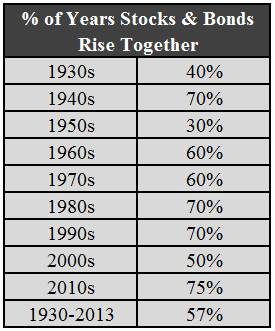
Using long-term U.S. market history, annual declines in both the S&P 500 and intermediate-to-long-term U.S. Treasury bonds have been uncommon. Based on historical annual return data for U.S. stocks and 10-year Treasury bonds from 1928 through 2025, both asset classes declined in the same calendar year only a handful of times. Depending on the exact bond benchmark and rounding method used, the frequency is roughly around 5% of calendar years.
That means the classic “both stocks and bonds are down this year” experience is not something investors should expect every few years. It is closer to a rare market weather event: not impossible, not mythical, but definitely not the usual forecast.
However, shorter time frames tell a different story. Quarterly data has shown that stocks and bonds can both decline in the same quarter roughly around one-tenth of the time. Monthly and daily returns can overlap even more often because short-term price movements are noisy. Markets do not politely coordinate themselves around calendar years just because humans like neat spreadsheets.
Historical Examples of Stocks and Bonds Falling Together
To understand how rare these events are, it helps to look at actual history. Using the S&P 500 for stocks and 10-year U.S. Treasury bond total returns for bonds, several years stand out as examples when both declined in the same calendar year.
| Year | Stock Market Context | Bond Market Context | Why It Mattered |
|---|---|---|---|
| 1931 | Stocks collapsed during the Great Depression. | Long-term Treasuries also declined. | A severe financial and economic crisis pressured many assets. |
| 1941 | Stocks fell amid wartime uncertainty. | Treasury bonds posted a negative return. | War, policy shifts, and inflation concerns shaped markets. |
| 1969 | Stocks declined as inflation and tighter policy weighed on valuations. | Bond prices fell as interest rates rose. | A classic inflation-and-rate-pressure environment. |
| 2018 | Stocks ended the year lower after a sharp fourth-quarter selloff. | Some long Treasury return series were slightly negative. | A mild example, with bonds close to flat rather than deeply damaged. |
| 2022 | Stocks declined sharply as inflation and Fed tightening hit valuations. | Bonds suffered one of their worst modern drawdowns. | The most famous recent example of the 60/40 portfolio struggling. |
The year 2022 deserves its own spotlight because it was not just a “both down” year. It was a “both down hard enough to make investors check their statements through one eye” year. The S&P 500 fell sharply, while long-duration bonds also dropped as interest rates rose at a historic pace. For many investors, it was the first time they truly saw that bonds can lose money, too.
Why Stocks and Bonds Usually Do Not Fall Together
In many market downturns, stocks fall because investors worry about weaker economic growth, lower profits, rising unemployment, or recession. In that kind of environment, high-quality government bonds often benefit. Investors seek safety, bond prices rise, and yields fall. This is the “flight to quality” effect, and it is one reason bonds have historically helped stabilize diversified portfolios.
For example, during the 2008 financial crisis, stocks plunged, but U.S. Treasury bonds performed strongly. The same broad pattern appeared during several growth scares and recessions. When the market’s biggest fear is weak growth, bonds can behave like the responsible adult in the room.
That relationship is one reason the traditional 60/40 portfolio became so popular. A mix of 60% stocks and 40% bonds does not eliminate risk, but it has often reduced volatility compared with an all-stock portfolio. Stocks drive long-term growth. Bonds provide income, stability, and potential ballast during equity selloffs.
Why Stocks and Bonds Sometimes Decline Together
The trouble begins when the market’s main fear is not recession but inflation. Inflation changes the script. Stocks dislike inflation because it can squeeze profit margins, reduce consumer purchasing power, and force central banks to raise interest rates. Bonds dislike inflation because it erodes the real value of fixed interest payments. When inflation rises unexpectedly, both asset classes can look at each other and say, “You too?”
1. Rising Interest Rates Hurt Bond Prices
Bond prices and interest rates move in opposite directions. When yields rise, existing bonds with lower coupons become less attractive, so their prices fall. The longer the bond’s duration, the more sensitive it usually is to rate changes. That is why long-term bonds can suffer large losses during rapid rate-hiking cycles.
In 2022, the Federal Reserve raised rates aggressively to fight inflation. Bond yields climbed quickly, and bond prices fell. Investors who thought bonds were “safe” discovered that high-quality does not always mean price-stable.
2. Higher Rates Can Pressure Stock Valuations
Stocks are also sensitive to interest rates. Higher rates can reduce the present value of future corporate earnings, especially for growth stocks whose profits are expected far into the future. Higher borrowing costs can also slow business investment, cool housing, and reduce consumer spending.
That is why a rapid rise in rates can hit both stocks and bonds at once. Bonds fall because yields rise. Stocks fall because higher discount rates and tighter financial conditions make future profits less valuable. It is a two-for-one sale, except nobody wants what is being sold.
3. Inflation Shocks Can Overpower Diversification
Stock-bond diversification works best when the dominant risk is growth weakness. It works less well when inflation is the dominant shock. In inflationary periods, stocks and bonds may become positively correlated, meaning they move in the same direction more often.
Positive correlation does not mean stocks and bonds become identical. It simply means the usual offsetting behavior weakens. A correlation of zero or slightly positive can still provide some diversification, but it is not the same as a guaranteed hedge.
Annual Declines vs. Quarterly Declines: A Big Difference
One reason investors get confused is that “stocks and bonds fell together” can mean different things. If someone says both declined in the same year, that is a high-level statement. If both fell in the same quarter or month, that is much more common.
Annual data smooths out a lot of market noise. Bonds might fall during part of the year and recover later. Stocks might sell off in one quarter and rally in another. By December 31, one asset class may have recovered enough to finish positive.
Quarterly data is less forgiving. A sharp inflation surprise, a sudden Fed policy shift, or a jump in yields can hurt both stocks and bonds over a three-month stretch. That does not necessarily mean diversification has failed forever. It may simply mean both assets were reacting to the same short-term macro shock.
Did the 60/40 Portfolio Fail?
The 60/40 portfolio did not fail in the sense that gravity failed because you tripped over a suitcase. It had a bad year. A very bad year, yes. A year that made headlines, caused frustration, and inspired many dramatic “Is the 60/40 dead?” articles. But one painful period does not erase the long-term logic of diversification.
The better lesson is that the 60/40 portfolio is not a magic shield. It is a risk-management framework. It can reduce volatility over time, but it cannot guarantee positive returns every year. Bonds can decline. Stocks can decline. Sometimes they can decline together.
What 2022 reminded investors is that bond risk comes in different flavors. Credit risk is the risk that a borrower cannot pay. Interest-rate risk is the risk that rising yields push prices lower. Inflation risk is the risk that money paid back in the future buys less than expected. U.S. Treasury bonds have low credit risk, but they still carry interest-rate and inflation risk.
Which Bonds Are Most Vulnerable When Stocks Fall Too?
Not all bonds behave the same way. Long-term bonds are usually more sensitive to interest-rate changes than short-term bonds. Corporate bonds may also suffer when credit spreads widen, especially if investors worry about recession or default risk. High-yield bonds can sometimes behave more like stocks than like safe government bonds.
Short-term Treasury bills and short-duration bonds tend to be less volatile when rates rise because their cash flows reset sooner. That does not make them exciting. Nobody brags at a party about the thrilling emotional journey of Treasury bills. But in a rising-rate environment, boring can be beautiful.
Treasury Inflation-Protected Securities, or TIPS, can help address inflation risk, though they can still decline when real yields rise. Commodities, real assets, and certain alternative strategies may also provide diversification in inflationary environments, but each comes with its own risks and costs. There is no free lunch in investing. At best, there is a reasonably priced sandwich with disclosures.
What Investors Should Learn From Simultaneous Declines
The main lesson is not to abandon bonds after a bad bond year. That is like firing your umbrella because it failed during a hurricane while you were standing sideways in a parking lot. Bonds still have roles: income, liquidity, capital preservation, and potential protection during growth-driven equity selloffs.
The smarter takeaway is to understand what kind of bonds you own and why. A portfolio full of long-duration bonds behaves differently from one using short-term Treasuries. A core bond fund behaves differently from high-yield debt. A ladder of individual bonds behaves differently from a long-duration bond ETF.
Investors should also remember that starting yields matter. When bond yields are extremely low, there is less income cushion to offset price declines. When yields are higher, future bond returns may become more attractive, even if the path remains bumpy.
How Often Should You Expect It Going Forward?
No one can predict the exact frequency of future simultaneous stock and bond declines. But history offers a reasonable framework. On a calendar-year basis, both stocks and high-quality bonds declining together has been rare. On a quarterly basis, it is uncommon but not shocking. On a monthly basis, it happens often enough that investors should not treat it as a market apocalypse every time.
The frequency may rise during periods when inflation uncertainty dominates growth uncertainty. If investors are more worried about sticky inflation, central-bank tightening, and rising real yields, stocks and bonds may move together more often. If recession risk becomes the main concern, high-quality bonds may again provide stronger ballast.
In other words, the stock-bond relationship is not a marriage contract. It is more like a working relationship. Most of the time, each asset has a different job. Occasionally, they both have a terrible Monday.
Practical Portfolio Ideas Without Panic
When stocks and bonds decline together, investors often feel tempted to make sudden changes. That can be dangerous. Selling after losses may lock in damage and leave the portfolio poorly positioned for recovery. A better approach is to review the portfolio calmly.
Review Duration
Duration measures a bond portfolio’s sensitivity to interest-rate changes. Longer duration can help when rates fall but hurt when rates rise. Investors who need stability may prefer a mix of short- and intermediate-term bonds rather than relying heavily on long-term bonds.
Keep Cash for Near-Term Needs
Money needed soon should not depend on stocks or long-term bonds behaving nicely. Cash, money market funds, or short-term Treasury bills can help cover short-term spending needs without forcing sales during market declines.
Rebalance Instead of Reacting
Rebalancing is the disciplined act of bringing a portfolio back to its target mix. When stocks fall more than bonds, rebalancing may mean buying stocks. When bonds become more attractive after yields rise, rebalancing may mean adding fixed income. It is not glamorous, but neither is brushing your teeth, and both tend to help over time.
Diversify Beyond the Basic Label
Diversification is not just “own stocks and bonds.” It also means understanding sectors, geographies, maturities, credit quality, inflation protection, and liquidity. A portfolio can look diversified on the surface but still be highly exposed to one macro risk, such as rising rates.
Investor Experience: What It Feels Like When Both Stocks and Bonds Fall
The textbook explanation of simultaneous stock and bond declines is neat: inflation rises, rates rise, valuations fall, duration hurts, correlations shift. Very tidy. Very professional. Very unlikely to comfort someone staring at a brokerage account that looks like it was edited by a raccoon.
In real life, the experience is emotional. Many investors build balanced portfolios because they want a smoother ride. They accept that stocks may have rough years, but they expect bonds to soften the landing. When both fall, the emotional contract feels broken. It is not just the loss that hurts. It is the surprise.
That surprise can lead to three common mistakes. The first is declaring diversification useless. This is understandable but too extreme. Diversification does not promise that every asset will rise whenever another falls. It reduces reliance on any single source of return over time. The second mistake is chasing whatever worked recently. After a bad stock-bond year, investors may rush into commodities, cash, private assets, or complex strategies without understanding the risks. The third mistake is changing the plan without changing the goal. If your time horizon, spending needs, and risk tolerance are the same, a bad year alone may not justify a completely new strategy.
A useful way to think about these periods is to separate discomfort from danger. Discomfort is seeing temporary losses in a portfolio designed for long-term goals. Danger is needing to sell volatile assets to pay near-term bills. Discomfort can often be managed with patience and rebalancing. Danger requires better planning, such as holding enough cash or short-term bonds for upcoming expenses.
Another experience investors often report is frustration with bonds. Stocks are expected to be wild. Bonds are expected to behave. When bonds fall, people take it personally, as if the bond market borrowed the family car and returned it with a dent. But bonds are priced every day, and their prices respond to interest rates. A high-quality bond can still decline before maturity. That does not mean it has become junk. It means the market is adjusting to new yields.
For retirees, simultaneous declines can feel especially stressful because withdrawals magnify the pain. This is where portfolio structure matters. A cash reserve, short-term bond bucket, or planned withdrawal strategy can help reduce the need to sell stocks or long-duration bonds after a bad period. For younger investors, the experience is different. Falling stock and bond prices may feel discouraging, but higher bond yields can improve future expected returns, and lower stock prices may create better long-term entry points.
The most practical lesson from these episodes is humility. Markets are complex, correlations change, and no portfolio mix is perfect in every environment. The goal is not to build a portfolio that never has a bad year. The goal is to build one that can survive bad years without forcing bad decisions.
When stocks and bonds decline together, the best response is usually not panic. It is diagnosis. Ask what caused the decline. Was it inflation? Rising rates? Credit stress? Recession fear? Then ask whether your portfolio still matches your goals. If the answer is yes, discipline may matter more than action. If the answer is no, adjust thoughtfully rather than emotionally.
Conclusion
Stocks and bonds do decline at the same time, but calendar-year declines in both have historically been rare. Over shorter periods, such as months and quarters, they happen more often. The key driver is usually the type of economic shock hitting markets. Growth scares often help high-quality bonds. Inflation shocks and rapid rate increases can hurt both stocks and bonds at once.
The lesson is not that diversification is broken. The lesson is that diversification has limits. Bonds are not guaranteed shock absorbers in every market environment, but they can still play an important role in long-term portfolio construction. Investors who understand duration, inflation risk, starting yields, and rebalancing are better prepared for those uncomfortable moments when both sides of the portfolio fall together.
In investing, rare does not mean impossible. It means you should not be shocked when it happens, and you should not design your entire financial life around pretending it never will.