Some buildings politely ask for attention. Cathedrals do not. They rise above skylines, swallow footsteps in stone naves, throw colored light across centuries-old floors, and make even the most confident traveler whisper, “Wow,” like a tourist in a movie montage. Whether you love Gothic arches, glittering mosaics, sacred music, city views, or simply places that make your phone camera work overtime, the world’s most stunning cathedrals offer far more than a quick sightseeing stop.
This guide to 11 stunning cathedrals you can visit blends architecture, history, travel practicality, and the small human details that make these places memorable. These are active houses of worship, cultural landmarks, and architectural masterpieces, so the best visit is equal parts curiosity and respect. In other words: admire the ceiling, but maybe do not test the echo with your karaoke version of “Bohemian Rhapsody.”
Below are some of the best cathedrals to visit in Europe and the United States, from medieval icons to modern sacred spaces. Each one offers a different kind of beauty: stained glass, towers, domes, carvings, crypts, mosaics, pilgrimage traditions, and enough stonework to make a mason weep into his lunch.
Why Cathedrals Still Captivate Modern Travelers
Cathedrals are not just big churches. A cathedral is the principal church of a diocese, traditionally containing the bishop’s seat, or cathedra. But for travelers, cathedrals are also time machines. They show how people expressed faith, power, fear, hope, artistry, and civic pride long before anyone could post a “hard launch” on social media.
Many historic cathedrals took decades or even centuries to build. Their builders often knew they would never see the final stone placed. That alone gives these places a strange and moving energy. They are monuments to patience, which is impressive in an age when we get annoyed if a webpage loads for more than three seconds.
For SEO-minded travelers searching for beautiful cathedrals to visit, historic cathedrals, Gothic architecture, and cathedral travel destinations, this list offers a practical starting point. For everyone else, consider it a friendly warning: once you fall in love with cathedral architecture, ordinary ceilings may start looking a little underdressed.
11 Stunning Cathedrals You Can Visit
1. Notre-Dame de Paris Paris, France
Notre-Dame de Paris is one of the most famous cathedrals in the world, and for good reason. Sitting on the Île de la Cité, it has watched Paris change around it for more than eight centuries. Its flying buttresses, rose windows, sculpted portals, and twin towers helped define the imagination of Gothic architecture.
After the devastating 2019 fire, Notre-Dame underwent a major restoration and reopened to visitors after years of careful work. That makes a visit today especially emotional. You are not only seeing medieval craftsmanship; you are seeing resilience in limestone, oak, glass, and faith.
Look for the renewed interior brightness, the famous rose windows, the grand nave, and the feeling that Paris itself is holding its breath. Entry arrangements and tower access can change, so travelers should check current visitor rules before going. Notre-Dame is popular enough to make a rock star jealous, so early planning helps.
2. Chartres Cathedral Chartres, France
If stained glass had a royal family, Chartres Cathedral would wear the crown and look fabulous doing it. Officially known as the Cathedral of Our Lady of Chartres, this UNESCO-listed Gothic masterpiece is internationally famous for its extraordinary medieval stained-glass windows and sculpted portals.
Chartres is a favorite among architecture lovers because so much of its medieval character remains intact. The deep blue glass, often called “Chartres blue,” gives the interior a mysterious glow that feels almost liquid. The cathedral also has a famous labyrinth set into the floor, a reminder that pilgrimage can be physical, spiritual, and occasionally confusing if you forgot comfortable shoes.
Located about an hour by train from Paris, Chartres works beautifully as a day trip. It is less frantic than the capital’s major attractions, which gives visitors more time to stand still, look up, and quietly wonder how medieval artists managed all this without modern scaffolding, laser levels, or iced coffee.
3. Cologne Cathedral Cologne, Germany
Cologne Cathedral is the kind of building that makes a skyline stop being casual. Its twin spires dominate the city, rising with such Gothic confidence that they seem to say, “Yes, we are the main event.” This UNESCO World Heritage Site is one of Europe’s great High Gothic cathedrals and one of Germany’s most visited landmarks.
Inside, visitors find soaring vaults, stained glass, chapels, and the famous Shrine of the Three Kings, an important pilgrimage treasure. The cathedral’s scale is enormous, but its details are just as compelling. Carved figures, patterned stone, and colored light reward anyone who slows down instead of rushing through like they are late for a train.
And speaking of trains, Cologne Cathedral sits conveniently near the main railway station. Few cities offer such a dramatic first impression. One moment you are dealing with luggage; the next, you are staring at a Gothic giant and forgetting what platform you came from.
4. Milan Cathedral Milan, Italy
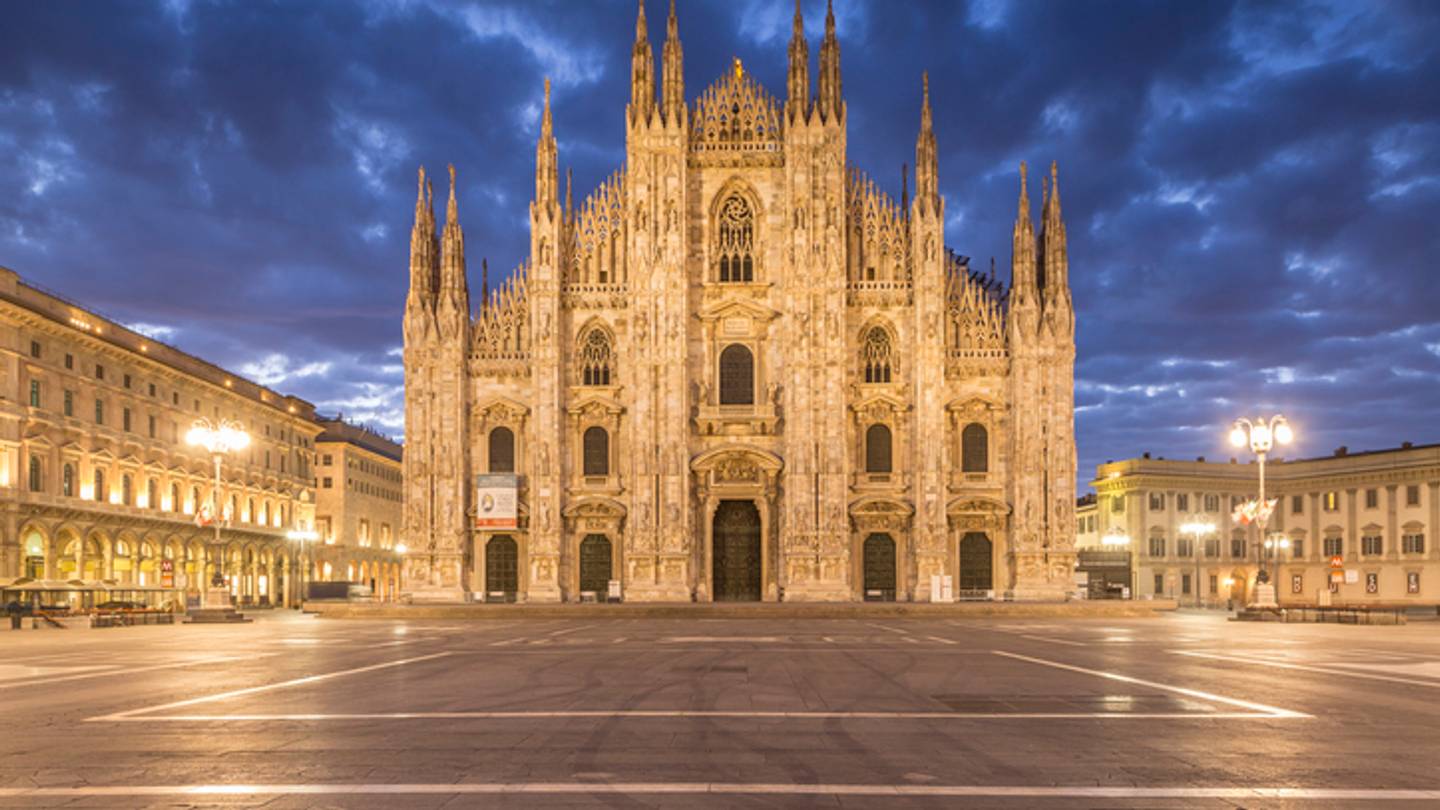
Milan Cathedral, or the Duomo di Milano, is proof that sometimes “more is more” works beautifully. This marble masterpiece bristles with spires, statues, pinnacles, and elaborate details. It is not shy. It does not do minimalism. It wears its stone lace like high fashion, which feels appropriate in Milan.
The cathedral complex includes the interior, archaeological areas, museum spaces, and the famous terraces. The rooftop terraces are one of the great cathedral experiences in Europe. Visitors can walk among the spires and look across Milan while pretending, just briefly, that they live in a Renaissance painting with better espresso.
Inside, the Duomo feels vast and solemn, with huge columns, stained glass, and an atmosphere that shifts dramatically depending on the light. Outside, the piazza buzzes with tourists, shoppers, photographers, pigeons, and the occasional person trying to capture the entire façade in one photo. Good luck. The cathedral is not exactly pocket-sized.
5. Seville Cathedral Seville, Spain
Seville Cathedral is often described as the largest Gothic cathedral in the world, and it absolutely behaves like it. Built on the site of a former mosque, the Cathedral of Saint Mary of the See reflects layers of Spanish history, blending Gothic scale with elements connected to the city’s Islamic past.
The Giralda, once a minaret and now the cathedral’s bell tower, is one of Seville’s most recognizable symbols. Climbing it offers wonderful views over the city, and the ramped ascent is a fascinating architectural feature in itself. Inside the cathedral, visitors encounter an immense nave, chapels, artworks, and a grand altarpiece that practically demands a moment of silence.
Seville Cathedral is a place where cultures, centuries, and styles meet. It is also a place where travelers discover that “just popping in for a quick look” can accidentally become two hours. This is normal. Blame the architecture.
6. St. Paul’s Cathedral London, England
St. Paul’s Cathedral is one of London’s defining landmarks, crowned by a dome that has anchored the city skyline for centuries. Designed by Sir Christopher Wren after the Great Fire of London, the present cathedral is a masterpiece of English Baroque architecture.
Visitors can explore the cathedral floor, the crypt, and the dome galleries. The climb to the galleries is not exactly a lazy stroll, but the views over London are worth the effort. The Whispering Gallery, Stone Gallery, and Golden Gallery are among the cathedral’s signature experiences, although access can vary, so checking current visitor information is wise.
St. Paul’s is also tied to national ceremonies, memorials, and royal history. Yet it still works as a daily place of worship. That balance between grandeur and living tradition gives it a special presence. It is majestic, but not frozen in time.
7. Canterbury Cathedral Canterbury, England
Canterbury Cathedral sits at the heart of English religious and literary history. With roots reaching back more than 1,400 years, it is the seat of the Archbishop of Canterbury and part of a UNESCO World Heritage Site. It is also forever linked with the pilgrimage tradition made famous by Geoffrey Chaucer’s The Canterbury Tales.
The cathedral offers a rich mix of Romanesque and Gothic architecture, medieval stained glass, cloisters, chapels, and quiet corners that feel like they have been collecting stories for centuries. The site’s history includes the martyrdom of Thomas Becket, which turned Canterbury into one of medieval Europe’s major pilgrimage destinations.
For travelers, Canterbury is easy to pair with a broader trip through southeast England. The city around the cathedral is walkable and atmospheric, with old streets, timber-framed buildings, and enough charm to make your camera battery nervous.
8. Washington National Cathedral Washington, D.C.
Washington National Cathedral brings Gothic grandeur to the American capital. Officially the Cathedral Church of Saint Peter and Saint Paul, it is one of the largest cathedrals in the world and one of the most impressive examples of Gothic-inspired architecture in the United States.
Visitors can explore stone carvings, chapels, stained glass, vaulted ceilings, and details that range from solemn to surprisingly playful. The famous Space Window contains a piece of lunar rock, which is a wonderful reminder that cathedral art can look backward into tradition and outward into the cosmos at the same time.
The cathedral also offers tours that help visitors understand the building’s art, architecture, and national role. From memorial services to concerts, Washington National Cathedral has become a symbolic gathering place for the country. It is spiritual, civic, and architectural all at once basically a multitasker with flying buttresses.
9. St. Patrick’s Cathedral New York City, New York
Set on Fifth Avenue across from Rockefeller Center, St. Patrick’s Cathedral is one of New York City’s most striking contrasts: a Neo-Gothic sanctuary surrounded by glass, traffic, luxury shops, office towers, and people walking very fast while holding very expensive coffee.
The cathedral is known as a major Roman Catholic landmark in the United States and one of Manhattan’s most beloved sacred spaces. Its twin spires, pointed arches, marble interior, stained glass, and busy liturgical life make it both a tourist destination and an active parish.
What makes St. Patrick’s special is the drama of its setting. Many cathedrals dominate old town squares; St. Patrick’s stands in the middle of modern Manhattan and somehow refuses to be overshadowed. Step inside, and the city noise drops away. For a few minutes, New York remembers how to whisper.
10. Cathedral Basilica of St. Louis St. Louis, Missouri
The Cathedral Basilica of St. Louis is one of America’s great hidden-in-plain-sight treasures. From the outside, it is handsome and dignified. Inside, it becomes a universe of mosaics. Millions of tiny tesserae cover the interior in glowing color, creating one of the largest mosaic collections in the world.
The effect is dazzling without feeling chaotic. Domes, arches, saints, symbols, and patterns unfold overhead and around the nave. It is the kind of place where visitors begin by saying, “That’s beautiful,” and end by tilting their necks so long they start negotiating with gravity.
The cathedral offers museum and tour opportunities, making it especially rewarding for visitors who want to understand how the mosaics were designed and installed. It deserves a place on any list of stunning cathedrals in the United States.
11. Cathedral of Saint Paul Saint Paul, Minnesota
Set dramatically on Summit Hill, the Cathedral of Saint Paul overlooks Minnesota’s capital with Beaux-Arts confidence. Inspired by French churches and cathedrals, it features a grand dome, rounded arches, a symmetrical plan, and a sense of civic presence that makes it one of the Midwest’s most impressive sacred buildings.
The cathedral was designed by architect Emmanuel Louis Masqueray, who helped shape several important American church projects. Inside, visitors can explore chapels, sacred art, decorative details, and museum displays that explain the cathedral’s construction and history.
Its location is part of the experience. From outside, the cathedral commands the hill. From inside, it offers calm, proportion, and beauty. It is a reminder that stunning cathedral travel does not require crossing an ocean. Sometimes the masterpiece is waiting in the Midwest, wearing a dome and quietly outclassing nearby office buildings.
How to Plan a Cathedral Visit Without Acting Like a Lost Gargoyle
Cathedrals reward slow travel. Before visiting, check opening hours, service times, ticket requirements, tower access, photography rules, and dress expectations. Many cathedrals are active places of worship, so sightseeing may pause during Mass, Evensong, funerals, or special ceremonies. This is not an inconvenience; it is the building doing its actual job.
Book ahead for popular sites like Notre-Dame de Paris, Milan Cathedral terraces, Seville Cathedral, and St. Paul’s Cathedral. For smaller or less crowded cathedrals, guided tours can transform a pretty visit into a meaningful one. A good guide explains why a carving matters, how a window tells a story, or why a certain chapel was placed exactly where it is.
Bring comfortable shoes, especially if towers, terraces, crypts, or old stone floors are involved. Cathedrals were not designed with modern sneaker technology in mind, but your feet will still appreciate it. Also bring patience. The best cathedral moments often happen after the checklist: when the light changes, the organ begins, or you notice a tiny carved face hiding above a doorway.
Experience Guide: What It Feels Like to Visit These Stunning Cathedrals
The best cathedral visits are not just visual; they are sensory. You remember the coolness of the stone before you remember the name of every chapel. You remember the sound of footsteps stretching down the nave. You remember how sunlight breaks through stained glass and lands in patches of red, blue, gold, and green, as if the floor has briefly become a painting.
One of the most powerful experiences is the first step inside. Outside, you may be in a busy city: Paris traffic, London buses, New York sirens, Milan shoppers, Seville heat. Then the door closes behind you, and the atmosphere changes. Cathedrals have a way of slowing people down without asking. Conversations become softer. Even teenagers temporarily stop saying “literally” every six seconds. Miracles do happen.
Another unforgettable experience is looking up. Cathedral ceilings are not casual design decisions. Gothic vaults, painted domes, mosaics, ribs, bosses, and lanterns pull your eyes upward. This upward movement is part engineering, part theology, and part theatrical genius. It makes the human body feel small, but not insignificant. Instead, it suggests that small people can still build enormous beauty when they work with patience and purpose.
Cathedral travel is also a lesson in detail. In a museum, art often appears in frames. In a cathedral, art is everywhere: underfoot, overhead, in windows, on doors, around altars, inside chapels, and sometimes tucked into corners where only the observant will find it. Washington National Cathedral has whimsical carvings. St. Louis glows with mosaics. Chartres teaches through glass. Milan turns stone into lace. Seville layers cultures into a single breathtaking monument.
For a richer experience, try attending a public service or music event where appropriate. You do not need to belong to the tradition to appreciate the sound of a choir filling a vaulted space. Sacred music reveals why these buildings were shaped the way they were. The architecture becomes an instrument, and suddenly the stone feels alive.
Photography is tempting, of course. These cathedrals are photogenic in the way sunsets and movie stars are photogenic: almost unfairly. But do not spend the entire visit behind a screen. Take the photo, then lower the phone. Let your eyes adjust. Notice the smell of wax, the grain of old wood, the temperature shift near the crypt, the way people instinctively pause before a side chapel.
The most meaningful cathedral visits often end quietly. You step back into the street changed in a small but real way. The city seems louder than before. The sky looks different. Your neck may hurt from looking up, but spiritually and architecturally, it was worth it.
Conclusion
The world’s most stunning cathedrals are more than travel attractions. They are archives of human imagination, faith, craftsmanship, ambition, and endurance. From Notre-Dame’s restored Gothic heart to St. Patrick’s calm presence in Manhattan, from Milan’s marble terraces to St. Louis’s shimmering mosaics, each cathedral offers a different answer to the same question: how do people build beauty that outlives them?
Whether you are planning a cathedral-focused itinerary or simply adding one unforgettable stop to your next trip, choose at least one place where you can linger. Read the plaques, take the tour, climb the tower if your knees are on speaking terms with you, and give yourself time to look up. The best cathedrals do not just show you history. They make you feel standing inside it.