Note: This article is based on real U.S. animal shelter reporting and national shelter data, rewritten in original language for web publishing.
The Sound of Silence: Why Empty Kennels Made Everyone Cheer
Most animal shelters are not quiet places. They have barking, meowing, squeaky doors, jingling leashes, ringing phones, and at least one volunteer saying, “Who ate the adoption paperwork?” But on one unforgettable day at the Humane Society of the Pikes Peak Region in Colorado Springs, the silence meant something wonderful: the kennels were empty because every available dog had found a home.
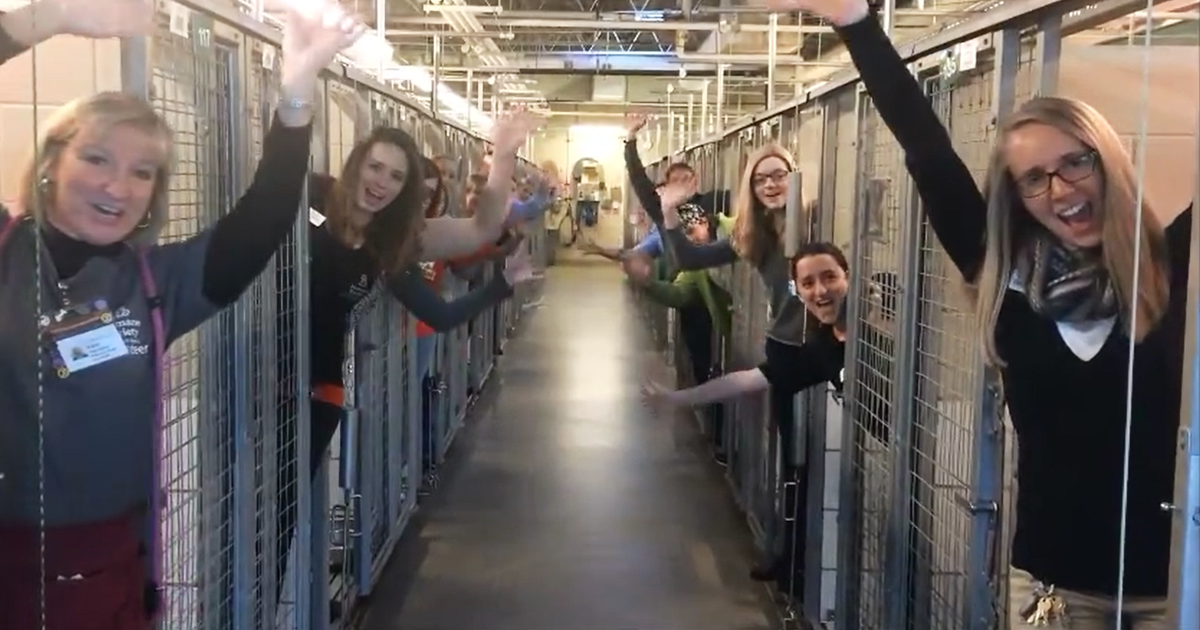
The joyful moment happened during the shelter’s holiday adoption campaign, “Bring Them Home for the Holidays.” Staff and volunteers celebrated by climbing into the empty kennels, cheering, laughing, and showing the world what a successful adoption day really looks like. It was not glamorous in the red-carpet sense. Nobody wore sequins. Nobody accepted a tiny golden statue. But in the world of animal rescue, an empty kennel is basically an Oscar, a Super Bowl ring, and a surprise pizza party rolled into one.
The campaign waived adoption fees for cats and dogs age five and older during the holiday season, helping older pets get extra attention from families who might otherwise have walked straight toward puppies and kittens. The result was a wave of adoptions, including dozens of cats and dogs placed with new families. The celebration became a feel-good reminder that behind every empty cage is a full couch, a new collar, and probably one very confused pet learning which rug is “the good rug.”
Why This Story Hit America Right in the Heart
The image of shelter workers dancing in empty kennels became popular because it captured something simple and powerful: rescue work is exhausting, but hope is real. Animal shelter staff do not just feed animals and clean cages. They comfort frightened strays, answer difficult calls, manage medical needs, match pets with adopters, and say goodbye more often than anyone should have to. So when a kennel goes empty for the best possible reason, everyone gets to exhale.
Empty kennels do not mean the problem of homeless pets has disappeared forever. Shelters continue to receive new animals every day. Some arrive as strays. Some are surrendered by families facing housing issues, medical costs, or life changes. Others are transferred from overcrowded facilities. But an empty kennel day is proof that community action works. It says, “Look what happens when adopters, volunteers, donors, and shelter teams all pull in the same direction.”
It also reminds people that adoption is not just a kind gesture. It is a practical solution. When one animal goes home, another animal can move into that safe space. That is why many animal welfare organizations often say adoption saves more than one life. It helps the adopted pet, and it opens room for the next dog or cat waiting for help.
The Bigger Picture: America’s Shelters Still Need Help
National animal shelter data shows why stories like this matter. Millions of dogs and cats enter U.S. shelters and rescues every year. In recent years, about 4.2 million shelter animals have been adopted annually, which is a huge number and deserves a standing ovation, preferably with paw-shaped confetti. Still, shelters across the country continue to face overcrowding, staffing shortages, veterinary care challenges, and longer stays for animals with medical or behavioral needs.
Many animals entering shelters are strays, while many others are surrendered because their owners can no longer care for them. That does not always mean people stopped loving their pets. Sometimes it means rent went up, pet-friendly housing was impossible to find, a medical bill appeared at the worst time, or a family had no access to affordable veterinary support. Compassionate sheltering is not only about finding new homes; it is also about helping pets stay with the families who already love them.
Why Older Pets Deserve the Spotlight
The Colorado shelter’s decision to waive fees for cats and dogs age five and older was especially meaningful. Older pets are often overlooked, even though they are frequently fantastic companions. They may already know basic manners. They may be calmer than puppies. They may be perfectly happy with a soft bed, a snack, and a human who understands that “wild Friday night” can mean watching TV together while both parties snore.
Senior and adult pets also give adopters a clearer sense of personality. With a puppy, you may be adopting a mystery box with paws. With an adult dog, shelter staff can often tell you whether the dog loves walks, prefers quiet homes, enjoys other pets, or believes squirrels are a personal insult. Adult cats can be equally clear about their preferences, including whether they want to be cuddled, admired from a respectful distance, or worshiped as the tiny velvet emperor of the hallway.
How Adoption Events Create Empty Kennel Days
Adoption campaigns work because they remove hesitation. A family may have been thinking about adopting for months, but a well-timed event gives them a reason to visit now. Reduced fees, extended hours, media attention, and social sharing all help bring more people through the doors. When shelters pair that attention with thoughtful matchmaking, the result can be life-changing.
National campaigns such as Clear the Shelters and Empty the Shelters have shown how powerful coordinated adoption efforts can be. These programs help shelters reach people who may not follow local rescue pages or know how many pets are waiting nearby. They also remind the public that shelters are not sad places by definition. They are places where second chances are organized, photographed, microchipped, and sent home with a bag of food and a slightly emotional receipt.
Lower Fees Do Not Mean Lower Standards
One common misunderstanding is that reduced-fee or waived-fee adoptions are careless. In reality, responsible shelters still screen adopters, counsel families, review pet needs, and make careful matches. The adoption fee is only one part of the process. When a shelter reduces that fee, it may simply be removing a financial barrier while still requiring the adopter to be prepared, informed, and committed.
Many shelters also send pets home already spayed or neutered, vaccinated, and microchipped. That means adopters are not just getting a pet; they are getting a companion who has already received essential care. For families watching every dollar, that support can make adoption possible without compromising the animal’s well-being.
What an Empty Kennel Really Means
An empty kennel is not just an empty space. It is a before-and-after story. Before, there was a dog waiting behind a gate, watching every visitor walk by. After, there is a dog learning the sound of a new refrigerator, discovering couch cushions, and realizing that dinner may arrive at the same time every evening like some kind of delicious miracle.
For shelter workers, empty kennels mean fewer animals under stress. Shelter environments can be hard on pets, especially those who are shy, elderly, recovering from illness, or sensitive to noise. A home environment gives many animals the chance to relax and show their real personalities. The dog who barked in the kennel may become a gentle shadow in the living room. The cat who hid under a blanket may become a lap manager with strong opinions about laptop placement.
Empty kennels also help shelters reset. Staff can deep-clean spaces, prepare for new arrivals, and focus more attention on animals with special needs. In overcrowded shelters, every inch matters. When adoptions create breathing room, the whole system works better.
Adoption Is a Community Sport
No shelter clears kennels alone. It takes adopters, foster families, volunteers, rescue partners, veterinarians, donors, photographers, social media followers, and people who share posts even when their own pet limit has been reached since 2014. Every role matters.
Foster homes are especially important. A foster family gives a pet temporary care, which frees kennel space and helps the shelter learn more about the animal’s personality. Some pets do not shine in a noisy shelter, but they blossom in a home. Foster notes can tell future adopters whether a dog is house-trained, whether a cat enjoys children, or whether a senior pet prefers a heated blanket and the remote control within paw distance.
Volunteers also make a huge difference. Walking dogs, socializing cats, washing blankets, answering phones, transporting animals, and taking adoption photos are not small tasks. A good photo can help an overlooked pet get noticed. A calm walk can reduce a dog’s stress. A clean blanket can make a kennel feel less frightening. Rescue work is built from these small acts of care.
How to Help Your Local Shelter Reach Its Happiest Day
Adopt When You Are Ready
The best adoption is not impulsive; it is prepared. Before adopting, think about your schedule, budget, housing rules, energy level, and long-term commitment. A pet is not a seasonal decoration, even if a cat in a holiday bow looks like it belongs on a greeting card. Adoption should be joyful, but it should also be realistic.
Talk honestly with shelter staff. Tell them if you live in an apartment, have children, travel often, own other pets, or want a hiking buddy versus a couch potato. The more they know, the better they can match you with an animal who fits your life.
Foster If You Cannot Adopt
Fostering is perfect for people who want to help but cannot make a permanent commitment. Some foster placements last a weekend. Others last a few weeks. Many shelters need fosters for puppies and kittens too young for adoption, pets recovering from surgery, shy animals needing quiet time, or dogs who need a break from kennel stress.
Donate What Shelters Actually Need
Money is always useful because shelters can direct it where the need is greatest. But supplies help too. Many shelters need pet food, towels, blankets, cleaning products, toys, leashes, collars, and treats. Before dropping off donations, check the shelter’s wish list. Not every shelter can use every item, and nobody wants to become the person who donates twenty-seven decorative pillows that say “Live, Laugh, Bark.”
Share Adoptable Pets Online
Social media sharing may feel small, but it can be powerful. You might not be able to adopt a senior beagle named Walter, but someone in your network might be searching for exactly that kind of low-speed, high-snack gentleman. Sharing posts helps pets reach people beyond the shelter’s regular audience.
Specific Examples of Empty Kennel Success
The Pikes Peak celebration is one of many examples of shelters using creative campaigns to move animals into homes. Around the country, large adoption weekends, holiday promotions, reduced-fee events, and community partnerships have helped shelters place hundreds or even thousands of pets. Some events clear entire wings. Others help long-stay animals finally meet their people. The common ingredient is visibility.
In Florida, adoption events have helped public shelters clear large kennel areas after months of overcrowding. In Pennsylvania, shelters have celebrated rare moments when all dogs were adopted around the holidays. National efforts like Clear the Shelters have helped more than a million pets find homes since the campaign began. BISSELL Pet Foundation’s Empty the Shelters program has supported hundreds of thousands of adoptions by making adoption more affordable and bringing extra attention to shelters across the U.S. and Canada.
These examples show that empty kennel days are not fairy tales. They are the result of planning, publicity, cooperation, and ordinary people deciding that the family group chat needs a dog photo immediately.
Why Happy Shelter Stories Matter
Animal welfare can be emotionally heavy. People often hear about overcrowding, abandonment, cruelty, and euthanasia. Those realities should not be ignored, but hope deserves airtime too. Happy stories motivate action. They remind readers that adoption works, volunteering matters, and shelters are not hopeless places. They are busy places full of people trying very hard to turn hard beginnings into happy endings.
A viral empty-kennel celebration can inspire someone to visit a local shelter. It can convince a family to consider an older pet. It can encourage a volunteer to sign up or a donor to send supplies. Joy is not a distraction from the problem; sometimes joy is the fuel that keeps people solving it.
Experience Notes: What an Empty Kennel Day Feels Like
Imagine walking into a shelter on an ordinary morning. The first thing you notice is the sound. Dogs bark in different tones, from “Hello, new best friend!” to “I have concerns about that mop.” Cats blink from cubbies with the dignified expression of tiny judges. Staff members move quickly between feeding, cleaning, answering questions, and updating adoption profiles. There is always something to do, and the to-do list has probably grown legs and started its own to-do list.
Now imagine that same hallway after a successful adoption event. The kennel doors are open. The name cards are gone. The water bowls are clean and waiting. A leash hangs unused. The silence feels strange at first, almost like the building is holding its breath. Then someone says, “They all went home,” and suddenly the quiet becomes music.
For adopters, the experience begins with a visit that may feel overwhelming. There are so many faces. A family may arrive thinking they want a young dog and leave with a gray-muzzled sweetheart who gently puts one paw on a shoe. A single person may come in “just to look” and discover a cat who immediately behaves as if the adoption has already been legally finalized. Shelter magic is sneaky like that.
The ride home is often the beginning of comedy. A newly adopted dog may sit stiffly in the back seat, unsure whether this is a taxi, a spaceship, or a mobile snack room. A cat carrier may emit one dramatic meow every three blocks, just to keep everyone humble. At home, the new pet explores carefully. There is sniffing. There is hiding. There may be a suspicious relationship with the water bowl. But slowly, the animal begins to understand: this place is safe.
For shelter workers, the emotional reward is enormous. They remember the scared dog from intake. They remember the cat who would not eat for the first day. They remember the medical treatment, the behavior notes, the volunteer walks, the photo attempts where the dog looked everywhere except the camera. When that pet leaves with a loving family, it is not “one less animal.” It is one story completed correctly.
For volunteers, empty kennels feel personal. They may have walked that dog every Tuesday. They may have sat with that shy cat during lunch breaks. They may have whispered, “Your person is coming,” even when they were not fully sure. When the person finally comes, the joy is deep because the waiting was real.
For the community, an empty kennel day is a reminder that compassion becomes powerful when it becomes organized. One person adopts. Another fosters. Someone donates food. Someone shares a post. Someone drives a pet to a vet appointment. Someone sponsors an adoption fee. None of those actions feels huge alone, but together they create the kind of day where shelter staff climb into empty kennels and cheer like they just won the championship of kindness.
The best part is that anyone can help create that day. You do not need a cape, a mansion, or a magical ability to speak fluent golden retriever. You just need to do one useful thing. Visit your local shelter. Ask what they need. Share one adoptable pet. Foster for a weekend. Donate a bag of food. Choose adoption when the time is right. Empty kennels are not accidents. They are built by communities that refuse to look away.
Conclusion: Empty Kennels, Full Hearts
The story of an animal shelter celebrating empty kennels is more than a cute internet moment. It is a snapshot of what happens when compassion becomes action. At the Humane Society of the Pikes Peak Region, a holiday adoption campaign gave older pets a better chance, helped families find new companions, and gave shelter workers a rare moment of pure celebration.
But the message reaches far beyond one shelter in Colorado. Across the United States, shelters need adopters, fosters, volunteers, donors, and advocates. Every adoption opens space. Every foster home reduces pressure. Every shared post increases visibility. Every empty kennel tells the same beautiful story: someone was waiting, someone showed up, and now a pet is home.
So yes, when all the kennels are empty, a shelter should celebrate. They should cheer, dance, laugh, cry, take photos, and maybe order the good donuts. Because in animal rescue, empty kennels are not empty at all. They are filled with proof that kindness works.