Dragons are humanity’s favorite way of saying, “What if a snake had better public relations?” Across mythology and history, dragons have guarded treasure, controlled rain, swallowed heroes, inspired royal symbols, decorated temple gates, terrified villagers, and somehow still managed to look excellent on flags, pottery, tattoos, and fantasy book covers.
But here is the fun part: not every dragon is a winged, fire-breathing lizard with anger issues. Some dragons are wise water spirits. Some are feathered gods. Some are multi-headed nightmares. Some are royal emblems. Some are basically serpents with a dramatic résumé. The word “dragon” stretches across cultures, languages, and centuries, gathering local fears and hopes like a scaly snowball rolling through history.
In this guide, we explore 12 different types of dragons from mythology and history, from European fire-breathers and Chinese long dragons to the Greek Hydra, the Mesoamerican Feathered Serpent, the Japanese Yamata no Orochi, and the Babylonian Mushhushshu. Buckle up. There will be claws, clouds, curses, and at least one creature that makes “guard dog” feel wildly underqualified.
What Is a Dragon, Really?
A dragon is usually a large mythical creature with serpent-like or reptilian traits, but that basic definition barely scratches the scales. In some traditions, dragons are monsters defeated by heroes. In others, they are divine beings connected to water, fertility, wisdom, kingship, weather, or cosmic balance. The dragon is not one single creature; it is a global idea that different cultures dressed in local colors.
That is why dragon mythology is so fascinating for readers, historians, and folklore fans. A dragon can be evil, protective, sacred, greedy, clever, chaotic, or noble. It can fly through storms, sleep under mountains, live in lakes, coil around the world tree, or become the proud symbol of a nation. If mythology had a talent show, dragons would win “Most Versatile Beast” and then accidentally set the trophy table on fire.
12 Different Types of Dragons from Mythology & History
1. European Fire-Breathing Dragons
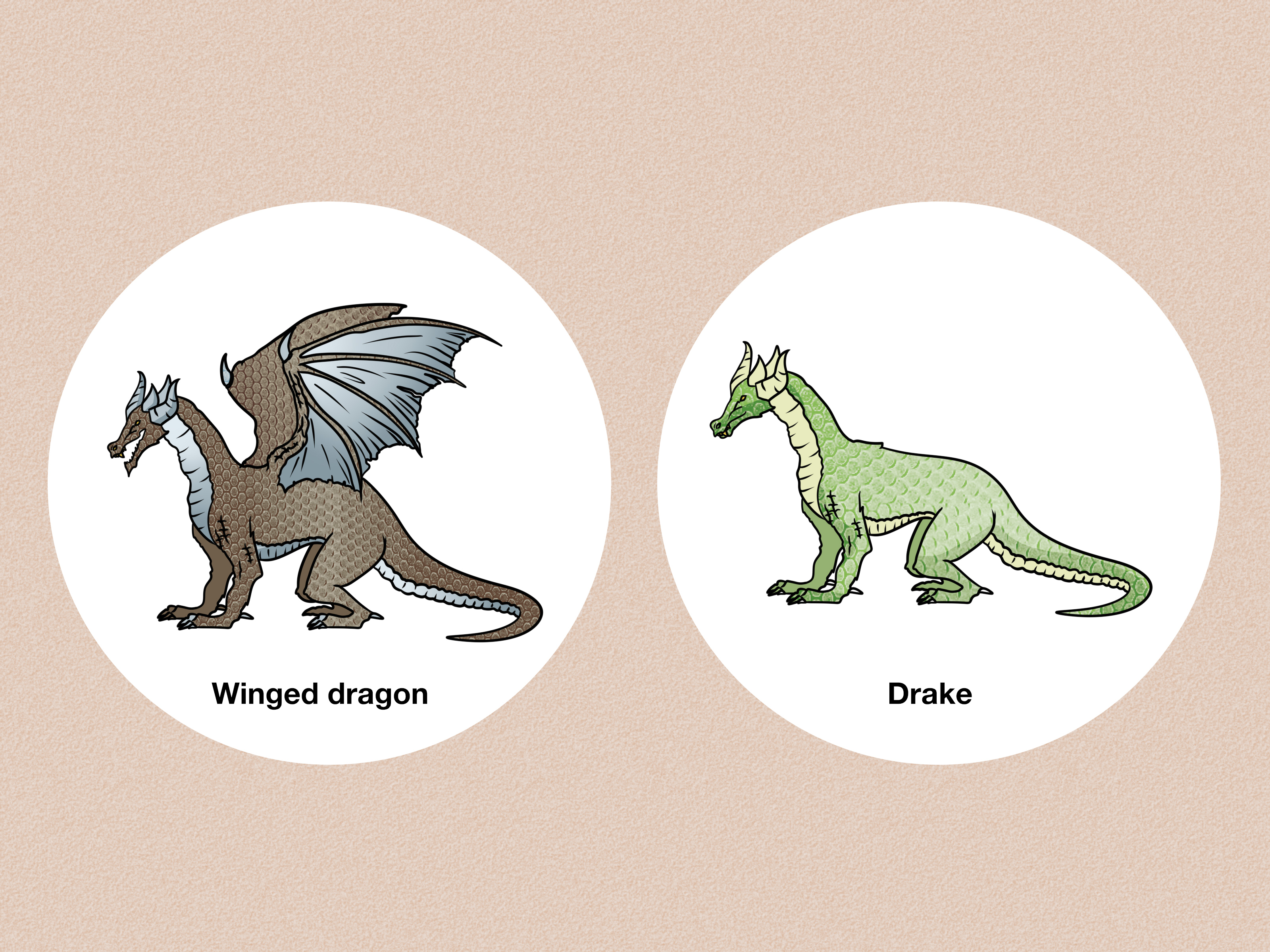
When most Americans picture a dragon, this is usually the creature that stomps into the imagination first: huge wings, four legs, horns, claws, armored scales, a long tail, and a mouth that doubles as a medieval flamethrower. European dragons often appear as dangerous beasts that must be defeated by saints, knights, or heroic champions.
In medieval European stories, dragons commonly represent chaos, greed, sin, or destruction. They guard treasure, demand sacrifices, burn villages, and generally behave like landlords with wings. The legend of Saint George and the Dragon is one of the most famous examples. In that story, George rescues a princess from a dragon and kills the beast, turning the tale into a symbol of courage, faith, and victory over evil.
These dragons shaped much of the modern fantasy dragon: powerful, terrifying, territorial, and often obsessed with gold. If a dragon has a cave, a treasure pile, and a serious attitude problem, it is probably borrowing its personality from medieval Europe.
2. Chinese Long Dragons
The Chinese long dragon is one of the most respected dragons in world mythology. Unlike the villainous dragons of many Western stories, Chinese dragons are usually benevolent, wise, and associated with water, rain, rivers, lakes, fertility, protection, imperial power, and good fortune.
Chinese dragons are often long, serpentine creatures with antler-like horns, flowing whiskers, claws, and the graceful confidence of a mythological celebrity. They are linked to clouds and storms, and they are often seen as bringers of life-giving rain. In ancient China, dragons became symbols of imperial authority, especially in art and court culture. A five-clawed dragon, for example, was closely associated with the emperor.
This dragon type reminds us that not all dragons are monsters. Some are cosmic VIPs. The Chinese dragon is less “villain in a cave” and more “celestial weather manager with excellent branding.”
3. Japanese Ryū and Yamata no Orochi
Japanese dragon traditions include powerful water-associated beings called ryū, often influenced by Chinese dragon imagery but given distinctive Japanese meaning through local myth, religion, and folklore. Japanese dragons are commonly connected to water, storms, rivers, seas, and divine power.
One of the most famous Japanese dragon-like monsters is Yamata no Orochi, the eight-headed and eight-tailed serpent defeated by the storm god Susanoo. According to the myth, the creature terrorized a family by devouring their daughters until Susanoo intervened. After slaying Orochi, he discovered the legendary sword Kusanagi inside one of the serpent’s tails.
Yamata no Orochi is sometimes interpreted as a symbol of flooding rivers, wild nature, or destructive forces that must be brought under control. In other words, this dragon did not just bring drama; it brought a whole weather-related metaphor with multiple heads.
4. Nāga Dragons
Nāgas are serpent beings found in Hindu, Buddhist, and Jain traditions. They are often described as semi-divine creatures, sometimes half-human and half-cobra, sometimes fully serpent-like. Although not always called “dragons” in the Western sense, nāgas belong to the broader family of sacred serpent-dragon beings found across Asia.
Nāgas may be dangerous, but they are also protective and beneficial. They are associated with water, fertility, hidden treasures, underground realms, wisdom, and spiritual power. In Buddhist art and storytelling, nāgas can appear as guardians of sacred teachings. In some traditions, nāga kings rule splendid subterranean palaces filled with jewels.
Unlike the dragon who hoards treasure because greed is its main hobby, the nāga often guards treasure as part of a sacred or cosmic role. Think less “angry cave billionaire” and more “serpent guardian with temple-level authority.”
5. Quetzalcoatl, the Feathered Serpent
Quetzalcoatl, whose name is often translated as “Feathered Serpent,” is one of the great mythological figures of ancient Mesoamerica. Associated with cultures such as the Aztec and earlier traditions, Quetzalcoatl combines the serpent’s earthly power with the bird’s connection to the sky.
This feathered serpent was not just a monster. Quetzalcoatl was a major deity connected with wind, learning, priesthood, creation, calendars, books, crafts, and cosmic order. Earlier representations of feathered serpents appear in ancient Mexican art, showing how deep this dragon-like figure runs in Mesoamerican history.
Quetzalcoatl proves that dragon mythology is not limited to Europe and Asia. Some dragons do not breathe fire; they breathe culture, symbolism, and civilization. Also, feathers are a bold fashion choice for a serpent, and honestly, it works.
6. The Greek Hydra
The Hydra is one of the most famous monsters from Greek mythology. This gigantic water-serpent lived near Lerna and had multiple heads, with some traditions describing one head as immortal. When Heracles fought the Hydra as one of his labors, the creature became even more terrifying because cutting off one head could cause others to grow back.
The Hydra represents a special kind of dragon problem: the more you attack it incorrectly, the worse it gets. It is basically the mythological version of ignoring a small email issue until your inbox becomes a swamp monster.
In Greek myth, the Hydra is linked to monstrous parentage, dangerous waters, poison, and heroic struggle. It is often classified as a dragon-like serpent rather than a classic winged dragon, but its influence on later monster lore is enormous. Any multi-headed dragon in fantasy owes at least a polite thank-you note to the Hydra.
7. Wyverns
A wyvern is a dragon-like creature usually shown with two legs, two wings, and a long tail. In heraldry, the wyvern became an important symbol, especially in European coats of arms and later in modern mascots, logos, and fantasy art.
The key difference between a wyvern and the classic four-legged dragon is anatomy. A traditional European dragon often has four legs plus wings. A wyvern usually has two legs and wings, making it look more birdlike or batlike in structure. This distinction matters a lot to heraldry fans and fantasy artists. To everyone else, it is mostly an excellent reason for internet arguments.
Wyverns are not always fire-breathing in older traditions. Their historical role is strongly tied to heraldic design, where they represent fierceness, vigilance, and martial power. In modern fantasy, however, wyverns have become fast, airborne predators with a sleek and dangerous look.
8. Lindworms and Wyrms
Lindworms and wyrms are serpent-like dragons from Northern and Central European folklore. They are usually less like the winged dragons of modern fantasy and more like giant snakes or crawling monsters. Some have two legs; others have none. Some are venomous, some guard treasure, and some simply appear to make life difficult for anyone living near forests, wells, or suspiciously gloomy hills.
The word “wyrm” is especially important in older Germanic and English traditions, where it could refer to a serpent, worm, or dragon-like creature. In many old stories, dragons are not always winged reptiles; they are enormous serpents connected with earth, death, treasure, and hidden danger.
Lindworms remind us that the dragon did not begin as one fixed design. Before fantasy art standardized the creature into a winged fire machine, many dragons were closer to snakes with supernatural importance. Less “air raid,” more “ancient nightmare under the roots.”
9. Fafnir, the Treasure-Hoarding Norse Dragon
Fafnir is one of the most famous dragons in Norse and Germanic heroic legend. In the Völsunga tradition, Fafnir begins as a being consumed by greed. After killing his father to seize cursed gold, he transforms into a dragon and guards the treasure until the hero Sigurd kills him.
Fafnir is not just a monster; he is a moral warning with scales. His story connects dragons with greed, curses, treasure, and transformation. The idea that wealth can corrupt the soul is made extremely literal: hoard cursed gold long enough, and suddenly you are a reptilian security system.
This dragon type had a major impact on later fantasy literature. The image of the dragon sleeping on treasure, guarding gold, and embodying greed owes a great deal to stories like Fafnir’s. When modern dragons lounge on piles of coins, Fafnir is somewhere in the mythological background saying, “You’re welcome.”
10. Nidhogg, the World-Tree Dragon
Nidhogg is a dark and ominous dragon or serpent from Norse mythology. Rather than guarding treasure or fighting knights, Nidhogg is associated with the roots of Yggdrasil, the great world tree. In Norse cosmology, this creature gnaws at the roots, linking it to decay, death, and cosmic tension.
Nidhogg is not a flashy dragon in the modern action-movie sense. It does not need to burn down a village to be terrifying. Its power comes from where it lives and what it represents. A dragon chewing at the roots of the world is a haunting image of destruction working slowly beneath reality.
This type of dragon belongs to the deep mythological layer where monsters are not just enemies; they are forces in the structure of the universe. Nidhogg is less boss battle and more existential plumbing problem.
11. Mushhushshu, the Babylonian Dragon
The Mushhushshu, also written as Mušḫuššu, is a dragon-like creature from ancient Mesopotamia. It is famously associated with Marduk, the chief god of Babylon, and appears on the Ishtar Gate. Its body is a striking hybrid: serpent-like head and scales, lion-like forelegs, eagle-like hind claws, a long neck, horns, and a tail sometimes described with a scorpion-like end.
This creature shows how ancient dragon imagery often blended features from multiple powerful animals. The result was not just a monster but a divine emblem. The Mushhushshu was a protective and symbolic creature tied to royal and religious power.
In modern terms, the Mushhushshu looks like someone opened a mythology design app and selected “snake,” “lion,” “eagle,” “horns,” and “make it Babylonian.” The result is one of history’s most visually memorable dragon forms.
12. The Welsh Red Dragon
The Welsh Red Dragon, or Y Ddraig Goch, is one of the most famous national dragon symbols in the world. It appears on the flag of Wales and has deep roots in Welsh legend and identity. One famous story connects the red dragon with the Britons and a white dragon with invading Saxons, a symbolic battle explained in legends involving Vortigern and Merlin.
Unlike many dragons that exist mainly as monsters in stories, the Welsh dragon became a proud emblem of people, place, and history. It is a dragon of identity rather than destruction. It roars not from a cave, but from banners, sports jerseys, government symbols, and national pride.
The Welsh Red Dragon shows how dragons can move from myth into public life. A creature once imagined in legend can become a living symbol of heritage. Not bad for something that probably never had to fill out a passport application.
Why Dragons Appear in So Many Cultures
One reason dragons appear worldwide is that humans have long shared deep instincts about large predators, snakes, storms, darkness, and dangerous landscapes. A dragon combines many ancient fears into one unforgettable creature. It may have claws like a predator, scales like a reptile, wings like a bird of prey, and the mystery of something that lives underground, underwater, or beyond the mountains.
Another reason is symbolic flexibility. Dragons can represent chaos, wisdom, kingship, fertility, greed, weather, death, rebirth, protection, or divine authority. Few mythological creatures are this adaptable. A unicorn may be pure, a phoenix may be reborn, but a dragon can be the villain, the god, the guard, the storm, the treasure, and the national mascot. Dragons are mythological multitaskers.
Historically, dragons also gave cultures a dramatic way to explain natural forces. Floods, droughts, storms, rivers, volcanoes, fossils, and dangerous animals may all have contributed to dragon legends. When people saw enormous bones, violent weather, or deadly snakes, the imagination had plenty of raw material. Add storytelling, ritual, religion, and a few centuries of artistic flair, and suddenly the world has dragons.
Experiences Related to Dragon Mythology: How to Explore These Legends Today
Reading about dragons is one thing; experiencing their cultural afterlife is another. The best way to understand dragon mythology is to follow the creature out of the storybook and into museums, festivals, art, architecture, flags, games, and local traditions. Dragons are not frozen in ancient myths. They are still moving through modern culture, usually with better lighting and gift-shop merchandise.
A museum visit can completely change how you see dragons. In galleries of Chinese art, dragon motifs may appear on porcelain, robes, bronzes, jade carvings, and paintings. Seeing these objects in person helps reveal that the Chinese dragon was not merely decorative. It carried ideas of imperial authority, cosmic balance, water, protection, and good fortune. A dragon curling through clouds on a vase is not just “cool art.” It is a symbol with centuries of cultural meaning packed into every claw and whisker.
European medieval art offers a very different experience. There, dragons often appear in manuscripts, church carvings, stained glass, and heraldic imagery. These dragons are frequently shown being defeated by saints or heroes, which tells us a lot about how medieval communities imagined evil, danger, and spiritual victory. Look closely at those dragons and you will notice that they often resemble a mixture of snake, bird, dog, bat, and lizard. Medieval artists were not trying to create a zoology textbook. They were building a visual warning sign with teeth.
Festivals are another excellent way to experience dragon traditions. Lunar New Year celebrations often feature dragon dances, where the dragon becomes a moving symbol of luck, strength, rhythm, and community. The long body carried by performers creates the feeling of a living creature flowing through the street. It is joyful, loud, colorful, and probably the friendliest dragon encounter most people can hope for.
Travel can also make dragon mythology feel surprisingly real. In Wales, the red dragon is everywhere: on flags, souvenirs, sports gear, and public symbols. Seeing it in everyday life shows how myth can become identity. In Japan, stories of serpents and water spirits still echo in shrines, regional folklore, and local landscapes. In Greece, reading about the Hydra while learning about ancient heroic myths gives the monster a stronger sense of place. Dragon stories often cling to rivers, mountains, caves, lakes, and old roads, as if geography itself helped invent them.
Even modern entertainment can be a gateway into ancient dragon lore. Fantasy novels, movies, tabletop games, and video games borrow heavily from older traditions. A treasure-hoarding dragon may reflect Fafnir. A flying two-legged beast may resemble a wyvern. A many-headed monster may trace its family tree back to the Hydra. The trick is to enjoy the modern version while asking, “Which older myth is hiding under these scales?” That question turns casual entertainment into cultural detective work.
For students, writers, and mythology fans, dragons are especially useful because they reveal how societies think. A culture’s dragon tells you what it fears, what it honors, what it wants to control, and what it considers sacred. Some dragons must be slain. Some must be respected. Some must be celebrated. Some must be placed on a flag and cheered for at sporting events. That variety is exactly why dragons remain so powerful. They are not just monsters; they are mirrors with wings.
Conclusion
Dragons have survived for thousands of years because they are more than imaginary reptiles. They are symbols of power, danger, wisdom, weather, greed, protection, identity, and transformation. From the benevolent Chinese long to the terrifying Hydra, from Fafnir’s cursed treasure to the Welsh Red Dragon’s national pride, dragon mythology shows how different cultures use similar shapes to tell wildly different stories.
The next time someone says “dragon,” do not picture just one creature. Picture a whole world: a rain-bringing spirit in China, a feathered god in Mesoamerica, a serpent under a world tree, a Babylonian divine beast, a medieval wyvern, and a red dragon flying proudly over Wales. Dragons are not one myth. They are a global conversation, and apparently, humanity has been very committed to keeping that conversation scaly.