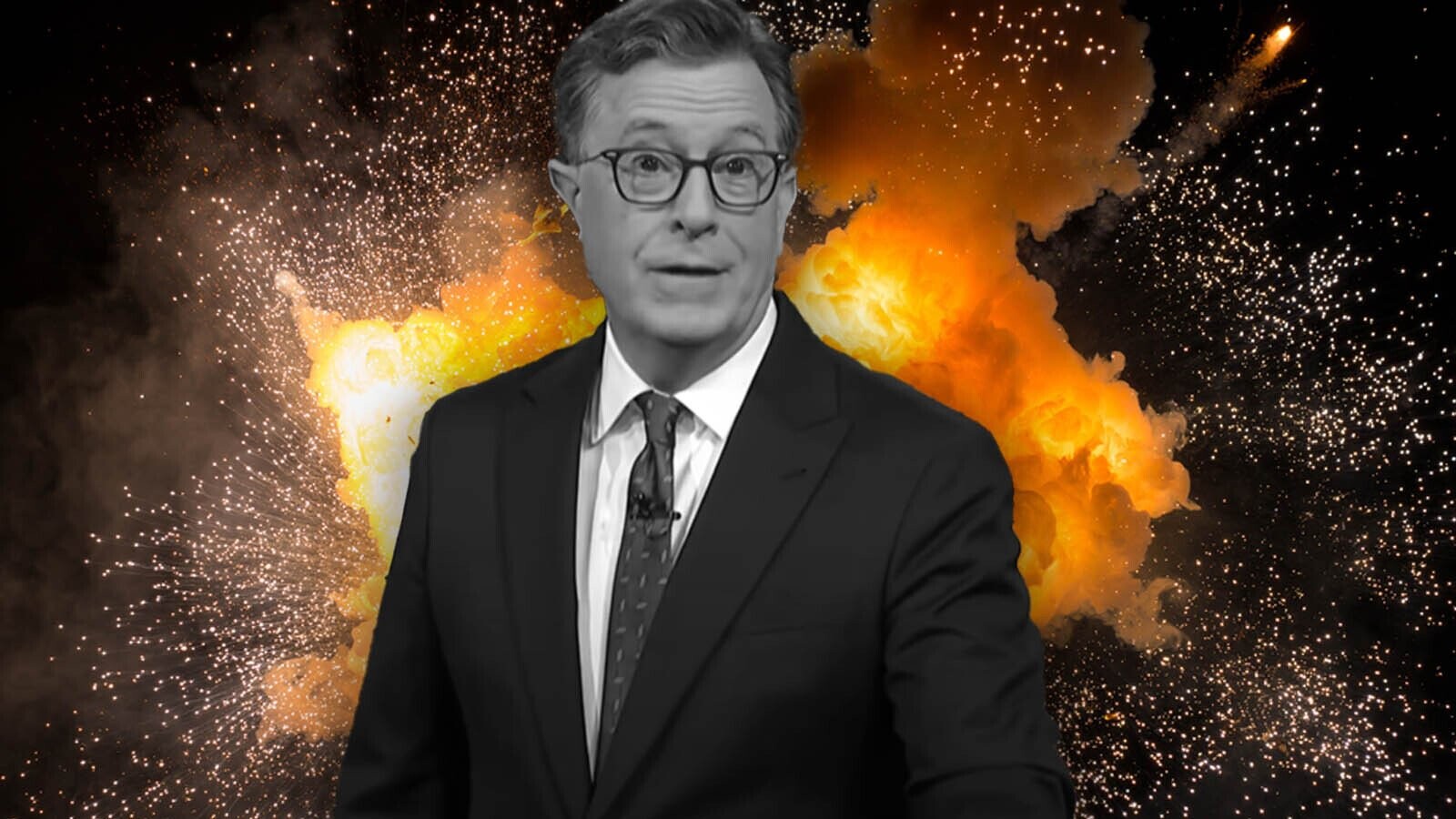
Note: This article uses the word “probably” in the headline as a punchy editorial hook, not as a proven legal fact. CBS stated that ending The Late Show with Stephen Colbert was a financial decision. Still, the timing, the political climate, and Colbert’s relentless Donald Trump jokes made the cancellation feel, to many viewers, like the most dramatic late-night plot twist since someone decided America needed a second season of campaign rallies.
Why Stephen Colbert’s Trump Burns Became Late-Night History
Stephen Colbert did not simply make Donald Trump jokes. He built a nightly comedy weather system around them. When Trump said something strange, Colbert translated it into punchlines. When Trump posted something fiery, Colbert brought marshmallows. When American politics became a 24-hour noise machine, The Late Show became one of the places where millions of viewers went to laugh, sigh, and confirm that, yes, they had heard that correctly.
That is why the end of The Late Show with Stephen Colbert hit so hard. CBS announced in July 2025 that the show would end in May 2026, retiring the entire Late Show franchise rather than replacing Colbert with a new host. The network described the move as a financial decision made during a difficult era for late-night television. Yet the announcement landed just days after Colbert blasted Paramount’s $16 million settlement with Donald Trump over a dispute involving a 60 Minutes interview. Colbert called the settlement a “big fat bribe,” and suddenly the cancellation looked less like a spreadsheet decision and more like a suspiciously well-timed trapdoor.
Was Colbert fired because of Trump jokes? There is no public proof of that. But the question became irresistible because Colbert’s best Trump burns were never soft little paper cuts. They were political comedy with teeth, eyebrows, and a tiny constitutional law degree.
The “Big Fat Bribe” Burn That Lit the Final Fuse
If one joke became the centerpiece of the controversy, it was Colbert’s reaction to Paramount’s settlement with Trump. The setup was serious: Paramount, CBS’s parent company, had agreed to a $16 million settlement connected to Trump’s lawsuit over a 60 Minutes interview with Kamala Harris. The company was also seeking approval for its merger with Skydance, which made the political optics extra spicy. Colbert did not tiptoe around the situation. He mocked the deal as a “big fat bribe,” a phrase that instantly traveled beyond late-night fans and into the wider media bloodstream.
That burn mattered because it was not merely aimed at Trump. It also jabbed upward at Colbert’s own corporate bosses. Late-night hosts roast presidents all the time; roasting the parent company while the parent company is handling a politically sensitive merger is a different level of workplace excitement. Most employees avoid calling the boss’s legal settlement suspicious on national television. Colbert did it with a suit, a smile, and the calm energy of a man who had already chosen violence, grammatically speaking.
Three days later, CBS announced the show’s end. Again, CBS said the reason was money, not politics. But the timing gave the public a neat, dramatic storyline: Colbert called out the settlement, and then his show was shown the exit. In media terms, that is not a coincidence machine; that is a headline factory.
“Cancel Culture Has Gone Way Too Far”
After the cancellation news broke, Colbert returned to his desk and delivered one of the sharpest responses of his late-night career. With the audience chanting his name, he looked at the situation and joked, “Cancel culture has gone way too far.” It was a perfect Colbert line: self-aware, ironic, and delivered with just enough theatrical innocence to make the punchline land like a piano from a cartoon window.
The joke worked because Trump and his allies had spent years complaining about cancel culture, while Trump publicly celebrated the news that Colbert’s show was ending. Colbert flipped the phrase back on the political machine that loved to use it. Instead of pleading for sympathy, he turned the moment into satire. The burn was not simply, “I got canceled.” It was, “Look who suddenly loves cancellation when the canceled person tells jokes about him.”
That is why this moment belongs near the top of any list of the best Trump burns. It captured Colbert’s method: take a slogan, hold it under studio lights, and let the contradiction sweat.
The 2017 Trump-Putin Joke That Sparked #FireColbert
Long before the final-season controversy, Colbert had already faced a major backlash for a crude 2017 monologue aimed at Trump. The joke came after Trump insulted CBS journalist John Dickerson during an interview. Colbert, defending a colleague, unleashed a string of insults that ended with a vulgar Trump-Putin line. Critics called it offensive, the hashtag #FireColbert trended, and the Federal Communications Commission reviewed complaints before deciding not to take action.
Colbert later said he would change some words that were cruder than necessary, but he did not apologize for the spirit of the criticism. That moment showed both the power and the risk of his approach. He was not merely tossing out harmless one-liners about hair, hand size, or golf carts. He was turning late-night comedy into a nightly pressure valve for viewers alarmed by presidential behavior.
From an SEO perspective, this is one of the key reasons searches for “Stephen Colbert Trump jokes,” “Trump burns,” and “why was Colbert canceled” continue to overlap. His comedy was never separate from the political arguments around it. It was part of the argument.
The Emmys Roast: Trump, Ratings, and the Popular Vote
At the 2017 Emmy Awards, Colbert roasted Trump on one of television’s biggest stages. He joked about Trump’s long-running obsession with ratings and awards, including Trump’s frustration that The Apprentice never won an Emmy. Colbert also landed a memorable popular-vote punchline, noting that unlike the presidency, Emmys go to the winner of the popular vote.
That burn was classic Colbert because it combined show-business trivia with electoral math. It was not just “Trump likes TV.” It was “Trump likes TV so much that losing a TV award may still be living rent-free in the West Wing.” Colbert understood that Trump’s celebrity identity and political identity were fused. By joking about ratings, applause, crowd size, and awards, Colbert was not wandering away from politics. He was walking directly into the engine room.
The Sean Spicer cameo during that Emmys broadcast became controversial in its own way, but the broader point remains: Colbert knew Trump’s media language. He spoke it fluently, then added a rimshot.
The Cartoon Trump Era
One of Colbert’s smartest Trump burns was turning him into a recurring cartoon character. The animated version of Trump allowed The Late Show to exaggerate traits that already felt exaggerated in real life: the bragging, the defensiveness, the wandering logic, the toddler-king confidence. Satire often works best when it stretches reality just enough to reveal what was already absurd. With Cartoon Trump, Colbert barely had to stretch.
The bit eventually helped inspire Our Cartoon President, a Showtime animated series built around a satirical version of Trump’s White House. That matters because Colbert’s Trump comedy did not stay inside the nightly monologue. It became a full comedy ecosystem: desk jokes, animated sketches, parody interviews, election-night specials, and viral clips. In the modern media age, a late-night burn does not vanish when the credits roll. It gets clipped, shared, argued over, and revived whenever the news cycle needs a fresh bottle of antacid.
The “Trump Watches TV” Burn
Another recurring Colbert theme was Trump’s relationship with television itself. Colbert frequently mocked Trump as a president who seemed unusually motivated by cable-news segments, ratings, and personal coverage. The joke was simple but effective: America had elected a man who treated television not as a medium but as oxygen.
This line of comedy worked because it connected Trump’s public behavior to the medium Colbert knew best. Late-night hosts understand TV rhythm, camera hunger, audience reaction, and the weird power of a well-timed close-up. Colbert’s Trump burns often implied that Trump was not just watching television; he was governing through it, reacting to it, and demanding applause from it.
That made Colbert a particularly irritating critic. He was not an outsider sneering at television culture. He was a master of television culture calling out another television creature from inside the habitat. It was like being roasted by the zoo’s most articulate penguin.
Why the Burns Felt Riskier After the Paramount Settlement
By 2025, late-night television was under intense financial pressure. Viewers had shifted to streaming, YouTube, TikTok, podcasts, and shorter clips. Traditional advertising revenue had fallen. Reports said The Late Show was expensive to produce despite its strong ratings position. In business terms, CBS had a plausible financial explanation for ending the franchise.
But politics made the story harder to separate from suspicion. Colbert was a vocal critic of Trump. Paramount had settled with Trump. Paramount was also trying to complete a major merger requiring regulatory approval. Then Colbert mocked the settlement. Then CBS announced the end of his show. Even if the decision had been discussed for months, the public timeline was practically begging for raised eyebrows.
That is the heart of the controversy. The best Trump burns did not literally need to “get Colbert fired” to matter. They only needed to make the cancellation feel politically loaded. Satire thrives on perception, and the perception here was powerful: the loudest Trump critic in late night was leaving the stage after mocking a deal involving Trump and his own corporate parent.
Trump’s Reaction Became Part of the Joke
Trump did not respond to Colbert’s exit with polite distance. He celebrated it. He criticized Colbert’s talent, ratings, and relevance, and later continued to jab at him after the final episode. For Colbert fans, that reaction only strengthened the idea that the jokes had landed. After all, nothing says “I am totally unbothered” quite like posting repeatedly about the comedian who supposedly does not matter.
In comedy, a burn is successful when the target reacts in a way that proves the premise. Colbert’s long-running premise was that Trump cared deeply about media attention, personal praise, and televised humiliation. Trump’s public celebration of Colbert’s departure seemed, to critics, like evidence that the host had been living in his head rent-free, possibly with a CBS parking pass.
So, What Were the Best Trump Burns?
1. Calling the Paramount settlement a “big fat bribe”
This was the most consequential burn because it aimed at both Trump and Colbert’s corporate universe. It was sharp, memorable, and dangerous in the way great satire often is: it said the quiet part loudly, then added studio applause.
2. “Cancel culture has gone way too far”
This post-cancellation line was Colbert at his most elegant. It turned a right-wing complaint into a mirror and held it up at exactly the right angle.
3. The Emmys popular-vote joke
By connecting Trump’s award-show obsession with the 2016 popular vote, Colbert created a joke that was both entertainment gossip and political commentary.
4. Cartoon Trump
Animated Trump worked because reality already felt animated. Colbert’s team simply gave the exaggeration brighter colors and better timing.
5. The 2017 Trump-Putin monologue
Crude? Yes. Controversial? Absolutely. Historically important? Also yes. It proved Colbert was willing to risk backlash when he thought Trump had crossed a line.
6. The ongoing “TV president” jokes
Colbert repeatedly mocked Trump’s obsession with ratings, coverage, and televised praise. It was one of his most durable comedic frames because it explained so much with so little.
Experience: Watching Colbert’s Trump Burns in Real Time
Watching Colbert roast Trump over the years felt different from watching ordinary late-night comedy. It was less like tuning in for jokes and more like checking the national pressure gauge. Some nights, the monologue felt like a comedy show. Other nights, it felt like group therapy with better lighting and a house band.
The experience was especially memorable because Colbert knew how to balance outrage with craft. He could be angry, but he rarely sounded sloppy. He could be silly, but the silliness usually had a target. When Trump created a chaotic news day, Colbert did not simply shout, “Can you believe this?” He built a structure around the disbelief. He would start with the headline, add a facial expression that said “I, too, regret being literate,” then walk the audience through the absurdity one punchline at a time.
For viewers exhausted by politics, that mattered. Trump-era news often arrived like a leaf blower pointed directly at the soul. Colbert gave people a way to process it without pretending it was normal. His best burns worked because they gave shape to frustration. They transformed doomscrolling into laughter, even if the laughter sometimes came with a side of civic indigestion.
There was also a strange comfort in the ritual. The desk, the monologue, the raised eyebrow, the pause before the punchline: these became familiar tools for surviving unfamiliar times. Colbert’s Trump jokes were not just jokes about one politician. They were jokes about power, media, fear, ego, and the very American habit of turning everything, including democracy, into a television segment.
That is why the cancellation controversy felt personal to many fans. People were not only losing a show. They were losing a nightly interpreter. Colbert had become one of the voices that could take a ridiculous political moment and make it feel understandable, or at least laughable enough to get through bedtime.
The most fascinating part is that Colbert’s burns aged like a media diary. The early jokes focused on Trump the candidate, the celebrity, the ratings addict. Later jokes dealt with Trump as president, litigant, power broker, and symbol of a transformed political culture. By the end, Colbert himself had become part of the story he was covering. His show’s cancellation was no longer just entertainment news; it was a case study in comedy, corporate power, political pressure, and the fragile economics of television.
That is the real legacy of the best Trump burns. They did not merely make audiences laugh. They documented a period when politics became entertainment, entertainment became politics, and one late-night host kept showing up with a monologue sharp enough to cut through the fog. Whether those burns got him fired is still debated. But they definitely made it impossible to ignore him.
Conclusion: The Joke That Outlived the Show
The best Trump burns from Stephen Colbert were not random insults tossed into the late-night void. They were carefully shaped responses to a political era obsessed with television, loyalty, spectacle, and revenge. Colbert understood that Trump was not just a president who appeared on TV. He was a television personality who brought TV instincts into politics. That made him an unusually rich subject for a host whose greatest skill was exposing performance.
CBS said The Late Show ended because of financial realities, and the decline of traditional late-night economics is real. But the timing of the cancellation, the Paramount settlement, Trump’s public celebration, and Colbert’s history of sharp criticism created a story too loaded to dismiss with a neat corporate sentence. The headline “The Best Trump Burns That Probably Got Stephen Colbert Fired” may be cheeky, but it captures a real cultural feeling: Colbert’s jokes hit hard enough that people believed they could have consequences.
In the end, Colbert’s sharpest burn may be the one history writes for him. He left late night as a host whose satire made powerful people react, whose audience stayed loyal, and whose final chapter turned into a debate about free expression, media consolidation, and political pressure. Not bad for a man with a desk, a suit, and the dangerous ability to make a punchline sound like a closing argument.