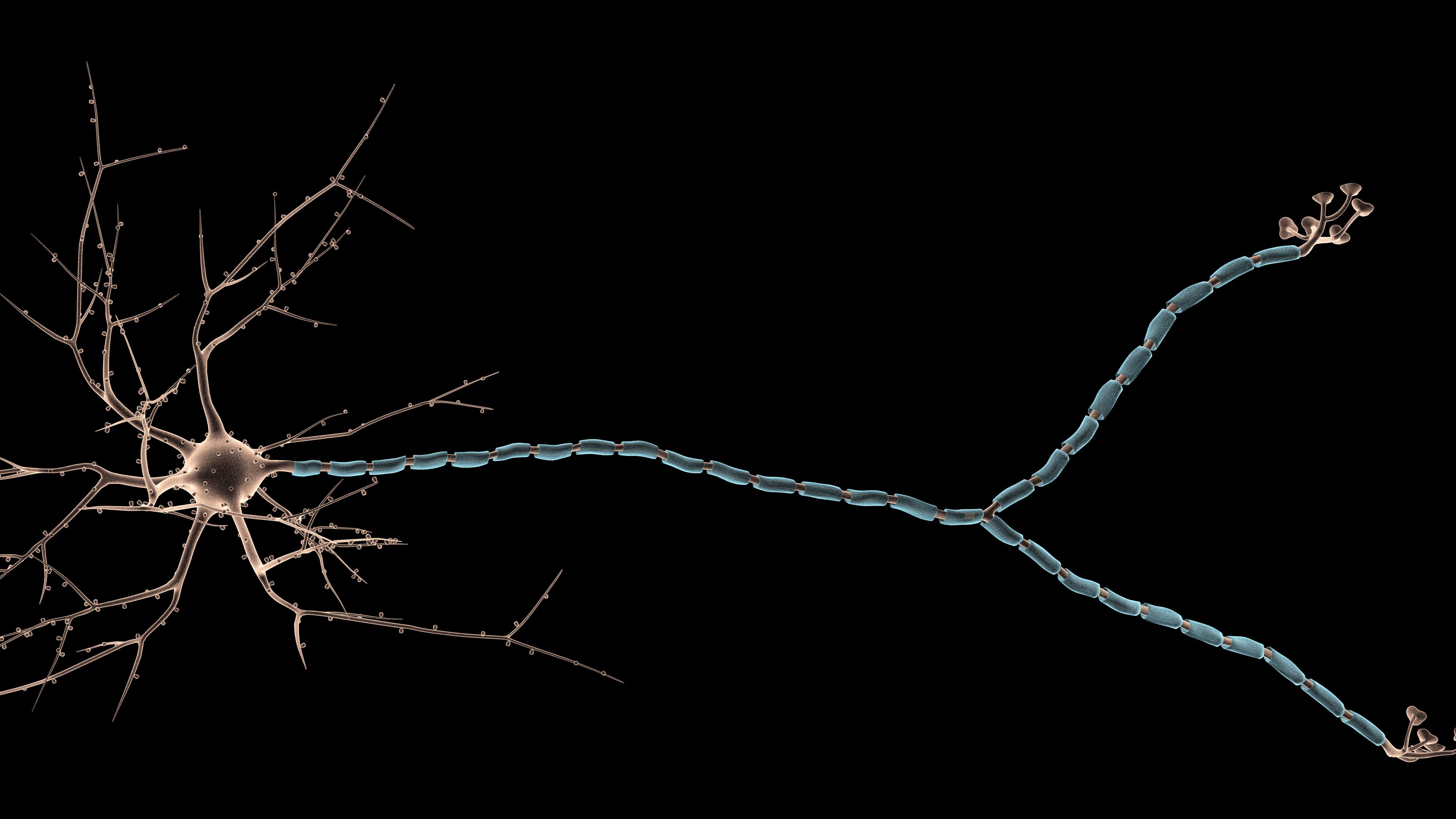
Neuroscience used to feel like the kind of field where you needed a university badge, a grant with more zeros than a luxury yacht invoice, and a lab full of equipment that looked suspiciously like it came from a moon mission. Then open-source neuroscience hardware entered the chatliterally. The phrase Open-Source Neuroscience Hardware Hack Chat captures a growing movement where researchers, engineers, educators, students, and beautifully stubborn tinkerers meet to discuss how brain science tools can be built, shared, modified, repaired, and improved by the community.
At the center of this conversation is a practical question: what happens when the tools used to study the nervous system are no longer locked behind proprietary designs and high prices? The answer is not just “cheaper gadgets,” although everyone loves a budget-friendly brain probe. The bigger answer is faster innovation, better reproducibility, broader education, and a culture where scientific tools become living projects rather than mysterious black boxes.
The original Hack Chat idea brought together people interested in open-source neuroscience tools, including researchers such as Dr. Alexxai Kravitz and Dr. Mark Laubach, to talk about the hardware, software, and community practices that make experimental neuroscience more accessible. Since then, the open neuroscience ecosystem has continued to mature, with platforms such as Open Ephys, OpenBCI, Backyard Brains, UCLA Miniscope, Bonsai, Bpod, pyPhotometry, ONIX, and others proving that open hardware is not a hobbyist side quest. It is a serious scientific engine.
What Is Open-Source Neuroscience Hardware?
Open-source neuroscience hardware refers to physical tools used in neuroscience research or education whose designs are openly shared. That may include circuit schematics, printed circuit board files, firmware, 3D-printable parts, assembly instructions, bill of materials, software code, and documentation. In plain English, it means someone does not simply sell you a sealed magic box and tell you to trust it. They show you how the box works, how to build it, how to fix it, andif you are feeling brave after coffeehow to improve it.
This matters because neuroscience experiments are rarely one-size-fits-all. A lab studying mouse behavior may need synchronized video, neural recordings, stimulation, and reward delivery. A classroom may need a safe and affordable way for students to observe spikes from a nerve. A brain-computer interface enthusiast may need EEG hardware that can be customized for biosensing experiments. A researcher building a closed-loop system may need millisecond-level timing, modular inputs, and enough flexibility to prevent the experiment from turning into a spaghetti monster of cables.
Why Hack Chats Matter in Neuroscience
A Hack Chat is more than a casual online Q&A. It is a community workshop in conversation form. Instead of reading a polished paper and wondering what went wrong during the build, participants can ask direct questions: Which amplifier worked? Which connector failed? How did you reduce noise? Why did the mouse chew that cable like it owed him money?
For open-source neuroscience hardware, this format is especially valuable. Hardware knowledge often lives in tiny details: grounding strategies, shielding, firmware timing, sensor placement, enclosure design, part substitutions, and documentation habits. These details may never appear in a traditional journal article, yet they can decide whether an experiment produces useful data or a beautiful recording of 60 Hz electrical hum.
The Open-Source Neuroscience Hardware Hack Chat idea also reflects a shift in scientific culture. Researchers are increasingly expected to share not only results, but also the tools and workflows that produced those results. When the hardware is open, other labs can inspect it, reproduce it, adapt it, and catch problems earlier. That is good for science and mildly terrifying for sloppy documentationwhich is exactly why it helps.
The Big Players in Open Neuroscience Hardware
Open Ephys: Modular Tools for Serious Neural Recording
Open Ephys is one of the best-known names in open-source electrophysiology. Its ecosystem includes acquisition boards, a plugin-based graphical user interface, tools for multichannel neural recording, and hardware designed for behavior control and synchronization. The appeal is not only lower cost. It is modularity. Labs can combine tools, write plugins, adapt workflows, and avoid rebuilding the same solution from scratch every time a new experiment appears.
That modular mindset is crucial in neuroscience, where experiments often evolve quickly. Today you are recording from electrodes. Tomorrow you are adding video tracking. Next week someone says “closed-loop stimulation” in a lab meeting, and suddenly the hardware needs to respond in real time. Open Ephys-style systems make that kind of evolution less painful.
OpenBCI: Brain-Computer Interfaces for Researchers and Builders
OpenBCI helped popularize affordable, open-source biosensing and brain-computer interface hardware. Its boards, headsets, electrodes, and software tools have been used by students, artists, researchers, neurofeedback developers, and curious builders who want to explore EEG, EMG, ECG, and related signals.
OpenBCI is especially important because it sits at the intersection of neuroscience, human-computer interaction, education, and maker culture. It lowers the barrier to entry for people who want to understand how brain signals can be captured and interpreted. Of course, EEG is not mind reading. If your headset says you are “concentrating,” it is not discovering your secret pizza opinions. But it can reveal measurable electrical patterns, and that is powerful when handled carefully.
Backyard Brains: Neuroscience Education Without the Ivory Tower
Backyard Brains brought open neuroscience into classrooms and kitchen-table science through tools like the SpikerBox, a low-cost bioamplifier designed to let students observe neural activity. The educational value is enormous. Instead of describing action potentials as abstract textbook squiggles, teachers can show real signals and let students experience the nervous system as something measurable, surprising, and alive.
This is where open-source neuroscience hardware becomes more than research infrastructure. It becomes a gateway. A student who hears a neural spike for the first time may decide that biology is not just memorizing labels on a diagram. It is electricity, behavior, code, circuits, and discovery rolled into one wonderfully nerdy burrito.
UCLA Miniscope: Open Imaging for Freely Moving Animals
The UCLA Miniscope project showed how open-source design can transform calcium imaging. Miniature microscopes allow researchers to image neural activity in freely behaving animals, making it possible to study circuits during movement, learning, social behavior, and other naturalistic conditions. Open miniscope projects helped labs build and modify imaging systems rather than depending entirely on expensive closed platforms.
For neuroscience, this is a major leap. Brain activity is not very interesting if the subject must behave like a statue with anxiety. Tools that allow neural imaging during real behavior help researchers connect cells, circuits, and actions in a more meaningful way.
Bonsai, Bpod, and the Synchronization Problem
Modern experiments rarely rely on one instrument. They combine cameras, sensors, lasers, microphones, lick ports, treadmills, electrophysiology rigs, and reward systems. The scientific challenge is not only collecting data. It is knowing exactly when everything happened.
Platforms such as Bonsai and Bpod help researchers build behavioral experiments, control devices, track animals, and synchronize data streams. This may sound less glamorous than recording from neurons, but timing is the quiet hero of neuroscience. If you cannot align behavior and brain activity, your dataset becomes an expensive scrapbook.
Why Open Hardware Is Good for Reproducibility
Reproducibility is a major concern in science. If one lab publishes an exciting result but nobody else can recreate the experiment, the finding becomes shaky. Proprietary hardware can make this problem worse because other researchers may not know exactly how a device processes signals, filters data, or handles timing.
Open-source hardware improves reproducibility by making the instrument part of the scientific record. A lab can publish not only what it found, but also how its tools were built and configured. Other researchers can inspect the design, rebuild the system, test modifications, and report improvements. In the best cases, open hardware turns scientific tools into community-maintained infrastructure.
That does not mean open hardware is automatically perfect. A badly documented open tool is still a headache wearing a lab coat. But when projects provide clear build guides, version control, calibration procedures, example datasets, and active community support, they make reproducible science much easier.
Cost, Customization, and the Joy of Not Reinventing the Wheel
Commercial neuroscience equipment can be excellent, but it can also be expensive and difficult to customize. For a well-funded lab, that may be inconvenient. For a small lab, community college, high school, startup, or researcher in a low-resource setting, it can be a locked door.
Open-source neuroscience hardware changes the economics. A tool that can be assembled from off-the-shelf parts, printed components, and shared design files gives more people access to serious experimentation. It also allows researchers to modify tools for unusual experiments. That flexibility matters because neuroscience is full of odd but important questions. Sometimes the experiment you need does not fit inside a product catalog.
Open hardware also reduces duplicated effort. Without sharing, one lab spends six months solving a design problem, another lab unknowingly solves the same problem badly, and a third lab buys an expensive workaround. With open sharing, improvements accumulate. The wheel still gets reinvented occasionally, but at least someone posts the CAD files.
Challenges: Open Does Not Mean Easy
Open-source neuroscience hardware has real challenges. First, biological signals are small and noisy. Recording from neurons or EEG electrodes is not like plugging in a keyboard. The hardware must deal with amplification, filtering, shielding, grounding, motion artifacts, and safety concerns.
Second, documentation takes time. A brilliant prototype is not the same as a usable open-source project. The community needs assembly instructions, troubleshooting notes, firmware versions, test data, and realistic expectations. Nobody wants to discover that “simple setup” means “requires three PhDs, a microscope, and emotional resilience.”
Third, maintenance matters. Parts become unavailable. Software dependencies change. Operating systems update themselves at the worst possible moment. A healthy open project needs contributors, issue tracking, governance, and a plan for long-term support.
Finally, ethics and safety must stay front and center. Brain-computer interface tools, stimulation systems, and biological experiments should not be treated like harmless toys. Open access should come with responsible guidance, institutional review where appropriate, and honest discussion of limitations.
How to Join the Open Neuroscience Hardware Movement
For beginners, the easiest entry point is education-focused hardware such as bioamplifier kits, EEG learning tools, or simple behavioral tracking projects. These help build intuition without requiring a full research facility. Students can learn about signals, noise, electrodes, code, and experimental design in a hands-on way.
For researchers, the best starting point is identifying a specific bottleneck. Do you need cheaper acquisition? Better synchronization? Custom stimulation? Automated behavior control? Portable EEG? Once the problem is clear, explore existing platforms before designing from scratch. The open neuroscience world is full of projects that may already solve 70 percent of your problem, which is a delightful number when grant deadlines are breathing on your neck.
For engineers and makers, neuroscience offers a playground of meaningful challenges. Signal quality, miniaturization, power management, wireless communication, real-time processing, machine learning, and mechanical design all matter. The trick is to collaborate with domain experts so the project solves a real scientific problem rather than becoming an impressive gadget searching for a purpose.
Experiences and Practical Lessons from Open-Source Neuroscience Hardware Hack Chat
Anyone who has spent time around open-source neuroscience hardware quickly learns that the magic is not only in the circuit board. It is in the conversation around the circuit board. A Hack Chat-style discussion can save weeks of frustration because someone else has already met the same gremlin. Maybe their amplifier picked up noise from a laptop charger. Maybe a camera trigger drifted just enough to ruin synchronization. Maybe a 3D-printed headstage worked perfectly until the animal discovered it had teeth. These are the tiny war stories that make open communities valuable.
One useful experience is learning to treat documentation as part of the device. In open hardware, a tool without documentation is like a map with the roads removed. Good projects show photos, wiring diagrams, firmware steps, calibration procedures, and failure modes. The best ones also explain why design choices were made. That “why” helps users adapt a tool intelligently instead of copying it blindly.
Another common lesson is that cheaper does not mean casual. A low-cost EEG board or bioamplifier still requires careful setup. Electrode contact matters. Cable movement matters. Grounding matters. Software settings matter. Beginners sometimes expect brain signals to appear like a dramatic movie scene, complete with glowing graphics and instant revelations. In reality, the first victory may simply be recording a clean blink artifact or muscle signal. That is not disappointing. That is science saying hello in its weird little accent.
Hack Chat communities also teach humility. Neuroscience hardware sits at the intersection of biology, electronics, programming, statistics, and behavior. Nobody knows everything. The biologist may understand the animal model but need help with microcontrollers. The engineer may design a beautiful board but underestimate experimental variability. The coder may build an elegant interface but forget that wet lab gloves and tiny dropdown menus are mortal enemies. Open collaboration turns these gaps into shared progress.
A particularly valuable experience is seeing how open tools change student confidence. When learners can see the schematic, modify code, print a part, and collect a signal, neuroscience becomes less intimidating. The brain is still complexno one is pretending otherwisebut the tools become understandable. That shift can turn passive learners into active investigators.
For labs, the practical takeaway is simple: start small, validate often, and share improvements. Build one module. Test it against known signals. Document the setup. Compare results. Then expand. Open-source neuroscience hardware rewards patience and punishes heroic improvisation. In other words, do not build an entire closed-loop behavior rig the night before data collection unless your favorite hobby is panic.
The broader experience of an Open-Source Neuroscience Hardware Hack Chat is optimism with a soldering iron. It shows that brain research can be more transparent, more accessible, and more collaborative. It also reminds us that innovation is not always a polished product launch. Sometimes it is a group of people in a chat room asking practical questions, sharing imperfect prototypes, fixing bugs, and slowly building better tools for understanding the most complicated object in the known universe: the nervous system. No pressure.
Conclusion
The Open-Source Neuroscience Hardware Hack Chat represents a larger transformation in brain science. Open tools are making neuroscience more affordable, customizable, inspectable, and collaborative. From classroom SpikerBoxes to research-grade electrophysiology systems, from open EEG boards to miniature microscopes and synchronized behavioral platforms, the movement is changing who can participate in neuroscience and how quickly ideas can improve.
The future of neuroscience will not be built only by sealed commercial systems or isolated labs. It will also be built by communities that share designs, admit mistakes, document fixes, and invite others to improve the work. That is the real power of open-source neuroscience hardware: it turns scientific instrumentation from a locked box into a shared conversation.