If your cash is sitting in a sleepy savings account earning a rate that looks like it needs a cup of coffee, certificates of deposit may deserve a fresh look. A CD, or certificate of deposit, is one of the simplest ways to earn a fixed return on money you do not need right away. You deposit a set amount, choose a term, lock in an annual percentage yield, and let time do its quiet little magic.
The big question is not simply, “Where can I get the best CD rates?” The better question is, “Where can I get the best CD rates for my money, my timeline, my risk tolerance, and my sanity?” Because chasing the highest APY without reading the fine print is like buying a sports car and discovering it has no seats. Exciting? Sure. Practical? Not exactly.
In today’s market, many of the best CD rates are found at online banks, credit unions, and brokerage platforms that offer brokered CDs. Traditional big banks may be convenient, but they do not always win the rate race. The best place for your CD money depends on how long you can lock it away, how much you want to deposit, whether you need FDIC or NCUA insurance, and whether early withdrawal penalties would make you cry into your spreadsheet.
What Is a CD and Why Do Savers Still Use Them?
A certificate of deposit is a time deposit offered by banks and credit unions. You agree to keep your money deposited for a specific term, such as three months, six months, one year, two years, or five years. In return, the institution usually pays a fixed interest rate. When the CD matures, you receive your original deposit plus the interest earned.
CDs appeal to savers because they are predictable. Unlike stocks, a standard insured CD does not wake up one morning and decide to drop 17% because a CEO sneezed during an earnings call. If the CD is issued by an FDIC-insured bank or an NCUA-insured credit union and your balance stays within coverage limits, your principal is federally protected.
The tradeoff is liquidity. A CD is not meant for cash you may need next Tuesday because your water heater develops a personality problem. If you withdraw early, you may owe a penalty. That penalty can reduce your interest and, in some cases, nibble into your principal. CDs are best for money with a clear purpose and a clear timeline.
Where Can You Find the Best CD Rates?
The best CD rates usually come from institutions that are actively competing for deposits. These are often online banks, regional banks, credit unions, and brokerage platforms. Because online banks may have lower overhead than branch-heavy banks, they can sometimes pay higher yields. Credit unions may also offer strong rates, especially promotional share certificates.
1. Online Banks
Online banks are often the first place to check for competitive CD rates. They tend to offer clean digital applications, low or no monthly fees, and APYs that beat many traditional banks. Some online banks also have no minimum deposit requirements, which helps newer savers get started without needing a suitcase of cash and a dramatic entrance.
When comparing online banks, look beyond the headline APY. Review the minimum opening deposit, compounding schedule, early withdrawal penalty, renewal policy, and customer service options. A 4.10% APY with a reasonable penalty may be better than a slightly higher rate that locks you into unfriendly terms.
2. Credit Unions
Credit unions can be excellent places to find high CD rates. At credit unions, CDs are often called share certificates. Some credit unions offer promotional rates on short terms such as five, six, nine, or thirteen months. These specials can be attractive, but they may have membership requirements, deposit caps, or limited-time windows.
Before joining a credit union for a CD, confirm that it is federally insured by the NCUA. Also check whether membership is open nationwide or limited by employer, association, location, or family connection. Some credit unions make joining easy through a partner organization, while others are more exclusive than a private dinner reservation in Manhattan.
3. Brokerage Platforms and Brokered CDs
Brokered CDs are issued by banks but purchased through brokerage firms. They can be useful because one brokerage account may give you access to CDs from many banks. This makes comparison shopping easier and can help larger savers spread deposits across multiple issuing banks while staying within insurance limits.
Brokered CDs have their own quirks. Some are callable, meaning the issuing bank can redeem the CD early. Others trade in a secondary market, which means if you sell before maturity, the price may be higher or lower than your original investment depending on interest rates and demand. For conservative savers, noncallable new-issue brokered CDs held to maturity are usually easier to understand than secondary-market CDs.
4. Local and Regional Banks
Do not ignore local banks. Sometimes a regional bank wants to attract deposits in a specific market and offers a promotional CD rate that beats national averages. The downside is that these offers may require branch visits, local residency, or a larger minimum deposit.
If you already bank locally and prefer in-person support, a regional bank may be worth checking. Just do not assume loyalty automatically earns you the best rate. Banks are businesses, not golden retrievers. They appreciate you, but they may not volunteer the highest available APY unless you ask.
How Good Are CD Rates Right Now?
As of the current 2026 rate environment, many competitive CD offers are clustered around the 4% range, with some short-term promotional offers higher. The strongest rates often appear on shorter terms, such as three months to one year, rather than long five-year CDs. That reflects market expectations that interest rates may not stay high forever.
This is why rate shopping matters. A national average CD rate may look modest, while top online banks and credit unions may pay several times more. The difference is not pocket lint. On a $50,000 deposit, moving from a 1.50% APY to a 4.10% APY could mean roughly $1,300 more in annual interest before taxes. That is not “retire tomorrow” money, but it is “my cash finally got a job” money.
What Makes a CD Rate “Best”?
The best CD rate is not always the highest number on the page. A great CD fits your financial plan. You want a strong APY, yes, but you also want safe insurance coverage, a term that matches your timeline, and rules you can live with.
APY vs. Interest Rate
When comparing CDs, focus on APY, or annual percentage yield. APY includes the effect of compounding and gives a better apples-to-apples comparison than a simple interest rate. If one bank quotes an interest rate and another quotes APY, compare APY whenever possible.
Minimum Deposit
Some CDs require no minimum deposit, while others require $500, $1,000, $10,000, or even $100,000 for jumbo CDs. A high APY does not help if the minimum deposit is higher than the amount you want to commit. Also watch for tiered rates, where only larger balances qualify for the advertised yield.
Early Withdrawal Penalty
Early withdrawal penalties vary widely. A short-term CD might charge several months of interest, while a long-term CD may charge six months, one year, or more. Before opening a CD, ask yourself: “What happens if I need this money early?” If the answer is panic, choose a shorter term, a no-penalty CD, or a high-yield savings account instead.
Insurance Coverage
For bank CDs, FDIC insurance generally protects deposits up to $250,000 per depositor, per insured bank, per ownership category. For federally insured credit unions, NCUA coverage works similarly for member accounts. If you plan to deposit more than the insured amount, spread funds across different institutions or ownership categories, or use a brokerage platform carefully to diversify issuers.
Best CD Strategies for Different Types of Savers
For Emergency Funds
Your emergency fund should be accessible. A CD can hold part of an emergency reserve, but not all of it. Keep enough cash in a high-yield savings account for immediate needs, then consider a short-term or no-penalty CD for the portion you are unlikely to touch.
For a Home Down Payment
If you plan to buy a home in six to eighteen months, a CD can be a sensible parking place. You do not want your down payment invested in something volatile right before you need it. Match the CD maturity to your expected purchase window. If your timeline is uncertain, use shorter CDs or a CD ladder.
For Retirees and Conservative Investors
CDs can provide predictable income and principal stability. Retirees may use CDs as part of a broader cash and fixed-income strategy. A ladder of CDs with different maturity dates can help create regular access to cash while still earning competitive yields.
For High-Income Savers
If you have a larger amount of cash, insurance limits become more important. Instead of putting $600,000 into one CD at one bank, you may need multiple banks, joint ownership categories, trust accounts, or brokered CDs from separate issuers. The goal is not just yield. The goal is yield with protection.
Should You Build a CD Ladder?
A CD ladder divides your money among several CDs with different maturity dates. For example, instead of putting $50,000 into one five-year CD, you might place $10,000 each into one-year, two-year, three-year, four-year, and five-year CDs. As each CD matures, you can use the money or reinvest it into a new longer-term CD.
The advantage is flexibility. You avoid locking all your cash at one rate and one maturity date. If rates rise, you can reinvest maturing CDs at higher yields. If rates fall, you still have older CDs earning previously locked-in rates. A CD ladder is not flashy, but neither is flossing, and both can save you from pain later.
CDs vs. High-Yield Savings Accounts
High-yield savings accounts are better for flexible cash. CDs are better when you want a fixed rate and can commit to a term. If savings rates fall after you open a CD, your fixed CD rate may look brilliant. If rates rise, your CD may feel less exciting, but at least you know exactly what you will earn if you hold to maturity.
A practical approach is to use both. Keep your monthly emergency cushion in a high-yield savings account. Put planned, date-specific savings into CDs. That way, your money is organized by purpose rather than dumped into one financial junk drawer.
CDs vs. Treasury Bills and Treasury Bonds
Treasury bills and Treasury bonds can also be attractive for conservative savers. Treasuries are backed by the U.S. government and may offer state and local tax advantages. CDs, however, may be easier to buy through a bank, easier to understand for many savers, and federally insured within applicable limits when issued by covered institutions.
When comparing CDs and Treasuries, consider after-tax yield, maturity date, liquidity, account convenience, and whether you are comfortable buying securities directly or through a brokerage. The best choice is the one that fits your financial system, not the one that sounds smartest at dinner.
Common Mistakes When Shopping for CD Rates
Only Looking at Your Current Bank
Your current bank may be convenient, but convenience can be expensive. Always compare rates from online banks, credit unions, and brokered CD platforms before renewing an existing CD.
Ignoring Renewal Terms
Many CDs automatically renew at maturity. If you forget to act during the grace period, your money may roll into a new CD at a less attractive rate. Mark the maturity date on your calendar. Future you deserves better than a surprise rollover.
Overcommitting Cash
Do not lock up money you may need soon. A higher APY is not worth it if you must break the CD early and pay a penalty. Liquidity has value, even if it does not show up as a shiny percentage.
Forgetting Taxes
CD interest is generally taxable as interest income. You may receive a Form 1099-INT if you earn enough interest during the year. Consider your after-tax return, especially if you are in a higher tax bracket.
A Simple Checklist Before Opening a CD
- Confirm the bank is FDIC-insured or the credit union is NCUA-insured.
- Compare APY, not just the stated interest rate.
- Check the minimum deposit and maximum balance limits.
- Read the early withdrawal penalty carefully.
- Match the CD term to your actual cash timeline.
- Know what happens at maturity and whether the CD auto-renews.
- Stay within federal insurance limits across institutions and ownership categories.
So, Where Should You Get the Best CD Rates for Your Money?
Start with online banks and credit unions for direct CDs. Then compare brokered CDs from reputable brokerage platforms if you want broader access and easier diversification across issuers. Use traditional banks only if their rate is competitive or their convenience is worth the lower yield.
For many savers, the sweet spot is a short-term CD between six and eighteen months, especially when short-term rates are stronger than long-term rates. If you are unsure where rates are heading, a ladder can reduce regret. If you need flexibility, keep more money in a high-yield savings account and use CDs only for funds with a clear time horizon.
Personal Experience: How I Think About CD Rates and Cash
My preferred way to think about CDs is not as a get-rich investment, but as a cash management tool. A CD is where money goes when it needs to behave. Stocks can be exciting. Real estate can be powerful. Private investments can sound glamorous at cocktail parties. But sometimes money has a job that is wonderfully boring: stay safe, earn a decent yield, and be available on a known date.
Imagine you have $100,000 set aside for a future home purchase, tax payment, tuition bill, or business reserve. You do not want that money swinging around in the stock market like it just drank three espressos. You want stability. If a one-year CD pays around 4%, that cash could earn roughly $4,000 before taxes while you wait. That is meaningful. It may cover insurance, moving costs, closing expenses, or a small vacation where you celebrate not doing something reckless with your savings.
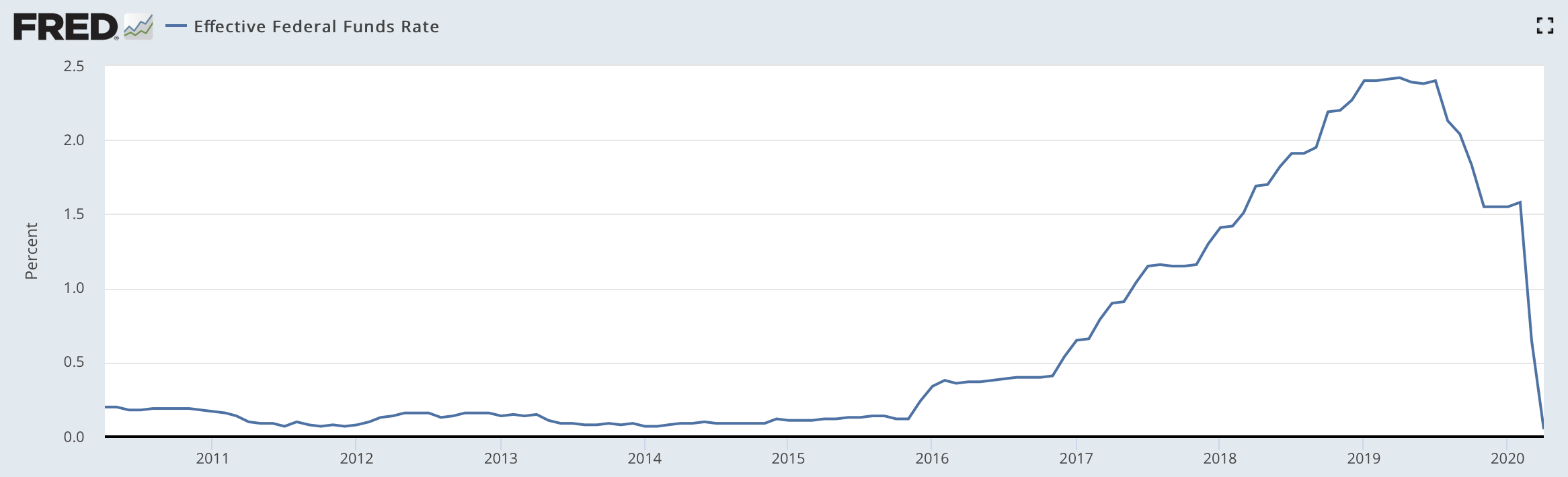
The key lesson from years of watching interest-rate cycles is that cash should be managed actively, not emotionally. When rates were near zero, many people ignored cash because it felt useless. When rates rose, cash suddenly became interesting again. But the smartest savers do not worship cash or hate cash. They assign it a role. Emergency cash belongs in liquid savings. Medium-term cash may belong in CDs or Treasuries. Long-term growth money usually belongs elsewhere, depending on your goals and risk tolerance.
Another experience-based rule: never let a CD renewal happen by accident. Banks know many customers forget maturity dates. A CD can renew into a lower rate while you are busy living life, eating tacos, or trying to remember another password. Put the maturity date in your calendar at least two weeks early. When the date approaches, compare new rates, review your cash needs, and decide intentionally.
I also like splitting cash into buckets. For example, suppose you have $60,000 in conservative savings. You might keep $20,000 in a high-yield savings account for immediate access, put $20,000 in a six-month CD, and put $20,000 in a twelve-month CD. This structure gives you liquidity, yield, and optionality. If rates rise, some money matures soon. If rates fall, some money remains locked at the older rate. It is not perfect, but it is practical.
Finally, remember that the “best” CD is the one you can hold comfortably to maturity. If a CD makes you nervous because the term is too long, the penalty is too harsh, or the institution seems unfamiliar, keep shopping. A slightly lower APY from a stronger fit may be the better financial decision. Your money should work hard, but it should not make you lose sleep. Sleep is also an asset, and unlike CD interest, it is tax-free.
Conclusion
The best CD rates for your money are usually found by comparing online banks, credit unions, regional promotions, and brokered CD platforms. Do not chase APY blindly. Look at the full package: term length, minimum deposit, early withdrawal penalty, insurance coverage, renewal rules, and your own cash timeline.
CDs can be excellent for conservative savers, retirees, future homebuyers, business owners, and anyone who wants predictable interest without market drama. They are not magic. They will not replace a long-term investment portfolio. But when used wisely, CDs can turn idle cash into a reliable income-producing tool. And in personal finance, reliable is often underrated. Reliable pays bills. Reliable reduces stress. Reliable does not text you at midnight asking if you have heard about the next hot crypto coin.