Retirement planning has a funny way of making perfectly rational adults stare at a calendar and panic. Turn 50, and suddenly every financial advertisement seems to whisper, “Shouldn’t you have figured this out already?” Turn 60, and the whisper becomes a foghorn.
But one of the biggest retirement investing mistakes is assuming your investment horizon ends on the day you retire. It usually does not. If you retire in your mid-60s, your portfolio may still need to finance 20, 30, or even more years of living expenses. In other words, the retirement party may mark the end of office meetings, but it is not necessarily the retirement party for your money.
This longer perspective can completely change how you think about retirement savings, asset allocation, Social Security, catch-up contributions, and even working a few additional years. The important question is not simply, “How many years until I retire?” It is, “How many years until I will actually need each portion of my money?”
Research basis: U.S. retirement research finds that many workers underestimate longevity, while major retirement providers commonly plan around multi-decade retirements.
Your Retirement Date Is Not Your Investment Finish Line
Suppose you are 58 and hope to retire at 67. At first glance, you have only nine years left to invest. That sounds uncomfortably short.
But you probably will not withdraw your entire retirement account on your 67th birthday, stuff it into a briefcase, and walk dramatically into the sunset. Retirement assets are generally used gradually. Money needed during your first few years of retirement has a relatively short investment horizon, while money you might not spend until your 70s, 80s, or 90s has much longer to remain invested.
That distinction matters because time horizon is a central factor in deciding how much investment risk is appropriate. Investor.gov notes that investors with longer horizons may be able to tolerate more volatility than people who will need their money soon. Retirement therefore creates several time horizons rather than one giant deadline. Your grocery money for next year and your potential living expenses 20 years from now should not necessarily be treated identically.
Retirement Could Last Longer Than You Expect
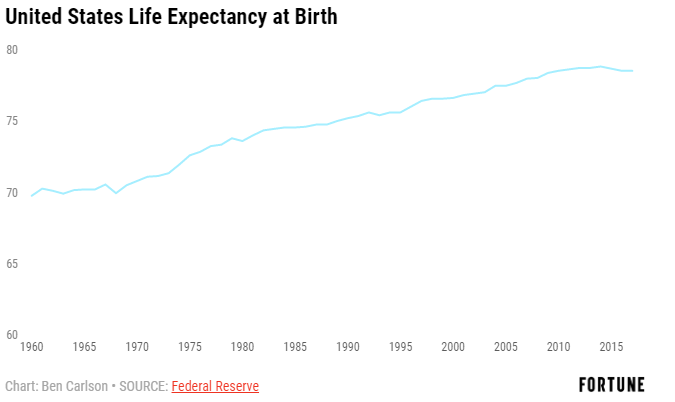
Longevity is one reason your investing window may be surprisingly long. Research from the TIAA Institute found that a substantial share of adults underestimate how long a typical 65-year-old can expect to live. That can create what researchers describe as a retirement planning horizon that is simply too short.
Financial institutions therefore frequently model retirement over periods of roughly 30 years. Fidelity, for example, says someone retiring at age 65 may need to plan for a retirement lasting 30 years or more.
That does not mean everyone will live to 95. Nobody gets a warranty card at retirement. Health, family history, lifestyle, and plain luck all matter. But retirement planning has to account for the possibility of living longer than average because running out of money at 72 is inconvenient; running out at 92 is a considerably bigger problem.
More Time Gives Compounding More Room to Work
Compound growth receives most of its publicity as advice for 22-year-olds. Start investing with your first paycheck, the familiar lecture goes, and future-you will send present-you a thank-you card.
That is true, but compounding does not mysteriously stop because your hair turns gray.
Consider a hypothetical $100,000 investment earning an average 5% annually, before taxes and fees and with no withdrawals. After 10 years, it would be worth about $162,900. After 20 years, it would be roughly $265,300. These numbers are only illustrationsnot predictionsbut they demonstrate why additional years can remain meaningful late in life.
The same principle applies to new contributions. Someone investing $1,000 per month for another 10 years at a hypothetical 5% annual return would accumulate roughly $155,000 from those contributions and their growth. Starting earlier is better, of course. Yesterday would have been lovely. But “I didn’t start early” and “there is no point starting now” are two very different statements.
The Department of Labor specifically emphasizes the long-term power of consistent retirement contributions, tax advantages, employer contributions, and compounding. The clock matters, but every remaining year is still a year.
Catch-Up Contributions Can Make Your Later Working Years Powerful
Federal retirement rules recognize that older workers often want to accelerate their savings. In 2026, the basic employee contribution limit for many 401(k), 403(b), and governmental 457 plans is $24,500. Workers age 50 or older can generally make an additional $8,000 catch-up contribution, creating a potential total of $32,500.
Workers who are ages 60 through 63 during 2026 have an even larger catch-up limit of $11,250 under SECURE 2.0 provisions. IRA contributions are capped at $7,500 for 2026, with an additional $1,100 available to eligible people age 50 or older. Income limits and other eligibility rules can apply.
There is another useful change older investors sometimes overlook: since 2020, the IRS has imposed no maximum age for making regular traditional or Roth IRA contributions, provided applicable compensation and other requirements are satisfied.
That makes continued employment potentially valuable in several ways. Another year of work can mean another year of contributions, another employer match, another year without drawing heavily from the portfolio, and another year for existing investments to grow. One extra working year can therefore affect several parts of the retirement equation simultaneously.
Working Longer Does Not Have to Mean Working Forever
“Work longer” may be mathematically useful advice, but it can sound suspiciously like being sentenced to another decade of Monday mornings.
Fortunately, retirement is increasingly flexible. Some people move into consulting, seasonal work, part-time employment, or less demanding jobs instead of flipping directly from 40-hour weeks to zero-hour weeks.
Government labor statistics show this is hardly unusual. In 2025, 19.1% of Americans age 65 and older were participating in the labor force. Among men 65 and older, the figure was 23.1%; among women, it was 15.7%.
Obviously, not everyone can or wants to continue working. Health issues, caregiving responsibilities, layoffs, physically demanding occupations, and personal priorities can make later employment unrealistic. But for people who have flexibility, earning even part of their living expenses can reduce the amount that must immediately come from investments.
Delaying Social Security Can Extend Your Investment Strategy
Your Social Security decision can also interact with your retirement investing horizon. Social Security retirement benefits can generally begin between ages 62 and 70. According to the Social Security Administration, monthly benefits increase when claiming is delayed, up to age 70.
This creates an important planning question: should you claim Social Security early and reduce withdrawals from investments, or use other assets and income temporarily so that you can delay claiming?
There is no universal answer. Claiming earlier can be sensible for certain health, income, family, or cash-flow circumstances. Delaying can be attractive for others because it increases future monthly income. Married couples also have additional survivor and household considerations.
The larger lesson is that Social Security and your investment portfolio should not be planned in separate universes. They are pieces of the same retirement-income puzzle.
Do Not Become Too Conservative Too Soon
One traditional retirement image involves steadily selling stocks until almost everything is safely parked in bonds or cash. Reducing risk as major withdrawals approach can make sense. Turning a potentially 30-year retirement portfolio into an oversized checking account may not.
Inflation does not retire when you do. A lifestyle costing $50,000 today will likely cost considerably more decades from now. Assets intended for later retirement years therefore may still need growth.
Charles Schwab, for example, notes that investors in the early stages of retirement may still benefit from stock exposure to address longevity risk, while gradually emphasizing income and capital preservation later. That does not mean every 65-year-old should own the same percentage of stocks. Asset allocation depends on financial resources, withdrawal needs, pensions, Social Security, risk tolerance, health, goals, and other circumstances.
The key is avoiding an automatic assumption that “retired” means “no investment risk whatsoever.” Avoiding every visible market risk can quietly increase inflation and longevity risk instead.
Think of Your Portfolio in Multiple Time Horizons
A useful way to view retirement assets is according to when you expect to spend them. Money required soon should generally receive different treatment from money intended for much later.
- Near-term money: Funds required for upcoming living expenses may belong in cash, short-term bonds, CDs, or other relatively stable assets.
- Intermediate money: Assets for expenses several years away may use a balanced mixture of bonds and growth investments.
- Long-term money: Assets unlikely to be needed for 10, 15, or 20 years may have more capacity to remain invested for growth, depending on your risk tolerance.
This type of structure can also help emotionally. A stock-market decline feels very different when next month’s electric bill does not depend on selling stocks that afternoon.
Watch Out for Sequence-of-Returns Risk
Having a long investing horizon does not mean market declines become irrelevant. In fact, the first several years around retirement can be particularly sensitive because you may be withdrawing money while the portfolio is falling.
This is known as sequence-of-returns risk. Two retirees could experience similar average investment returns over several decades yet have very different results depending on whether the worst market years occur early or late in retirement.
That is why having enough lower-volatility assets for near-term spending can be useful. It may reduce the need to sell heavily depressed investments during a bear market. Flexible spending can help too. Postponing a major discretionary purchase or taking a smaller inflation adjustment after a terrible market year can give investments more room to recover.
Required Minimum Distributions Do Not Mean You Must Stop Investing
Retirement-account withdrawal rules are another source of confusion. Required minimum distributions, or RMDs, eventually force many owners of tax-deferred retirement accounts to take distributions.
Under current law, the applicable RMD age is generally 73 for people who reach age 73 before 2033. For people born in 1960 or later, the applicable age is 75. Roth IRAs owned by the original owner are generally not subject to lifetime RMDs.
An RMD is a distribution requirement, not an instruction to spend the entire withdrawal on cruises, collectible guitars, or an unexpectedly ambitious backyard waterfall. If you do not need distributed money for living expenses, after paying applicable taxes it may potentially be reinvested in an ordinary taxable investment account.
So even mandatory distributions do not automatically mark the end of your investment life.
What Extra Time Cannot Fix
A longer investment horizon is encouraging, but it is not magic. Time cannot make an excessively expensive lifestyle affordable, guarantee stock-market returns, erase high-interest debt, or transform speculative bets into a retirement plan.
Retirement investors still need diversification, appropriate risk management, sensible withdrawal planning, emergency reserves, and realistic spending assumptions. FINRA emphasizes that investment decisions should reflect not just time horizon but also how dependent you are on the invested money and how much risk you can realistically afford.
This is especially important late in your career. Discovering that you have more investing time should not lead to desperately chasing huge returns. Going all-in on whichever stock, cryptocurrency, or investment theme is currently exciting the internet is not “making up for lost time.” It is taking concentrated risk with less room to recover if things go badly.
Practical Experiences: What a Longer Retirement Horizon Can Look Like
The Late Starter Who Stops Trying to Win the Lottery
Imagine a 52-year-old named Mike who realizes his retirement account is smaller than he hoped. His first reaction is predictable: panic. He calculates what he “should” have saved, reads several alarming headlines, and briefly becomes interested in investments promising suspiciously spectacular returns.
A more productive approach starts by changing the timeline. Instead of thinking, “I have only 13 years until 65,” Mike considers that he may work until 67 and could need part of his portfolio well into his 80s or 90s.
He increases his workplace contribution, captures the full employer match, uses catch-up contributions when eligible, and automatically increases his contribution whenever his salary rises. He does not suddenly become rich. Retirement planning is annoyingly resistant to movie-style montages. But 15 years of higher contributions plus another two or three decades of potential investment growth gives him considerably more opportunity than he initially believed.
The New Retiree Who Nearly Goes All to Cash
Now imagine Linda, who retires at 66 after watching several frightening periods in the stock market. Her instinct is to sell almost everything and move into cash. Emotionally, this feels safe. Her account balance stops bouncing around, which is pleasant after decades of market drama.
Then she considers the other side of safety. If she lives another 25 or 30 years, inflation could steadily reduce what that cash can buy. Money for next year needs stability; money for her 85th birthday has a much longer job.
Instead of treating the portfolio as one pile, Linda separates near-term spending from longer-term investments. She maintains conservative assets for expected withdrawals while keeping a diversified growth allocation for later years. She still has market risk, but she no longer has to choose between “100% invested” and “100% cash.” Retirement planning becomes a series of smaller decisions rather than one dramatic switch.
The Couple Who Uses Work as a Retirement Bridge
Consider another hypothetical couple, Robert and Karen. Both originally planned to stop working completely at 65. Robert enjoys his profession but wants fewer responsibilities, so he moves to three days a week. Karen leaves her full-time position but begins occasional consulting.
Their part-time income covers a meaningful share of routine expenses. As a result, they make smaller withdrawals from retirement accounts and have greater flexibility about when to claim Social Security.
The lesson is not that everyone should work forever. The lesson is that retirement does not have to happen in one irreversible step. A modest amount of earned income can act as a bridge between full employment and full retirement, providing additional saving time while reducing pressure on investments.
The Common Thread
These scenarios are fictional composites, not guarantees of investment results. Their common lesson is simple: retirement planning improves when you stop treating age 65 as a financial cliff.
Your retirement assets may have multiple jobs extending across several decades. Some money must provide stability today. Some needs to create income tomorrow. Some may remain invested for expenses you will not encounter for many years. And some may ultimately become a legacy for family or charitable goals.
Once those jobs are separated, the timeline often looks considerably less frightening.
Conclusion: Your Financial Clock May Have More Time on It
The best time to begin investing for retirement may have been decades ago. The second-best time is not to spend the next decade complaining about the first-best time.
If retirement is approaching and you feel behind, examine your real investment horizon before assuming the opportunity has disappeared. Longer lifespans, catch-up contribution rules, flexible retirement, continued employment, delayed Social Security, and the simple fact that retirement assets are spent gradually can give your money more years to work than a retirement date alone suggests.
That does not justify reckless investing. A 62-year-old should not automatically invest like a 22-year-old simply because part of the portfolio might remain untouched for decades. Instead, build a strategy around when different dollars will be needed, how much market volatility you can tolerate, your guaranteed income, your spending needs, and your personal circumstances.
Retirement is not the moment investing ends. For many Americans, it is the beginning of a newand potentially very longphase of investing.
Note: This article provides general educational information about retirement investing and U.S. retirement rules. It is not individualized investment, tax, or legal advice. Contribution limits, tax rules, and retirement regulations can change, so readers should verify current requirements and consider consulting an appropriate financial or tax professional.