Sudoku may look like a tiny number jungle at first, but don’t worrythere are no wild animals hiding in the grid, only friendly logic waiting to be discovered. If your child can recognize numbers, spot patterns, and follow simple rules, they can learn how to play Sudoku for kids in a fun, confidence-building way.
The best part? Sudoku is not really a math test. Nobody has to multiply, divide, carry the one, or stare dramatically at a calculator. Sudoku is a logic puzzle. The numbers are symbols, and the goal is to place them in the right spots by thinking carefully. For kids, that makes Sudoku a wonderful brain game for focus, patience, memory, problem-solving, and good old-fashioned “Aha!” moments.
This guide breaks Sudoku rules for kids into 12 simple steps, using clear examples and kid-friendly strategies. Whether you are a parent, teacher, tutor, or puzzle-loving older sibling, you can use these steps to turn a blank Sudoku grid from “Wait, what?” into “I’ve got this!”
What Is Sudoku?
Sudoku is a number-placement puzzle. In the classic version, the board is a 9×9 grid divided into nine smaller 3×3 boxes. The goal is to fill the empty squares with the numbers 1 through 9. Each row, column, and 3×3 box must contain each number only once.
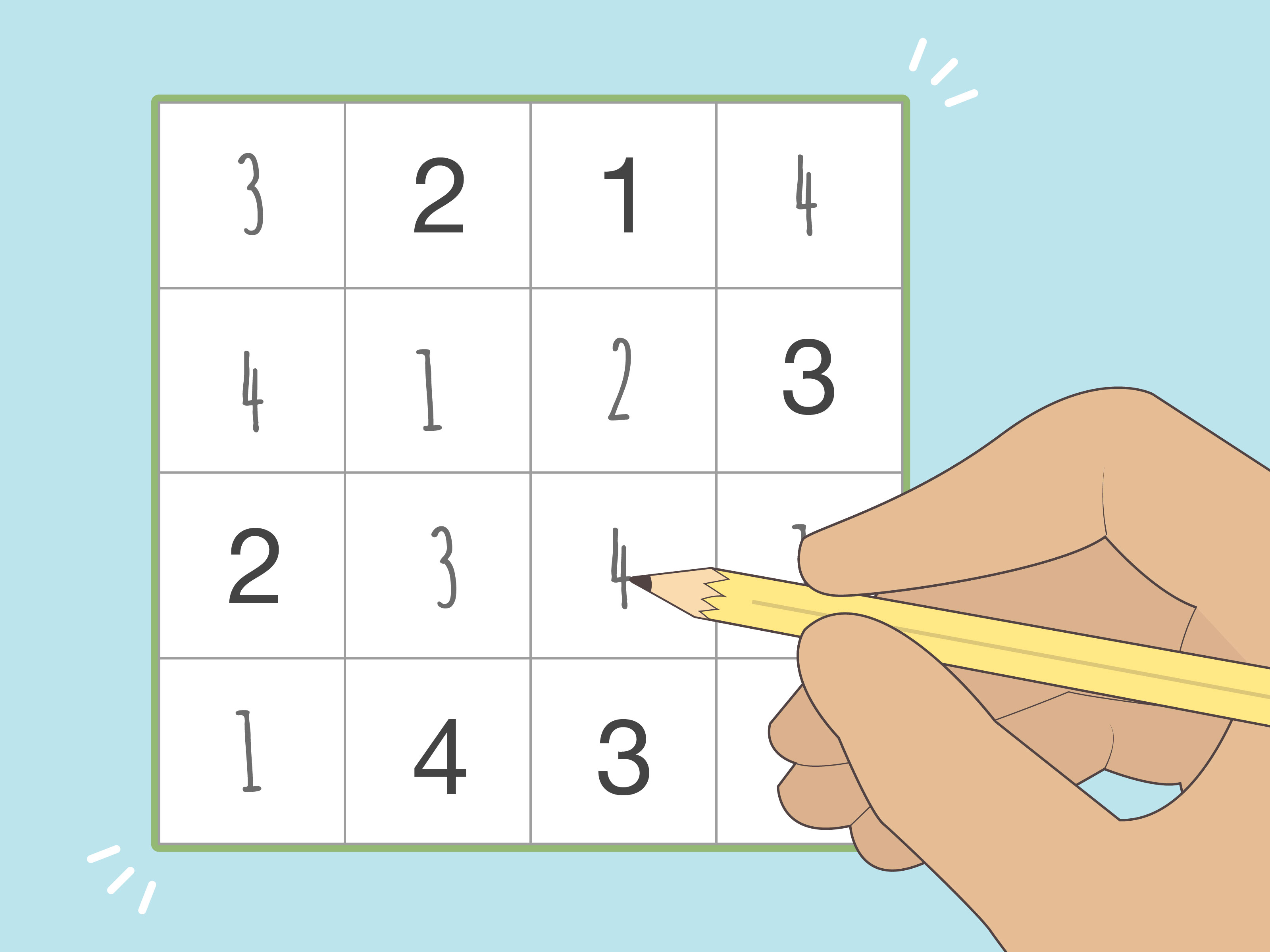
For younger children, however, it is perfectly fine to begin with easier Sudoku puzzles. Many kids start with 4×4 grids using the numbers 1 through 4, or picture Sudoku puzzles with animals, shapes, colors, or toys instead of numbers. Starting small helps children understand the idea before moving on to the full 9×9 puzzle.
Why Sudoku Is Great for Kids
Sudoku helps children practice thinking before acting. That is a very useful life skill, especially when the alternative is guessing, panicking, or blaming the family goldfish. Because Sudoku requires kids to compare rows, columns, and boxes, it encourages attention to detail and logical reasoning.
It also builds patience. A Sudoku puzzle cannot be solved by shouting at it, although many adults have tried. Kids learn to pause, scan, eliminate impossible answers, and celebrate small progress. These habits can support schoolwork, especially in subjects that require careful reading, pattern recognition, and step-by-step thinking.
How to Play Sudoku for Kids: 12 Steps
Step 1: Start With the Right Puzzle Size
Before handing a child a full 9×9 Sudoku puzzle, choose the right difficulty level. Younger beginners often do better with a 4×4 puzzle. A 4×4 Sudoku uses four rows, four columns, and four smaller boxes. The numbers are only 1, 2, 3, and 4, so kids can focus on the rule instead of feeling buried under too many choices.
Once the child understands the pattern, move to a 6×6 puzzle or a very easy 9×9 puzzle. A good beginner puzzle should already have many numbers filled in. The more clues provided, the easier the puzzle is. Think of the starting numbers as friendly signposts, not spoilers.
Step 2: Learn the Main Sudoku Rule
The golden rule of Sudoku is simple: do not repeat a number in the same row, column, or box. In a 4×4 puzzle, each row needs 1, 2, 3, and 4. Each column also needs 1, 2, 3, and 4. Each small box needs the same set.
For example, if a row already has 1, 2, and 4, then the missing number must be 3. That is Sudoku logic in action. No magic wand required. The puzzle gives clues, and the child uses those clues to figure out what belongs where.
Step 3: Understand Rows, Columns, and Boxes
Kids need to know the three “neighborhoods” of Sudoku: rows, columns, and boxes. A row goes side to side. A column goes up and down. A box is the smaller square section inside the grid.
A helpful teaching trick is to use colored pencils. Circle one row in blue, one column in green, and one box in orange. Then ask, “Can the number 2 live here?” Children usually understand faster when they can see that one square belongs to three groups at the same time.
Step 4: Look for Missing Numbers
One of the easiest Sudoku strategies for kids is to look for rows, columns, or boxes that are almost complete. If a row has only one empty square, the child can ask, “Which number is missing?”
For example, in a 4×4 puzzle, a row has 1, 3, and 4. The only missing number is 2, so 2 goes in the empty square. This small success helps kids feel smart quickly, which is important because nobody wants their first Sudoku experience to feel like fighting a tiny spreadsheet dragon.
Step 5: Use the Process of Elimination
Elimination means crossing out answers that cannot work. Suppose a square could maybe be 2, 3, or 4. If the row already has a 3, then the square cannot be 3. If the column already has a 4, then it cannot be 4. That leaves 2.
This is one of the most important beginner Sudoku techniques. Teach kids to say, “What is impossible?” before asking, “What is the answer?” That small shift makes Sudoku less about guessing and more about detective work.
Step 6: Scan the Grid Like a Puzzle Detective
Scanning means looking across rows and columns to find where a number can or cannot go. Choose one number at a time. For example, ask the child to look for all the 1s already on the board. Then check which rows, columns, and boxes still need a 1.
This technique works well because it gives children a mission. Instead of staring at the whole puzzle, they focus on one number. It is like saying, “Find the missing 5,” rather than “Solve this entire brain maze by lunchtime.”
Step 7: Try Pencil Marks
Pencil marks are tiny notes written inside empty squares. They show which numbers might fit. In digital Sudoku, these are often called notes or candidates. For kids, pencil marks can reduce frustration because they do not have to remember every possibility in their head.
For example, if a square might be 2 or 4, the child writes a small “2 4” in the corner. Later, if 4 appears in the same row, the child can erase 4 from the note. Now the square must be 2. Pencil marks turn the puzzle into a conversation: “Maybe this, maybe thatoh wait, now I know!”
Step 8: Never Guess Too Early
Guessing is tempting, especially when a child wants to finish quickly. But Sudoku is built on logic. One wrong guess can make the whole puzzle wobble like a tower of pancakes. Teach kids to place a number only when they can explain why it belongs there.
A good question is, “How do you know?” If the child can answer, “Because this row already has 1, 2, and 4, so the missing number is 3,” they are using logic. If the answer is, “Because 3 looked lonely,” it may be time to slow down.
Step 9: Work From Easy Clues to Harder Ones
Sudoku puzzles become easier when kids build momentum. Encourage them to solve the obvious squares first. Completed rows and boxes create new clues, which make other squares easier.
This step also teaches a valuable problem-solving habit: start with what you know. Kids do not need to solve everything at once. They only need to find the next logical move. That mindset is useful in math homework, reading comprehension, science projects, and even cleaning a messy bedroomalthough Sudoku cannot guarantee miracles in that last category.
Step 10: Check Every Answer Three Ways
Before writing a final number, kids should check the row, the column, and the box. This three-way check prevents most beginner mistakes.
Try this simple checklist:
- Is this number already in the row?
- Is this number already in the column?
- Is this number already in the small box?
If the answer is “no” to all three, the number may fit. If the square has only one possible number left, the child can place it with confidence.
Step 11: Take Breaks When the Puzzle Gets Stuck
Every Sudoku player gets stuck sometimes. That does not mean the child is bad at puzzles. It means the puzzle is doing its job. When frustration rises, take a short break. Stretch, drink water, pet the dog, or dramatically announce, “The detective will return after a snack.”
Breaks help kids return with fresh eyes. Often, the clue they missed earlier becomes obvious after a pause. This teaches persistence without turning the puzzle into a battle.
Step 12: Celebrate the Logic, Not Just the Finished Puzzle
The goal is not only to complete the Sudoku grid. The bigger goal is to help kids enjoy thinking. Praise the process: “You checked the column carefully,” “You used elimination,” or “You found the missing number without guessing.”
This kind of praise builds confidence. Kids begin to see themselves as problem solvers. When they complete a puzzle, celebrate. When they make a mistake, treat it as part of learning. Sudoku should feel like a challenge, not a courtroom trial.
Easy Example: A 4×4 Sudoku for Kids
Imagine a 4×4 Sudoku row that looks like this:
1 | 2 | _ | 4
The missing number is 3, because a 4×4 row must include 1, 2, 3, and 4. Now imagine a column that has 2, 3, and 4. The missing number must be 1. These simple clues help kids understand the puzzle’s rhythm.
Once children master this idea, they can handle bigger puzzles by repeating the same thinking: check what is already there, find what is missing, and place numbers only when the logic is clear.
Best Sudoku Strategies for Kids
Use One Number at a Time
Ask your child to search for all the places where one number might go. For example, “Let’s hunt for 4s.” This keeps the puzzle manageable and gives kids a clear job.
Finish Crowded Areas First
Rows, columns, or boxes with many filled squares are usually easier. Teach kids to look for the busiest parts of the grid first because they contain the most clues.
Keep the Puzzle Neat
Messy notes can confuse kids. Encourage small pencil marks, careful erasing, and clean writing. Sudoku is easier when the grid does not look like a squirrel ran across it holding a crayon.
Talk Through the Thinking
When kids explain their reasoning out loud, they often catch mistakes. A parent or teacher can ask, “Why can’t 5 go there?” or “What number is missing from this box?” These questions guide without giving away the answer.
Common Sudoku Mistakes Kids Make
The most common mistake is repeating a number in a row, column, or box. Another common mistake is guessing too soon. Kids may also focus on one empty square for too long instead of moving around the puzzle to find easier clues.
To prevent frustration, remind children that Sudoku is not a race. A slow correct answer is better than a fast wrong one. Accuracy comes first; speed can arrive later wearing tiny running shoes.
How Parents and Teachers Can Make Sudoku Fun
Sudoku becomes more enjoyable when adults keep the mood light. Use stickers, colorful pencils, or themed puzzles. For younger kids, try animal Sudoku, shape Sudoku, or picture Sudoku before number Sudoku.
Teachers can use Sudoku as a quiet morning activity, early-finisher challenge, or logic center. Parents can use it during travel, rainy afternoons, waiting rooms, or screen-free time. The key is to choose puzzles that match the child’s level. Too easy is boring; too hard is a meltdown invitation.
Real-Life Experiences With Teaching Sudoku to Kids
One of the most helpful experiences when teaching Sudoku to kids is realizing that children often understand the game faster when it feels like play. A child who freezes at the sight of a 9×9 number grid may happily solve a 4×4 animal Sudoku with cats, dogs, frogs, and birds. The logic is the same, but the mood changes completely. Instead of thinking, “This is math,” the child thinks, “The frog cannot go there because there is already a frog in this row.” That is Sudoku thinking, just wearing a sillier hat.
Another useful experience is to sit beside the child rather than hovering like a puzzle referee. When adults jump in too quickly, kids may stop trusting their own reasoning. A better approach is to ask gentle questions. “What numbers are missing?” “Can that number go in this column?” “Which box is almost finished?” These questions give children ownership of the solution. The adult becomes a coach, not a human answer machine.
In classrooms, Sudoku works especially well when introduced as a team discussion before becoming an individual task. A teacher might display a simple puzzle and ask the class to vote on where a missing number belongs. Students can explain their thinking, agree, disagree politely, and learn from each other. This turns Sudoku into a communication activity as well as a logic puzzle. Children practice using evidence: “I think 2 goes there because the row already has 1, 3, and 4.” That sentence is small, but it contains reasoning, confidence, and proof.
At home, Sudoku can become a calm routine. Some families use one easy puzzle after dinner. Others keep a puzzle book in the car for long rides. A few minutes of Sudoku can help children transition from noisy play to focused thinking. It is also a nice alternative to screen time because it gives the brain something active to do without flashing lights, pop-up ads, or cartoon treasure chests demanding attention.
The biggest lesson from real experience is this: the first goal is not finishing the puzzle. The first goal is helping the child enjoy the feeling of figuring something out. If a child solves three squares correctly and stops, that can still be a win. If they make a mistake and learn how to check it, that is also a win. Sudoku teaches children that thinking carefully can be fun, mistakes can be fixed, and hard things become easier one clue at a time.
Conclusion
Learning how to play Sudoku for kids is all about making logic friendly. Start small, explain the row-column-box rule clearly, use easy puzzles, and encourage children to think like detectives. With practice, kids learn to scan, eliminate, use pencil marks, check their answers, and stay patient when a puzzle gets tricky.
Sudoku is more than a number game. It is a quiet workout for focus, memory, reasoning, and confidence. Whether your child solves a 4×4 puzzle with pictures or graduates to a classic 9×9 grid, every correct move is a tiny celebration of clear thinking. And if the puzzle wins for the day? No problem. The detective can always come back after cookies.